Stephen M. Saideman - Böcker
Visar alla böcker från författaren Stephen M. Saideman. Handla med fri frakt och snabb leverans.
9 produkter
9 produkter
1 108 kr
Skickas inom 7-10 vardagar
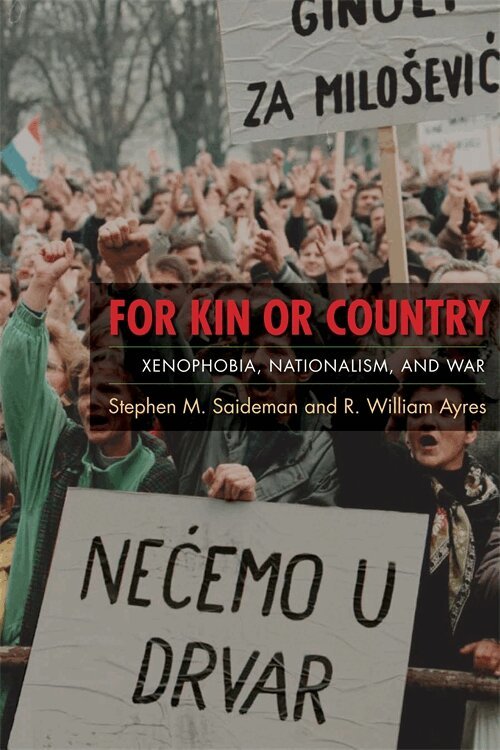
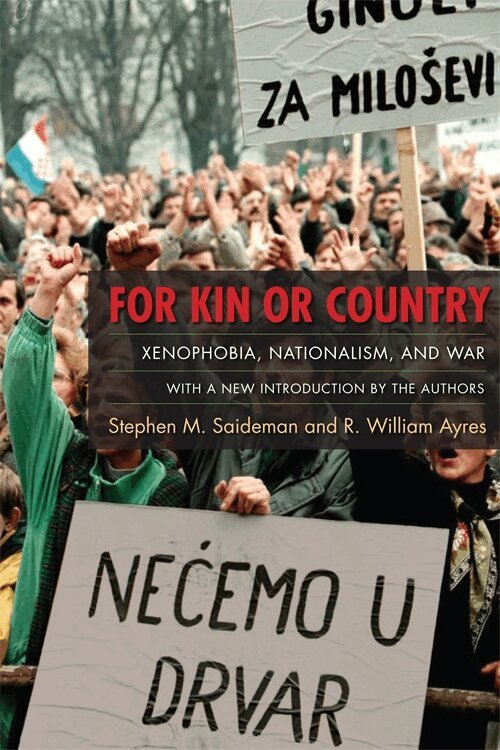
The collapse of an empire can result in the division of families and the redrawing of geographical boundaries. New leaders promise the return of people and territories that may have been lost in the past, often advocating aggressive foreign policies that can result in costly and devastating wars. The final years of the Austro-Hungarian and Ottoman empires, the end of European colonization in Africa and Asia, and the demise of the Soviet Union were all accompanied by war and atrocity. These efforts to reunite lost kin are known as irredentism-territorial claims based on shared ethnic ties made by one state to a minority population residing within another state. For Kin or Country explores this phenomenon, investigating why the collapse of communism prompted more violence in some instances and less violence in others. Despite the tremendous political and economic difficulties facing all former communist states during their transition to a market democracy, only Armenia, Croatia, and Serbia tried to upset existing boundaries. Hungary, Romania, and Russia practiced much more restraint.The authors examine various explanations for the causes of irredentism and for the pursuit of less antagonistic policies, including the efforts by Western Europe to tame Eastern Europe. Ultimately, the authors find that internal forces drive irredentist policy even at the risk of a country's self-destruction and that xenophobia may have actually worked to stabilize many postcommunist states in Eastern Europe. Events in Russia and Eastern Europe in 2014 have again brought irredentism into the headlines. In a new Introduction, the authors address some of the events and dynamics that have developed since the original version of the book was published. By focusing on how nationalist identity interact with the interests of politicians, For Kin or Country explains why some states engage in aggressive irredentism and when others forgo those opportunities that is as relevant to Russia and Ukraine in 2014 as it was for Serbia, Croatia, and Armenia in the 1990s.
578 kr
Skickas inom 3-6 vardagar
The collapse of an empire can result in the division of families and the redrawing of geographical boundaries. New leaders promise the return of people and territories that may have been lost in the past, often advocating aggressive foreign policies that can result in costly and devastating wars. The final years of the Austro-Hungarian and Ottoman empires, the end of European colonization in Africa and Asia, and the demise of the Soviet Union were all accompanied by war and atrocity. These efforts to reunite lost kin are known as irredentism-territorial claims based on shared ethnic ties made by one state to a minority population residing within another state. For Kin or Country explores this phenomenon, investigating why the collapse of communism prompted more violence in some instances and less violence in others. Despite the tremendous political and economic difficulties facing all former communist states during their transition to a market democracy, only Armenia, Croatia, and Serbia tried to upset existing boundaries. Hungary, Romania, and Russia practiced much more restraint.The authors examine various explanations for the causes of irredentism and for the pursuit of less antagonistic policies, including the efforts by Western Europe to tame Eastern Europe. Ultimately, the authors find that internal forces drive irredentist policy even at the risk of a country's self-destruction and that xenophobia may have actually worked to stabilize many postcommunist states in Eastern Europe. Events in Russia and Eastern Europe in 2014 have again brought irredentism into the headlines. In a new Introduction, the authors address some of the events and dynamics that have developed since the original version of the book was published. By focusing on how nationalist identity interact with the interests of politicians, For Kin or Country explains why some states engage in aggressive irredentism and when others forgo those opportunities that is as relevant to Russia and Ukraine in 2014 as it was for Serbia, Croatia, and Armenia in the 1990s.
Intra-State Conflict, Governments and Security
Dilemmas of Deterrence and Assurance
Inbunden, Engelska, 2008
2 155 kr
Skickas inom 10-15 vardagar
This volume seeks to understand the central role of governments in intra-state conflicts.The book explores how the government in any society plays two pivotal roles: as a deterrent against those who would use violence; and as a potential danger to the society. These roles come into conflict with each other, as those governments that can best deter potential rebels are also those that can do the most harm to their citizens. Therefore, a balance must be achieved, raising difficult tradeoffs for policy-makers. This volume marks a departure from studies of ethnic conflict and civil war in recent years, which have focused on failed states, in considering the idea that governments themselves may be the source of violence. The contributors not only explore the balancing act that governments must perform, but also on the positive and negative roles that the international community can play in these conflicts. In doing so, the book covers a range of cases from both advanced and newer democracies to the most conflict-prone parts of the world.
412 kr
Skickas inom 7-10 vardagar
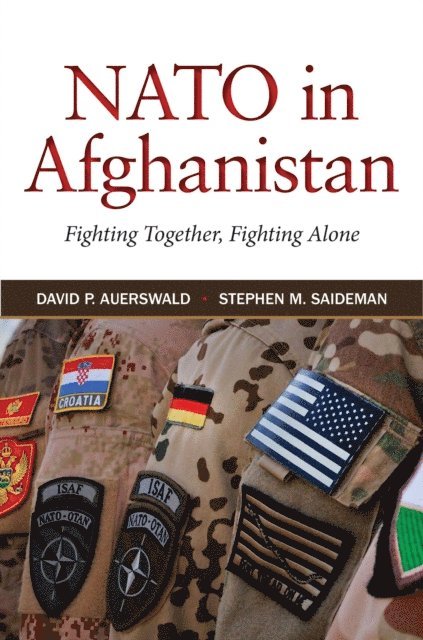
Modern warfare is almost always multilateral to one degree or another, requiring countries to cooperate as allies or coalition partners. Yet as the war in Afghanistan has made abundantly clear, multilateral cooperation is neither straightforward nor guaranteed. Countries differ significantly in what they are willing to do and how and where they are willing to do it. Some refuse to participate in dangerous or offensive missions. Others change tactical objectives with each new commander. Some countries defer to their commanders while others hold them to strict account. NATO in Afghanistan explores how government structures and party politics in NATO countries shape how battles are waged in the field. Drawing on more than 250 interviews with senior officials from around the world, David Auerswald and Stephen Saideman find that domestic constraints in presidential and single-party parliamentary systems--in countries such as the United States and Britain respectively--differ from those in countries with coalition governments, such as Germany and the Netherlands.As a result, different countries craft different guidelines for their forces overseas, most notably in the form of military caveats, the often-controversial limits placed on deployed troops. Providing critical insights into the realities of alliance and coalition warfare, NATO in Afghanistan also looks at non-NATO partners such as Australia, and assesses NATO's performance in the 2011 Libyan campaign to show how these domestic political dynamics are by no means unique to Afghanistan.
234 kr
Skickas inom 7-10 vardagar
Modern warfare is almost always multilateral to one degree or another, requiring countries to cooperate as allies or coalition partners. Yet as the war in Afghanistan has made abundantly clear, multilateral cooperation is neither straightforward nor guaranteed. Countries differ significantly in what they are willing to do and how and where they are willing to do it. Some refuse to participate in dangerous or offensive missions. Others change tactical objectives with each new commander. Some countries defer to their commanders while others hold them to strict account. NATO in Afghanistan explores how government structures and party politics in NATO countries shape how battles are waged in the field. Drawing on more than 250 interviews with senior officials from around the world, David Auerswald and Stephen Saideman find that domestic constraints in presidential and single-party parliamentary systems--in countries such as the United States and Britain respectively--differ from those in countries with coalition governments, such as Germany and the Netherlands.As a result, different countries craft different guidelines for their forces overseas, most notably in the form of military caveats, the often-controversial limits placed on deployed troops. Providing critical insights into the realities of alliance and coalition warfare, NATO in Afghanistan also looks at non-NATO partners such as Australia, and assesses NATO's performance in the 2011 Libyan campaign to show how these domestic political dynamics are by no means unique to Afghanistan.
Intra-State Conflict, Governments and Security
Dilemmas of Deterrence and Assurance
Häftad, Engelska, 2015
752 kr
Skickas inom 10-15 vardagar
This volume seeks to understand the central role of governments in intra-state conflicts.The book explores how the government in any society plays two pivotal roles: as a deterrent against those who would use violence; and as a potential danger to the society. These roles come into conflict with each other, as those governments that can best deter potential rebels are also those that can do the most harm to their citizens. Therefore, a balance must be achieved, raising difficult tradeoffs for policy-makers. This volume marks a departure from studies of ethnic conflict and civil war in recent years, which have focused on failed states, in considering the idea that governments themselves may be the source of violence. The contributors not only explore the balancing act that governments must perform, but also on the positive and negative roles that the international community can play in these conflicts. In doing so, the book covers a range of cases from both advanced and newer democracies to the most conflict-prone parts of the world.
268 kr
Skickas inom 10-15 vardagar
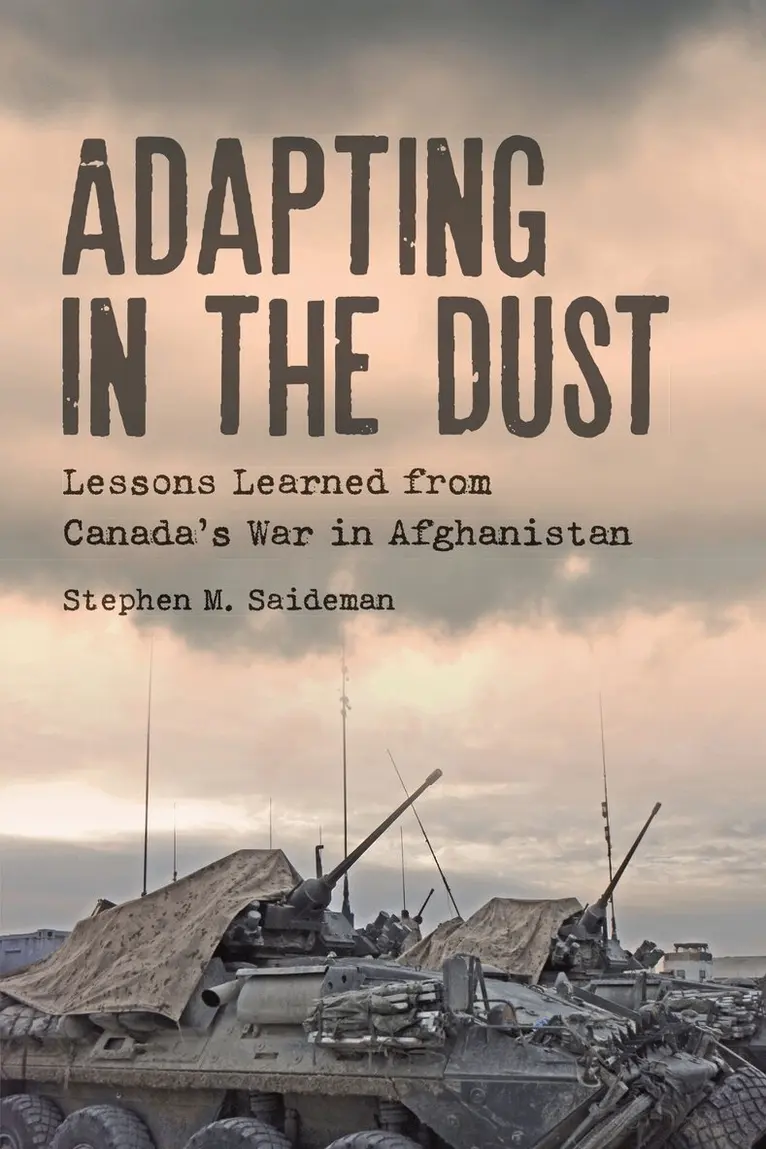
Canada’s six-year military mission in Afghanistan’s Kandahar province was one of the most intense and challenging moments in Canadian foreign affairs since the Korean War. A complex war fought in an inhospitable environment, the Afghanistan mission tested the mettle not just of Canada’s soldiers but also of its politicians, public servants, and policy makers. In Adapting in the Dust, Stephen M. Saideman considers how well the Canadian government, media, and public managed the challenge.Building on interviews with military officers, civilian officials, and politicians, Saideman shows how key actors in Canada’s political system, including the prime minister, the political parties, and parliament, responded to the demands of a costly and controversial mission. Some adapted well; others adapted poorly or – worse yet – in ways that protected careers but harmed the mission itself.Adapting in the Dust is a vital evaluation of how well Canada’s institutions, parties, and policy makers responded to the need to oversee and sustain a military intervention overseas, and an important guide to what will have to change in order to do better next time.
488 kr
Skickas inom 10-15 vardagar
Canada’s six-year military mission in Afghanistan’s Kandahar province was one of the most intense and challenging moments in Canadian foreign affairs since the Korean War. A complex war fought in an inhospitable environment, the Afghanistan mission tested the mettle not just of Canada’s soldiers but also of its politicians, public servants, and policy makers. In Adapting in the Dust, Stephen M. Saideman considers how well the Canadian government, media, and public managed the challenge.Building on interviews with military officers, civilian officials, and politicians, Saideman shows how key actors in Canada’s political system, including the prime minister, the political parties, and parliament, responded to the demands of a costly and controversial mission. Some adapted well; others adapted poorly or – worse yet – in ways that protected careers but harmed the mission itself.Adapting in the Dust is a vital evaluation of how well Canada’s institutions, parties, and policy makers responded to the need to oversee and sustain a military intervention overseas, and an important guide to what will have to change in order to do better next time.
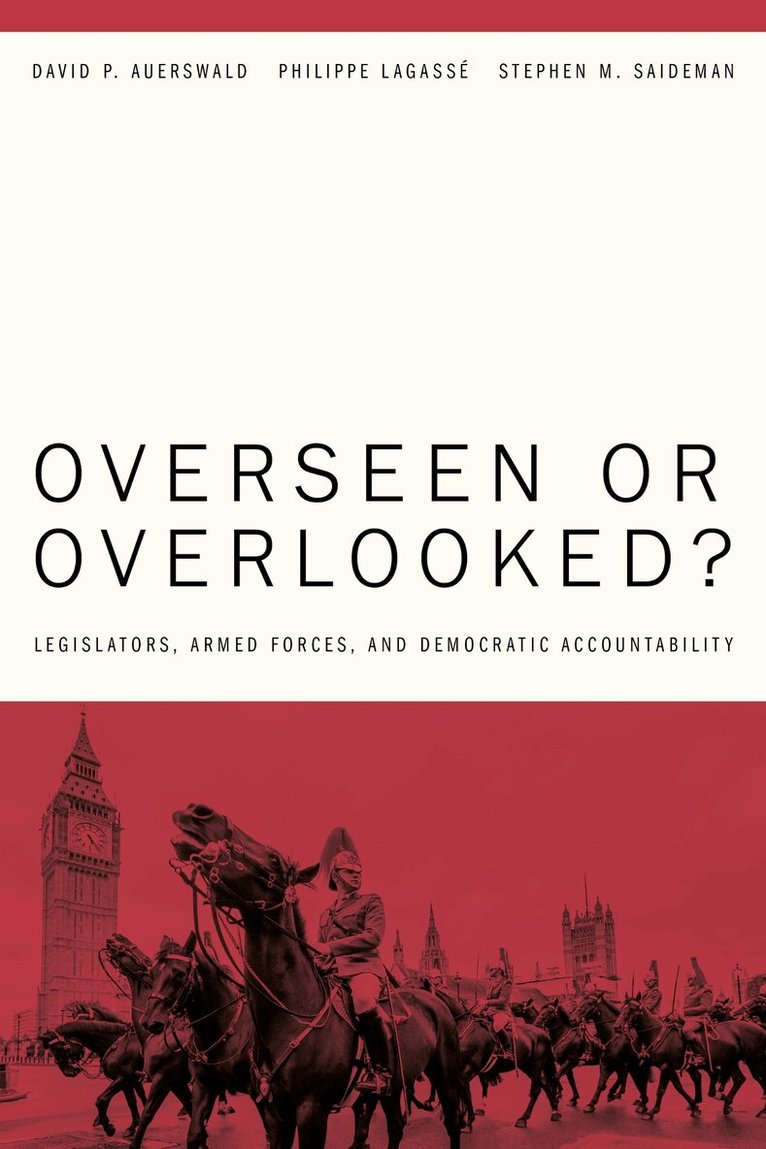
Overseen or Overlooked?
Legislators, Armed Forces, and Democratic Accountability
Inbunden, Engelska, 2025
796 kr
Skickas inom 7-10 vardagar
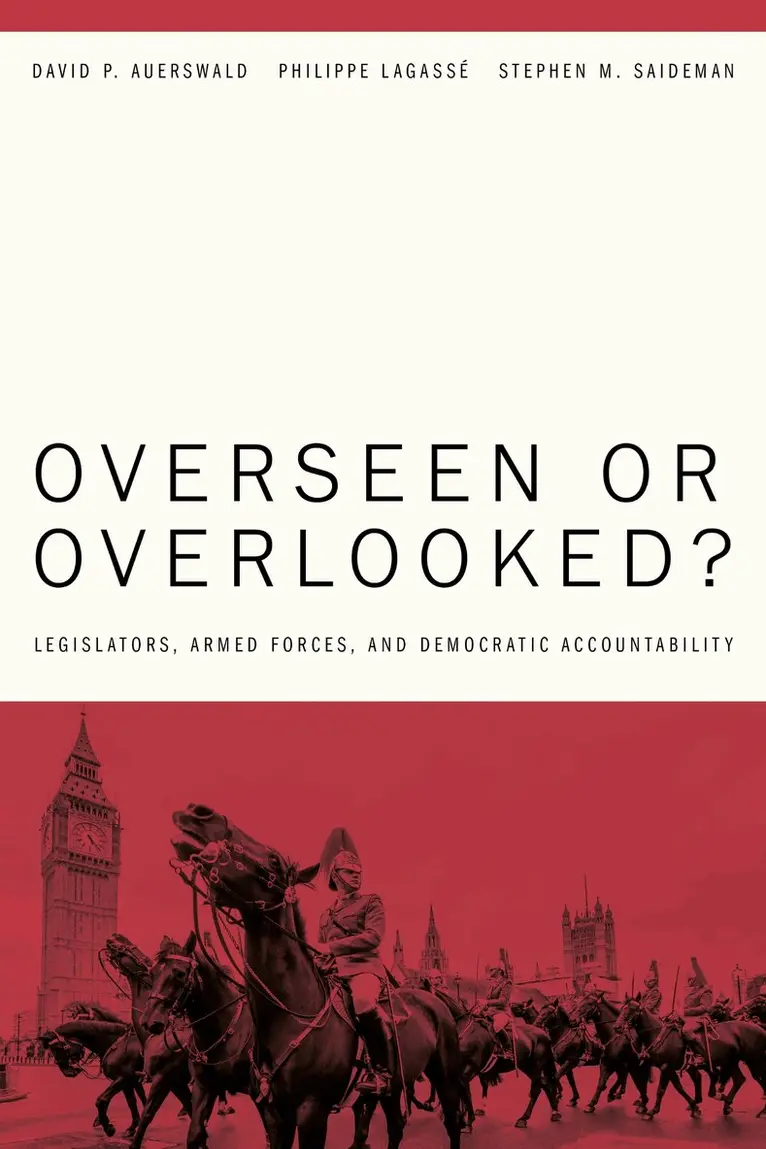
"War is too important to be left to the generals," declared French Prime Minister Georges Clemenceau over a century ago. But which civilians, exactly, play the most important roles in controlling the armed forces? When civilian control is studied, the focus is typically on those in the upper echelons of the executive branch: presidents, prime ministers, or defense secretaries. Yet, because civilians in the executive may be tempted to hide problems or use the military in controversial ways, researchers must extend Clemenceau's dictum: if war is too important to be left to the generals, civilian control is too important to leave with the executive. This book aims to understand the similarities and differences among the world's democracies regarding the role of legislatures in democratic civil-military relations. Drawing on over a dozen cases from across the globe, the authors examine how most legislatures face capability and motivational impediments to conducting truly robust oversight and propose realistic reforms to strengthen military accountability to elected officials and the public—the heart of the civil-military relationship.