David Pinner - Böcker
Visar alla böcker från författaren David Pinner. Handla med fri frakt och snabb leverans.
7 produkter
7 produkter
220 kr
Skickas inom 10-15 vardagar
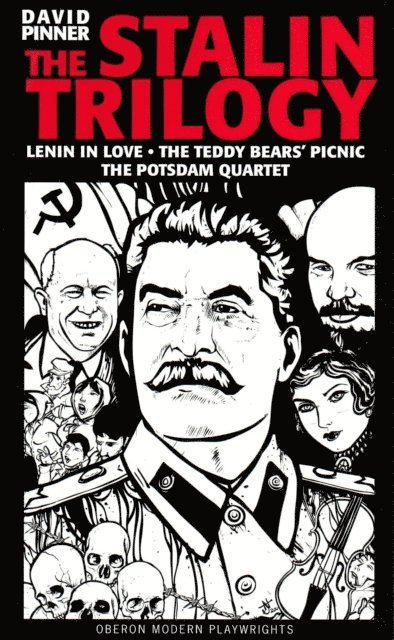
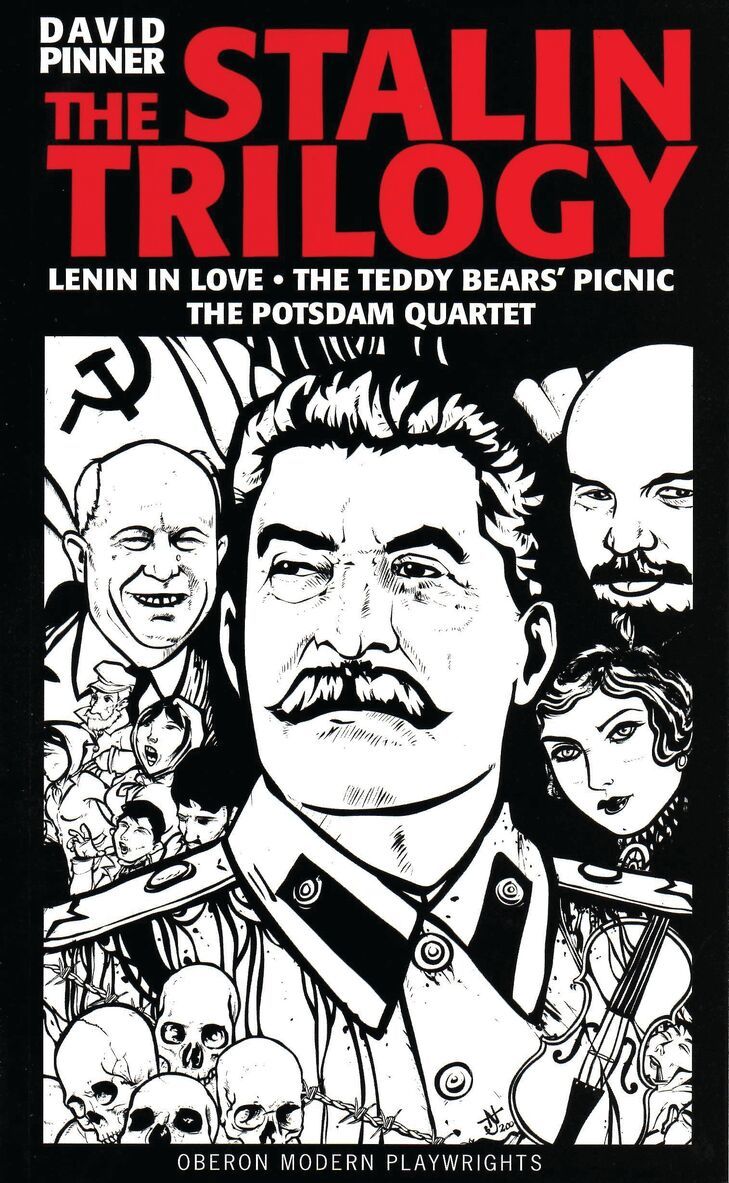
" Includes the plays Lenin in Love, The Teddy Bears' Picnic and The Potsdam Quartet Three gripping political plays: Lenin in Love takes up the alleged sexual troika and sadistic inclinations of one of the foremost political leaders of the 20th century. The Teddy Bears' Picnic is an ironic comedy which shows Stalin playing relaxed host and bon viveur in his country retreat. His Politburo guests are somewhat less relaxed. The Potsdam Quartet features four embittered musicians hired to entertain Stalin, Truman, Atlee and Churchill as they 'divide up the world'."
269 kr
Skickas inom 10-15 vardagar
Features three power plays such as "The Drums of Snow", "Richelieu", and "Prince of Traitors".
177 kr
Skickas inom 10-15 vardagar
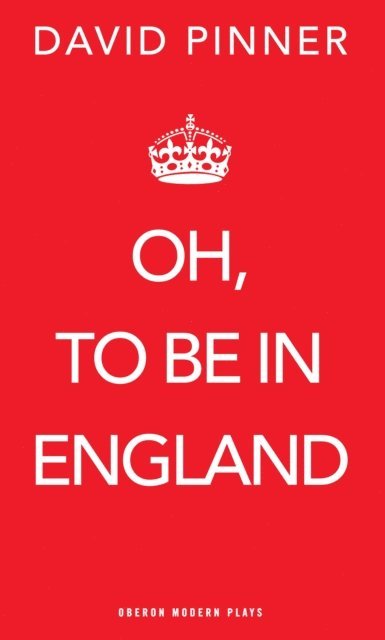
"If I was French, it would be simple; I'd commit crime passionel in a riot of garlic and vin ordinaire. And if I was German, I'd invoke the phantom of the Fuhrer and get hacking. In America, the husband generally shoots the family first, then takes a dozen high-powered rifles up some bell tower and blasts away at the town. But I knew the English way was the only way, God help me. You make a bloody great speech - and then you have a stiff drink.”Like Pinner's contemporaneous 1973 Stalin play The Teddy Bears' Picnic, Oh, To Be In England was unproduceable at the time of its writing because of its unapologetic skewering of political extremism in the UK. Unlike The Teddy Bears' Picnic, which finally ran in 1990 to press acclaim, Oh, To Be In England has remained lost. After thirty-five years, it is now receiving its world premiere.Frighteningly prescient, and tragically current, Oh, To Be In England is a dark comedic examination what it means to live in an ex-empire in economic free-fall, and the political and personal extremism that results when all other belief is lost. A middle-aged Englishman, bred to believe in his innate superiority as a birthright of class, race, and gender, loses his job in the City. Left floundering impotently in a world that is no longer cricket, his family, security, and sanity follow close behind.
284 kr
Skickas inom 10-15 vardagar
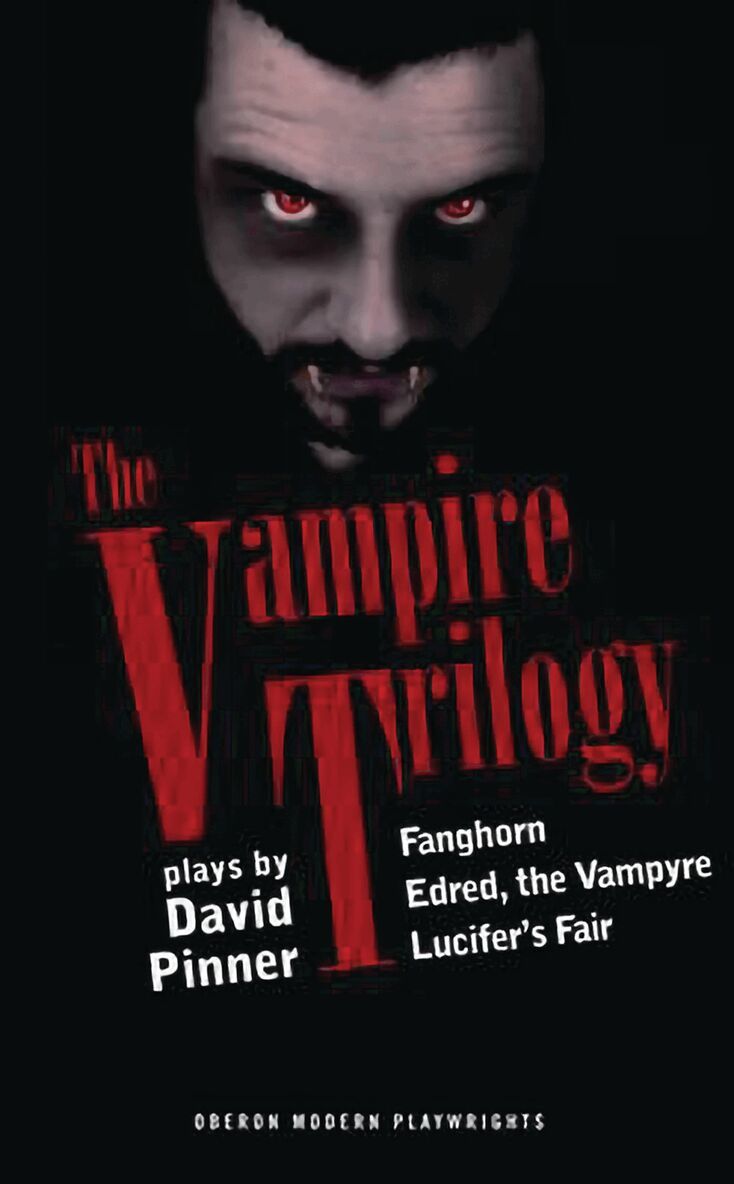
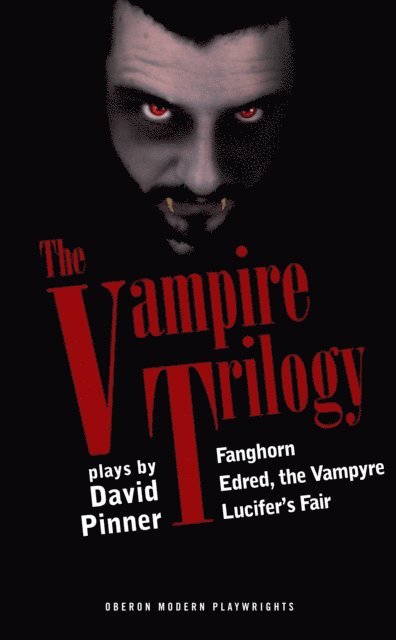
Includes the plays Fanghorn, Edred, the Vampire and Lucifer's FairFanghorn is a darkly-surrealistic comedy, which pokes fun at the Theatre of Cruelty. Fanghorn is a lesbian vampire, who invades the household of Joseph King, who may, or may not, be the First Secretary to the Minister of Defence, and hilarious emasculation and murderous mayhem follow in her wake. Edred, the Vampyre is a thousand-year-old Anglo-Saxon bisexual vampire, who slept with Shakespeare, but never bit him. Breaking all Bram Stoker’s vampire laws, Edred loves garlic and crucifixes, so he lives in the village church where he is confronted by two students who Googled him. But soon the students wish they hadn’t.Lucifer’s Fair is the family Hallowe’en musical play, about a fair run by the Devil to entrap unwary children. Lucifer is aided by Fangs, who is a bovver boy by day, but an incompetent vampire by night. Simultaneously scary and funny, Lucifer’s Fair, with its comic spills, thrills and chills, highlights the unreliability of grownups, both the living and the undead.
238 kr
Skickas inom 10-15 vardagar
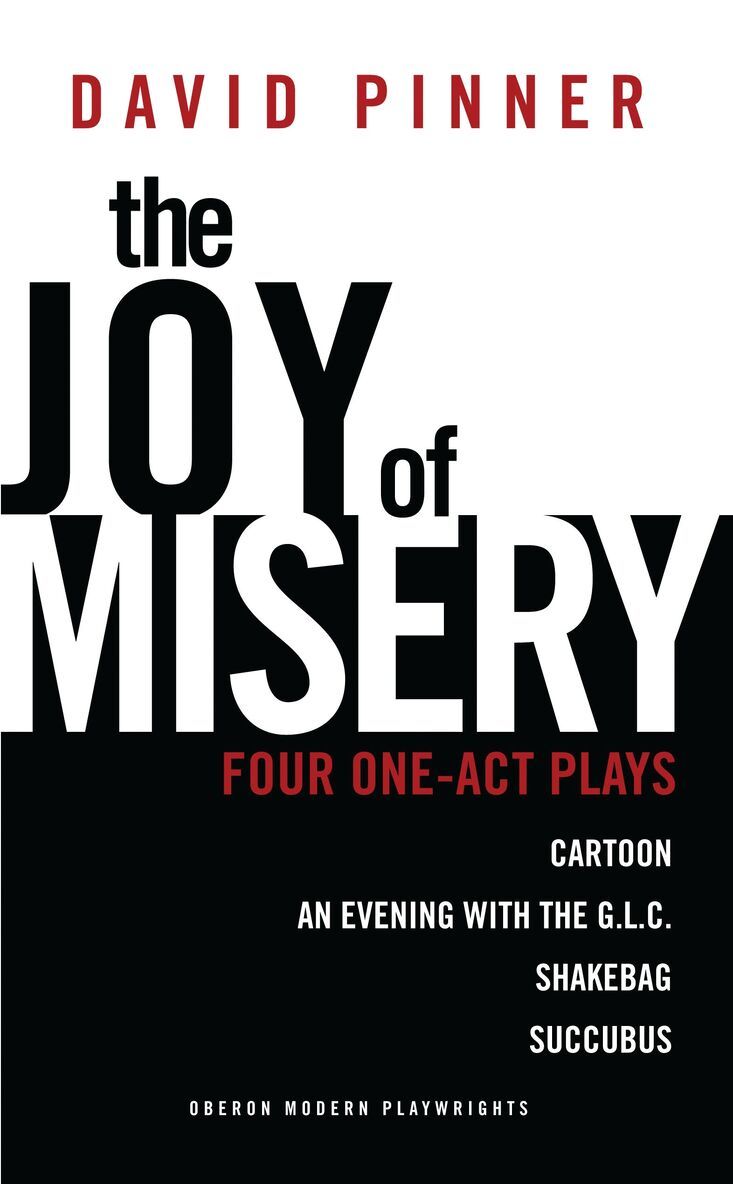
Cartoon is a comedy about cartoons and the joy of misery. As Siegfried, the cartoonist, remarks; ‘If you cut succulent slices off people, then everyone laughs. However, if the scalpel slips, then you’re down to the bone. But then, of course, comedy is tragedy speeded up.’An Evening With The G.L.C. is a play about public morality versus political expediency, and it exposes the dire state of London. Labour Councillor Rennip, who is on the G.L.C., faces some very awkward questions from his son on the combative TV Current Affairs programme ‘Confrontation’.Shakebag is a farcical comedy about an amateur company’s chaotic rehearsal of Macbeth and A Midsummer Night’s Dream on the Bard’s birthday while the amused ghost of Shakespeare looks down from on high at the antics of his thespian ‘mechanicals’.Succubus is Lili, who may, or may not be, a Mesopotamian storm demon or the Moon Goddess Herself. Mark, the Born-Again Christian, confronts Lili with his burning secret, and the play explores female myths, male fears, paganism and Christianity.
540 kr
Tillfälligt slut
”What purpose is served by showing that England's greatest natural philosopher is flawed … like other mortals?” asks one of the characters in Newton's Darkness. “We need unsullied heroes!” But what if the hero is sullied? At stake is an issue that is as germane today as it was 300 years ago: a scientist's ethics must not be divorced from scientific accomplishments. There is probably no other scientist of whom so many biographies and other historical analyses have been published than Isaac Newton — all of them in the standard format of documentary prose because of their didactic purpose to transmit historical information. Newton's Darkness, however, illuminates the darker aspects of Newton's persona through two historically grounded plays dealing with two of the bitterest struggles in the history of science.The name of Isaac Newton appears in virtually every survey of the public's choice for the most important persons of the second millennium. Yet the term “darkness” can be applied to much of Newton's personality. Adjectives that have been used to describe facets of his personality include “remote”, “lonely”, “secretive”, “introverted”, “melancholic”, “humorless”, “puritanical”, “cruel”, “vindictive” and, perhaps worst of all, “unforgiving”. The trait most relevant to the present book is Newton's obsessively competitive nature, which was often out of proportion to the warranted facts, as demonstrated in three of Newton's best-known bitter conflicts: with the physicist Robert Hooke, the astronomer royal John Flamsteed, and a German contemporary of almost equal intellectual prowess, Gottfried Wilhelm Leibniz — the last fight eventually turning into an England vs Continental Europe competition. It is two of these three relentless drawn-out battles that are illuminated in Newton's Darkness in the form of historically grounded drama.After a summary of the historical evidence, the book starts with the Newton-Hooke struggle (Chapter 2), which was conducted mano a mano, and is then followed by little-known aspects of the Newton-Leibniz confrontation (Chapter 3), which was fought largely through surrogates — notably the infamous, anonymous committee of 11 Fellows of the Royal Society.
353 kr
Tillfälligt slut
”What purpose is served by showing that England's greatest natural philosopher is flawed … like other mortals?” asks one of the characters in Newton's Darkness. “We need unsullied heroes!” But what if the hero is sullied? At stake is an issue that is as germane today as it was 300 years ago: a scientist's ethics must not be divorced from scientific accomplishments. There is probably no other scientist of whom so many biographies and other historical analyses have been published than Isaac Newton — all of them in the standard format of documentary prose because of their didactic purpose to transmit historical information. Newton's Darkness, however, illuminates the darker aspects of Newton's persona through two historically grounded plays dealing with two of the bitterest struggles in the history of science.The name of Isaac Newton appears in virtually every survey of the public's choice for the most important persons of the second millennium. Yet the term “darkness” can be applied to much of Newton's personality. Adjectives that have been used to describe facets of his personality include “remote”, “lonely”, “secretive”, “introverted”, “melancholic”, “humorless”, “puritanical”, “cruel”, “vindictive” and, perhaps worst of all, “unforgiving”. The trait most relevant to the present book is Newton's obsessively competitive nature, which was often out of proportion to the warranted facts, as demonstrated in three of Newton's best-known bitter conflicts: with the physicist Robert Hooke, the astronomer royal John Flamsteed, and a German contemporary of almost equal intellectual prowess, Gottfried Wilhelm Leibniz — the last fight eventually turning into an England vs Continental Europe competition. It is two of these three relentless drawn-out battles that are illuminated in Newton's Darkness in the form of historically grounded drama.After a summary of the historical evidence, the book starts with the Newton-Hooke struggle (Chapter 2), which was conducted mano a mano, and is then followed by little-known aspects of the Newton-Leibniz confrontation (Chapter 3), which was fought largely through surrogates — notably the infamous, anonymous committee of 11 Fellows of the Royal Society.