David R. DeWalle - Böcker
Visar alla böcker från författaren David R. DeWalle. Handla med fri frakt och snabb leverans.
4 produkter
4 produkter
705 kr
Skickas inom 7-10 vardagar
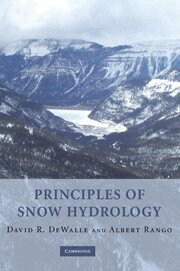
Principles of Snow Hydrology describes the factors that control the accumulation, melting and runoff of water from seasonal snowpacks over the surface of the earth. The book addresses not only the basic principles governing snow in the hydrologic cycle, but also the latest applications of remote sensing, and techniques for modeling streamflow from snowmelt across large mixed land-use river basins. Individual chapters are devoted to climatology and distribution of snow, snowpack energy exchange, snow chemistry, ground-based measurements and remote sensing of snowpack characteristics, snowpack management, and modeling snowmelt runoff. Many chapters have review questions and problems with solutions available online. This book is a reference book for practicing water resources managers and a text for advanced hydrology and water resources courses which span fields such as engineering, earth sciences, meteorology, biogeochemistry, forestry and range management, and water resources planning.
1 903 kr
Skickas inom 7-10 vardagar
Principles of Snow Hydrology describes the factors that control the accumulation, melting and runoff of water from seasonal snowpacks over the surface of the earth. The book addresses not only the basic principles governing snow in the hydrologic cycle, but also the latest applications of remote sensing, and techniques for modeling streamflow from snowmelt across large mixed land-use river basins. Individual chapters are devoted to climatology and distribution of snow, snowpack energy exchange, snow chemistry, ground-based measurements and remote sensing of snowpack characteristics, snowpack management, and modeling snowmelt runoff. Many chapters have review questions and problems with solutions available online. This book is a reference book for practicing water resources managers and a text for advanced hydrology and water resources courses which span fields such as engineering, earth sciences, meteorology, biogeochemistry, forestry and range management, and water resources planning.
1 589 kr
Skickas inom 10-15 vardagar
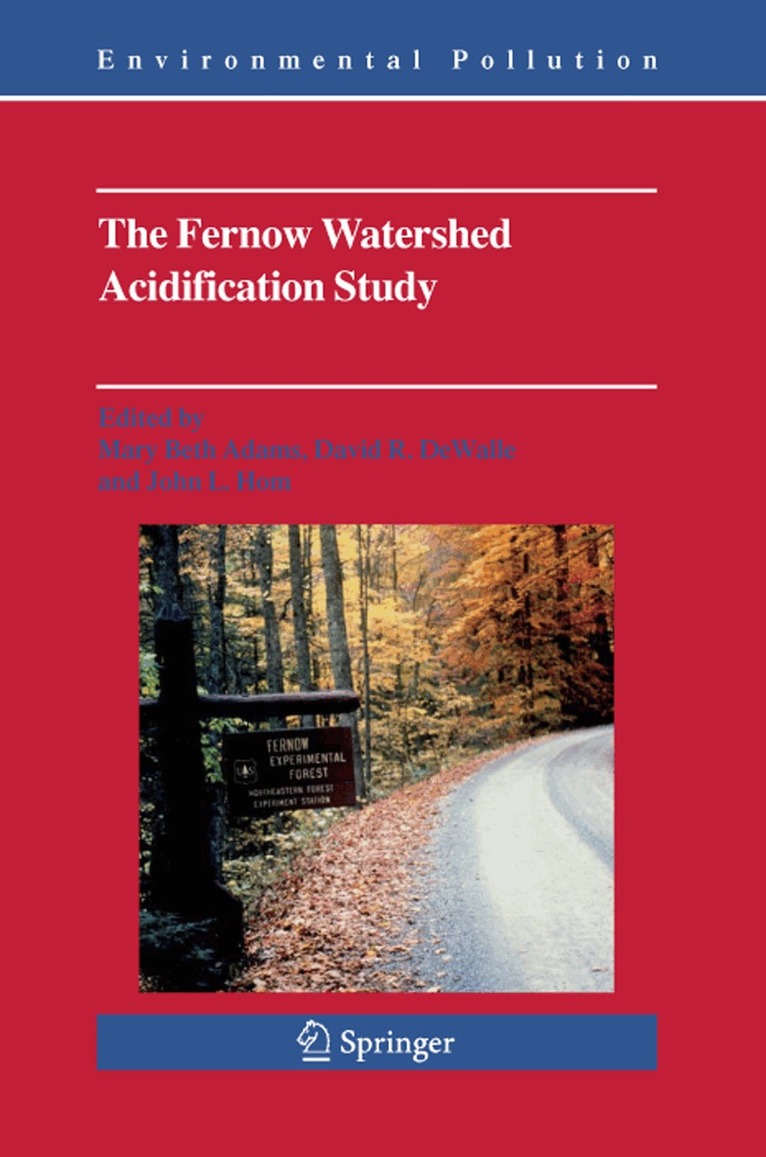
In the late 1980’s, a considerable amount of research addressing the effects of acidic deposition was begun, much of it related to the Congr- sionally mandated National Atmospheric Precipitation Assessment Program (NAPAP). As a result of the 10-year NAPAP program, effects on human health, materials, structures, visibility and terrestrial and aquatic ecosystems were evaluated. As a result of NAPAP funded research, negative effects of acidic deposition were documented on freshwater lakes in the Adirondacks and on the red spruce of the Adirondacks and northern Appalachians. One of the recommendations of the NAPAP Forest Response Program, however, was that a better understanding of the effects of acidic deposition and its constituents on processes within forest ecosystems was needed. In response to this need, the US Environmental Protection Agency (EPA) funded an ambitious program to manipulate the geochemical processes within wat- sheds in the United States. Originally, there were to be many watersheds to be treated, to encompass the scope of vegetation types, climate and deposition regimes. Ultimately only two such studies, one at on the Fernow Experimental Forest in West Virginia and one at Bear Brook Watersheds in Maine (BBWM) were implemented. Both are ongoing more than fifteen years later. Work began in 1987 in preparation for the Fernow Watershed Acidi- cation Study. Much attention was initially devoted to issues related to analyses of water chemistry and the quality control/quality assurance of the data coming from the study.
1 589 kr
Skickas inom 10-15 vardagar
In the late 1980’s, a considerable amount of research addressing the effects of acidic deposition was begun, much of it related to the Congr- sionally mandated National Atmospheric Precipitation Assessment Program (NAPAP). As a result of the 10-year NAPAP program, effects on human health, materials, structures, visibility and terrestrial and aquatic ecosystems were evaluated. As a result of NAPAP funded research, negative effects of acidic deposition were documented on freshwater lakes in the Adirondacks and on the red spruce of the Adirondacks and northern Appalachians. One of the recommendations of the NAPAP Forest Response Program, however, was that a better understanding of the effects of acidic deposition and its constituents on processes within forest ecosystems was needed. In response to this need, the US Environmental Protection Agency (EPA) funded an ambitious program to manipulate the geochemical processes within wat- sheds in the United States. Originally, there were to be many watersheds to be treated, to encompass the scope of vegetation types, climate and deposition regimes. Ultimately only two such studies, one at on the Fernow Experimental Forest in West Virginia and one at Bear Brook Watersheds in Maine (BBWM) were implemented. Both are ongoing more than fifteen years later. Work began in 1987 in preparation for the Fernow Watershed Acidi- cation Study. Much attention was initially devoted to issues related to analyses of water chemistry and the quality control/quality assurance of the data coming from the study.