David Reher – författare
Visar alla böcker från författaren David Reher. Handla med fri frakt och snabb leverans.
2 produkter
2 produkter
Del 12 - Cambridge Studies in Population, Economy and Society in Past Time
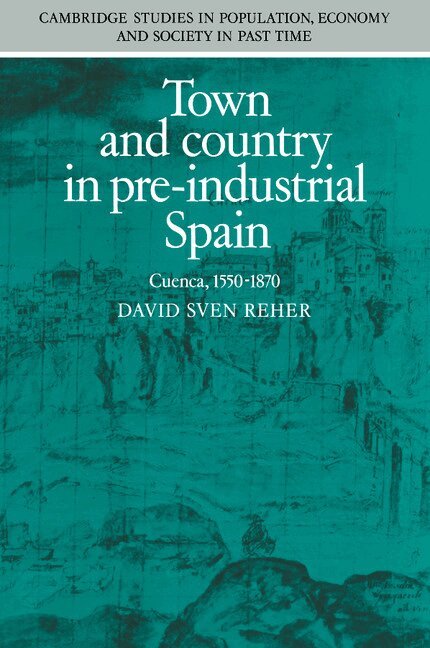
Town and Country in Pre-Industrial Spain
Cuenca, 1540-1870
Häftad, Engelska, 2012
509 kr
Skickas inom 7-10 vardagar
Originally published in 1990, this is an in-depth study of Cuenca, a hilltop town on the Castilian Meseta, from the middle of the 16th to the end of the 19th centuries. Dr Reher analyses its socio-economic structures in the context of the urbanisation of rural Spain, and shows how the history of the town is paradigmatic of the social, economic and demographic changes in urban areas of the Mediterranean basin. Based on many hitherto unpublished Spanish sources, this book was the first of its kind to come from the Iberian Peninsula. It aims to be relevant to any scholar interested in the general experience of urban development and relations with the countryside in early modern Europe. Specialists in social, economic and demographic history, historians of Spain and historical geographers will be interested in this book.
536 kr
Skickas inom 3-6 vardagar
Gold! Gold! Gold! This seductive mantra, shouted throughout the Americas in 1848–49, convinced thousands of people that California's gold could be had simply by picking it up off the ground. Ramón Gil Navarro, an Argentinean political exile living in Chile, heard these rumors of a new El Dorado, but he was not so naïve as to believe that the gold merely had to be gathered. He understood that mining required extensive capital investment and labor, and along with three other investors he arranged to have 120 workers and a shipload of supplies sent to California. Navarro accompanied the workers to Stockton and began prospecting. Gold rush California was a rough and tumble world where finding gold—and keeping it—was not a simple matter. Navarro encountered people from all over the world brought together in a society marked by racial and ethnic intolerance, swift and cruel justice, and great hardships. It was a world of contrasts, where the roughest of the rough lived in close proximity to extremely refined cultural circles. Despite his planning, Navarro had not reckoned on the racism he would encounter. He witnessed several instances of Anglo miners harassing Latinos and other ethnic groups. After three years without success, Navarro returned to South America. He became a national representative in the Argentinean congress and worked as a journalist. He never returned to California.