David Suisman - Böcker
Visar alla böcker från författaren David Suisman. Handla med fri frakt och snabb leverans.
4 produkter
4 produkter
291 kr
Skickas inom 7-10 vardagar
An original history of music in the lives of American soldiers. Since the Civil War, music has coursed through the United States military. Soldiers have sung while marching, listened to phonographs and armed forces radio, and packed the seats at large-scale USO shows. “Reveille” has roused soldiers in the morning and “Taps” has marked the end of a long day. Whether the sounds came from brass instruments, weary and homesick singers, or a pair of heavily used earbuds, where there was war, there was music, too. Instrument of War is a first-of-its-kind study of music in the lives of American soldiers. Although musical activity has been part of war since time immemorial, the significance of the US military as a musical institution has generally gone unnoticed. Historian David Suisman traces how the US military used—and continues to use—music to train soldiers and regulate military life, and how soldiers themselves have turned to music to cope with war’s emotional and psychological realities. Opening our ears to these practices, Suisman reveals how music has enabled more than a century and a half of American war-making. Instrument of War unsettles assumptions about music as a force of uplift and beauty, demonstrating how it has also been entangled in large-scale state violence. Whether it involves chanting “Sound off!” in basic training, switching on a phonograph or radio, or cueing up an iPod playlist while out on patrol, the sound of music has long resonated in soldiers’ wartime experiences. Now we all can finally hear it.
267 kr
Skickas inom 7-10 vardagar
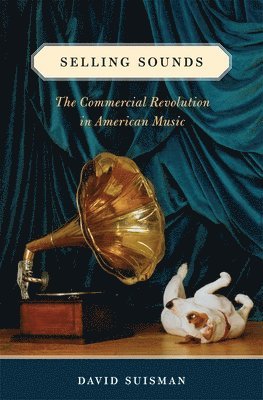
From Tin Pan Alley to grand opera, player-pianos to phonograph records, David Suisman’s Selling Sounds explores the rise of music as big business and the creation of a radically new musical culture. Around the turn of the twentieth century, music entrepreneurs laid the foundation for today’s vast industry, with new products, technologies, and commercial strategies to incorporate music into the daily rhythm of modern life. Popular songs filled the air with a new kind of musical pleasure, phonographs brought opera into the parlor, and celebrity performers like Enrico Caruso captivated the imagination of consumers from coast to coast. Selling Sounds uncovers the origins of the culture industry in music and chronicles how music ignited an auditory explosion that penetrated all aspects of society. It maps the growth of the music business across the social landscape—in homes, theaters, department stores, schools—and analyzes the effect of this development on everything from copyright law to the sensory environment. While music came to resemble other consumer goods, its distinct properties as sound ensured that its commercial growth and social impact would remain unique. Today, the music that surrounds us—from iPods to ring tones to Muzak—accompanies us everywhere from airports to grocery stores. The roots of this modern culture lie in the business of popular song, player-pianos, and phonographs of a century ago. Provocative, original, and lucidly written, Selling Sounds reveals the commercial architecture of America’s musical life.
378 kr
Skickas inom 10-15 vardagar
During the twentieth century sound underwent a dramatic transformation as new technologies and social practices challenged conventional aural experience. As a result, sound functioned as a means to exert social, cultural, and political power in unprecedented and unexpected ways. The fleeting nature of sound has long made it a difficult topic for historical study, but innovative scholars have recently begun to analyze the sonic traces of the past using innovative approaches. Sound in the Age of Mechanical Reproduction investigates sound as part of the social construction of historical experience and as an element of the sensory relationship people have to the world, showing how hearing and listening can inform people's feelings, ideas, decisions, and actions.The essays in Sound in the Age of Mechanical Reproduction uncover the varying dimensions of sound in twentieth-century history. Together they connect a host of disparate concerns, from issues of gender and technology to contests over intellectual property and government regulation. Topics covered range from debates over listening practices and good citizenship in the 1930s, to Tokyo Rose and Axis radio propaganda during World War II, to CB-radio culture on the freeways of Los Angeles in the 1970s. These and other studies reveal the contingent nature of aural experience and demonstrate how a better grasp of the culture of sound can enhance our understanding of the past.
711 kr
Skickas inom 7-10 vardagar
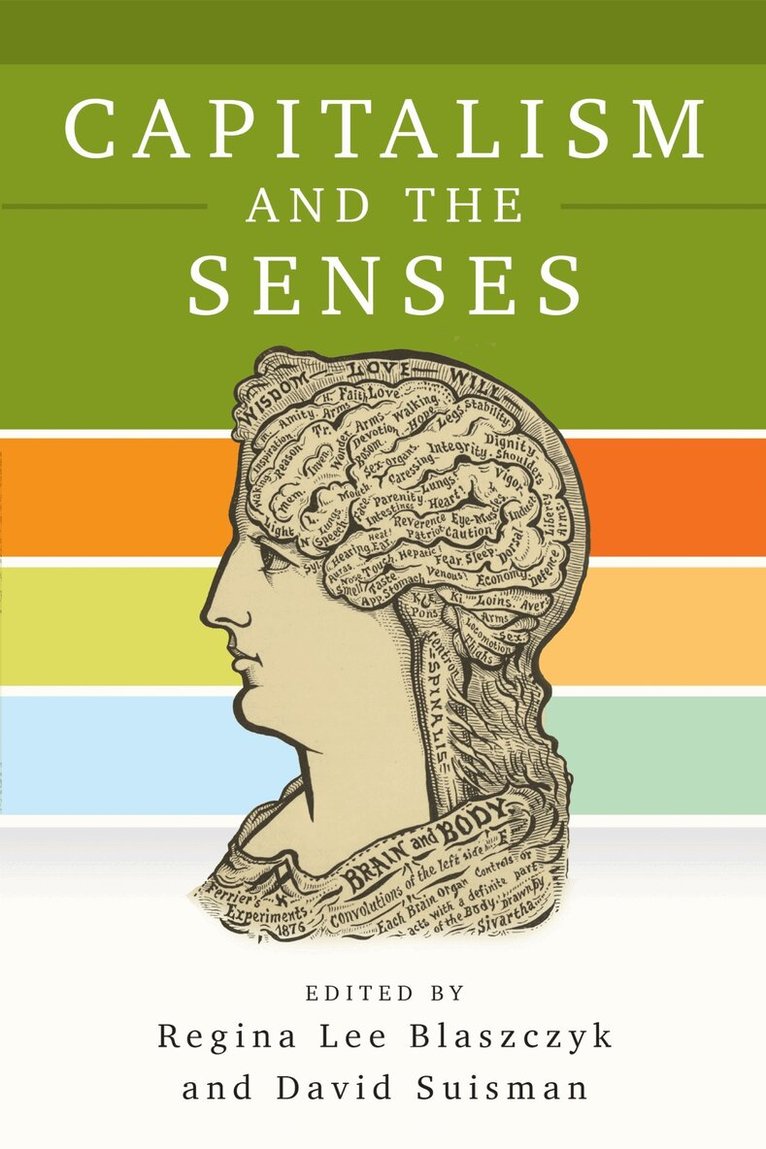
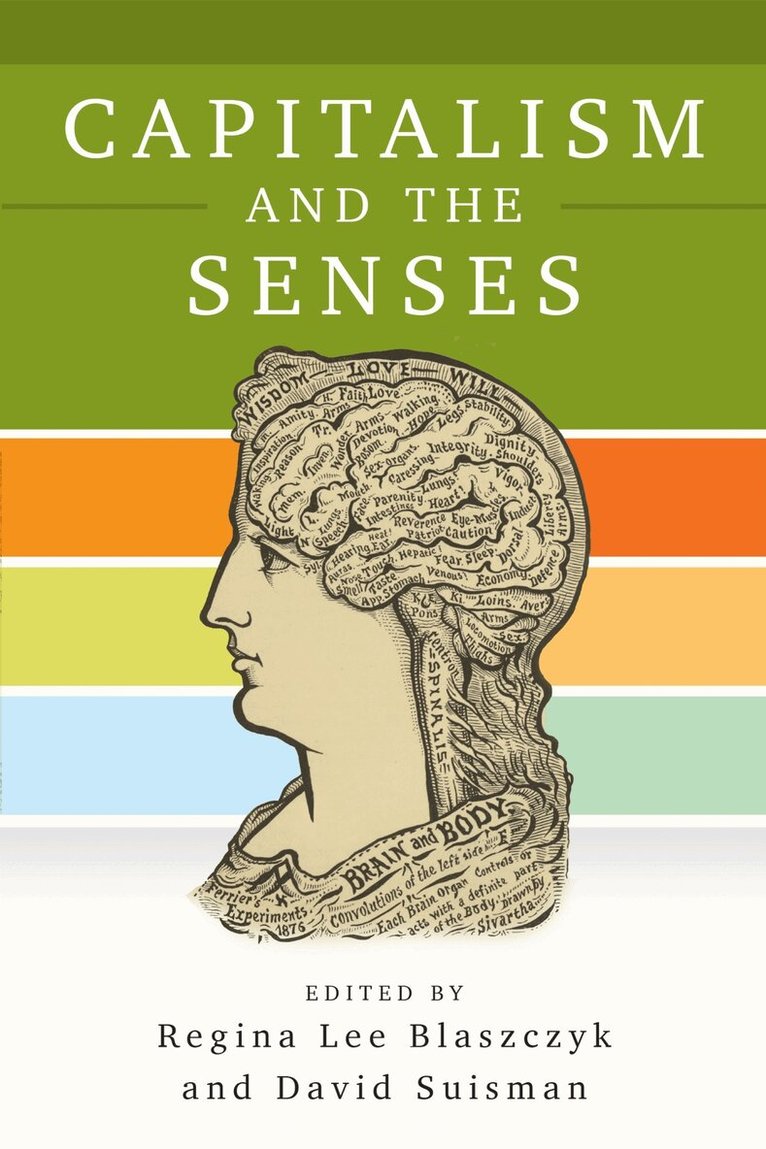
Capitalism and the Senses is the first edited volume to explore how the forces of capitalism are entangled with everyday sensory experience. If the senses have a history, as Karl Marx wrote, then that history is inseparable from the development of capitalism, which has both taken advantage of the senses and influenced how sensory experience has changed over time.This pioneering collection shows how seeing, hearing, tasting, smelling, and touching have both shaped and been shaped by commercial interests from the turn of the twentieth century to our own time. From the manipulation of taste and texture in the food industry to the careful engineering of the feel of artificial fabrics, capitalist enterprises have worked to commodify the senses in a wide variety of ways. Drawing on history, anthropology, geography, and other fields, the volume's essays analyze not only where this effort has succeeded but also where the senses have resisted control and the logic of markets. The result is an innovative ensemble that demonstrates how the drive to exploit sensorial experience for profit became a defining feature of capitalist modernity and establishes the senses as an important dimension of the history of capitalism.Contributors: Nicholas Anderman, Regina Lee Blaszczyk, Jessica P. Clark, Ai Hisano, Lisa Jacobson, Sven Kube, Grace Lees-Maffei, Ingemar Pettersson, David Suisman, Ana María Ulloa, Nicole Welk-Joerger.