David T. Marshall – författare
Visar alla böcker från författaren David T. Marshall. Handla med fri frakt och snabb leverans.
10 produkter
COVID-19 and Schools
Policy, Stakeholders, and School Choice
Av David T. Marshall, Robert Maranto
E-bok, 2023
791 kr
Lägg i varukorg
This book features contributions from leading experts who present peer reviewed research on how the unprecedented COVID-19 pandemic affected U.S. teachers, students, parents, teaching practices, enrolments, and institutional innovations, offering the first empirical findings exploring educational …
COVID-19 and Schools
Policy, Stakeholders, and School Choice
Av David T. Marshall, Robert Maranto
E-bok, 2023
791 kr
Lägg i varukorg
This book features contributions from leading experts who present peer reviewed research on how the unprecedented COVID-19 pandemic affected U.S. teachers, students, parents, teaching practices, enrolments, and institutional innovations, offering the first empirical findings exploring educational …
COVID-19 and Schools
Policy, Stakeholders, and School Choice
Av Robert Maranto, David T. Marshall
Inbunden, 2023
2441 kr
Lägg i varukorg
This book features contributions from leading experts who present peer reviewed research on how the unprecedented COVID-19 pandemic affected U.S. teachers, students, parents, teaching practices, enrolments, and institutional innovations, offering the first empirical findings exploring educational …
COVID-19 and Schools
Policy, Stakeholders, and School Choice
Av Robert Maranto, David T. Marshall
Häftad, 2025
672 kr
Lägg i varukorg
This book features contributions from leading experts who present peer reviewed research on how the unprecedented COVID-19 pandemic affected U.S. teachers, students, parents, teaching practices, enrolments, and institutional innovations, offering the first empirical findings exploring educational …
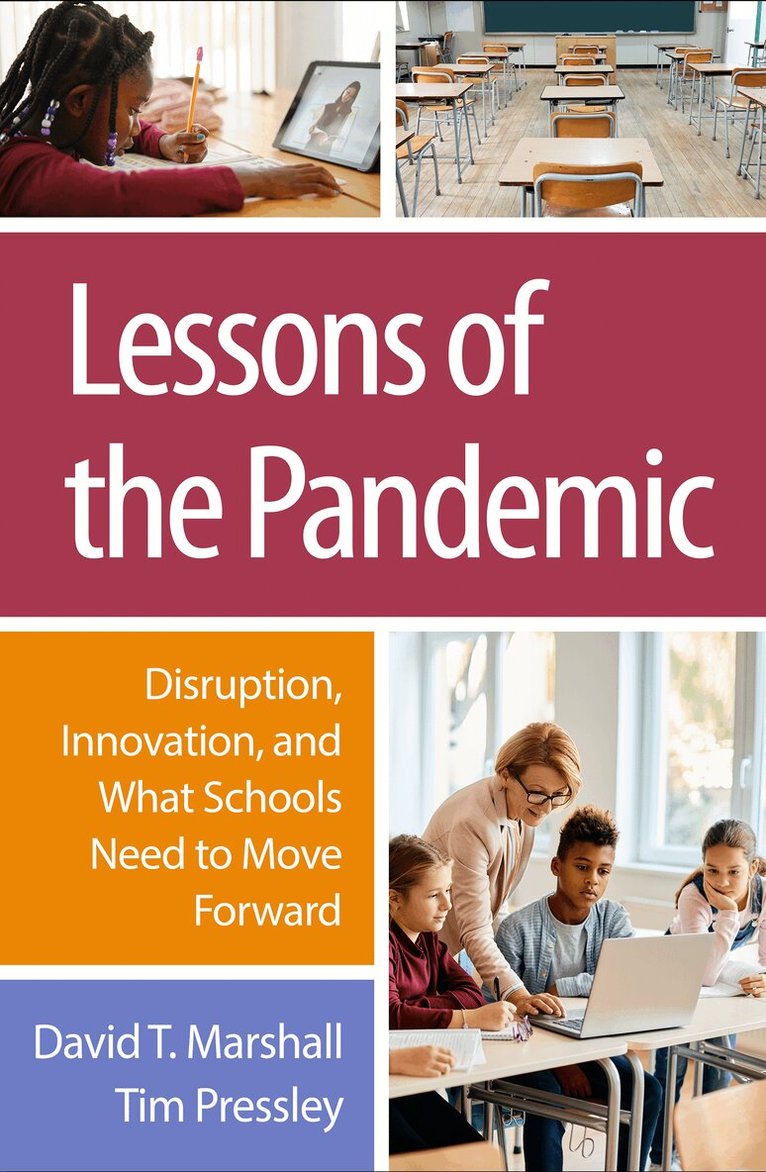
Lessons of the Pandemic
Disruption, Innovation, and What Schools Need to Move Forward
Av David T. Marshall, Tim Pressley
Häftad, 2024
427 kr
Lägg i varukorg
The impacts of the COVID-19 pandemic on K-12 education have been pervasive and profound. This engaging book concisely outlines the current crisis in schools in the core areas of student learning, student and teacher mental health, and teacher burnout. Synthesizing original research, David T. …
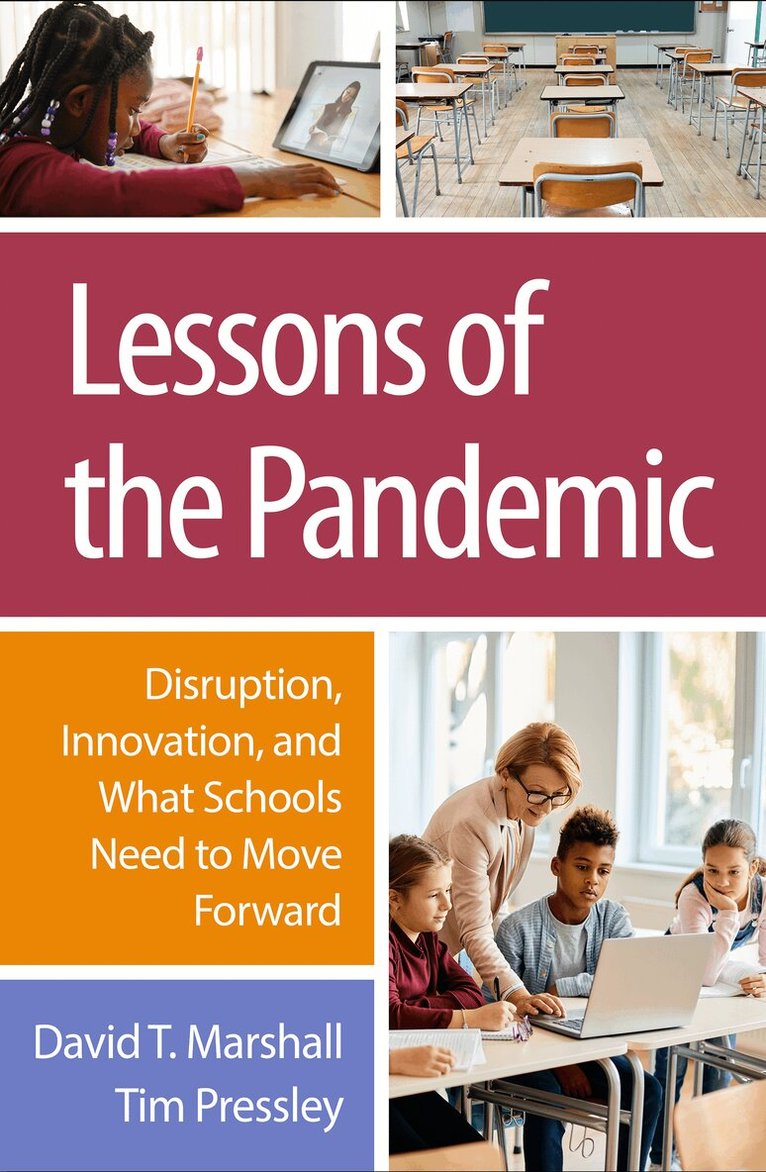
Lessons of the Pandemic
Disruption, Innovation, and What Schools Need to Move Forward
Av David T. Marshall, Tim Pressley
Inbunden, 2024
637 kr
Lägg i varukorg
The impacts of the COVID-19 pandemic on K-12 education have been pervasive and profound. This engaging book concisely outlines the current crisis in schools in the core areas of student learning, student and teacher mental health, and teacher burnout. Synthesizing original research, David T. …
Lessons of the Pandemic
Disruption, Innovation, and What Schools Need to Move Forward
Av Tim Pressley, David T. Marshall
E-bok, 2023
505 kr
Lägg i varukorg
The impacts of the COVID-19 pandemic on K–12 education have been pervasive and profound. This engaging book concisely outlines the current crisis in schools in the core areas of student learning, student and teacher mental health, and teacher burnout. Synthesizing original research, David T. …
Lessons of the Pandemic
Disruption, Innovation, and What Schools Need to Move Forward
Av Tim Pressley, David T. Marshall
E-bok, 2023
505 kr
Lägg i varukorg
The impacts of the COVID-19 pandemic on K–12 education have been pervasive and profound. This engaging book concisely outlines the current crisis in schools in the core areas of student learning, student and teacher mental health, and teacher burnout. Synthesizing original research, David T. …
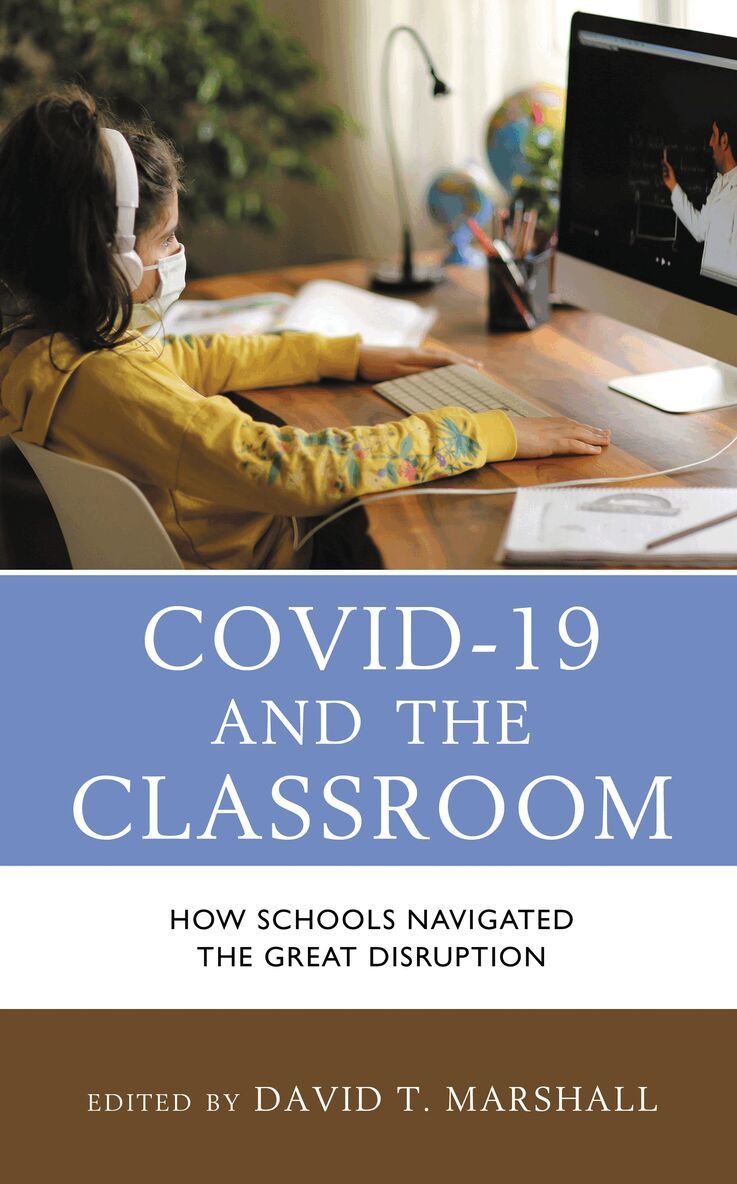
COVID-19 and the Classroom
How Schools Navigated the Great Disruption
Inbunden, 2022
1384 kr
Lägg i varukorg
COVID-19 and the Classroom: How Schools Navigated the Great Disruption presents social science research that explores how schools navigated the disruption caused by the COVID-19 pandemic from March 2020 through the 2020-21 school year. This book also serves as a history book, documenting what this …
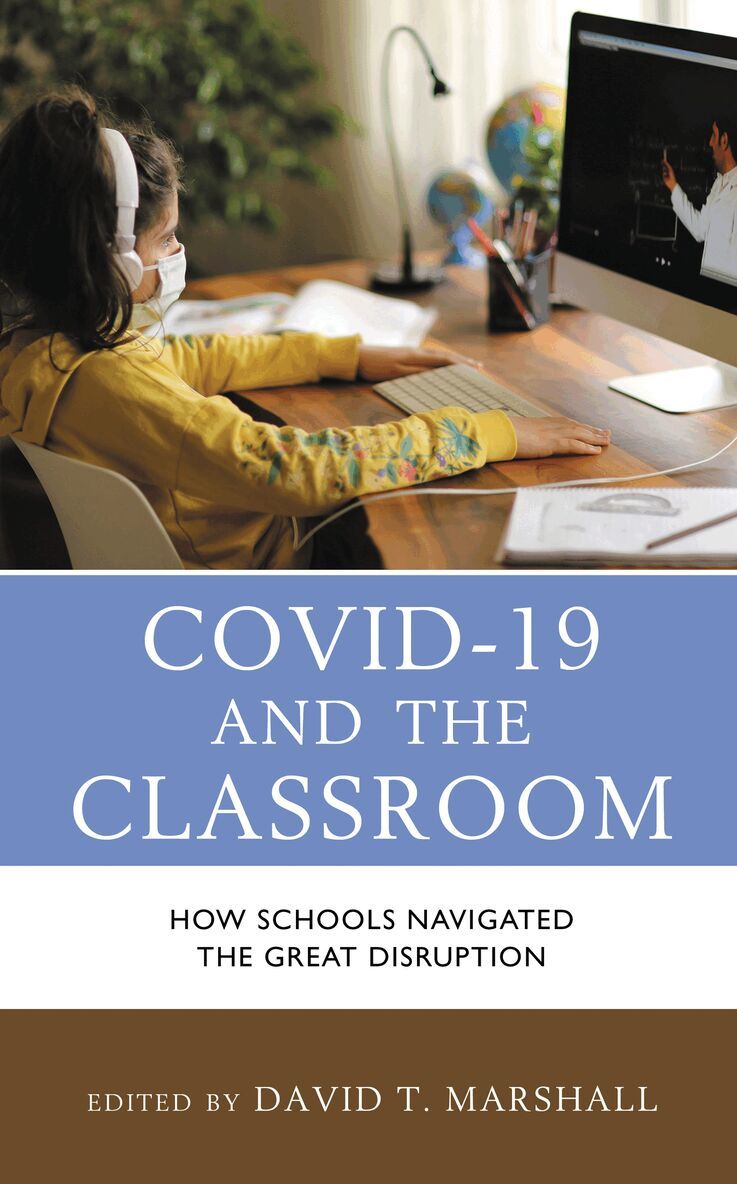
COVID-19 and the Classroom
How Schools Navigated the Great Disruption
Häftad, 2023
503 kr
Lägg i varukorg
COVID-19 and the Classroom: How Schools Navigated the Great Disruption presents social science research that explores how schools navigated the disruption caused by the COVID-19 pandemic from March 2020 through the 2020-21 school year. This book also serves as a history book, documenting what this …