• Fri frakt över 249 kr
  • •
  • Snabba leveranser
  • •
  • Billiga böcker
Kundservice

Du är på sajten för privatpersoner.

Företag, bibliotek eller offentlig verksamhet?

Du handlar på classic.bokus.com, där alla dina funktioner finns intakta.
Till classic.bokus.com
Bokus logotyp. Gå till startsidan.
  • Erbjudanden
  • Nyheter
  • Student
  • Topplistor
  • Barn & ungdom
  • Bokus Play
  • E-böcker
  • Pocketböcker
  • Spel & pussel

10% rabatt på allt med kod: NYSTART10 →

Sidfot

Mina sidor

    Hjälp

    • Kundservice
    • Vanliga frågor och svar
    • Frakt och leverans
    • Retur vid ångerrätt
    • Reklamera vara
    • Betalning
    • Köpvillkor
    • Allmänna villkor
    • Information om webbplatsens tillgänglighet

    Om Bokus

    • Om oss
    • Pressrum
    • För studenter
    • För företag
    • För bibliotek och offentlig verksamhet
    • För leverantörer
    • Hållbarhet

    Populärt

    • Aktuella erbjudanden
    • Presentkort
    • Studentlitteratur
    • Nya böcker
    • Topplistor
    • Signerade böcker
    • Engelska böcker

    Inspiration

    • Boktips
    • BookTok
    • Populära bokserier
    • Barnbokskaraktärer
    • Populära författare
    Logotyp för Bokus
    Följ oss på Facebook (extern länk)Följ oss på Instagram (extern länk)Följ oss på YouTube (extern länk)Följ oss på TikTok (extern länk)
    bokus @ CookiesAnpassa cookiesIntegritetspolicyKöpvillkor
    Till Citymail hemsida (extern länk)Till Budbee hemsida (extern länk)Till Postnord hemsida (extern länk)Till Schenker hemsida (extern länk)Till Early Bird hemsida (extern länk)Till Walleys hemsida (extern länk)
    1. Psykologi och pedagogik
    2. Pedagogik
    3. Skolan och förskolan

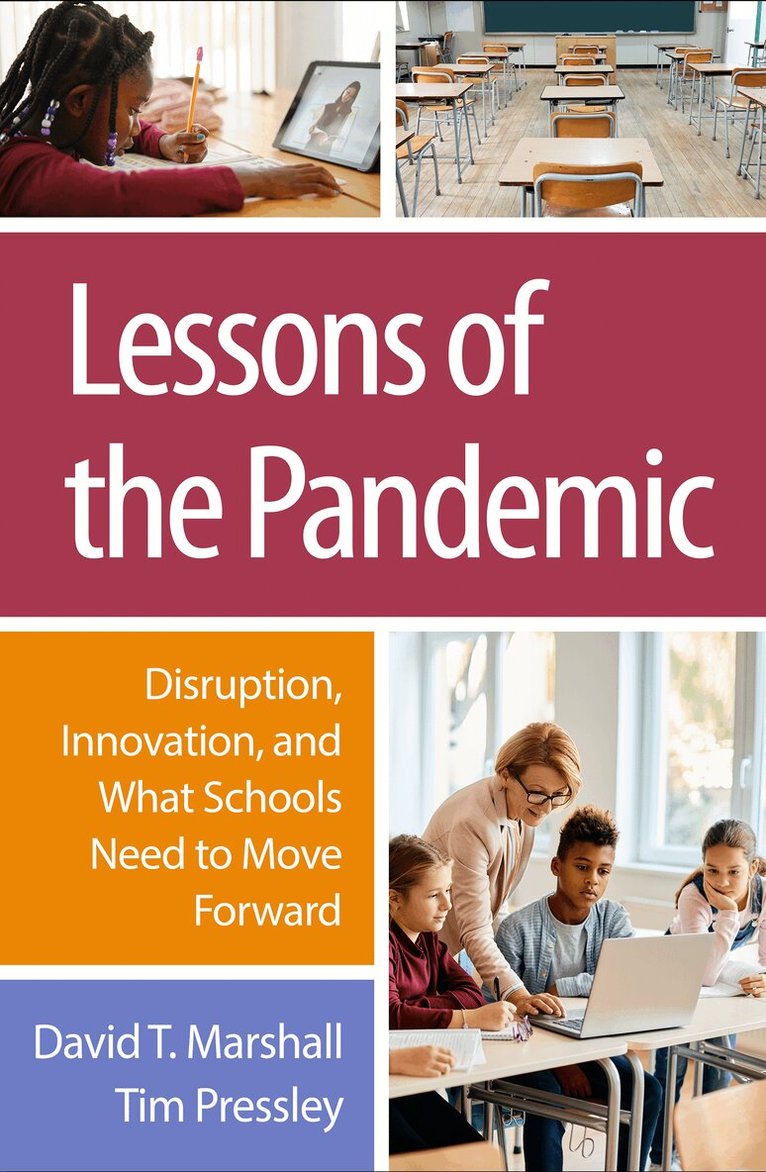
    Lessons of the Pandemic

    Disruption, Innovation, and What Schools Need to Move Forward

    AvDavid T. Marshall,Tim Pressley

    Häftad, Engelska, 2024

    416 kr

    Beställningsvara. Skickas inom 5-8 vardagar. Fri frakt över 249 kr.

    Fler format och utgåvor

    Inbunden

    620 kr

    Beskrivning

    The impacts of the COVID-19 pandemic on K-12 education have been pervasive and profound. This engaging book concisely outlines the current crisis in schools in the core areas of student learning, student and teacher mental health, and teacher burnout. Synthesizing original research, David T. Marshall and Tim Pressley offer in-depth descriptions of the disruptions caused by prolonged school closures and remote instruction. They also identify some positive changes, such as increased use of online resources and technology, flexible work models, and greater attention to social and emotional learning. Sharing key findings, concrete examples, and teachers’ own voices about what they need to succeed, the book provides clear recommendations for moving schools forward effectively and sustainably.

    Produktinformation

    • Utgivningsdatum:2024-02-05
    • Mått:152 x 229 x 12 mm
    • Vikt:260 g
    • Format:Häftad
    • Språk:Engelska
    • Antal sidor:170
    • Förlag:Guilford Publications
    • ISBN:9781462553877

    Utforska kategorier

    • Skolan och förskolan inom Psykologi och pedagogik

    Mer om författaren

    David T. Marshall, PhD, is Associate Professor of Educational Research in the College of Education at Auburn University. Since 2020, much of his research has focused on the COVID-19 pandemic and its impact on K-12 education. Dr. Marshall edited COVID-19 and the Classroom: How Schools Navigated the Great Disruption, one of the first books to share social science research documenting the first 15 months of the crisis. His research interests also include school choice and charter schools. Dr. Marshall’s work has been published in leading journals of education research, policy, and practice. Prior to his doctoral studies, he taught middle and high school social studies in both traditional public schools and public charter schools in Philadelphia. He served two terms as chair of the Alabama Public Charter School Commission.Tim Pressley, PhD, is Associate Professor of Psychology at Christopher Newport University, where he is also a faculty member in the Master of Arts in Teaching program and the Center for Education Research and Policy. Before receiving his doctorate, Dr. Pressley was an elementary school teacher, and giving teachers a voice on issues affecting their lives has been a driving force behind his research. Currently his research focuses on the impact of COVID-19 on teachers, teacher effectiveness, and teacher burnout. His work has been published in leading education journals. Dr. Pressley is coauthor of Reading Instruction That Works, Fifth Edition, and Lessons of the Pandemic: Disruption, Innovation, and What Schools Need to Move Forward.

    Recensioner i media

    "An invaluable treatment of COVID-19 and schools. Employing a comprehensive literature review, analyses of school responses in all 50 states, international comparisons, and unique teacher surveys and focus groups, Marshall and Pressley detail the errors of feckless policymakers while giving voice to the teachers who struggled through the pandemic with much fear and little leadership. Ultimately, U.S. schools dramatically reduced academic content, harming the most vulnerable students both intellectually and emotionally. We must read this history so that we may never repeat it."--Robert Maranto, PhD, 21st Century Chair in Leadership, Department of Education Reform, University of Arkansas"Marshall and Pressley present a thorough, data-based evaluation of how schools' responses to the pandemic affected all stakeholders in our educational system. This book provides eye-opening information. It takes a deep dive into policies and practices that worked versus those that had a negative impact on students and teachers alike. The authors analyze an impressive range of sources to produce a fair, unbiased analysis. Not only does this book validate teachers' experiences with pandemic teaching, but it also identifies crucial lessons for governmental and educational decision makers."--Laura Cvitanovich, MS, Secondary English Instructor, Virtual Virginia, Virginia Department of Education"Marshall and Pressley concisely show how the COVID-19 pandemic and the lockdown affected students' learning and the well-being of students and teachers, while exacerbating inequities in our educational system. This book goes beyond analyzing facts--it synthesizes recommendations for positive change and responsive leadership. A 'must read' for educators!"--Heather L. Walter, EdD, College of Education and Human Development, George Mason University"This book is well-structured and thoroughly referenced. The authors make credible, evidence-based arguments about the effects of the pandemic on students and teachers. The book fulfills the authors' intent of amplifying teachers’ voices by including both qualitative and quantitative data. Importantly, the authors recognize that we have very few pandemic-based intervention studies on which to base the way forward, and so they have based their plan on best practices established pre-pandemic in combination with the new insights gained from teachers. I highly recommend this compelling, comprehensive look at the pandemic and the next steps forward in educational recovery."--Laura Sokal, PhD, Faculty of Education, University of Winnipeg, Canada"A thoughtful and fair reflection on an important intersection of public health and education. This book is informed by a well-rounded body of research, including robust data on teacher experiences during the pandemic. It provides important insight into the impacts of COVID-19 on K-12 education as well as a path forward to helping teachers better meet the needs of students and families."--Jeffrey Keese, PhD, Tift College of Education, Mercer University-

    Innehållsförteckning

    • Foreword, Harry Anthony PatrinosPreface1. The Great Disruption2. The Case against Prolonged School Closures3. The Impact on Student Learning4. The Impact on Student Mental and Social Well-Being5. The Impact on Teacher Well-Being6. The Impact on Teacher Labor Markets7. What Changes Remain?8. What Do Teachers Need to Be Successful?9. Where Do We Go from Here? Lessons Learned from the PandemicAppendix: Overview of MethodologyReferencesIndex