David T. McNab - Böcker
Visar alla böcker från författaren David T. McNab. Handla med fri frakt och snabb leverans.
5 produkter
5 produkter
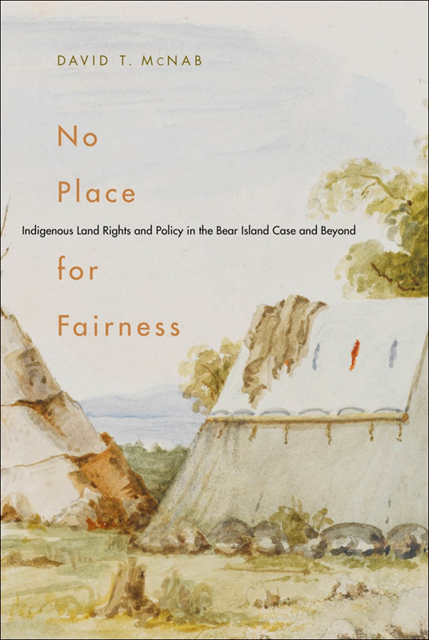
No Place for Fairness
Indigenous Land Rights and Policy in the Bear Island Case and Beyond
Häftad, Engelska, 2009
362 kr
Skickas inom 7-10 vardagar
Aboriginal policy and claims negotiation in Canada is seen to be a murky and perplexing world that has become an important public issue and has significant policy implications for government spending. Aboriginal land policy in Canada began as an Aboriginal initiative. In No Place for Fairness, David McNab - a long time advisor on land and treaty rights for both government and First Nations groups - looks at the Bear Island Indigenous rights case, initiated by the Teme-Augama Anishinabe, to explore why governments fail to deal effectively with Aboriginal land claims. The book, divided into two sections, includes a survey of the historical background of the Bear Island claim followed by a more personal series of reflections about what happened as the claim encountered decades of policy hurdles, court cases, public protests, and above all resistance by the Temagami First Nation. McNab provides details of how ministers and their senior officials resisted real efforts to resolve problems as well as examples of field staff resisting government attempts at resolution. He also shows that government entities such as the Indian Commission of Ontario and the Native Affairs Directorate were largely used as "mailboxes" where successive federal and provincial governments sent things they wanted to bury. No Place for Fairness is the story of what happens when Aboriginal peoples' political rights are crammed into the Euro-Canadian legal system. McNab makes a clear case that a legalistic approach to these problems is wholly inadequate and that more important things - like fairness - must be recognized as paramount if a just and lasting Aboriginal land policy is to be created.
488 kr
Skickas inom 10-15 vardagar
The contributors use a holistic approach comprising the four elements - earth, water, air, and fire - to address the diverse themes and variations in First Nations communities across Canada.
486 kr
Skickas inom 11-20 vardagar
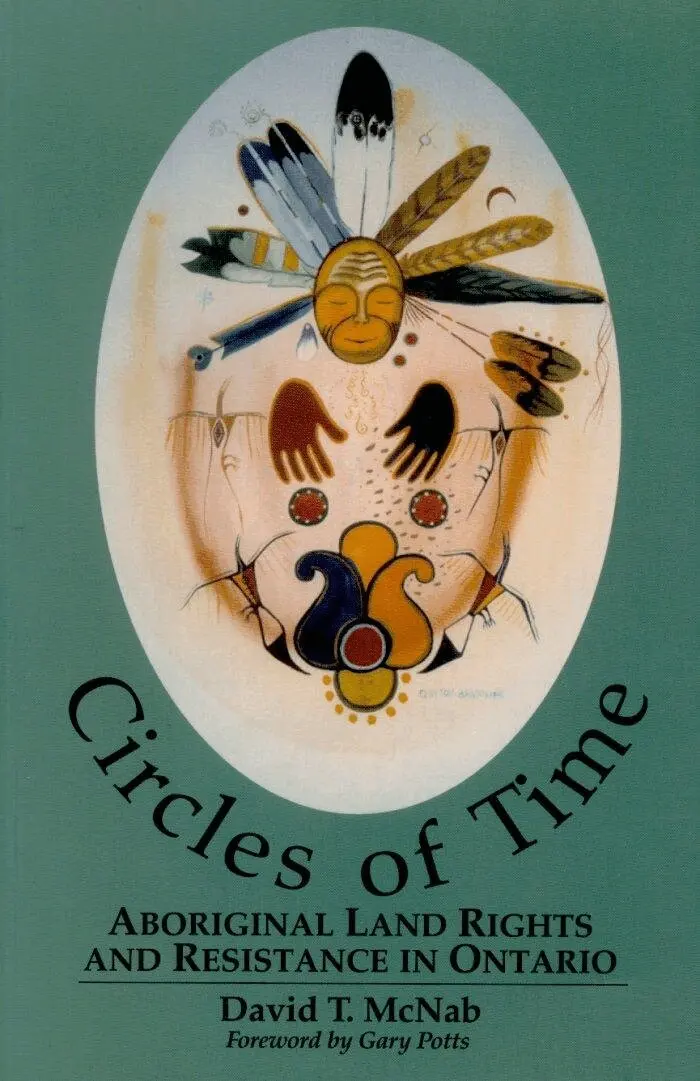
The origin of the events during the summer of 1990 in a little-known area of Quebec lies deep within the history of Canada. Resistance to government's handling of land claims is not new, but the extreme and violent form of the response at Oka heralded a new approach by First Nations to the resolution of Aboriginal land and treaty rights in Canada. Circles of Time documents the experiences of Aboriginal people, their history and recent negotiations in Ontario, and provides insight into the historiography of the treaty-making process, particularly in the last quarter-century. Controversial decisions such as the Temagami case and Oka are detailed, and McNab, who draws on archival sources that support oral history, provides a new perspective on land claims issues. Such compelling background information will be invaluable to anyone endeavoring to understand the origin and the current controversies surrounding Aboriginal land and treaty rights, and will clarify the reasons for resistance. Above all, this book will remind us we must never forget that this history belongs to Aboriginal people. Turtle Island is their place, and their oral history can no longer be ignored.
472 kr
Skickas inom 11-20 vardagar
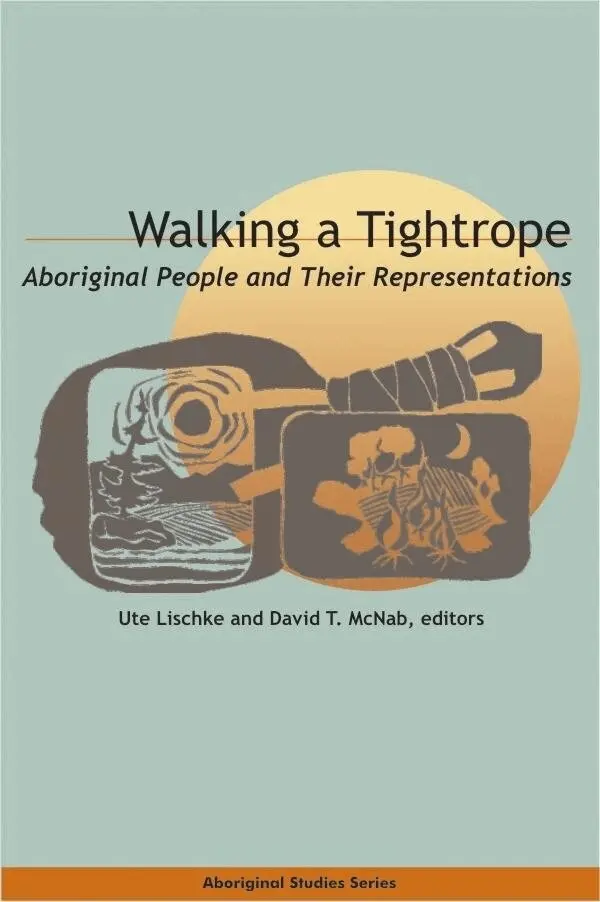
""The most we can hope for is that we are paraphrased correctly."" In this statement, Lenore Keeshig-Tobias underscores one of the main issues in the representation of Aboriginal peoples by non-Aboriginals. Non-Aboriginal people often fail to understand the sheer diversity, multiplicity, and shifting identities of Aboriginal people. As a result, Aboriginal people are often taken out of their own contexts. Walking a Tightrope plays an important role in the dynamic historical process of ongoing change in the representation of Aboriginal peoples. It locates and examines the multiplicity and distinctiveness of Aboriginal voices and their representations, both as they portray themselves and as others have characterized them. In addition to exploring perspectives and approaches to the representation of Aboriginal peoples, it also looks at Native notions of time (history), land, cultures, identities, and literacies. Until these are understood by non-Aboriginals, Aboriginal people will continue to be misrepresented - both as individuals and as groups. By acknowledging the complex and unique legal and historical status of Aboriginal peoples, we can begin to understand the culture of Native peoples in North America. Until then, given the strength of stereotypes, Native people have come to expect no better representation than a paraphrase.
576 kr
Skickas inom 11-20 vardagar
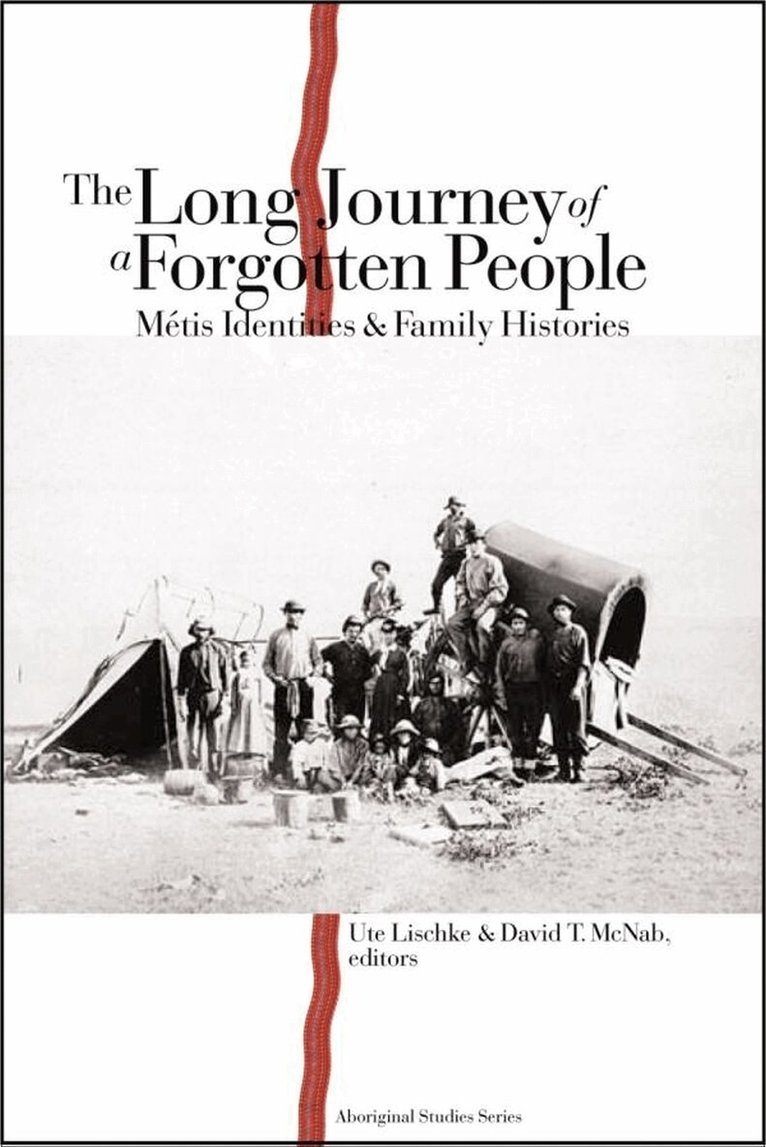
Known as ""Canada's forgotten people,"" the Métis have long been here, but until 1982 they lacked the legal status of Native people. At that point, however, the Métis were recognized in the constitution as one of Canada's Aboriginal peoples. A significant addition to Métis historiography, The Long Journey of a Forgotten People includes Métis voices and personal narratives that address the thorny and complicated issue of Métis identity from historical and contemporary perspectives. Topics include eastern Canadian Métis communities; British military personnel and their mixed-blood descendants; life as a Métis woman; and the Métis peoples ongoing struggle for recognition of their rights, including discussion of recent Supreme Court rulings.