David Weiss Halivni – författare
Visar alla böcker från författaren David Weiss Halivni. Handla med fri frakt och snabb leverans.
15 produkter
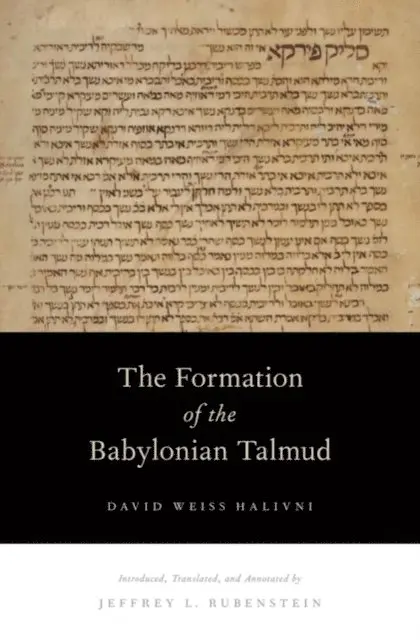
Formation of the Babylonian Talmud
E-bok, 2013
1375 kr
Lägg i varukorg
David Weiss Halivni''s The Formation of the Babylonian Talmud , originally published in Hebrew and here translated by Jeffrey L. Rubenstein, is widely regarded as the most comprehensive scholarly examination of the processes of composition and editing of the Babylonian Talmud. Halivni presents the …
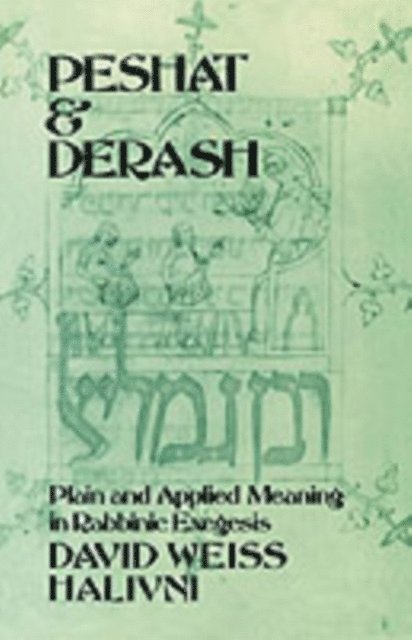
Peshat and Derash
Plain and Applied Meaning in Rabbinic Exegesis
E-bok, 1998
1210 kr
Lägg i varukorg
From the days of Plato, the problem of the efficacy and adequacy of the written word as a vehicle of human communication has challenged mankind, yet the mystery of how best to achieve clarity and exactitude of written expression has never been solved. The most repercussive instance of this …
Formation of the Babylonian Talmud
E-bok, 2013
1375 kr
Lägg i varukorg
David Weiss Halivni''s The Formation of the Babylonian Talmud , originally published in Hebrew and here translated by Jeffrey L. Rubenstein, is widely regarded as the most comprehensive scholarly examination of the processes of composition and editing of the Babylonian Talmud. Halivni presents the …
The Formation of the Babylonian Talmud
Inbunden, 2013
1943 kr
Lägg i varukorg
Jeffrey L. Rubenstein offers a translation from the Hebrew of The Formation of the Babylonian Talmud by David Weiss Halivni. Halivni's work is widely regarded as the most comprehensive scholarly examination of the processes of composition and editing of the Babylonian Talmud. Halivni presents the …
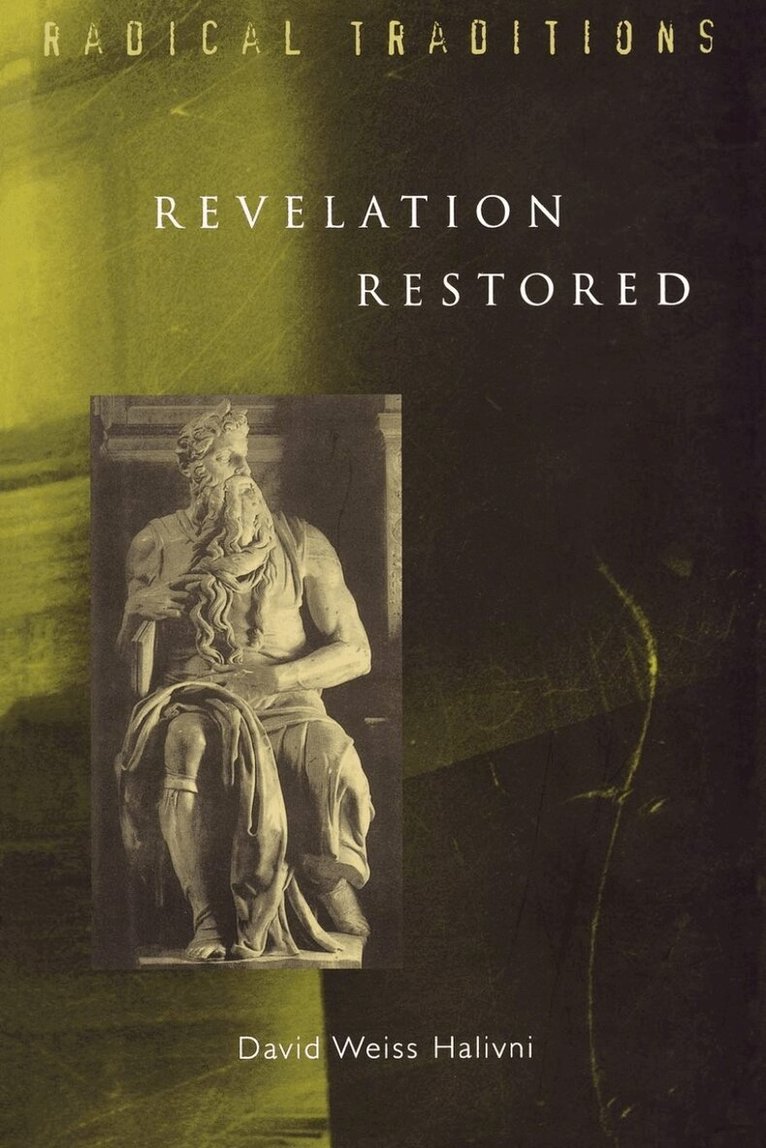
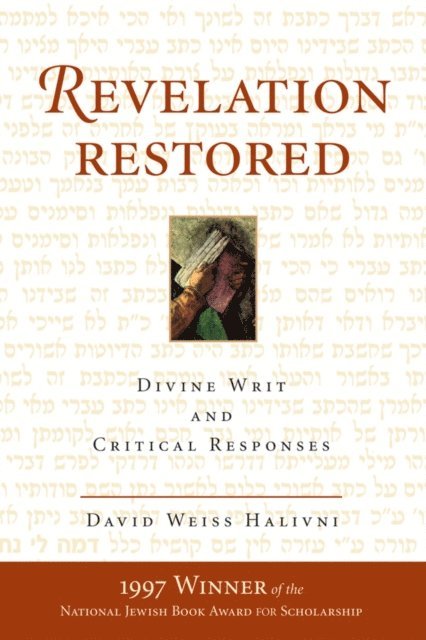
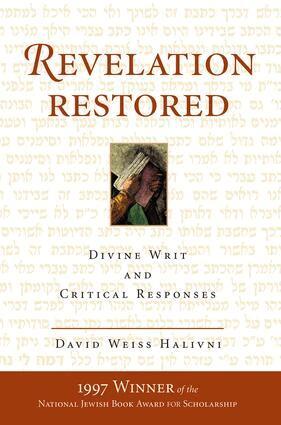
Revelation Restored
Divine Writ and Critical Responses
Häftad, 2001
504 kr
Lägg i varukorg
In this thought-provoking book, David Weiss Halivni asserts that the act of acknowledging and accounting for inconsistencies in the Pentateuchal text is not alien to the biblical or rabbinic tradition and need not belie the tradition of revelation. Moreover, the author argues that through …
Book And The Sword
A Life Of Learning In The Shadow Of Destruction
Inbunden, 2019
2744 kr
Lägg i varukorg
David Weiss Halivni emerges his original approach to critical study of the Talmudic text not only in its modern printed form but as it was in its original form, the Oral Torah from the mouths of countless sages.
Book And The Sword
A Life Of Learning In The Shadow Of Destruction
Häftad, 2021
691 kr
Lägg i varukorg
David Weiss Halivni emerges his original approach to critical study of the Talmudic text not only in its modern printed form but as it was in its original form, the Oral Torah from the mouths of countless sages.
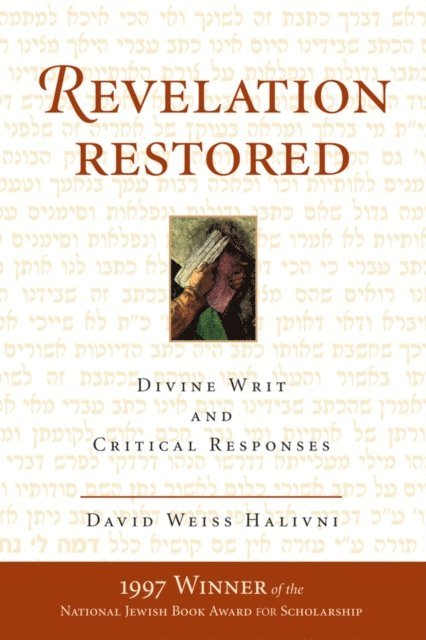
Revelation Restored
Divine Writ And Critical Responses
E-bok, 2019
881 kr
Lägg i varukorg
In this thought-provoking book, David Weiss Halivni asserts that the act of acknowledging and accounting for inconsistencies in the Pentateuchal text is not alien to the Biblical or Rabbinic tradition and need not belie the tradition of revelation. Moreover, the author argues that through …
Revelation Restored
Divine Writ And Critical Responses
E-bok, 2019
901 kr
Lägg i varukorg
In this thought-provoking book, David Weiss Halivni asserts that the act of acknowledging and accounting for inconsistencies in the Pentateuchal text is not alien to the Biblical or Rabbinic tradition and need not belie the tradition of revelation. Moreover, the author argues that through …
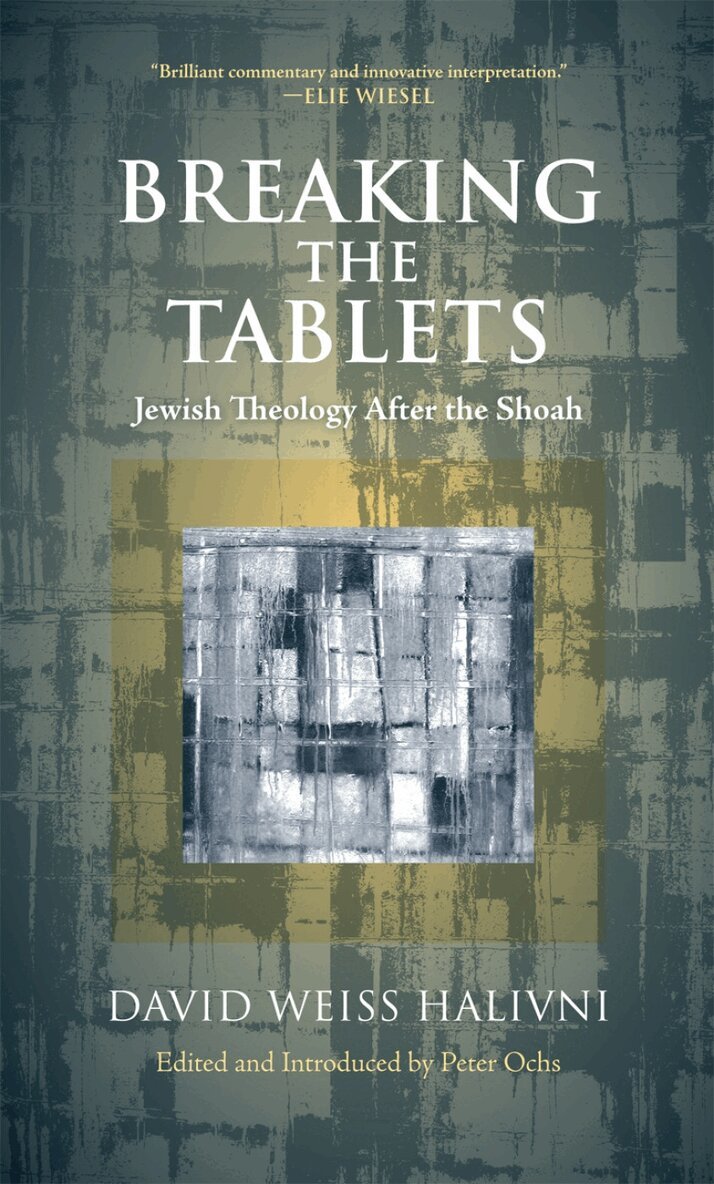
Breaking the Tablets
Jewish Theology After the Shoah
Av David Weiss Halivni, Peter Ochs
Inbunden, 2007
1208 kr
Lägg i varukorg
How is it possible, after the Shoah, to declare one's faith in the God of Israel? Breaking the Tablets is David Weiss Halivni's eloquent and insightful response to this question. Halivni, Auschwitz survivor and one of the greatest Talmudic scholars of the past century, declares that at this time of …
Breaking the Tablets
Jewish Theology After the Shoah
Av David Weiss Halivni, Peter Ochs
Häftad, 2007
459 kr
Lägg i varukorg
How is it possible, after the Shoah, to declare one's faith in the God of Israel? Breaking the Tablets is David Weiss Halivni's eloquent and insightful response to this question. Halivni, Auschwitz survivor and one of the greatest Talmudic scholars of the past century, declares that at this time of …
Breaking the Tablets
Jewish Theology After the Shoah
Av David Weiss Halivni, Peter Ochs
E-bok, 2007
468 kr
Lägg i varukorg
How is it possible, after the Shoah, to declare one''s faith in the God of Israel? Breaking the Tablets is David Weiss Halivni''s eloquent and insightful response to this question. Halivni, Auschwitz survivor and one of the greatest Talmudic scholars of the past century, declares that at this time …
Revelation Restored
Divine Writ And Critical Responses
Häftad, 1998
764 kr
Lägg i varukorg
Modern critical scholars divide the Pentateuch into distinct components, identifying areas of unevenness in the scriptural tradition, which point to several interwoven documents rather than one immaculate whole. While the conclusions reached by such critical scholarship are still matters of …
Book And The Sword
A Life Of Learning In The Shadow Of Destruction
E-bok, 2019
796 kr
Lägg i varukorg
David Weiss Halivni emerges his original approach to critical study of the Talmudic text not only in its modern printed form but as it was in its original form, the Oral Torah from the mouths of countless sages.
Book And The Sword
A Life Of Learning In The Shadow Of Destruction
E-bok, 2019
845 kr
Lägg i varukorg
David Weiss Halivni emerges his original approach to critical study of the Talmudic text not only in its modern printed form but as it was in its original form, the Oral Torah from the mouths of countless sages.