Dawn Jennifer - Böcker
871 kr
Skickas inom 3-6 vardagar
'Each of the authors has considerable relevant expertise so the text is rich both in research data and examples, including case studies, from their experience. Readers will find a wealth of practical advice and encouragement that is balanced by the acknowledgement of the limitations of individual interventions and the potential costs, overt and hidden, of each one. A whole-school approach is advocated and exemplified, including schools that have considered the needs of the staff' - Child and Adolescent Mental Health
`This work would be of use throughout all age ranges as the different problems and strategies are very easily accessible with a lot of proven, practical support. Professor Cowie and her colleagues have produced a valuable tool for use in all schools on both micro and macro level' - Education Review
`The book is an impressive and useful handbook of advice and resources. More than that, because it presents so much evidence, it's able to show, rather than tell, how schools can improve life for their pupils and teachers' - Gerald Haigh, TES Friday Magazine
`This book is recommended for the wealth of practical information it contains about strategies that can help young people in distress' - Youth Studies Australia
Secondary school is the place where young people are most constrained, observed and challenged to develop. This is not necessarily a stress free process, either for the young person, or for teachers and parents. This book describes behaviours, both disruptive and secretive, which indicates emotional distress. It looks at both the risk factors and the protective factors involved in emotional health, and addresses the impact of issues such as bullying, social exclusion, loss and bereavement.
The authors show what schools can do to develop practices grounded in knowledge about the mental health issues which relate to young people. In an accessible way, they present a range of strategies which practitioners have shown to be effective. They focus especially on methods and policies, which have been scientifically evaluated, or which are considered best practice.
Issues and interventions are illustrated throughout with case studies drawn from the authors' own practice and experience. Each of the authors has a long-standing interest in ways of creating supportive environments to prevent distress and to facilitate resilience in the young.
This book is essential reading for secondary school teachers, educational psychologists, education welfare officers and all those with pastoral care responsibilities.
2 290 kr
Skickas inom 11-20 vardagar
-personal characteristics of perpetrators, victims and bystanders
-role of the family
-ethos and culture of the school
-quality of interpersonal relationships at school
-quality of the learning environment of the school
-links between school and community
The authors' approach aims to promote non-violence , improve the climate of the school, enhance relationships among staff, pupils and parents, and to support the emotional health and well-being of all members of the school community. Strategies include preventative methods, provision for the individual needs of pupils and peer support, emotional literacy and restorative practice.
The authors also provide guidance on how to create a shared understanding of school violence, how to prepare for change and how to carry out an effective needs analysis in order to successfully address the issue.
This book is essential for practitioners, students in education and school management as well as local educational advisors.
871 kr
Skickas inom 3-6 vardagar
-personal characteristics of perpetrators, victims and bystanders
-role of the family
-ethos and culture of the school
-quality of interpersonal relationships at school
-quality of the learning environment of the school
-links between school and community
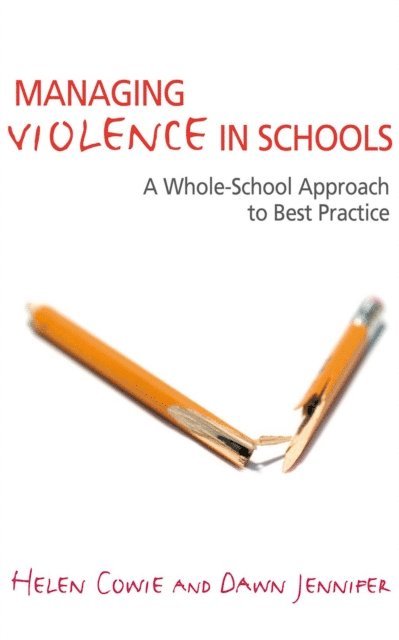
The authors' approach aims to promote non-violence , improve the climate of the school, enhance relationships among staff, pupils and parents, and to support the emotional health and well-being of all members of the school community. Strategies include preventative methods, provision for the individual needs of pupils and peer support, emotional literacy and restorative practice.
The authors also provide guidance on how to create a shared understanding of school violence, how to prepare for change and how to carry out an effective needs analysis in order to successfully address the issue.
This book is essential for practitioners, students in education and school management as well as local educational advisors.