Dawn Keetley - Böcker
Visar alla böcker från författaren Dawn Keetley. Handla med fri frakt och snabb leverans.
12 produkter
12 produkter
818 kr
Skickas inom 10-15 vardagar
First Published in 2017. The first of its kind to address the ecogothic in American literature, this collection of fourteen articles illuminates a new and provocative literacy category, one that exists at the crossroads of the gothic and the environmental imagination, of fear and the ecosystems we inhabit.
Public Women, Public Words
A Documentary History of American Feminism, Volume III
Häftad, Engelska, 2005
892 kr
Skickas inom 5-8 vardagar
This final volume in the Public Women, Public Words series focuses on what has come to be called the second wave of American feminism. It traces the resurgence of feminism in the late 1960s—from Betty Friedan and the National Organization for Women to the anarchist and lesbian identity dimensions of radical feminism. Including topics such as sexual autonomy, abortion, the Equal Rights Amendment, and the black-feminist resistance to the white-dominated second wave, this volume reflects the unprecedented range of women's issues taken up by feminists during the 1970s and beyond. Volume III also charts the great diffusion of feminism with separate sections on multicultural feminism and the feminist presence in media and pop culture. Finally, through the recent writings of feminist intellectuals, it looks toward a third feminist wave for the new millennium. Public Women, Public Words: A Documentary History of American Feminism provides a comprehensive view of the many strands of feminist thought and actions and is essential for every women's studies and feminism collection.
"We're All Infected"
Essays on AMC's The Walking Dead and the Fate of the Human
Häftad, Engelska, 2014
377 kr
Skickas inom 5-8 vardagar
This edited collection brings together an introduction and 13 original scholarly essays on AMC's The Walking Dead. The essays in the first section address the pervasive bloodletting of the series: What are the consequences of the series' unremitting violence? Essays explore violence committed in self-defense, racist violence, mass lawlessness, the violence of law enforcement, the violence of mourning, and the violence of history.The essays in the second section explore an equally urgent question: What does it mean to be human? Several argue that notions of the human must acknowledge the centrality of the body--the fact that we share a "blind corporeality" with the zombie. Others address how the human is closely aligned with language and time, the disappearance of which are represented by the aphasic, timeless zombie.Underlying each essay are the game-changing words of The Walking Dead's protagonist Rick Grimes to the other survivors: "We're all infected." The violence of the zombie is also our violence; their blind drives are also ours. The human characters of The Walking Dead may try to define themselves against the zombies but in the end their bodies harbor the zombie virus: they are the walking dead.Instructors considering this book for use in a course may request an examination copy here.
1 773 kr
Skickas inom 3-6 vardagar
596 kr
Skickas inom 3-6 vardagar
269 kr
Skickas inom 7-10 vardagar
Folk Gothic begins with the assertion that a significant part of what has been categorised as folk horror is more accurately and usefully labelled as Folk Gothic. Through the modifier 'folk', Folk Gothic obviously shares with folk horror its deployment (and frequent fabrication) of diegetic folklore. Folk Gothic does not share, however, folk horror's incarnate monsters, its forward impetus across spatial and ontological boundaries and the shock and repulsion elicited through its bodily violence. The author argues that the Folk Gothic as a literary, televisual and cinematic formation is defined by particular temporal and spatial structures that serve to forge distinctly nonhuman stories. In emphasising these temporal and spatial structures - not literal 'folk' and 'monsters' - the Folk Gothic tells stories that foreground land and 'things', consequently loosening the grip of anthropocentrism.
753 kr
Skickas inom 7-10 vardagar
Folk Gothic begins with the assertion that a significant part of what has been categorised as folk horror is more accurately and usefully labelled as Folk Gothic. Through the modifier 'folk', Folk Gothic obviously shares with folk horror its deployment (and frequent fabrication) of diegetic folklore. Folk Gothic does not share, however, folk horror's incarnate monsters, its forward impetus across spatial and ontological boundaries and the shock and repulsion elicited through its bodily violence. The author argues that the Folk Gothic as a literary, televisual and cinematic formation is defined by particular temporal and spatial structures that serve to forge distinctly nonhuman stories. In emphasising these temporal and spatial structures - not literal 'folk' and 'monsters' - the Folk Gothic tells stories that foreground land and 'things', consequently loosening the grip of anthropocentrism.
1 473 kr
Skickas inom 10-15 vardagar
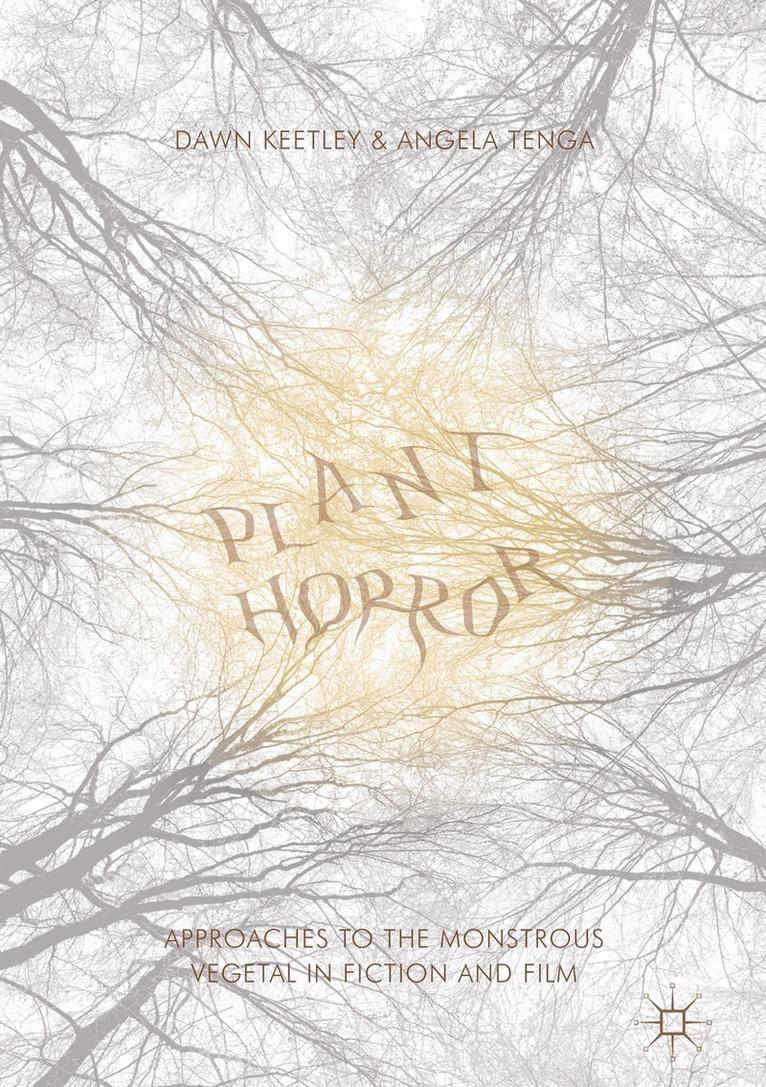
This collection explores artistic representations of vegetal life that imperil human life, voicing anxieties about our relationship to other life forms with which we share the earth.
2 709 kr
Skickas inom 10-15 vardagar
First Published in 2017. The first of its kind to address the ecogothic in American literature, this collection of fourteen articles illuminates a new and provocative literacy category, one that exists at the crossroads of the gothic and the environmental imagination, of fear and the ecosystems we inhabit.
1 406 kr
Kommande
An exploration of how contemporary horror films focusing on the internet engage with society’s material, functional and ideological reorientation to new digital realities, this book shows how subjects can resist the age of data capitalism and the authority of the algorithm. Upending the notion that the horror genre – arguably the seismograph of cultural unease – has remained unresponsive to the unprecedented dangers of the digital age, The Post-Internet Horror Film illustrates how the genre tackles the (un)representability of ubiquitous computing. With consideration of how ‘smart’ technologies and interconnectedness of all computing devises via the web destabilise conceptions of the internet, Max Jokschus examines to what extent contemporary internet horror films contribute to fostering awareness of the internet’s political economy – and how they, indeed, obscure it.Detailing a new phenomenon that will only become more urgent with time, and calling upon data-capitalism criticism, Jokschus provides a systemic analysis of this emerging genre, its semiotics, affects and ideologies. Breaking the genre down into first and second-wave internet horror cycles and covering themes ‘cyberphobia’, ‘datanoia’ and the dark web, the book makes case studies of such films as Strangeland (1999), Pulse (2001), The Lawnmower Man (1992), Chatroom (2010), Cyberbully (2015), Girl House (2016), Bedeviled (2016), Child’s Play (2019), Countdown (2018), Selfie From Hell (2018), and Dark Web: Descent into Hell (2021). Offering new ways to think, write and teach about the horror film, as well as modelling how critical internet studies and film studies can expand each other’s insights, The Post-Internet Horror Film explores a new kind of scary but also avenues for user agency and resistance.
Politics of Race, Gender and Sexuality in The Walking Dead
Essays on the Television Series and Comics
Häftad, Engelska, 2018
389 kr
Skickas inom 5-8 vardagar
From the beginning, both Robert Kirkman's comics and AMC's series of The Walking Dead have brought controversy in their presentations of race, gender and sexuality. Critics and fans have contended that the show's identity politics have veered toward the decidedly conservative, offering up traditional understandings of masculinity, femininity, heterosexuality, racial hierarchy and white supremacy.This collection of new essays explores the complicated nature of relationships among the story's survivors. In the end, characters demonstrate often-surprising shifts that consistently comment on identity politics. Whether agreeing or disagreeing with critics, these essays offer a rich view of how gender, race, class and sexuality intersect in complex new ways in the TV series and comics.
462 kr
Tillfälligt slut
While the undisputed heyday of folk horror was Britain in the 1960s and 1970s, the genre has not only a rich cinematic and literary prehistory, but directors and novelists around the world have also been reinventing folk horror for the contemporary moment. This study sets out to rethink the assumptions that have guided critical writing on the genre in the face of such expansions, with chapters exploring a range of subjects from the fiction of E. F. Benson to Scooby-Doo, video games, and community engagement with the Lancashire witches. In looking beyond Britain, the essays collected here extend folk horror’s geographic terrain to map new conceptualisations of the genre now seen emerging from Italy, Ukraine, Thailand, Mexico and the Appalachian region of the US.