Deborah Jaffe - Böcker
Visar alla böcker från författaren Deborah Jaffe. Handla med fri frakt och snabb leverans.
2 produkter
2 produkter
233 kr
Tillfälligt slut
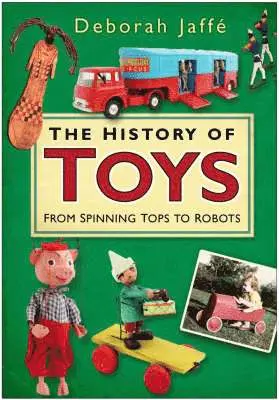
This appealing and well-illustrated book traces the history of toys through the ages. It reflects changing attitudes to childhood as well as the influences of technology and the invention of new materials. Remarkably, some toys have changed very little despite a change in materials: rattles once made of straw, clay, silver, leather and wood are now made of plastic. Greek, Egyptian and Roman children played with dolls, miniature houses, balls, spinning tops and pull-along animals on wheels. Kites have been flown in China for centuries. Dolls were either made from wood, fabric, leather or porcelain - or, for poor children, were just a chalk face on an old shoe wrapped in material - before the advent of fine sculpting by toymakers, Kathe Cruse or Sasha Morgenthaler. Deborah Jaffe explores the various influences on toys from politics and marketing to religion and education. She takes us on a fascinating exploration of toys through the ages.
809 kr
Skickas inom 5-8 vardagar
What is a memory of the future? Is it a myth, a fiction of a severed arm, a post-human debate or a broken time machine? In an increasingly insecure future-world there is an urgency to consider and debate these questions. Memories of the Future: On Countervision addresses these concerns by speculating on the connections between memory and futurity in fields such as counter-histories, women’s studies, science fiction, art and design, technology, philosophy and politics. This book reveals how these subjects regenerate at the intersections of vision, counter-cultural production and the former present. The volume links the re-imaginings of memory into the present with topics such as the fever dream allegory of the adolescent social experience, soft technologies of future dress, reinventions of monetary exchange, rekindled subjectivities of school days, and technics and human progression. These countervisions argue against the homogenizing status quo of the present in order to challenge the customs, traditions and conventions of the past and propositions of the future.