
Delia Popescu – författare
Visar alla böcker från författaren . Handla med fri frakt och snabb leverans.
2 produkter
2 produkter
Inbunden, Engelska, 2011
1 307 kr
Skickas inom 10-15 vardagar
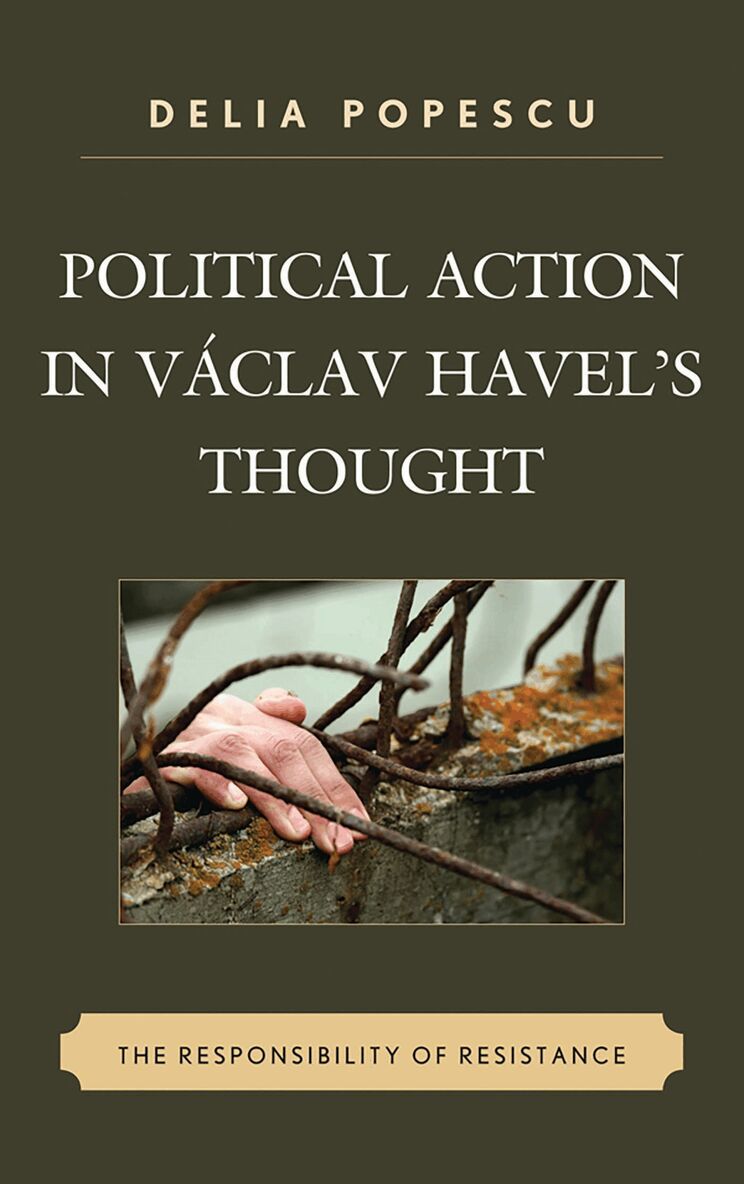
Political Action in Vaclav Havel’s Thought: The Responsibility of Resistance, by Delia Popescu, examines resistance to oppression and individual responsibility in political action, all in the context of Vaclav Havel’s political philosophy. The famous anti-communist dissident, acclaimed playwright, former President of the Czech Republic, and eminent political thinker argues that there is a certain tendency in modern humanity towards the creation, or at least toleration, of a political system that is invasive and controlling. Not unlike Tocqueville and Arendt, Havel claims that modern liberal democracy contains potential tendencies toward a new form of despotism that capitalizes on modern alienation and social atomization. Political Action in Vaclav Havel’s Thought suggests that Havel’s theory of individual opposition can be used to secure political freedom under the conditions of modernity. Popescu demonstrates that Havel’s idea of attaining true political participation and freedom requires a strong connection between an individually constructed ethics and the realm of politics. On this basis she reveals that a thick notion of morality can be usefully integrated into an account of both private and public accountability. Vaclav Havel’s essays, plays, speeches, and letters can therefore be integrated into a coherent political theory which contributes significantly to some of the central debates in modern political thought. Delia Popescu concludes that Havel’s theory of individual opposition to totalitarianism may also serve as the foundation for a conception of responsible participation in modern liberal democracies.

Inbunden, Engelska, 2027
1 479 kr
Kommande
This book explores the lessons that can be gleaned through a look from the East Central European experience of dissent for dissent and resistance as general modern phenomena.Lessons from the Revolutions of 1989 in East Central Europe has a two-fold purpose: (1) to teach about, in an accessible way, the East Central European culture of dissent, and (2) to explore connections between that time and place and our own post-1989 globalized world where dissent and resistance are more prominent and necessary than ever. Scholars of the pre-1989 East Central European culture of dissent do not, as a matter of course, look for lessons in their subject, and the scarcity of scholarly literature that explores this angle only confirms our point. At the same time, this avoidance, perhaps for good methodological reasons, does seem rather odd. Why not try to draw lessons—for us in the here and now—from studying the cultural-historical space of pre-1989 East Central Europe? This question seems especially important given that the intellectual dissidents did not think that what was happening in their time and place was isolated from the modern world as a whole: they thought that there were lessons to be drawn for the "West" from the experience of the "East."