Dell Upton - Böcker
Visar alla böcker från författaren Dell Upton. Handla med fri frakt och snabb leverans.
5 produkter
5 produkter
261 kr
Skickas inom 5-8 vardagar
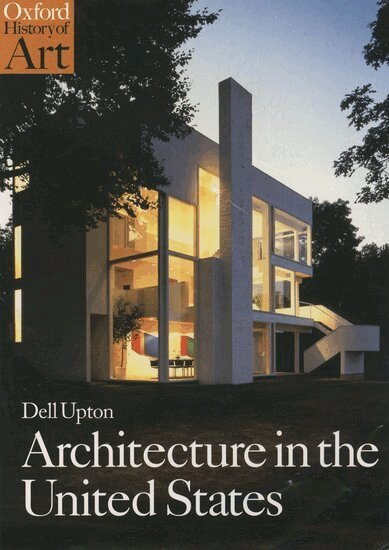
American Architecture is astonishingly varied. From Indian sites in New Mexico and Arizona, and the ancient earthworks of the Mississippi Valley, to the most fashionable contemporary buildings of Chicago and New York, the United States boasts three thousand years of architectural history. It is characterized by the diversity of its builders and consumers who include Native American men and women, African, Asian, and European immigrants, as well as renowned professional architects and urban planners. Dell Upton's revolutionizing interpretation examines American architecture in relation to five themes: community, nature, technology, money, and art. In giving particular attention to indigenous, folk, ethnic and popular architectures like Chaco Canyon, Brooklyn suspension bridge, and native American houses, as well as to the great monuments of traditional histories such as Jefferson's Monticello and Wright's Fallingwater, Architecture in the United States reveals the dazzling richness of America's human landscape. From the pre-publication reviews: Dell Upton: Architecture in the United States - Reviews 'In Architecture in the United States Dell Upton essentially reinvents American architectural history. Employing a series of cultural, economic, and political contexts, his incisive and entertaining narrative examines some 3,000 years of human intervention in the natural landscape, contrasting, comparing and interweaving an astounding range of built forms. This ingenious approach focuses our attention on both the commonality and diversity of human experiences that have shaped this country. Upton's book should be read by everyone with an interest in America's cultural landscape. They will never look at it in the same way again.' Professor Kenneth A. Breisch Southern California Institute of Architecture 'In Architecture in the United States Dell Upton has dismantled the typical chronological history of American architecture and reconceived it as a thematic history, organized according to the compelling themes of "Community", "Nature", "Technology", "Money", and "Art". Upton's very broad definitions of architecture includes traditional high-art monuments like Thomas Jefferson's Monticello or Frank Lloyd Wright's Falling Water, alongside Native American houses and earthworks, typical courthouse squares, recent planned suburbs, bridges, world's fair pavilions, office buildings, and other categories of building that gives the book its freshness and forces readers to reconsider received ideas about American architecture. The book begins with a tour-de-force chapter on Monticello in which all the themes are brought to bear in explaining the meanings embodied in this one site. Upton's inclusive analysis delivers sharp insights about buildings that are so familiar one would have thought there was nothing more to be said. His method invites us to move beyond the limits of aesthetics, and to take more risks to ask more wide-ranging questions about the architecture we inhabit and study.' Professor Elizabeth Cromley Northeastern University 'Dell Upton has written an extraordinarily illuminating book that is a pleasure to read. It synthesizes the existing literature on American architecture while critically exploring fundamental questions about the nature and meaning of architectural, urban, and landscape design. There is a refreshing inclusiveness here about the meaning of both America and its architecture. The book's thematic structure reveals rich new possibilities for understanding American society and culture by scrutinizing its architecture. By-passing conventional chronologies Upton represents cutting-edge historiographical methods but without the cant and jargon of contemporary theory. This important book will usefully transform our historical understanding of American architecture.' Professor Daniel Bluestone University of Virginia'The originality of Upton's conceptual framework makes everything he considers new, profound, and convincing. We see public and private space, social and individual effort, in a shifting dialectic resolvable into no stable patter. This Is architecture in motion. And at last we understand malls.' Professor Garry Wills Northwestern University 'The organization of the material that the author chose is very intriguing and successfully communicates his ideas' Rebecca L. Binder, FAIA Architect
588 kr
Tillfälligt slut
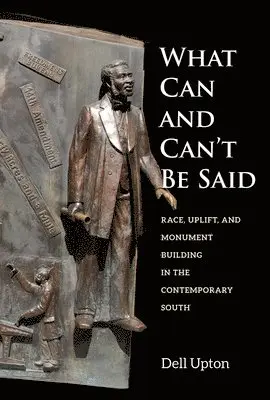
What Can and Can't Be Said: Race, Uplift, and Monument Building in the Contemporary South
Inbunden, Engelska
339 kr
Tillfälligt slut
716 kr
Skickas inom 5-8 vardagar
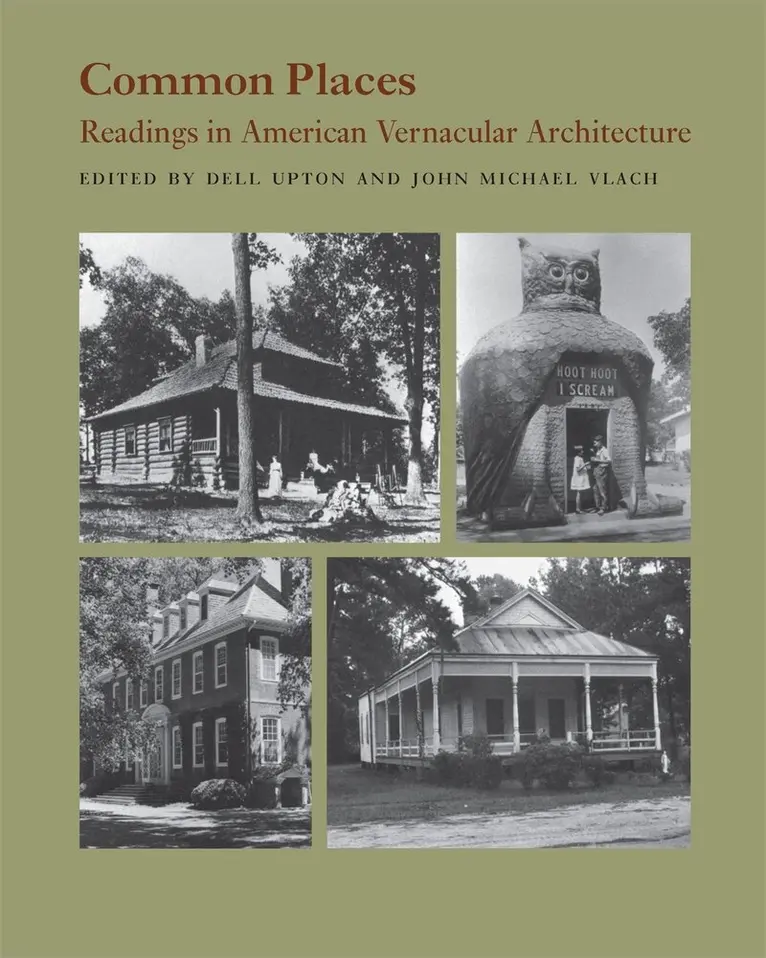
Exploring America's material culture, Common Places reveals the history, culture, and social and class relationships that are the backdrop of the everyday structures and environments of ordinary people. Examining America's houses and cityscapes, its rural outbuildings and landscapes from perspectives including cultural geography, decorative arts, architectural history, and folklore, these articles reflect the variety and vibrancy of the growing field of vernacular architecture.In essays that focus on buildings and spaces unique to the U.S. landscape, Clay Lancaster, Edward T. Price, John Michael Vlach, and Warren E. Roberts reconstruct the social and cultural contexts of the modern bungalow, the small-town courthouse square, the shotgun house of the South, and the log buildings of the Midwest. Surveying the buildings of America's settlement, scholars including Henry Glassie, Norman Morrison Isham, Edward A. Chappell, and Theodore H. M. Prudon trace European ethnic influences in the folk structures of Delaware and the houses of Rhode Island, in Virginia's Renish homes, and in the Dutch barn widely repeated in rural America.Ethnic, regional, and class differences have flavored the nation's vernacular architecture. Fraser D. Neiman reveals overt changes in houses and outbuildings indicative of the growing social separation and increasingly rigid relations between seventeenth-century Virginia planters and their servants. Fred B. Kniffen and Fred W. Peterson show how, following the westward expansion of the nineteenth century, the structures of the eastern elite were repeated and often rejected by frontier builders. Moving into the twentieth century, James Borchert tracks the transformation of the alley from an urban home for Washington's blacks in the first half of the century to its new status in the gentrified neighborhoods of the last decade, while Barbara Rubin's discussion of the evolution of the commercial strip counterpoints the goals of city planners and more spontaneous forms of urban expression.The illustrations that accompany each article present the artifacts of America's material past. Photographs of individual buildings, historic maps of the nation's agricultural expanse, and descriptions of the household furnishings of the Victorian middle class, the urban immigrant population, and the rural farmer's homestead complete the volume, rooting vernacular architecture to the American people, their lives, and their everyday creations.
Del 46 - Dumbarton Oaks Colloquium on the History of Landscape Architecture
Landscapes in the Making
Inbunden, Engelska, 2025
620 kr
Skickas inom 7-10 vardagar