Denise Schaeffer – författare
Visar alla böcker från författaren Denise Schaeffer. Handla med fri frakt och snabb leverans.
6 produkter
6 produkter
840 kr
Skickas inom 7-10 vardagar
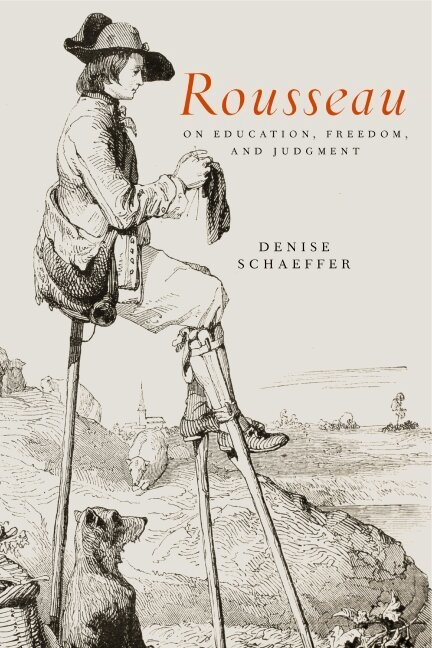
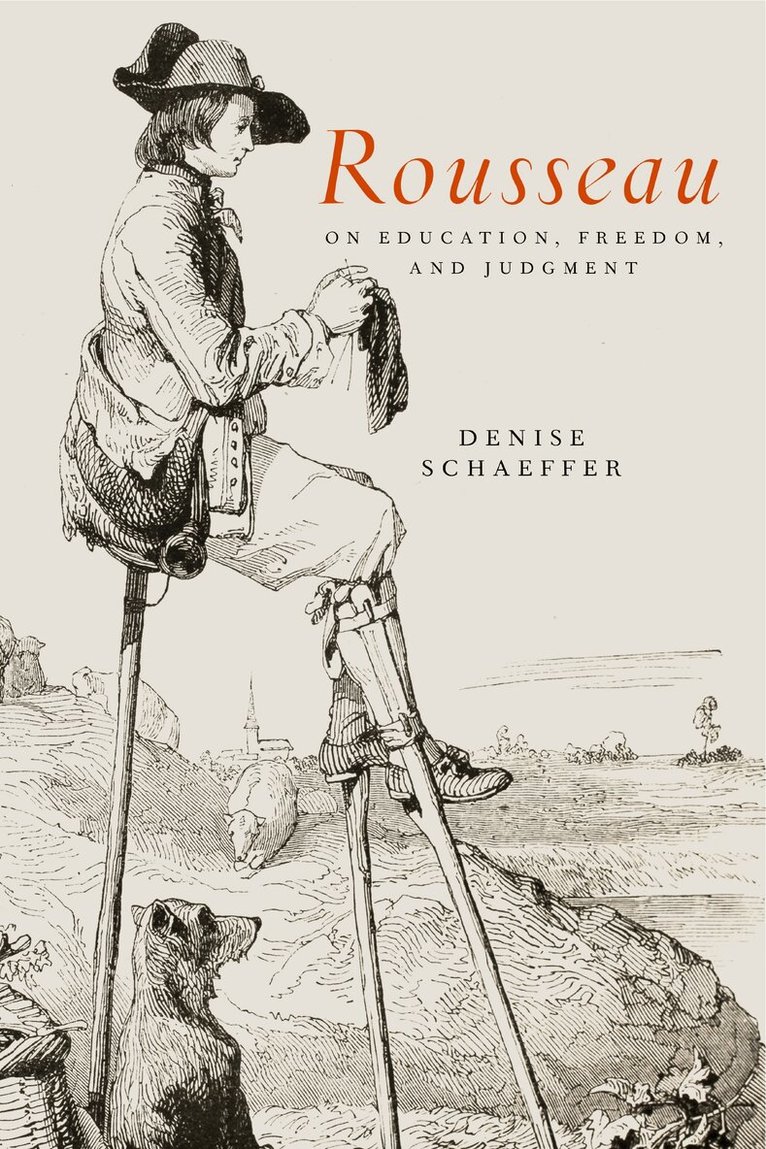
In Rousseau on Education, Freedom, and Judgment, Denise Schaeffer challenges the common view of Rousseau as primarily concerned with conditioning citizens’ passions in order to promote republican virtue and unreflective patriotism. Schaeffer argues that, to the contrary, Rousseau’s central concern is the problem of judgment and how to foster it on both the individual and political level in order to create the conditions for genuine self-rule. Offering a detailed commentary on Rousseau’s major work on education, Emile, and a wide-ranging analysis of the relationship between Emile and several of Rousseau’s other works, Schaeffer explores Rousseau’s understanding of what good judgment is, how it is learned, and why it is central to the achievement and preservation of human freedom. The model of Rousseauian citizenship that emerges from Schaeffer’s analysis is more dynamic and self-critical than is often recognized. This book demonstrates the importance of Rousseau’s contribution to our understanding of the faculty of judgment, and, more broadly, invites a critical reevaluation of Rousseau’s understanding of education, citizenship, and both individual and collective freedom.
537 kr
Skickas inom 5-8 vardagar
In Rousseau on Education, Freedom, and Judgment, Denise Schaeffer challenges the common view of Rousseau as primarily concerned with conditioning citizens’ passions in order to promote republican virtue and unreflective patriotism. Schaeffer argues that, to the contrary, Rousseau’s central concern is the problem of judgment and how to foster it on both the individual and political level in order to create the conditions for genuine self-rule. Offering a detailed commentary on Rousseau’s major work on education, Emile, and a wide-ranging analysis of the relationship between Emile and several of Rousseau’s other works, Schaeffer explores Rousseau’s understanding of what good judgment is, how it is learned, and why it is central to the achievement and preservation of human freedom. The model of Rousseauian citizenship that emerges from Schaeffer’s analysis is more dynamic and self-critical than is often recognized. This book demonstrates the importance of Rousseau’s contribution to our understanding of the faculty of judgment, and, more broadly, invites a critical reevaluation of Rousseau’s understanding of education, citizenship, and both individual and collective freedom.
1 276 kr
Skickas inom 10-15 vardagar
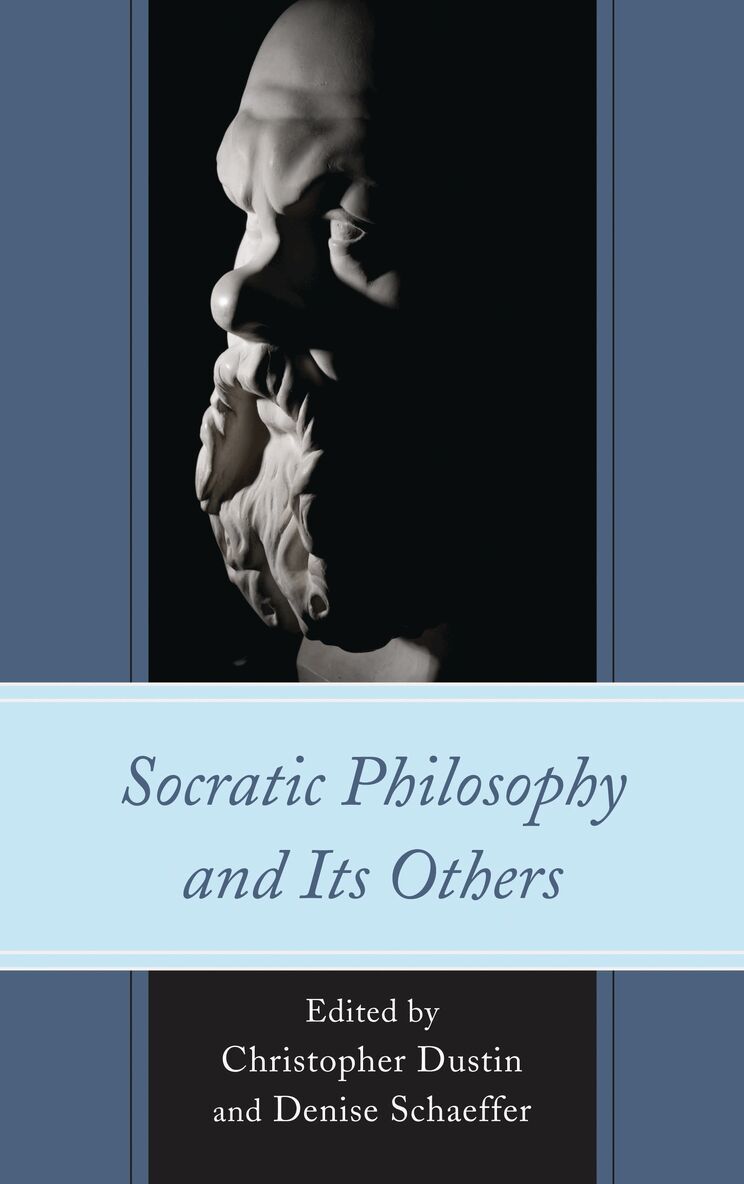
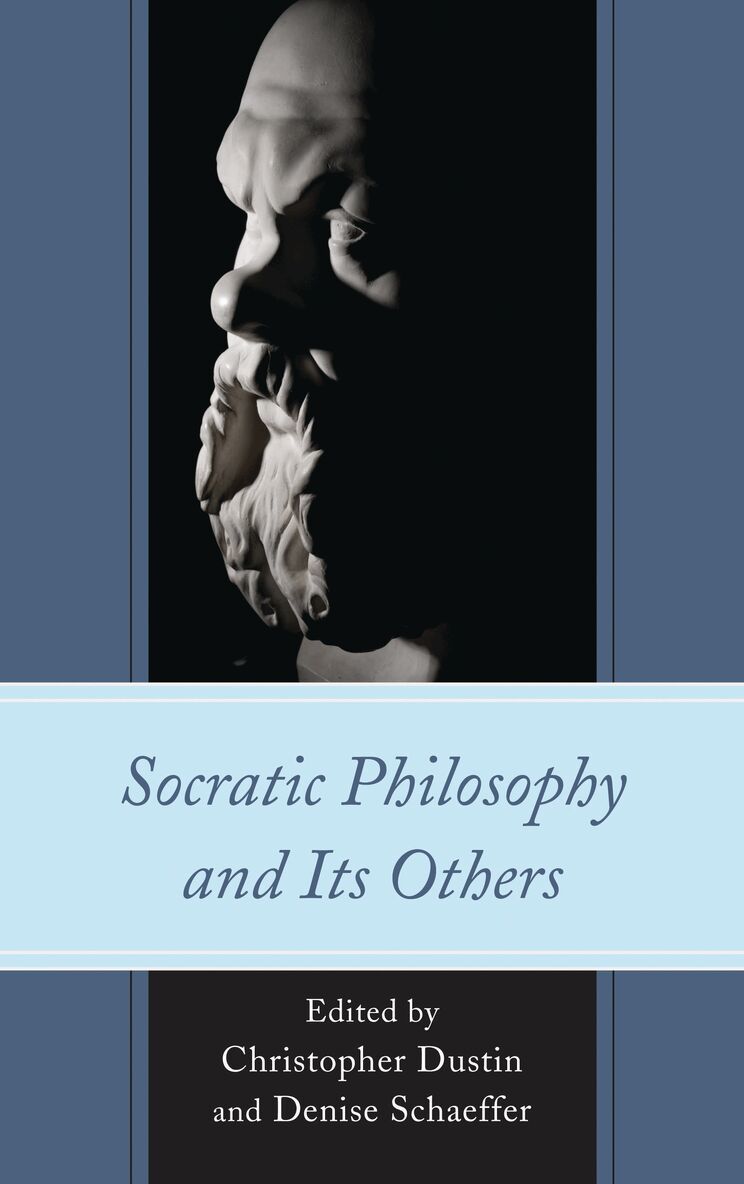
The overall aim of the volume is to explore the relation of Socratic philosophizing, as Plato represents it, to those activities to which it is typically opposed. The essays address a range of figures who appear in the dialogues as distinct “others” against whom Socrates is contrasted—most obviously, the figure of the sophist, but also the tragic hero, the rhetorician, the tyrant, and the poet. Each of the individual essays shows, in a different way, that the harder one tries to disentangle Socrates’ own activity from that of its apparent opposite, the more entangled they become. Yet, it is only by taking this entanglement seriously, and exploring it fully, that the distinctive character of Socratic philosophy emerges. As a whole, the collection sheds new light on the artful ways in which Plato not only represents philosophy in relation to what it is not, but also makes it “strange” to itself. It shows how concerns that seem to be raised about the activity of philosophical questioning (from the point of view of the political community, for example) can be seen, upon closer examination, to emerge from within that very enterprise. Each of the essays then goes on to consider how Socratic philosophizing can be defined, and its virtues defended, against an attack that comes as much from within as from without. The volume includes chapters by distinguished contributors such as Catherine Zuckert, Ronna Burger, Michael Davis, Jacob Howland, and others, the majority of which were written especially for this volume. Together, they address an important theme in Plato’s dialogues that is touched upon in the literature but has never been the subject of a book-length study that traces its development across a wide range of dialogues. One virtue of the collection is that it brings together a number of prominent scholars from both political science and philosophy whose work intersects in important and revealing ways. A related virtue is that it treats more familiar dialogues (Republic, Sophist, Apology, Phaedrus) alongside some works that are less well known (Theages, Major Hippias, Minor Hippias, Charmides, and Lovers). While the volume is specialized in its topic and approach, the overarching question—about the potentially troubling implications of Socratic philosophy, and the Platonic response—should be of interest to a broad range of scholars in philosophy, political science, and classics.
675 kr
Skickas inom 10-15 vardagar
The overall aim of the volume is to explore the relation of Socratic philosophizing, as Plato represents it, to those activities to which it is typically opposed. The essays address a range of figures who appear in the dialogues as distinct “others” against whom Socrates is contrasted—most obviously, the figure of the sophist, but also the tragic hero, the rhetorician, the tyrant, and the poet. Each of the individual essays shows, in a different way, that the harder one tries to disentangle Socrates’ own activity from that of its apparent opposite, the more entangled they become. Yet, it is only by taking this entanglement seriously, and exploring it fully, that the distinctive character of Socratic philosophy emerges. As a whole, the collection sheds new light on the artful ways in which Plato not only represents philosophy in relation to what it is not, but also makes it “strange” to itself. It shows how concerns that seem to be raised about the activity of philosophical questioning (from the point of view of the political community, for example) can be seen, upon closer examination, to emerge from within that very enterprise. Each of the essays then goes on to consider how Socratic philosophizing can be defined, and its virtues defended, against an attack that comes as much from within as from without. The volume includes chapters by distinguished contributors such as Catherine Zuckert, Ronna Burger, Michael Davis, Jacob Howland, and others, the majority of which were written especially for this volume. Together, they address an important theme in Plato’s dialogues that is touched upon in the literature but has never been the subject of a book-length study that traces its development across a wide range of dialogues. One virtue of the collection is that it brings together a number of prominent scholars from both political science and philosophy whose work intersects in important and revealing ways. A related virtue is that it treats more familiar dialogues (Republic, Sophist, Apology, Phaedrus) alongside some works that are less well known (Theages, Major Hippias, Minor Hippias, Charmides, and Lovers). While the volume is specialized in its topic and approach, the overarching question—about the potentially troubling implications of Socratic philosophy, and the Platonic response—should be of interest to a broad range of scholars in philosophy, political science, and classics.
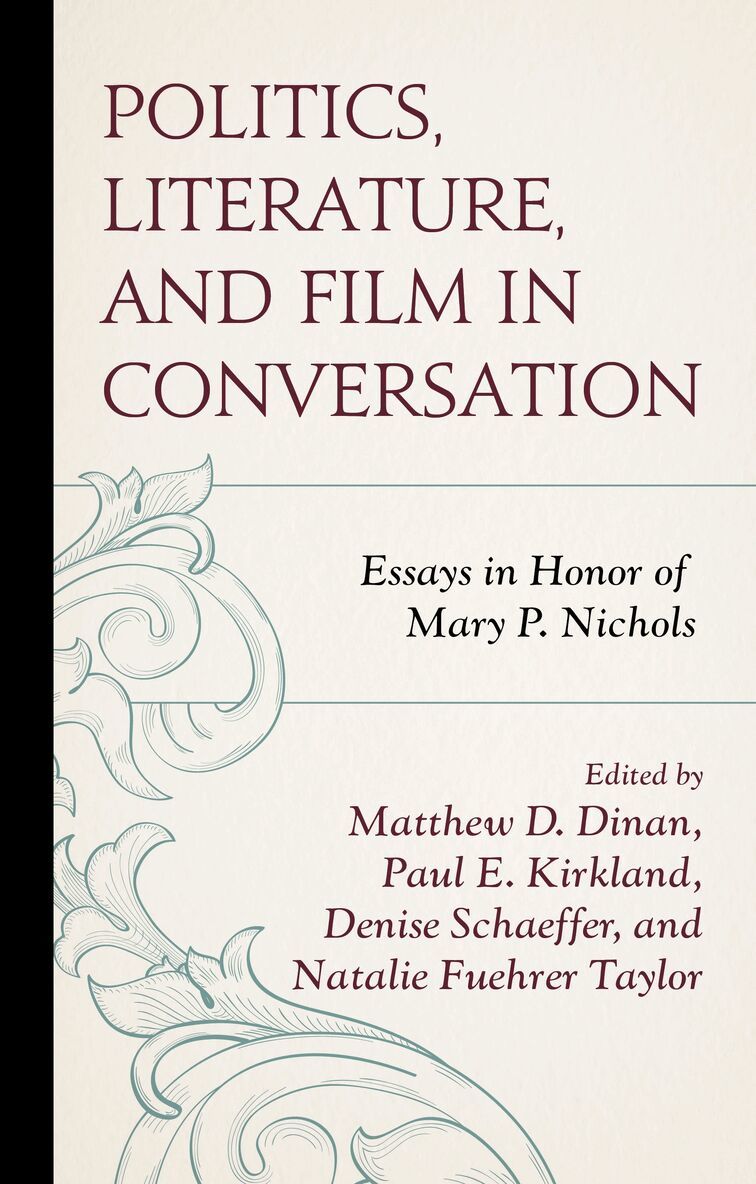
Politics, Literature, and Film in Conversation
Essays in Honor of Mary P. Nichols
Inbunden, Engelska, 2021
1 160 kr
Skickas inom 10-15 vardagar
This volume presents a series of essays in honor of noted scholar of political theory, Mary P. Nichols. The essays reflect Nichols’ pathbreaking work in ancient Greek political thought, as well as her influential treatments of works of literature and film in conversation with political theory. Part I: Conversations Concerning Love and Friendship features essays about the philosophical meaning of human connection and affection. Part II: Conversations Between Politics and Poetry looks at the political significance of art, and the ways in which political rule can be understood to be “artistic” or poetic. Part III: Conversations from Tragedy to Comedy considers whether the human need for community is something to be lamented or celebrated. Broad in scope and interdisciplinary in approach, the essays in this volume address authors such as Plato, Aristotle, Shakespeare, Machiavelli, Mary Wollstonecraft, G.W.F. Hegel, Jane Austen, Henry James, William Faulkner, Albert Camus, J.R.R. Tolkien, and Aleksander Solzhenitsyn, as well as the films of Woody Allen and Whit Stillman.
263 kr
Skickas inom 7-10 vardagar
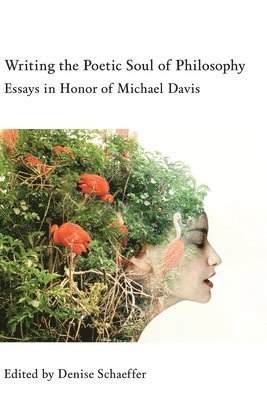
What is it about the nature of “soul” that makes it so difficult to adequately capture its complexity in a strictly discursive account? Why do some of the most profound human experiences elude our attempts to theorize them? How can a written document do justice to the dynamic activity of thinking, as opposed to merely presenting a collection of thoughts-as-artifacts? Finally, what can we learn about the activity of philosophizing, and about the human soul, by reflecting on the possibilities and limitations of writing?These concerns, in various forms and in different registers, have preoccupied Michael Davis throughout his distinguished career. This volume is in honor of, and in dialogue with, Davis’s work, which spans ancient philosophy and literature, continental philosophy and political philosophy. It includes original essays by numerous distinguished scholars in the fields of philosophy and political science. The remarkable range and caliber of the contributions attest to the breadth and depth of Davis’s influence.The essays in Part I of the volume explore the nature of soul through the lens of tragedy. Part II consists of three essays that explore the human longing for perfect knowledge and completion—and the obstacles to the fulfilment of that longing—in relation to the divine. In Part III, the essays address the distinctive challenges of the political sphere and philosophy’s relation to it. And while the relationship between philosophy and poetry is an implicit theme throughout the volume, the essays in Part IV focus directly on philosophy’s aestheticizing tendencies. Many different philosophical and literary works are discussed throughout these chapters, including ancient works such as Plato’s Republic, Euthydemus and Laws, Homer’s Iliad, and Euripides’ Trojan Women, as well as works by modern philosophers such as Rousseau, Kant, Hegel, Kierkegaard and Nietzsche. In addition, three essays analyze some of Shakespeare’s plays in relation to the thought of Plato and Machiavelli. All of the essays are thematically linked by a common thread as they attend to the poetic dimension of philosophical thinking.Michael Davis is Professor of Philosophy at Sarah Lawrence College, where he has taught since 1977 and has been the Sarah Yates Exley Chair in Teaching Excellence (2003-2005). He has also taught on the graduate faculty at Fordham University and the New School for Social Research. He is the author of numerous articles and books, which include: Ancient Tragedy and the Origins of Modern Science; The Poetry of Philosophy: On Aristotle’s Poetics; The Politics of Philosophy: A Commentary on Aristotle’s Politics; The Autobiography of Philosophy; Rousseau’s The Reveries of the Solitary Walker; Wonderlust: Ruminations on Liberal Education; and The Soul of the Greeks: An Inquiry. He is also co-translator (with Seth Benardete) of Aristotle’s On Poetics.Contributors include: Abraham Anderson, Jonathan Badger, Robert Berman, Ronna Burger, Kenneth DeLuca, Gwenda-lin Grewal, Scott Hemmenway, Paul Kirkland, Mary Nichols, Denise Schaeffer, Paul Stern, Richard Velkley, Lisa Pace Vetter, Ann Ward, Lee Ward, Catherine Zuckert and Michael Zuckert.About the Editor: Denise Schaeffer is Professor of Political Science at the College of the Holy Cross. She is the author of Rousseau on Education, Freedom and Judgment and contributing co-editor (with Christopher Dustin) of Socratic Philosophy and Its Others. She is co-editor (with Gregory McBrayer and Mary P. Nichols) of the Focus Philosophical Library edition of Plato’s Euthydemus, for which she authored the Introduction and co-authored the Interpretive Essay.