Deniz Beyazit – författare
Visar alla böcker från författaren Deniz Beyazit. Handla med fri frakt och snabb leverans.
5 produkter
5 produkter
Häftad, Engelska, 2026
362 kr
Skickas inom 5-8 vardagar
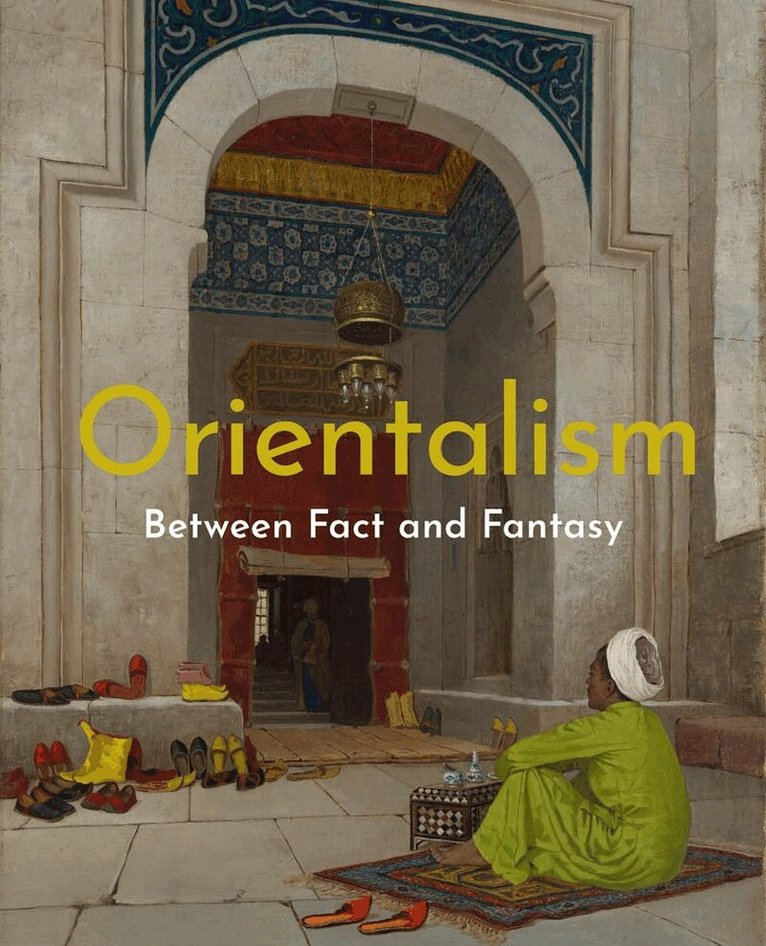
A fresh look at the ways nineteenth-century European and Ottoman artists portrayed and promoted the Middle East through interpretations and emulations of Islamic art and design Colonial and imperial expansion, technical advancement, and artistic transformation in the nineteenth century catalyzed the global marketplace and sparked a wave of European picture-making focused on North Africa and the Middle East. Known as Orientalism, the genre inspired by Islamic cultures relied equally on fact and fantasy to create iconic images both celebrated and interrogated today. This book tells a new, multifaceted story, taking into account how major figures ranging from the French painters Ingres, Delacroix, and Gérôme to the Ottoman statesman and artist Osman Hamdi Bey shaped an understanding of their world by incorporating Islamic motifs into their pictures. Addressing manifold questions about ethnic and racial difference, gender, power relations, and colonialist attitudes, the publication reinterprets beloved works of art such as Gérôme’s Bashi-Bazouk and Ingres’s La Grande Odalisque. The book reaches beyond easel painting to detail the impact of Orientalism on decorative arts, architecture, and collecting practices, which inspired a deep admiration for Islamic art and prompted a design revolution with an enduring legacy in Europe and the United States.Published by The Metropolitan Museum of Art/Distributed by Yale University PressExhibition Schedule: The Metropolitan Museum of Art, New York(June 12, 2026–February 28, 2027)
Inbunden, Engelska, 2020
1 540 kr
Skickas inom 7-10 vardagar
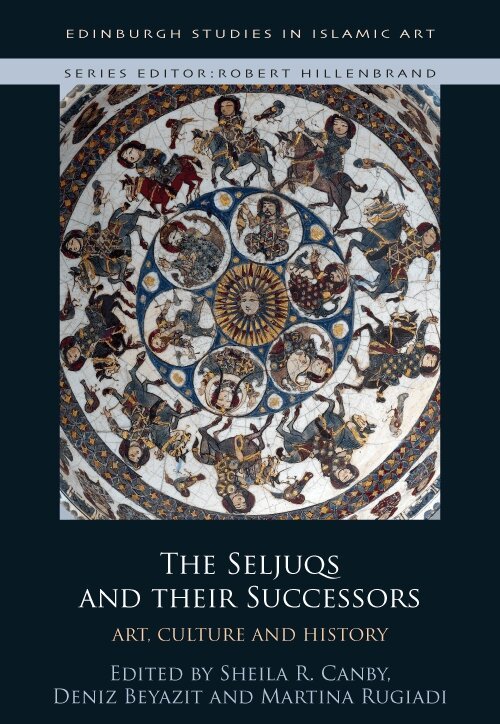
Rising from nomadic origins as Turkish tribesmen, the powerful and culturally prolific Seljuqs and their successor states dominated vast lands extending from Central Asia to the eastern Mediterranean from the eleventh to the fourteenth century. Supported by colour images, charts, and maps, this volume examines how under Seljuq rule, migrations of people and the exchange and synthesis of diverse traditions—including Turkmen, Perso-Arabo-Islamic, Byzantine, Armenian, Crusader and other Christian cultures—accompanied architectural patronage, advances in science and technology and a great flowering of culture within the realm. It also explores how shifting religious beliefs, ideologies of authority, and lifestyle in Seljuq times influenced cultural and artistic production, urban and rural architecture, monumental inscriptions and royal titulature, and practices of religion and magic. It also presents today’s challenges and new approaches to preserving the material heritage of this vastly accomplished and influential civilization.
221 kr
Läs direkt efter köp
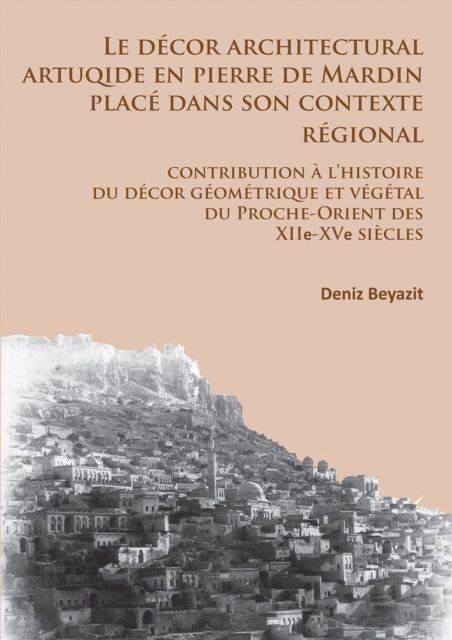
The Artuqids were one of the successor dynasties that rose to power in the aftermath of the eleventh-twelfth century invasion of Western and Central Asia by the Seljuq Turks. While the political power of the Artuqids was limited to the Diyar Bakr, a small region in northern Jazira corresponding to Southeastern Turkey, their artistic legacy is noteworthy. The many surviving Artuqid monuments, built over three hundred years (early 12th – early 15th century), and their decoration exemplify the mastery of stone carving which is reflected in intricate designs and motifs. Mardin, alongside other Artuqid centers such as Amid, Mayyafariqin and Hisn Kayfa, was set within a larger zone of diverse Christian and Islamic artistic traditions. This book defines Mardin’s artistic context in relation to the other Artuqid centers, as well as the neighboring zones that encompass Anatolia, the Caucasus, Iran, Iraq, Syria and Egypt. During the Artuqid period an original style developed in Mardin and the Diyar Bakr, which itself was rooted in a well-established local school of stone carving. Connected with Christian traditions found in the Syriac Tur ‘Abdin and in Late Antique Syria, the decoration also compares with that of monuments in Armenia and Georgia, and resonates with artistic practices seen in areas controlled by the regional Muslim powers of the time: the Zangids, Ayyubids, Mameluks, Great and Anatolian Seljuqs and the Ilkhanids. The Artuqid buildings reflect the spirit of the time, when the Jazira served as an artistic platform, fostering the circulation of ideas that led to new inspiration, and open-minded rulers and patrons, curious and receptive to new creations, stimulated the creative efforts of architects, stone carvers and craftsmen. The decorated monuments also attest to the existence of significant economic wealth and the need to commission sophisticated buildings that magnified the political and social status of the ruling elite’s. French description: Les Artuqides comptaient parmi les nombreuses dynasties successeurs (« successor states ») qui sont arrivées simultanément au pouvoir à la suite de l’invasion des Turcs Seljuqides dont les armées avaient conquis, au cours des XIe et XIIe siècles, de vastes territoires s’étendant des limites de la Chine occidentale à la Méditerranée orientale. Bien que le pouvoir politique des Artuqides fût limité à une petite région, le Diyar Bakr – au nord de la Jazira correspondant à la Turquie du sud-est – l’héritage artistique qu’ils ont légué est pourtant remarquable. Les nombreux monuments artuqides et leur décor architectural, créés sur une période de trois siècles (du début du XIIe au début du XVe siècle), témoignent de la maîtrise de la sculpture et de la taille de pierre qui se reflète dans des motifs et compositions complexes. Mardin, à l’instar des autres centres artuqides d’Amid, Mayyafariqin et Hisn Kayfa, se situe dans une zone englobant diverses traditions artistiques chrétiennes et musulmanes. Ce livre détermine le contexte artistique de Mardin par rapport aux autres centres artuqides, ainsi qu’aux zones voisines comprenant l’Anatolie, le Caucase, l’Iran, l’Iraq, la Syrie et l’Egypte. Durant la période artuqide, un style original se développe à Mardin ainsi qu’au Diyar Bakr. Ce style puise lui-même sa source dans une école locale bien établie de tailleur de pierre. Bien qu’étant liée aux précédentes traditions chrétiennes du Tur ‘Abdin syriaque et à la Syrie de l’Antiquité tardive, la décoration se compare également avec les monuments de l’Arménie et de la Géorgie, et résonne avec les traditions artistiques observées dans les régions contrôlées par les pouvoirs régionaux musulmans de l’époque : les Zangides, Ayyubides, Mamelukes, Grands Seldjuqides, Seldjuqides d’Anatolie et les Ilkhanides. Les monuments artuqides reflètent l’esprit d’une époque durant laquelle la Jazira était une sorte de plateforme artistique qui favorisait la circulation d’idées aboutissant à de nouvelles inspirations, et où souverains et mécènes curieux et réceptifs à de nouvelles créations encourageaient les efforts créatifs des architectes, des tailleurs de pierre et des artisans. Les monuments décorés témoignent aussi de la richesse économique et de la volonté de la classe dirigeante d’investir cette fortune dans la construction de monuments sophistiqués dans le but de s’élever socialement et d’accroître son pouvoir politique.
Inbunden, 2016
569 kr
Tillfälligt slut
A sweeping survey-the first of its kind-of the artistic, cultural, and technological achievements of the vast Seljuq empire
Häftad, Franska, 2016
1 186 kr
Tillfälligt slut
This volume studies the architecture of the city of Mardin in South-east Anatolia produced under the patronage of the Artuqids, whose influence held sway from c. 1101-1409.