• Fri frakt över 249 kr
  • •
  • Snabba leveranser
  • •
  • Billiga böcker
Kundservice

Du är på sajten för privatpersoner.

Företag, bibliotek eller offentlig verksamhet?

Du handlar på classic.bokus.com, där alla dina funktioner finns intakta.
Till classic.bokus.com
Bokus logotyp. Gå till startsidan.
  • Erbjudanden
  • Nyheter
  • Student
  • Topplistor
  • Barn & ungdom
  • Bokus Play
  • E-böcker
  • Pocketböcker
  • Spel & pussel

10% rabatt på allt med kod: NYSTART10 →

Sidfot

Mina sidor

    Hjälp

    • Kundservice
    • Vanliga frågor och svar
    • Frakt och leverans
    • Retur vid ångerrätt
    • Reklamera vara
    • Betalning
    • Köpvillkor
    • Allmänna villkor
    • Information om webbplatsens tillgänglighet

    Om Bokus

    • Om oss
    • Pressrum
    • För studenter
    • För företag
    • För bibliotek och offentlig verksamhet
    • För leverantörer
    • Hållbarhet

    Populärt

    • Aktuella erbjudanden
    • Presentkort
    • Studentlitteratur
    • Nya böcker
    • Topplistor
    • Signerade böcker
    • Engelska böcker

    Inspiration

    • Boktips
    • BookTok
    • Populära bokserier
    • Barnbokskaraktärer
    • Populära författare
    Logotyp för Bokus
    Följ oss på Facebook (extern länk)Följ oss på Instagram (extern länk)Följ oss på YouTube (extern länk)Följ oss på TikTok (extern länk)
    bokus @ CookiesAnpassa cookiesIntegritetspolicyKöpvillkor
    Till Citymail hemsida (extern länk)Till Budbee hemsida (extern länk)Till Postnord hemsida (extern länk)Till Schenker hemsida (extern länk)Till Early Bird hemsida (extern länk)Till Walleys hemsida (extern länk)
    1. Kultur
    2. Konstböcker
    3. Konsthistoria

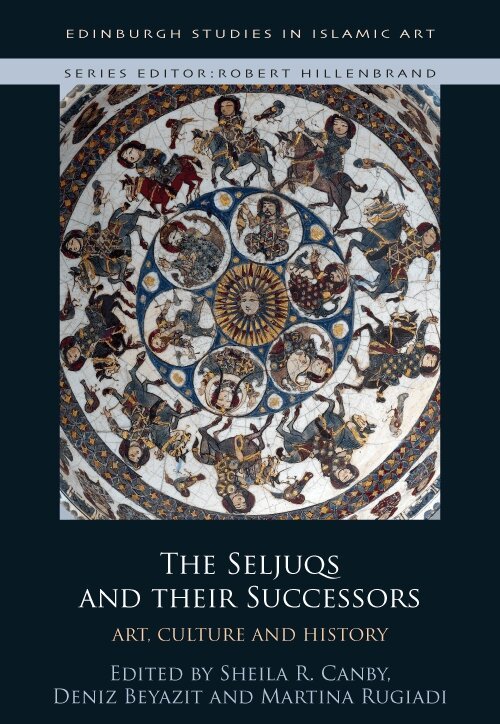
    Seljuqs and their Successors

    Art, Culture and History

    AvSheila Canby,Deniz Beyazit

    Inbunden, Engelska, 2020

    Del i serien Edinburgh Studies in Islamic Art

    1 592 kr

    Beställningsvara. Skickas inom 7-10 vardagar. Fri frakt över 249 kr.

    Beskrivning

    Rising from nomadic origins as Turkish tribesmen, the powerful and culturally prolific Seljuqs and their successor states dominated vast lands extending from Central Asia to the eastern Mediterranean from the eleventh to the fourteenth century. Supported by colour images, charts, and maps, this volume examines how under Seljuq rule, migrations of people and the exchange and synthesis of diverse traditions—including Turkmen, Perso-Arabo-Islamic, Byzantine, Armenian, Crusader and other Christian cultures—accompanied architectural patronage, advances in science and technology and a great flowering of culture within the realm. It also explores how shifting religious beliefs, ideologies of authority, and lifestyle in Seljuq times influenced cultural and artistic production, urban and rural architecture, monumental inscriptions and royal titulature, and practices of religion and magic. It also presents today’s challenges and new approaches to preserving the material heritage of this vastly accomplished and influential civilization.

    Produktinformation

    • Utgivningsdatum:2020-06-30
    • Mått:172 x 244 x 27 mm
    • Vikt:980 g
    • Format:Inbunden
    • Språk:Engelska
    • Serie:Edinburgh Studies in Islamic Art
    • Antal sidor:328
    • Förlag:Edinburgh University Press
    • ISBN:9781474450348

    Utforska kategorier

    • Konsthistoria inom Kultur

    Mer om författaren

    Sheila R. Canby is Curator Emerita of the Department of Islamic Art at the Metropolitan Museum of Art. She is co-author with Deniz Beyazit and Martina Rugiadi of Court and Cosmos: The Great Age of the Seljuqs, Metropolitan Museum of Art (2016), co-editor with Maryam Ekhtiar, Navina Najat Haidar, and Priscilla Soucek of Masterpieces from the Department of Islamic Art, Metropolitan Museum of Art (2011) and author of The Shahnama of Shah Tahmasp, Metropolitan Museum of Art (2011 and 2014), Shah `Abbas: the Remaking of Iran, British Museum Press (2009), Shah `Abbas and the Treasures of Imperial Iran, British Museum Press (2009), Islamic Art in Detail, British Museum Press (2005), Persian Love Poetry, with Vesta Curtis, British Museum Press (2005), among numerous other books. Deniz Beyazit is Associate Curator in the Department of Islamic Art at the Metropolitan Museum of Art. She is co-author with Sheila Canby and Martina Rugiadi of Court and Cosmos: The Great Age of the Seljuqs, Metropolitan Museum of Art (2016). Her other publications include Le décor architectural des Artuqides de Mardin (2016), and as editor, At the Crossroads of Empires: 14th–15th Century Eastern Anatolia (2012). Martina Rugiadi is Associated Curator in the Department of Islamic Art at the Metropolitan Museum of Art and and co-director of the Towns of Karakum Archaeological Project. She is co-author with Sheila Canby and Deniz Beyazit of Court and Cosmos: The Great Age of the Seljuqs, Metropolitan Museum of Art (2016).

    Recensioner i media

    A turning point in Islamic history and art history, the Seljuk age is still relatively understudied. In this substantive volume, Canby et al. gather together some of the best scholars in the field to present an integrated collection covering the history, polity, court ethos, architecture, and material culture of the Seljuks. Taken together, these essays enrich our understanding of the Seljuks and contextualize their legacy in relation to its wider Islamic setting and the trajectories of their various successor states.

    Innehållsförteckning

    • Part I: IntroductionChapter 1: Editors' Introduction Sheila Canby, Deniz Beyazit, Martina RugiadiChapter 2: What is special about Seljuq history? Carole HillenbrandChapter 3: Seljuq art: an overview, Robert HillenbrandPart II: Rulers and CitiesChapter 4: Rum Seljuq Caravanserais: Urbs in Rure, Scott RedfordPart III: Faith, Religion and ArchitectureChapter 5: The Religious History of the Great Seljūq Period , Deborah TorChapter 6: Domes in the Seljuq Architecture of Iran, Lorenz Korn Chapter 7: The Politics of Patronage in Medieval Mosul: Nur al-Din, Badr al-Din, and the Question of the Sunni Revival, Yasser TabbaaPart IV: Identities: Rulers and PopulaceChapter 8: Ghaznavid, Qarakhanid and Seljuq monumental inscriptions and the development of royal propaganda: towards an epigraphic corpus, Roberta Giunta & Viola AllegranziChapter 9: Inscribed Identities: Some Monumental Inscriptions in Eastern Anatolia and the Caucasus, Patricia BlessingChapter 10: Grasping the Magnitude: Saljuq Rum between Byzantium and Persia, Rustam ShukurovPart V: Magic and the CosmosChapter 11: A Seljuq occult manuscript and its world: MS Paris persan 174, Andrew PeacockChapter 12: Al-Khāzinī’s Astronomy Under the Seljuqs: Inferential Observations (iʽtibār), Calendars and Instruments, George SalibaPart VI: Objects and Material CultureChapter 13: Casting Shadows, Margaret GravesChapter 14: What’s in a Name? Signature, Maker’s Mark or Keeping Count: On Craft Practice at Rayy, Renata HolodChapter 15: Collaborative Investigations of a Monumental Seljuq Stucco Panel, Leslee Michelsen & Stefan MasarovicChapter 16: The Florence Shāhnāma between History and Science, Alessandro Sidoti & Mario Vitalone