Devan Pillay - Böcker
Visar alla böcker från författaren Devan Pillay. Handla med fri frakt och snabb leverans.
9 produkter
9 produkter
Labour and the Challenges of Globalization
What Prospects For Transnational Solidarity?
Häftad, Engelska, 2008
307 kr
Skickas inom 7-10 vardagar
This book critically examines the responses of the working classes of the world to the challenges posed by the neoliberal restructuring of the global economy.Neoliberal globalisation, the book argues, has created new forms of polarisation in the world. A renewal of working class internationalism must address the situation of both the more privileged segments of the working class and the more impoverished ones.The study identifies new or renewed labour responses among formalised core workers as well as those on the periphery, including street-traders, homeworkers and other 'informal sector' workers.The book contains ten country studies, including India, China, South Korea, Japan, Germany, Sweden, Canada, South Africa, Argentina and Brazil. It argues that workers and trade unions, through intensive collaboration with other social forces across the world, can challenge the logic of neoliberal globalization.
362 kr
Skickas inom 7-10 vardagar
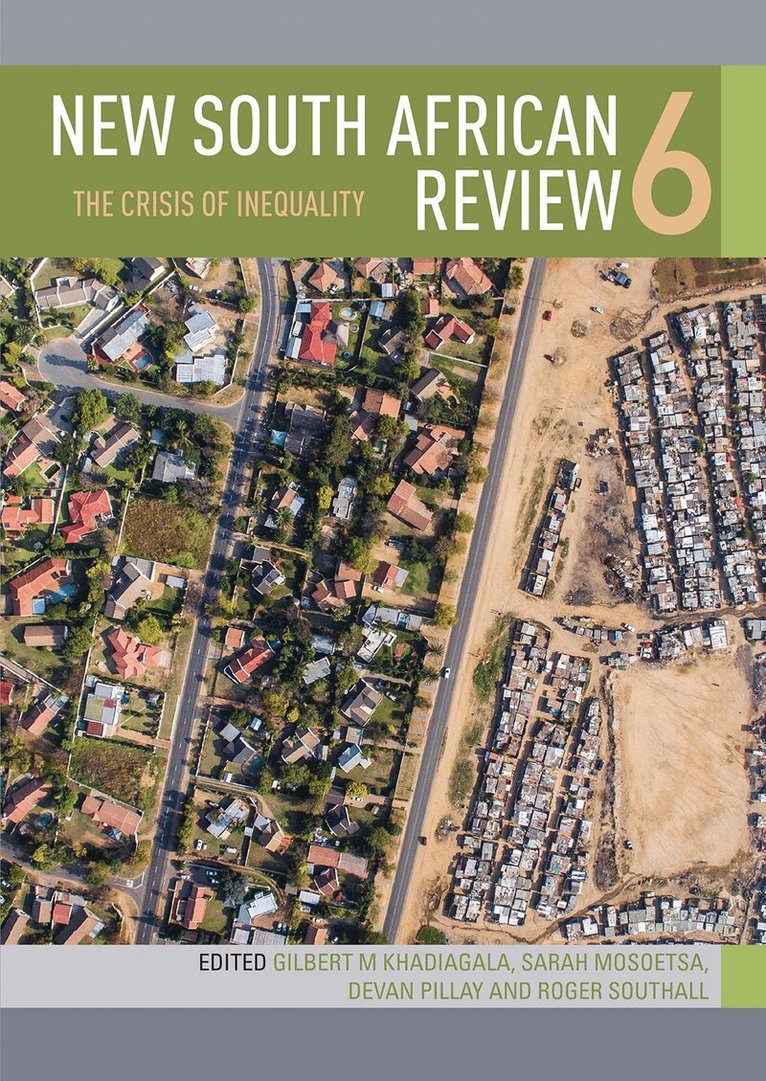
Wide-ranging essays demonstrate how the consequences of inequality extend throughout society and the political economyDespite the transition from apartheid to democracy, South Africa is the most unequal country in the world. Its extremes of wealth and poverty undermine intensifying struggles for a better life for all. The wide-ranging essays in this sixth volume of the New South African Review demonstrate how the consequences of inequality extend throughout society and the political economy, crippling the quest for social justice, polarising the politics, skewing economic outcomes and bringing devastating environmental consequences in their wake. Contributors survey the extent and consequences of inequality across fields as diverse as education, disability, agrarian reform, nuclear geography and small towns, and tackle some of the most difficult social, political and economic issues. How has the quest for greater equality affected progressive political discourse? How has inequality reproduced itself, despite best intentions in social policy, to the detriment of the poor and the historically disadvantaged? How have shifts in mining and the financialisation of the economy reshaped the contours of inequality? How does inequality reach into the daily social life of South Africans, and shape the way in which they interact? How does the extent and shape of inequality in South Africa compare with that of other major countries of the global South which themselves are notorious for their extremes of wealth and poverty? South African extremes of inequality reflect increasing inequality globally, and The Crisis of Inequality will speak to all those general readers, policy makers, researchers and students who are demanding a more equal world.
Del 6 - Democratic Marxisms
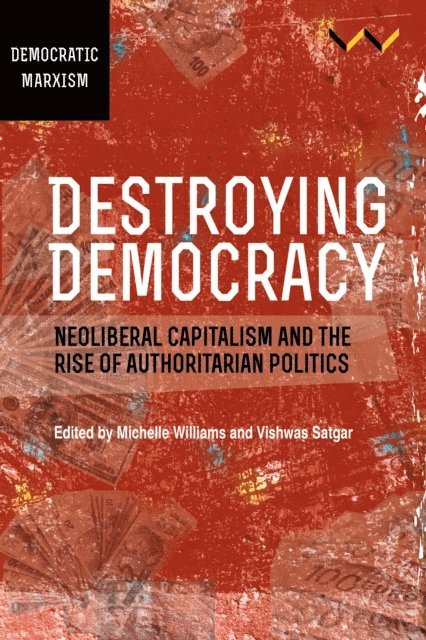
Destroying Democracy
Neoliberal Capitalism and the Rise of Authoritarian Politics
Häftad, Engelska, 2021
362 kr
Skickas inom 7-10 vardagar
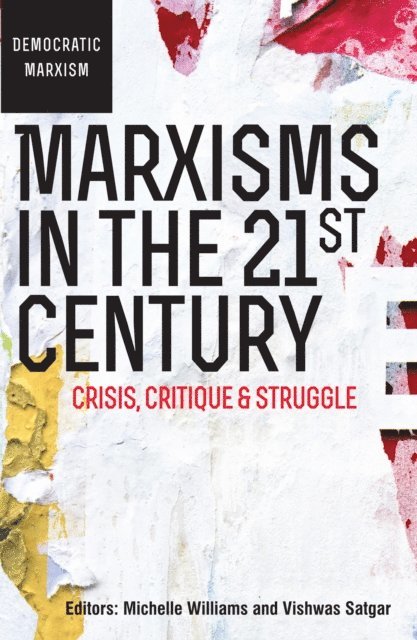
A history of the erosion of democracy across the globeDemocracy is being destroyed. This is a crisis that expresses itself in the rising authoritarianism visible in divisive and exclusionary politics, populist political parties and movements, increased distrust in fact-based information and news, and the withering accountability of state institutions. Over the last four decades, democracy has radically shifted to a market democracy in which all aspects of human, non-human and planetary life are commodified, with corporations becoming more powerful than states and their citizens. This is how neoliberal capitalism functions at a systemic level and if left unchecked, is the greatest threat to democracy and a sustainable planet.Volume six of the Democratic Marxism series focuses on how decades of neoliberal capitalism have eroded the global democratic project and how, in the process, authoritarian politics are gaining ground. Scholars and activists from the political left focus on four country cases – India, Brazil, South Africa and the United States of America – in which the COVID-19 pandemic has fuelled and highlighted the pre-existing crisis. They interrogate issues of politics, ecology, state security, media, access to information and political parties, and affirm the need to reclaim and re-build an expansive and inclusive democracy.Destroying Democracy is an invaluable resource for the general public, activists, scholars and students who are interested in understanding the threats to democracy and the rising tide of authoritarianism in the global south and the global north.
Destroying Democracy
Neoliberal Capitalism and the Rise of Authoritarian Politics
Inbunden, Engelska, 2021
1 285 kr
Skickas inom 5-8 vardagar
A history of the erosion of democracy across the globeDemocracy is being destroyed. This is a crisis that expresses itself in the rising authoritarianism visible in divisive and exclusionary politics, populist political parties and movements, increased distrust in fact-based information and news, and the withering accountability of state institutions. Over the last four decades, democracy has radically shifted to a market democracy in which all aspects of human, non-human and planetary life are commodified, with corporations becoming more powerful than states and their citizens. This is how neoliberal capitalism functions at a systemic level and if left unchecked, is the greatest threat to democracy and a sustainable planet.Volume six of the Democratic Marxism series focuses on how decades of neoliberal capitalism have eroded the global democratic project and how, in the process, authoritarian politics are gaining ground. Scholars and activists from the political left focus on four country cases – India, Brazil, South Africa and the United States of America – in which the COVID-19 pandemic has fuelled and highlighted the pre-existing crisis. They interrogate issues of politics, ecology, state security, media, access to information and political parties, and affirm the need to reclaim and re-build an expansive and inclusive democracy.Destroying Democracy is an invaluable resource for the general public, activists, scholars and students who are interested in understanding the threats to democracy and the rising tide of authoritarianism in the global south and the global north.
507 kr
Skickas inom 7-10 vardagar
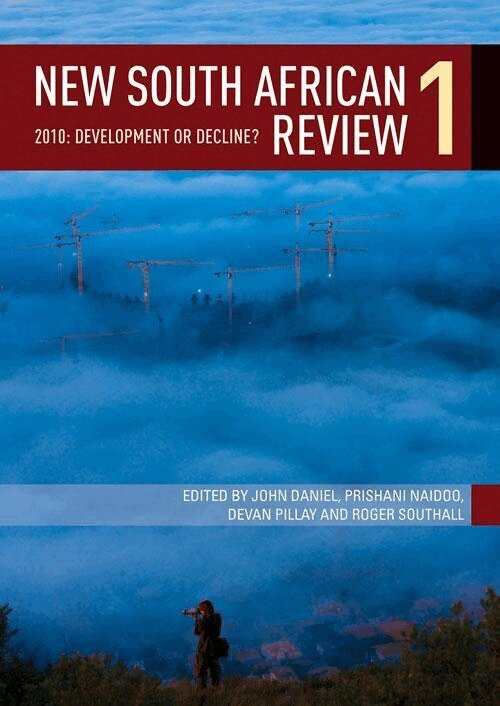
Is South Africa on a long-term decline? The New South African Review revives the tradition of critical, analytical scholarship developed by the South African Review in the 1970s and 1980s. Accessible to a wide readership and drawing upon authors from well beyond academia, its objective is to be informative, discursive and, at times, downright provocative. It seeks to provide contemporary comment and engage with current controversies. The first volume in the series, 2010: Development or Decline? ranges widely across the implications of the international crisis for the economy, the threats to our fragile ecology of present economic strategies, through to the state of the ANC and the public service, issues around service delivery, migration, HIV-Aids, land reform, crime, the sexual behaviour of our youth, and much more. Posing the provocative question of whether South Africa is embarking upon a long-term decline, the volume simultaneously argues the potential for a society premised upon social equality, social coherence and sustainability. This collection will appeal to both national and international audiences interested in engaging with the multiple dilemmas and challenges facing contemporary South Africa
507 kr
Skickas inom 7-10 vardagar
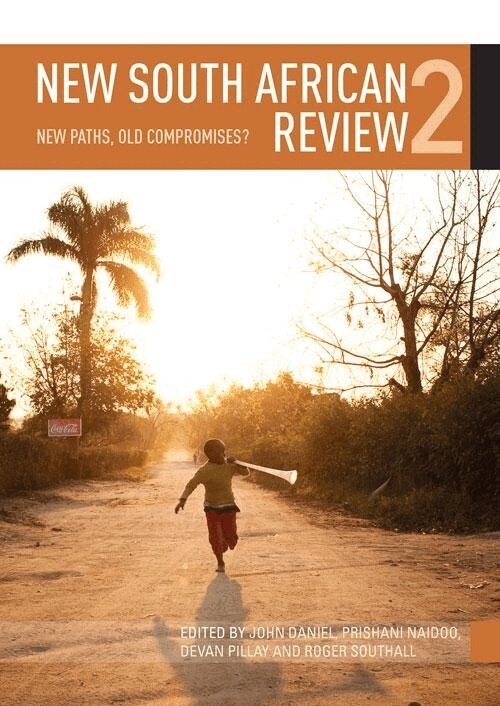
An explanation of the New Growth Plan and alternatives to neo-liberal and capitalist development in South AfricaIn this second volume of the New South African Review, the New Growth Path adopted by the South African government in 2010 provides the basis for a dialogue about whether 'decent work' is the best solution to South Africa's problems of low economic growth and high unemployment. There are investigations into rising inequality against the backdrop of the failings of Black Economic Empowerment; 'greening the economy', with emphasis on biofuels; the crisis of acid mine drainage on the Witwatersrand; possibilities for participatory forms of government; civil society activism; transformation of the print media and the SABC; the crisis in child care in public hospitals; the relationship between the police and a township community; the problems related to the absence of legislation to govern the powers of traditional authorities over land allocation; and assessments of the state of opposition political parties and the ANC Alliance. Asking whether the New Growth Plan reflects a set of new policies or an attempt to re-dress old (com)promises in new clothes, this volume brings together different voices in debate about possibilities for alternatives to neo-liberal and capitalist development in South Africa.
415 kr
Skickas inom 7-10 vardagar
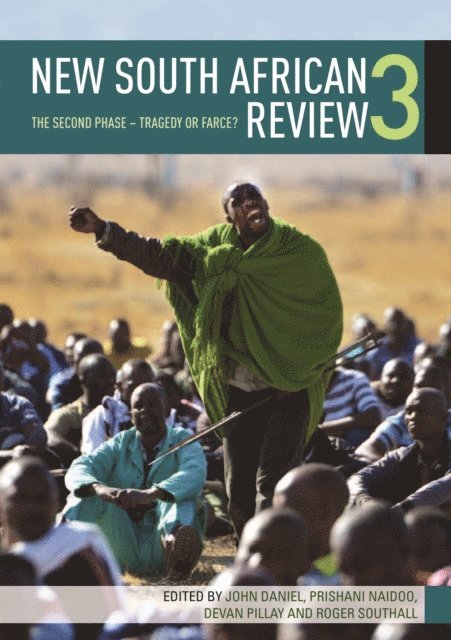
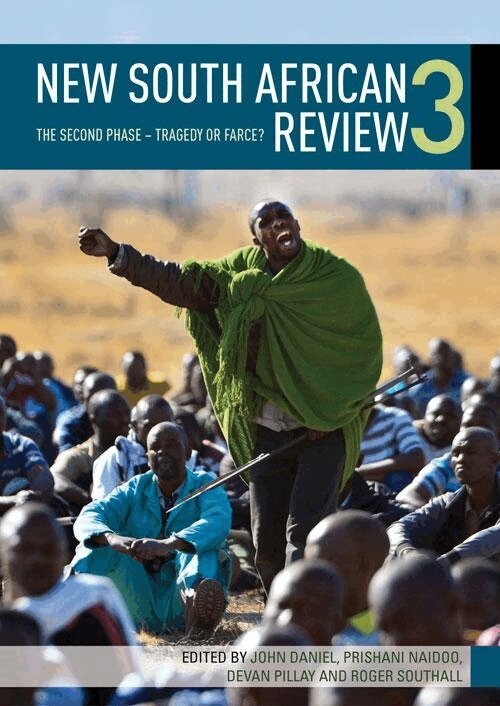
An evaluation of the ANC's second phase of the national democratic revolution.In the face of the continuing national tragedy of the inequality, poverty and unemployment which have triggered rising working-class discontent around the country, the ANC announced a 'second phase' of the 'national democratic revolution' to deal with the challenges. Ironically, the ANC post-Mangaung has resolved to preserve the core tenets of the minerals-energy-financial complex that defined racial capitalism - while at the same time ratcheting up the revolutionary rhetoric to keep the working class and marginalised onside. If the 'first phase' was a tragedy of the unmet expectations of the majority, is the 'second phase' likely to be a farce? The chapters in this volume are written by experts in their fields and address issues of politics, power and social class; economy, ecology and labour; public policy and social practice; and South Africa beyond its borders. They examine some of these challenges, and indicate that they are as much about the defective content of policies as their poor implementation. The third volume of the New South African Review continues the series by providing in-depth analyses of the key issues facing the country today.
415 kr
Skickas inom 7-10 vardagar
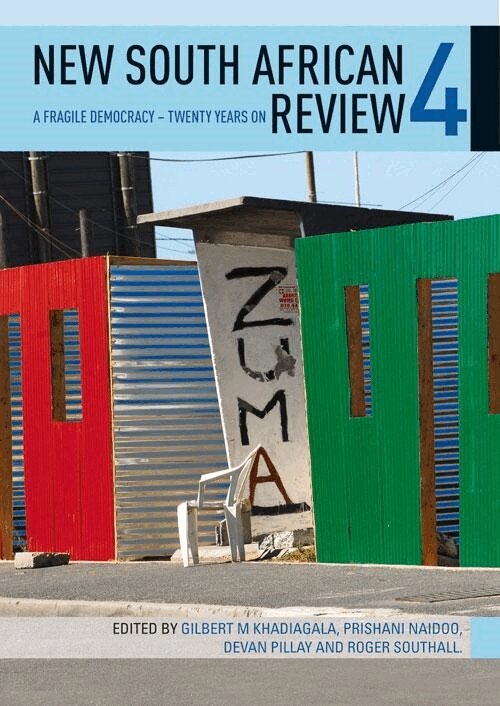
A series of essays taking an account of the milestones of South African democracy in order to give a multidimensional perspective of South Africa. The death of Nelson Mandela on 5 December 2013 was in a sense a wake-up call for South Africans, and a time to reflect on what has been achieved since 'those magnificent days in late April 1994' (as the editors of this volume put it) 'when South Africans of all colours voted for the first time in a democratic election'. In a time of recall and reflection it is important to take account, not only of the dramatic events that grip the headlines, but also of other signposts that indicate the shape and characteristics of a society. The New South African Review looks, every year, at some of these signposts, and the essays in this fourth volume of the series again examine and analyse a broad spectrum of issues affecting the country. They tackle topics as diverse as the state of organised labour; food retailing; electricity generation; access to information; civil courage; the school system; and - looking outside the country to its place in the world - South Africa's relationships with north-east Asia, with Israel and with its neighbours in the southern African region. Taken together, these essays give a multidimensional perspective on South Africa's democracy as it turns twenty, and will be of interest to general readers while being particularly useful to students and researchers.
362 kr
Skickas inom 7-10 vardagar
A series of essays explaining the impact of the events at Marikana upon the South African perspective of police and the keeping of order.This fifth volume in the New South African Review series takes as its starting point the shock wave emanating from the events at Marikana on 16 August 2012 and how it has reverberated throughout politics and society. Some of the chapters in the volume refer directly to Marikana. In others, the influence of that fateful day is pervasive if not direct. Marikana has, for instance, made us look differently at the police and at how order is imposed on society. Monique Marks and David Bruce write that the massacre 'has come to hold a central place in the analysis of policing, and broader political events since 2012...'.The chapters highlight a range of current concerns - political, economic and social. David Dickinson's chapter looks at the life of the poor in a township from within. In contrast, the chapter on foreign policy by Garth le Pere analyses South Africa's approach to international relations in the Mandela, Mbeki and Zuma eras. Anthony Turton's account, 'When gold mining ends' is a chilling forecast of an impending environmental catastrophe. Both Devan Pillay and Noor Nieftagodien focus attention on the left and, in different ways, ascribe its rise to a new politics in the wake of Marikana.The essays in NSAR 5: Beyond Marikana present a range of topics and perspectives of interest to general readers, but the book will also be a useful work of reference for students and researchers.