Diane Singerman - Böcker
Visar alla böcker från författaren Diane Singerman. Handla med fri frakt och snabb leverans.
5 produkter
5 produkter
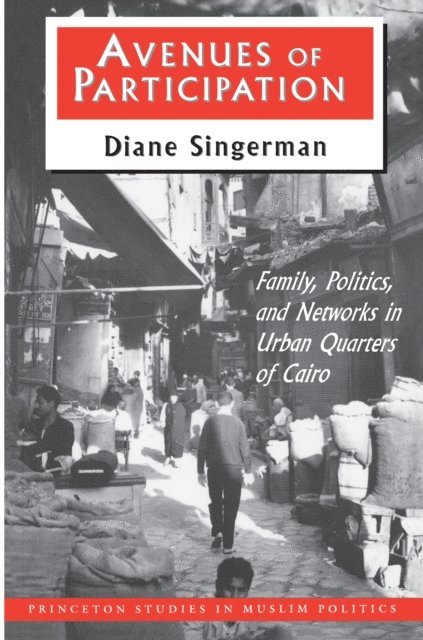
Avenues of Participation
Family, Politics, and Networks in Urban Quarters of Cairo
Häftad, Engelska, 1996
536 kr
Skickas inom 7-10 vardagar
Intentionally excluded from formal politics in authoritarian states by reigning elites, do the common people have concrete ways of achieving community objectives? Contrary to conventional wisdom, this book demonstrates that they do. Focusing on the political life of the sha'b (or popular classes) in Cairo, Diane Singerman shows how men and women develop creative and effective strategies to accomplish shared goals, despite the dominant forces ranged against them. Starting at the household level in one densely populated neighborhood of Cairo, Singerman examines communal patterns of allocation, distribution, and decision-making. Combining the institutional focus of political science with the sensitivities of anthropology, she uncovers a system of informal networks, supported by an informal economy, that constitutes another layer of collective institutions within Egypt and allows excluded groups to pursue their interests. Avenues of Participation traces this informal system from its grounding in the family to its influence on the larger polity.Discussing the role of these networks in meeting fundamental needs in the community--such as earning a living, reproducing the family, saving and investing money, and coping with the bureaucracy--Singerman demonstrates the surprising power these "excluded" people wield. While the government has reduced politics to the realm of distribution to protect itself from challenges, she argues that the popular classes in Cairo, as consumers of goods and services, have turned exploiting the government into a fine art.
337 kr
Tillfälligt slut
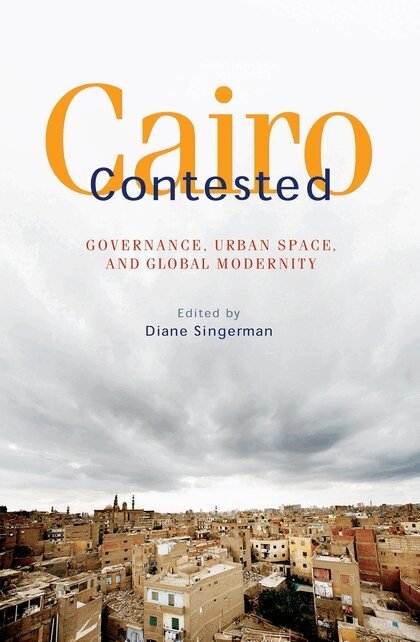
This cross-disciplinary, ethnographic, contextualized, and empirical volume explores the meaning and significance of urban space, and maps the spatial inscription of power on the mega-city of Cairo. Suspicious of collective life and averse to power-sharing, Egyptian governance structures weaken but do not stop the public’s role in the remaking of their city. What happens to a city where neo-liberalism has scaled back public services and encouraged the privatization of public goods, while the vast majority cannot afford the effects of such policies? Who wins and loses in the “march to the modern and the global” as the government transforms urban spaces and markets in the name of growth, security, tourism, and modernity? How do Cairenes struggle with an ambiguous and vulnerable legal and bureaucratic environment when legality is a privilege affordable only to the few or the connected? This companion volume to Cairo Cosmopolitan (2006) further develops the central insights of the Cairo School of Urban Studies.Contributors: Khaled Adham, Jennifer Bell, Agnès Deboulet, Taline Djerdjerian, W.J. Dorman, Bénédicte Florin, Jörg Gertel, Katarzyna Grabska, Patrick Haenni, Kareem Ibrahim, Samia Mehrez, Sarah Ben Néfissa, Agnieszka Paczynska, Samuli Schielke, Mulki Al-Sharmani, Diane Singerman, Hania Sobhy, Malika Zeghal.
282 kr
Skickas inom 5-8 vardagar
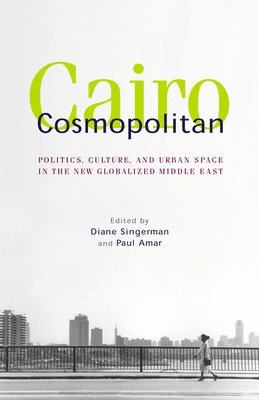
A new paperback edition of the first collected volume from the Cairo School of Urban StudiesBringing together a distinguished interdisciplinary group of scholars, this volume explores what happens when new forms of privatization meet collectivist pasts, public space is sold off to satisfy investor needs and tourist gazes, and the state plans for Egypt’s future in desert cities while stigmatizing and neglecting Cairo’s popular neighborhoods. These dynamics produce surprising contradictions and juxtapositions that are coming to define today’s Middle East.The original publication of this volume launched the Cairo School of Urban Studies, committed to fusing political-economy and ethnographic methods and sensitive to ambivalence and contingency, to reveal the new contours and patterns of modern power emerging in the urban frame. Contributors: Mona Abaza, Nezar AlSayyad, Paul Amar, Walter Armbrust, Vincent Battesti, Fanny Colonna, Eric Denis, Dalila ElKerdany, Yasser Elsheshtawy, Farha Ghannam, Galila El Kadi, Anouk de Koning, Petra Kuppinger, Anna Madoeuf, Catherine Miller, Nicolas Puig, Said Sadek, Omnia El Shakry, Diane Singerman, Elizabeth A. Smith, Leïla Vignal, Caroline Williams.
282 kr
Tillfälligt slut
This cross-disciplinary, ethnographic, contextualized, and empirical volume explores the meaning and significance of urban space, and maps the spatial inscription of power on the mega-city of Cairo. Suspicious of collective life and averse to power-sharing, Egyptian governance structures weaken but do not stop the public's role in the remaking of their city. What happens to a city where neo-liberalism has scaled back public services and encouraged the privatization of public goods, while the vast majority cannot afford the effects of such policies? Who wins and loses in the "march to the modern and the global" as the government transforms urban spaces and markets in the name of growth, security, tourism, and modernity? How do Cairenes struggle with an ambiguous and vulnerable legal and bureaucratic environment when legality is a privilege affordable only to the few or the connected? This companion volume to Cairo Cosmopolitan (AUC Press, 2006) further develops the central insights of the Cairo School of Urban Studies.
359 kr
Tillfälligt slut
In the cities of the Arab world, while the media focus overwhelmingly on questions of religiosity and war, the future of urban modernity and political globalism is taking shape. As the Egyptian state reaches out to capture the apparent promises of neoliberalism, Cairenes struggle over and redefine their place, identity, and material welfare. Bringing together a distinguished interdisciplinary group of scholars, this volume explores what happens when new forms of privatization meet collectivist pasts, public space is sold off to satisfy investor needs and tourist gazes, and the state plans for Egypt’s future in desert cities while stigmatizing and neglecting Cairo’s popular neighborhoods. These dynamics produce surprising contradictions and juxtapositions that are coming to define today’s Middle East. Luxury malls owned by the military or foreign investors compete with flourishing but criminalized open-air markets; Nubian, Upper Egyptian and labor-migrant identities confront a renaissance of Arab nationalism; and new chic coffee houses, crumbling movie palaces, and resurgent working-class cultures offer radically clashing versions of public and gender sociability. This volume launches the Cairo School of Urban Studies, committed to fusing political-economy and ethnographic methods and sensitive to ambivalence and contingency, to reveal the new contours and patterns of modern power emerging in the urban frame. Cairo shows us that divergent cosmopolitanisms—both elite and working-class—are emerging across a broad spectrum of the polity, making new claims for political space, recognition, and representation.Contributors: Mona Abaza, Nezar AlSayyad, Paul Amar, Walter Armbrust, Vincent Battesti, Fanny Colonna, Eric Denis, Dalila ElKerdany, Yasser Elsheshtawy, Farha Ghannam, Galila El Kadi, Anouk de Koning, Petra Kuppinger, Anna Madoeuf, Catherine Miller, Nicolas Puig, Said Sadek, Omnia El Shakry, Diane Singerman, Elizabeth A. Smith, Leïla Vignal, Caroline Williams.