Dominic Janes - Böcker
Visar alla böcker från författaren Dominic Janes. Handla med fri frakt och snabb leverans.
15 produkter
15 produkter
1 119 kr
Skickas inom 5-8 vardagar
To what extent did people think they could identify an 'obvious' sodomite before the construction of the homosexual as a type of person during the latter part of the nineteenth century? What role did secrecy and denial play in relation to the visual expression of same-sex desire before the term 'the closet' came into widespread use in the latter part of the twentieth century? And what, therefore, did sodomites/homosexuals/gays/queers look like in Britain in 1700, 1800, 1900 and 2000? Could they be spotted mincing down the street? Or were such as these just the flamboyant few whose presence conveniently drew attention away from the many others who wanted to appear 'normal'? These issues are not peripheral to the struggle of the last several decades for individual self-determination and self-expression. It was this set of cultural constructions that the pioneering writer Eve Kosofsky Sedgwick (1950-2009) attacked in her book Epistemology of the Closet as representing 'the defining structure for gay oppression in this century'. This book represents a visual culture counterpart to Sedgwick's study and aims, through the use of a series of interdisciplinary case-studies, to explore both the pre-history of the closet since the eighteenth century and its evolution through to the present day. Chapters explore key moments and issues within the British cultural experience and make pioneering use of a wide range of source materials ranging from art to fashion, literature, philosophy, theology, film and archival records.
Victorian Reformation
The Fight Over Idolatry in the Church of England, 1840-1860
Inbunden, Engelska, 2009
1 095 kr
Skickas inom 5-8 vardagar
In early Victorian England there was intense interest in understanding the early Church as an inspiration for contemporary sanctity. This was manifested in a surge in archaeological inquiry and also in the construction of new churches using medieval models. Some Anglicans began to use a much more complicated form of ritual involving vestments, candles, and incense. This "Anglo-Catholic" movement was vehemently opposed by evangelicals and dissenters, who saw this as the vanguard of full-blown "popery." The disputed buildings, objects, and art works were regarded by one side as idolatrous and by the other as sacred and beautiful expressions of devotion. Dominic Janes seeks to understand the fierce passions that were unleashed by the contended practices and artifacts - passions that found expression in litigation, in rowdy demonstrations, and even in physical violence. During this period, Janes observes, the wider culture was preoccupied with the idea of pollution caused by improper sexuality. The Anglo-Catholics had formulated a spiritual ethic that linked goodness and beauty. Their opponents saw this visual worship as dangerously sensual. In effect, this sacred material culture was seen as a sexual fetish. The origins of this understanding, Janes shows, lay in radical circles, often in the context of the production of anti-Catholic pornography which titillated with the contemplation of images of licentious priests, nuns, and monks.
1 801 kr
Skickas inom 5-8 vardagar
In recent years, terrorism has become closely associated with martyrdom in the minds of many terrorists and in the view of nations around the world. In Islam, martyrdom is mostly conceived as bearing witness to faith and God. Martyrdom is also central to the Christian tradition, not only in the form of Christs Passion or saints faced with persecution and death, but in the duty to lead a good and charitable life. In both religions, the association of religious martyrdom with political terror has a long and difficult history. The essays of this volume illuminate this historyfollowing, for example, Christian martyrdom from its origins in the Roman world, to the experience of the deaths of terrorist leaders of the French Revolution, to parallels in the contemporary worldand explore historical parallels among Islamic, Christian, and secular traditions. Featuring essays from eminent scholars in a wide range of disciplines, Martyrdom and Terrorism provides a timely comparative history of the practices and discourses of terrorism and martyrdom from antiquity to the twenty-first century. Dominic Janes is Reader in Cultural History and Visual Studies at Birkbeck, University of London. In addition to a spell as a lecturer at Lancaster University, he has been a research fellow at London and Cambridge universities. His latest book project is Queer Martyrdom from John Henry Newman to Derek Jarman. Alex Houen is Senior University Lecturer in Modern Literature in the Faculty of English, University of Cambridge, and Fellow of Pembroke College. He is author of Terrorism and Modern Literature, as well as various articles and book chapters on literature and political violence.
503 kr
Skickas inom 5-8 vardagar
In recent years, terrorism has become closely associated with martyrdom, in the minds of many terrorists and in the view of nations around the world. Islam contains manifold concepts of martyrdom, some of which link ''bearing witness'' to faith and God. Martyrdom is also central to the Christian tradition, not only in the form of Christ's Passion or saints faced with persecution and death, but in the duty to lead a good and charitable life. In both religions, the association of religious martyrdom with political terror has a long and difficult legacy. The essays of this volume illuminate these legacies--following, for example, Christian martyrdom from its origins in the Roman world, to the experience of the deaths of ''terrorist'' leaders of the French Revolution, to parallels in the contemporary world--and explore historical parallels in Islamic, Christian, and secular traditions. Featuring essays from eminent scholars in a wide range of disciplines, Martyrdom and Terorrism provides a timely comparative history of the practices and discourses of terrorism and martyrdom from antiquity to the twenty-first century.
356 kr
Skickas inom 7-10 vardagar
"I do not say you are it, but you look it, and you pose at it, which is just as bad," Lord Queensbury challenged Oscar Wilde in the courtroom which erupted in laughter accusing Wilde of posing as a sodomite. What was so terrible about posing as a sodomite, and why was Queensbury's horror greeted with such amusement? In Oscar Wilde Prefigured, Dominic Janes suggests that what divided the two sides in this case was not so much the question of whether Wilde was or was not a sodomite, but whether or not it mattered that people could appear to be sodomites. For many, intimations of sodomy were simply a part of the amusing spectacle of sophisticated life.Oscar Wilde Prefigured is a study of the prehistory of this "queer moment" in 1895. Janes explores the complex ways in which men who desired sex with men in Britain had expressed such interests through clothing, style, and deportment since the mid-eighteenth century.He supplements the well-established narrative of the inscription of sodomitical acts into a homosexual label and identity at the end of the nineteenth century by teasing out the means by which same-sex desires could be signaled through visual display in Georgian and Victorian Britain. Wilde, it turns out, is not the starting point for public queer figuration. He is the pivot by which Georgian figures and twentieth-century camp stereotypes meet. Drawing on the mutually reinforcing phenomena of dandyism and caricature of alleged effeminates, Janes examines a wide range of images drawn from theater, fashion, and the popular press to reveal new dimensions of identity politics, gender performance, and queer culture.
560 kr
Skickas inom 7-10 vardagar
From the conversion of the emperor Constantine in the early fourth century, vast sums of money were spent on the building and sumptuous decoration of churches. The resulting works of art contain many of the greatest monuments of late antique and early medieval society. But how did such expenditure fit with Christ's message of poverty and simplicity? In attempting to answer that question, this 1998 study employs theories on the use of metaphor to show how physical beauty could stand for spiritual excellence. As well as explaining the evolving attitudes to sanctity, decorum and display in Roman and medieval society, detailed analysis is made of case studies of Latin biblical exegesis and gold-ground mosaics so as to counterpoint the contemporary use of gold as a Christian image in art and text.
194 kr
Tillfälligt slut
Although Christianity began as a protest movement against the moral state of the people of Israel, it also started within a Roman province and was for centuries to develop within the context of the Roman Empire. The stereotype of cruel emperors and heroic martyrs is familiar (not least from films) but, as Dominic Janes shows in this stimulating and wide-ranging study, the relationship between Romans and Christians was not only more complex but continually evolving.The ignorance and incomprehension of Pontius Pilate was soon replaced by dislike and anger, as the Christian community grew. The refusal of these people to sacrifice to the emperor's divinity struck a blow at the heart of Roman authority. Decades of sporadic persecution followed before emperor Constantine I converted to Christianity. The Church was then showered by gifts and endowments. Great churches with splendid decorations sprang up across the Empire. The splendour of Roman art and architecture was now brilliantly employed by the Christian faith.The final period of the Roman Empire saw the decay of the grand monuments of the Roman state as its power crumbled away. Yet, during those turbulent years the Church was able to keep control of its power and splendour. From being the humble opponent of the grandeur of Rome, the Church became the vehicle for the preservation of classical magnificence through the art of its basilicas and baptisteries.This book explores the story of Romans and Christians across the Empire. Then it focuses on Britain and Gaul in the final years of the Roman Empire so as to explain the vital way in which the heritage of classical art and architecture was transmitted to the Middle Ages and thereby to our own times.
2 478 kr
Skickas inom 10-15 vardagar
Walsingham was medieval England's most important shrine to the Virgin Mary and a popular pilgrimage site. Following its modern revival it is also well known today. For nearly a thousand years, it has been the subject of, or referred to in, music, poetry and novels (by for instance Langland, Erasmus, Sidney, Shakespeare, Hopkins, Eliot and Lowell). But only in the last twenty years or so has it received serious scholarly attention. This volume represents the first collection of multi-disciplinary essays on Walsingham's broader cultural significance. Contributors to this book focus on the hitherto neglected issue of Walsingham's cultural impact: the literary, historical, art historical and sociological significance that Walsingham has had for over six hundred years. The collection's essays consider connections between landscape and the sacred, the body and sexuality and Walsingham's place in literature, music and, more broadly, especially since the Reformation, in the construction of cultural memory. The historical range of the essays includes Walsingham's rise to prominence in the later Middle Ages, its destruction during the English Reformation, and the presence of uncanny echoes and traces in early modern English culture, including poems, ballads, music and some of the plays of Shakespeare. Contributions also examine the cultural dynamics of the remarkable revival of Walsingham as a place of pilgrimage and as a cultural icon in the Victorian and modern periods. Hitherto, scholarship on Walsingham has been almost entirely confined to the history of religion. In contrast, contributors to this volume include internationally known scholars from literature, cultural studies, history, sociology, anthropology and musicology as well as theology.
340 kr
Skickas inom 5-8 vardagar
818 kr
Skickas inom 10-15 vardagar
Walsingham was medieval England's most important shrine to the Virgin Mary and a popular pilgrimage site. Following its modern revival it is also well known today. For nearly a thousand years, it has been the subject of, or referred to in, music, poetry and novels (by for instance Langland, Erasmus, Sidney, Shakespeare, Hopkins, Eliot and Lowell). But only in the last twenty years or so has it received serious scholarly attention. This volume represents the first collection of multi-disciplinary essays on Walsingham's broader cultural significance. Contributors to this book focus on the hitherto neglected issue of Walsingham's cultural impact: the literary, historical, art historical and sociological significance that Walsingham has had for over six hundred years. The collection's essays consider connections between landscape and the sacred, the body and sexuality and Walsingham's place in literature, music and, more broadly, especially since the Reformation, in the construction of cultural memory. The historical range of the essays includes Walsingham's rise to prominence in the later Middle Ages, its destruction during the English Reformation, and the presence of uncanny echoes and traces in early modern English culture, including poems, ballads, music and some of the plays of Shakespeare. Contributions also examine the cultural dynamics of the remarkable revival of Walsingham as a place of pilgrimage and as a cultural icon in the Victorian and modern periods. Hitherto, scholarship on Walsingham has been almost entirely confined to the history of religion. In contrast, contributors to this volume include internationally known scholars from literature, cultural studies, history, sociology, anthropology and musicology as well as theology.
1 361 kr
Skickas inom 7-10 vardagar
In this unique intervention in the study of queer culture, Dominic Janes highlights that, under the gaze of social conservatism, ‘gay’ life was hiding in plain sight. Indeed, he argues that the worlds of glamour, fashion, art and countercultural style provided rich opportunities for the construction of queer spectacle in London. Inspired by the legacies of Oscar Wilde, interwar and later 20th-century men such as Cecil Beaton expressed transgressive desires in forms inspired by those labelled ‘freaks’ and, thereby, made major contributions to the histories of art, design, fashion, sexuality, and celebrity.Janes reinterprets the origins of gay and queer cultures by charting the interactions between marginalized freaks and chic fashionistas. He establishes a new framework for future analyses of other cities and media, and of the roles of women and diverse identities.
420 kr
Skickas inom 10-15 vardagar
In this unique intervention in the study of queer culture, Dominic Janes highlights that, under the gaze of social conservatism, ‘gay’ life was hiding in plain sight. Indeed, he argues that the worlds of glamour, fashion, art and countercultural style provided rich opportunities for the construction of queer spectacle in London. Inspired by the legacies of Oscar Wilde, interwar and later 20th-century men such as Cecil Beaton expressed transgressive desires in forms inspired by those labelled ‘freaks’ and, thereby, made major contributions to the histories of art, design, fashion, sexuality, and celebrity.Janes reinterprets the origins of gay and queer cultures by charting the interactions between marginalized freaks and chic fashionistas. He establishes a new framework for future analyses of other cities and media, and of the roles of women and diverse identities.
413 kr
Skickas inom 7-10 vardagar
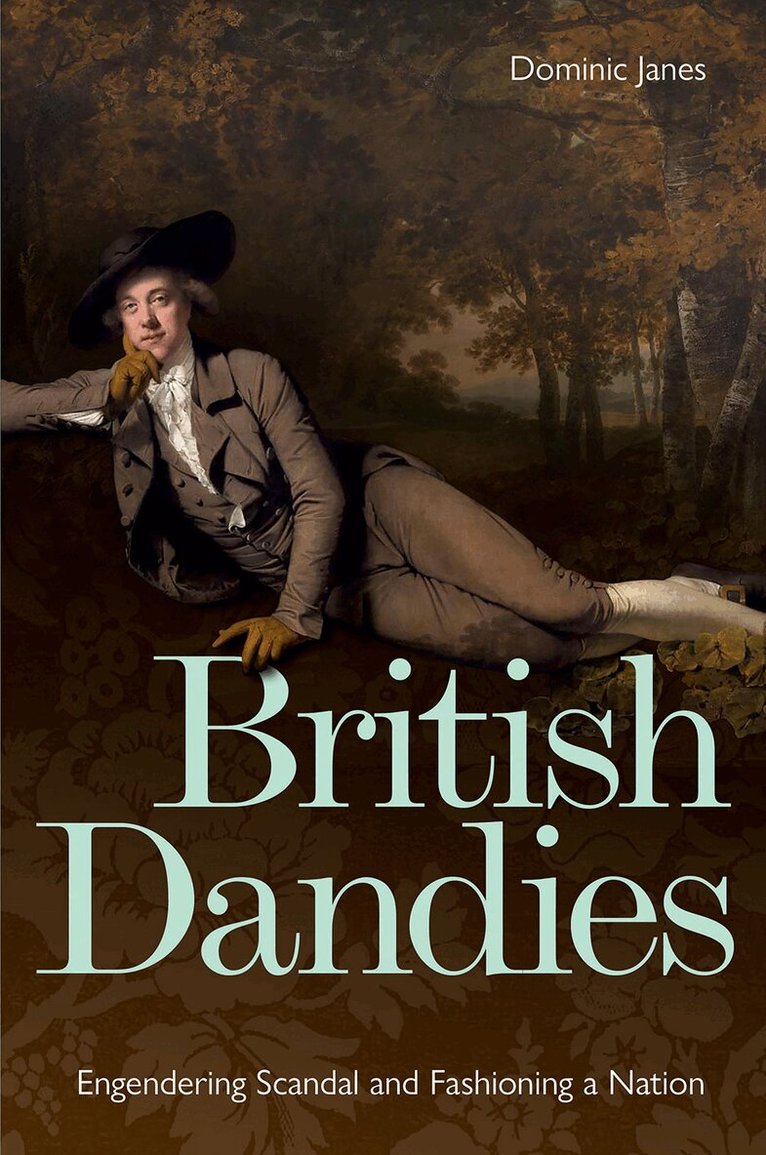
Dressy men as a type of celebrity have played a distinctive part in the cultural – and even in the political – life of Britain over several centuries. But unlike the twenty-first-century hipster, the dandies of the British past provoked intense degrees of fascination and horror in their homeland and played an important role in British society from the seventeenth to the twentieth century. This book – illustrated with contemporary prints, portraits and caricatures – explores that social and cultural history through a focus on the macaroni, the dandy and the aesthete. The first was noted for his flamboyance, the second for his austere perfectionism and the third for his sexual perversity. All were highly controversial in their time, pioneering new ways of displaying and performing gender, as demonstrated by the impact of key figures such as Lord Hervey, George ‘Beau’ Brummell and Oscar Wilde. This groundbreaking study tells the scandalous story of fashionable men and their clothes as a reflection of changing attitudes not only to style but also to gender and sexuality.
1 064 kr
Skickas inom 10-15 vardagar
This book offers a range of interdisciplinary evaluations of the history of same-sex relationships in the Church as they have been understood in different periods and contexts.
959 kr
Skickas inom 10-15 vardagar
This book offers a range of interdisciplinary evaluations of the history of same-sex relationships in the Church as they have been understood in different periods and contexts.