
Häftad, Engelska, 2015
290 kr
Skickas inom 5-8 vardagar
290 kr
Skickas inom 5-8 vardagar
335 kr
Skickas
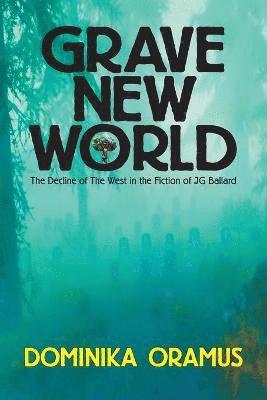
In this fascinating book Dr Dominika Oramus reads J.G. Ballard’s fiction (and some of his non-fiction) as a record of the gradual internal degeneration of Western civilization in the second half of the twentieth century. In sundry ways and styles Ballard’s ostensibly very heterogeneous oeuvre depicts the same intangible catastrophe that has happened to the world. Contemporary reality is thus presented in his late prose as “post-apocalyptic”: though we are not literally living amidst the ruins, the golden age is far behind us and we are witnessing the twilight of the West. Oramus achieves two aims in this study. First, the revelation of the Grave New World, that imaginary territory Ballard describes in his books, which is a combination of the turn-of-the-millennium world, intertextual allusions to both fiction and non-fiction, and Ballard’s projections for the near future with its sociological idiosyncrasies. Oramus shows that no matter which literary conventions Ballard applies in a given text (science fiction, speculative fiction, detective story, thriller, war novel, or any other), he charts the very same territory and remains throughout primarily interested in the reaction of the human mind to the post-World War II reality — which is the common denominator of his diverse obsessions. Second, she sheds light on the spiritual condition and social problems of contemporary Western civilization as seen by Ballard, its ever so inquisitive member. Her technique in approaching Ballard is that of textual analysis and a close readings of passages of his texts that best show his exuberant stylistics; sometimes she also points out his references to literary and cultural theories. As far as said theories are concerned, Oramus follows Ballard’s own readings. He very often alludes to critical schools and makes his characters discuss fashionable notions and ideas. She refers to the same sources: mostly psychoanalysts (many Ballardian characters are psychiatrists), but also historians and recent cultural theorists.
31 kr
Läs direkt efter köp
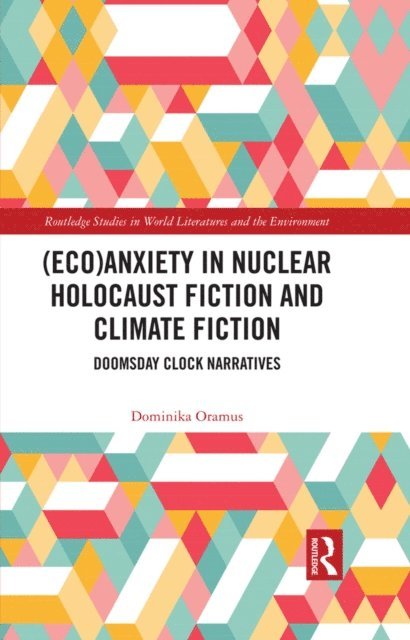
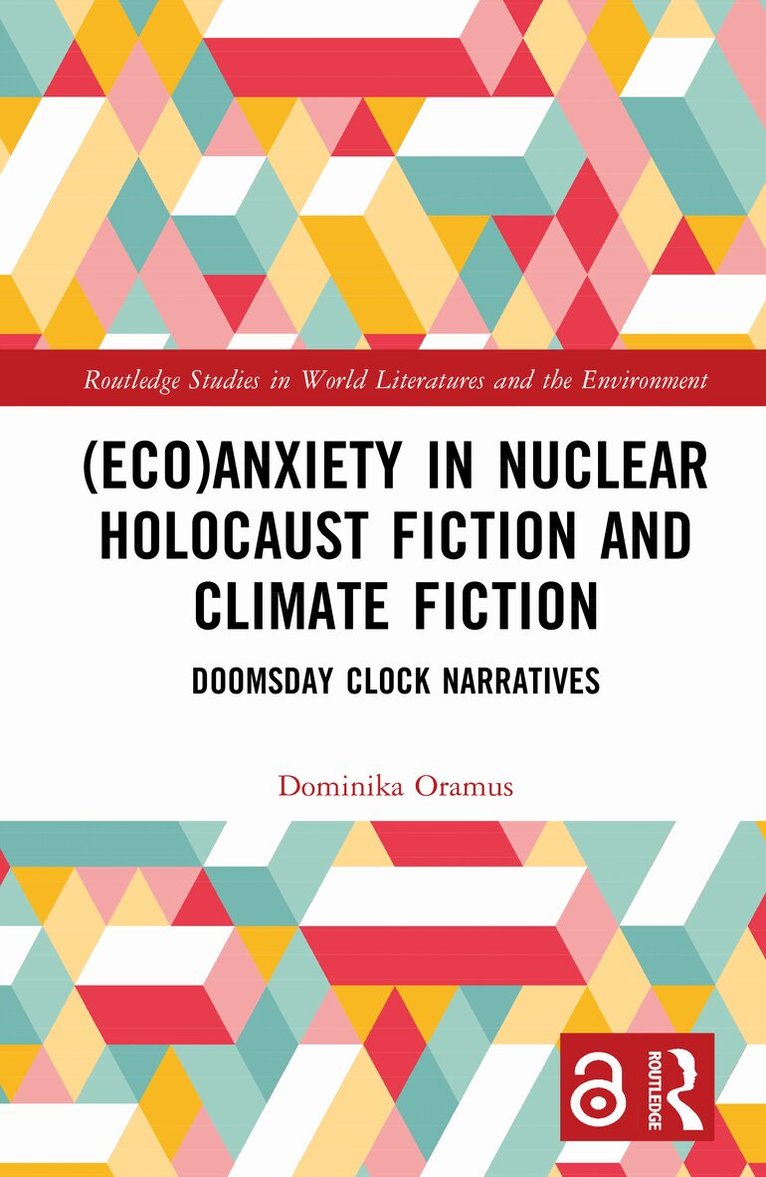
(Eco)Anxiety in Nuclear Holocaust Fiction and Climate Fiction: Doomsday Clock Narratives demonstrates that disaster fiction— nuclear holocaust and climate change alike— allows us to unearth and anatomise contemporary psychodynamics and enables us to identify pretraumatic stress as the common denominator of seemingly unrelated types of texts. These Doomsday Clock Narratives argue that earth’s demise is soon and certain. They are set after some catastrophe and depict people waiting for an even worse catastrophe to come. References to geology are particularly important— in descriptions of the landscape, the emphasis falls on waste and industrial bric- a- brac, which is seen through the eyes of a future, posthuman archaeologist. Their protagonists have the uncanny feeling that the countdown has already started, and they are coping with both traumatic memories and pretraumatic stress. Readings of novels by Walter M. Miller, Nevil Shute, John Christopher, J. G. Ballard, George Turner, Maggie Gee, Paolo Bacigalupi, Ruth Ozeki, and Yoko Tawada demonstrate that the authors are both indebted to a century- old tradition and inventively looking for new ways of expressing the pretraumatic stress syndrome common in contemporary society. This book is written for an academic audience (postgraduates, researchers, and academics) specialising in British Literature, American Literature, and Science Fiction Studies.
760 kr
Läs direkt efter köp
(Eco)Anxiety in Nuclear Holocaust Fiction and Climate Fiction: Doomsday Clock Narratives demonstrates that disaster fiction— nuclear holocaust and climate change alike— allows us to unearth and anatomise contemporary psychodynamics and enables us to identify pretraumatic stress as the common denominator of seemingly unrelated types of texts. These Doomsday Clock Narratives argue that earth’s demise is soon and certain. They are set after some catastrophe and depict people waiting for an even worse catastrophe to come. References to geology are particularly important— in descriptions of the landscape, the emphasis falls on waste and industrial bric- a- brac, which is seen through the eyes of a future, posthuman archaeologist. Their protagonists have the uncanny feeling that the countdown has already started, and they are coping with both traumatic memories and pretraumatic stress. Readings of novels by Walter M. Miller, Nevil Shute, John Christopher, J. G. Ballard, George Turner, Maggie Gee, Paolo Bacigalupi, Ruth Ozeki, and Yoko Tawada demonstrate that the authors are both indebted to a century- old tradition and inventively looking for new ways of expressing the pretraumatic stress syndrome common in contemporary society. This book is written for an academic audience (postgraduates, researchers, and academics) specialising in British Literature, American Literature, and Science Fiction Studies.
2 834 kr
Skickas inom 10-15 vardagar
714 kr
Skickas inom 10-15 vardagar
935 kr
Läs direkt efter köp
926 kr
Läs direkt efter köp
2 834 kr
Skickas inom 10-15 vardagar
The Theory of Evolution and the Life of its Author in Contemporary British Fiction and Non-Fiction
588 kr
Skickas inom 5-8 vardagar
Angela Carter's 'Discourse of Delight' in her Fiction and Non-Fiction
805 kr
Skickas inom 5-8 vardagar
290 kr
Skickas inom 5-8 vardagar
335 kr
Skickas
In this fascinating book Dr Dominika Oramus reads J.G. Ballard’s fiction (and some of his non-fiction) as a record of the gradual internal degeneration of Western civilization in the second half of the twentieth century. In sundry ways and styles Ballard’s ostensibly very heterogeneous oeuvre depicts the same intangible catastrophe that has happened to the world. Contemporary reality is thus presented in his late prose as “post-apocalyptic”: though we are not literally living amidst the ruins, the golden age is far behind us and we are witnessing the twilight of the West. Oramus achieves two aims in this study. First, the revelation of the Grave New World, that imaginary territory Ballard describes in his books, which is a combination of the turn-of-the-millennium world, intertextual allusions to both fiction and non-fiction, and Ballard’s projections for the near future with its sociological idiosyncrasies. Oramus shows that no matter which literary conventions Ballard applies in a given text (science fiction, speculative fiction, detective story, thriller, war novel, or any other), he charts the very same territory and remains throughout primarily interested in the reaction of the human mind to the post-World War II reality — which is the common denominator of his diverse obsessions. Second, she sheds light on the spiritual condition and social problems of contemporary Western civilization as seen by Ballard, its ever so inquisitive member. Her technique in approaching Ballard is that of textual analysis and a close readings of passages of his texts that best show his exuberant stylistics; sometimes she also points out his references to literary and cultural theories. As far as said theories are concerned, Oramus follows Ballard’s own readings. He very often alludes to critical schools and makes his characters discuss fashionable notions and ideas. She refers to the same sources: mostly psychoanalysts (many Ballardian characters are psychiatrists), but also historians and recent cultural theorists.
31 kr
Läs direkt efter köp
(Eco)Anxiety in Nuclear Holocaust Fiction and Climate Fiction: Doomsday Clock Narratives demonstrates that disaster fiction— nuclear holocaust and climate change alike— allows us to unearth and anatomise contemporary psychodynamics and enables us to identify pretraumatic stress as the common denominator of seemingly unrelated types of texts. These Doomsday Clock Narratives argue that earth’s demise is soon and certain. They are set after some catastrophe and depict people waiting for an even worse catastrophe to come. References to geology are particularly important— in descriptions of the landscape, the emphasis falls on waste and industrial bric- a- brac, which is seen through the eyes of a future, posthuman archaeologist. Their protagonists have the uncanny feeling that the countdown has already started, and they are coping with both traumatic memories and pretraumatic stress. Readings of novels by Walter M. Miller, Nevil Shute, John Christopher, J. G. Ballard, George Turner, Maggie Gee, Paolo Bacigalupi, Ruth Ozeki, and Yoko Tawada demonstrate that the authors are both indebted to a century- old tradition and inventively looking for new ways of expressing the pretraumatic stress syndrome common in contemporary society. This book is written for an academic audience (postgraduates, researchers, and academics) specialising in British Literature, American Literature, and Science Fiction Studies.
760 kr
Läs direkt efter köp
(Eco)Anxiety in Nuclear Holocaust Fiction and Climate Fiction: Doomsday Clock Narratives demonstrates that disaster fiction— nuclear holocaust and climate change alike— allows us to unearth and anatomise contemporary psychodynamics and enables us to identify pretraumatic stress as the common denominator of seemingly unrelated types of texts. These Doomsday Clock Narratives argue that earth’s demise is soon and certain. They are set after some catastrophe and depict people waiting for an even worse catastrophe to come. References to geology are particularly important— in descriptions of the landscape, the emphasis falls on waste and industrial bric- a- brac, which is seen through the eyes of a future, posthuman archaeologist. Their protagonists have the uncanny feeling that the countdown has already started, and they are coping with both traumatic memories and pretraumatic stress. Readings of novels by Walter M. Miller, Nevil Shute, John Christopher, J. G. Ballard, George Turner, Maggie Gee, Paolo Bacigalupi, Ruth Ozeki, and Yoko Tawada demonstrate that the authors are both indebted to a century- old tradition and inventively looking for new ways of expressing the pretraumatic stress syndrome common in contemporary society. This book is written for an academic audience (postgraduates, researchers, and academics) specialising in British Literature, American Literature, and Science Fiction Studies.
2 834 kr
Skickas inom 10-15 vardagar
714 kr
Skickas inom 10-15 vardagar
935 kr
Läs direkt efter köp
926 kr
Läs direkt efter köp
2 834 kr
Skickas inom 10-15 vardagar
The Theory of Evolution and the Life of its Author in Contemporary British Fiction and Non-Fiction
588 kr
Skickas inom 5-8 vardagar
Angela Carter's 'Discourse of Delight' in her Fiction and Non-Fiction
805 kr
Skickas inom 5-8 vardagar