Dona Brown - Böcker
Visar alla böcker från författaren Dona Brown. Handla med fri frakt och snabb leverans.
4 produkter
4 produkter
289 kr
Skickas inom 10-15 vardagar
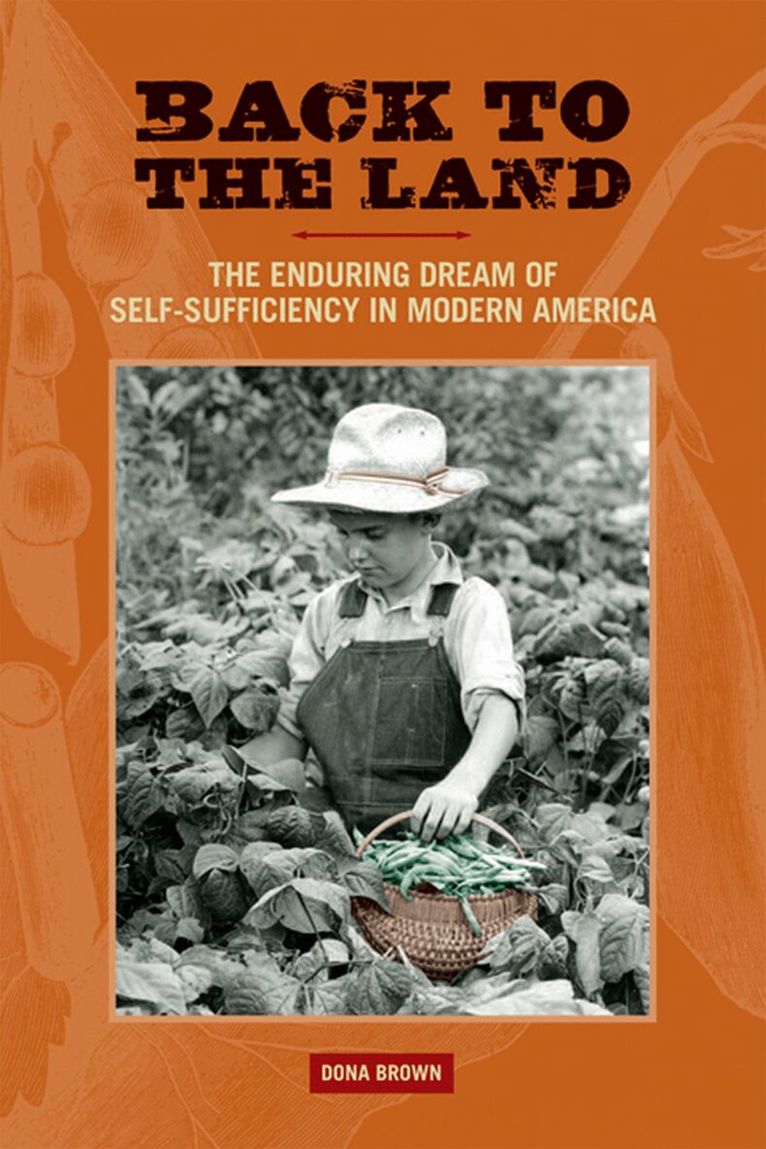
For many, 'going back to the land' brings to mind the 1960s and 1970s - hippie communes and the Summer of Love, The Whole Earth Catalog and Mother Earth News. More recently, the movement has reemerged in a new enthusiasm for locally produced food and more sustainable energy paths. But these latest back-to-the-landers are part of a much larger story. Americans have been dreaming of returning to the land ever since they started to leave it. In Back to the Land, Dona Brown explores the history of this recurring impulse. Back-to-the-landers have often been viewed as nostalgic escapists or romantic nature-lovers. But their own words reveal a more complex story. In such projects as Gustav Stickley's Craftsman Farms, Frank Lloyd Wright's 'Broadacre City,' and Helen and Scott Nearing's quest for 'the good life,' Brown finds that the return to the farm has meant less a going-backwards than a going-forwards, a way to meet the challenges of the modern era. Progressive reformers pushed for homesteading to help impoverished workers get out of unhealthy urban slums. Depression-era back-to-the-landers, wary of the centralizing power of the New Deal, embraced a new 'third way' politics of decentralism and regionalism. Later still, the movement merged with environmentalism. To understand Americans' response to these back-to-the- land ideas, Brown turns to the fan letters of ordinary readers - retired teachers and overworked clerks, recent immigrants and single women. In seeking their rural roots, Brown argues, Americans have striven above all for the independence and self-sufficiency they associate with the agrarian ideal.
319 kr
Skickas inom 11-20 vardagar
375 kr
Skickas inom 7-10 vardagar
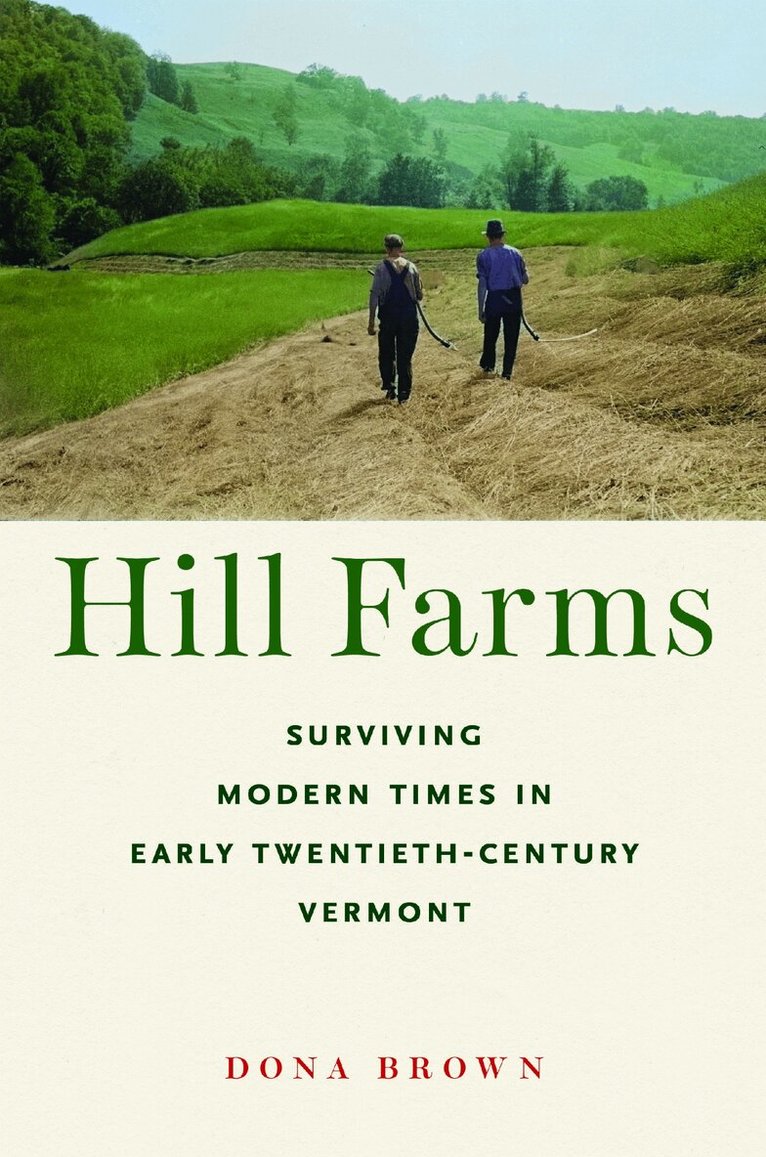
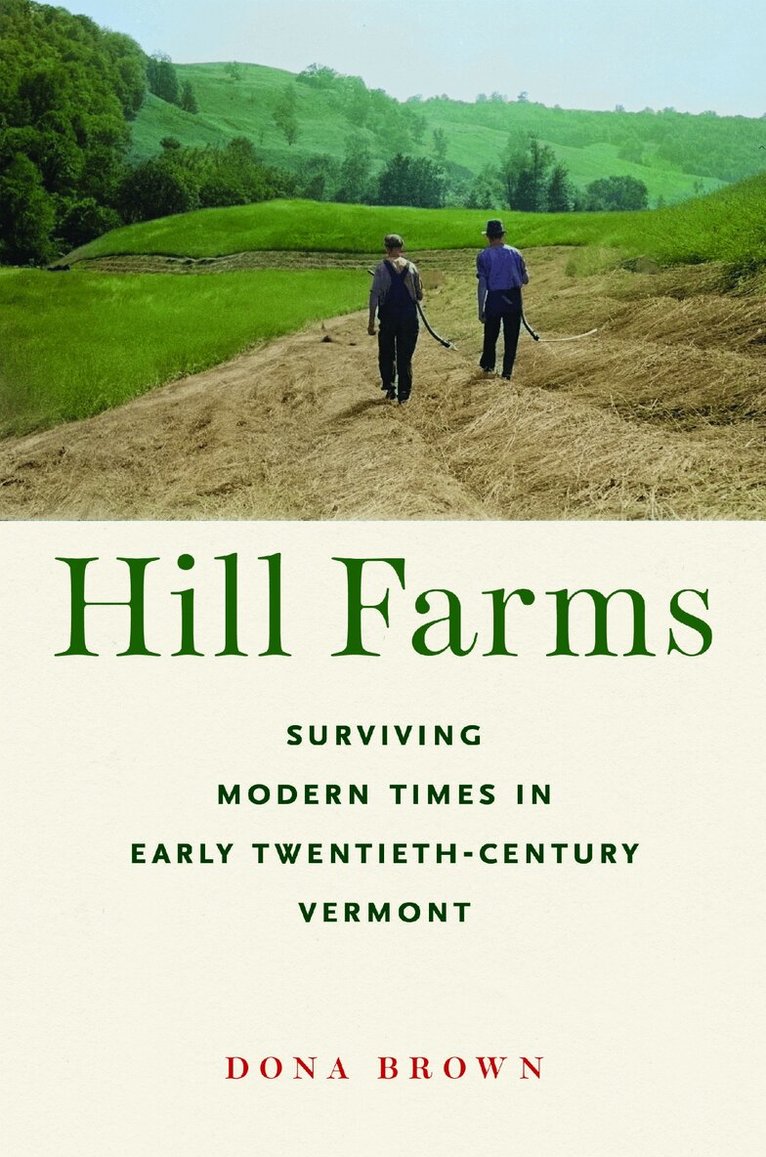
There is a stubborn myth that has persisted for almost two centuries: the narrative of the abandoned farm in the rural American northeast. In Hill Farms, historian Dona Brown confronts this myth of rural decline with a focus on Jamaica, Vermont, a small town in the hills west of Brattleboro. Through this town’s history, she reveals a more complex economic and environmental narrative, a story of the continued use of traditional farm methods despite the growing power of modernization and demands for increased efficiencies. Brown examines the records of a 1930 study by the University of Vermont’s now infamous Eugenics Survey, part of a flood of problematic investigations of Vermont rural life at the time, wherein eugenicists interviewed residents in every Jamaica household about crops, incomes, and housing conditions. These researchers from various disciplines saw in Jamaica and towns like it poverty and ignorance rather than a commitment to farming as a modest but sustainable way of life. Extensive handwritten notes from the Eugenics Survey provide a remarkable glimpse into the daily lives and practices of these upland farmers, revealing the value in maintaining older, less intensive farming practices and shedding new light on the social and environmental history of the time. As debates around farming and rural life intensified during the Great Depression, advocates beyond Vermont rose to the defense of traditional farms. Though industrialized agriculture ultimately prevailed, the old farming strategies cultivated by these upcountry residents continue to attract adherents in the face of new challenges to traditional farming in our own times.
1 085 kr
Skickas inom 7-10 vardagar
There is a stubborn myth that has persisted for almost two centuries: the narrative of the abandoned farm in the rural American northeast. In Hill Farms, historian Dona Brown confronts this myth of rural decline with a focus on Jamaica, Vermont, a small town in the hills west of Brattleboro. Through this town’s history, she reveals a more complex economic and environmental narrative, a story of the continued use of traditional farm methods despite the growing power of modernization and demands for increased efficiencies. Brown examines the records of a 1930 study by the University of Vermont’s now infamous Eugenics Survey, part of a flood of problematic investigations of Vermont rural life at the time, wherein eugenicists interviewed residents in every Jamaica household about crops, incomes, and housing conditions. These researchers from various disciplines saw in Jamaica and towns like it poverty and ignorance rather than a commitment to farming as a modest but sustainable way of life. Extensive handwritten notes from the Eugenics Survey provide a remarkable glimpse into the daily lives and practices of these upland farmers, revealing the value in maintaining older, less intensive farming practices and shedding new light on the social and environmental history of the time. As debates around farming and rural life intensified during the Great Depression, advocates beyond Vermont rose to the defense of traditional farms. Though industrialized agriculture ultimately prevailed, the old farming strategies cultivated by these upcountry residents continue to attract adherents in the face of new challenges to traditional farming in our own times.