Dorothy J. Hale - Böcker
Visar alla böcker från författaren Dorothy J. Hale. Handla med fri frakt och snabb leverans.
5 produkter
5 produkter
356 kr
Skickas inom 7-10 vardagar
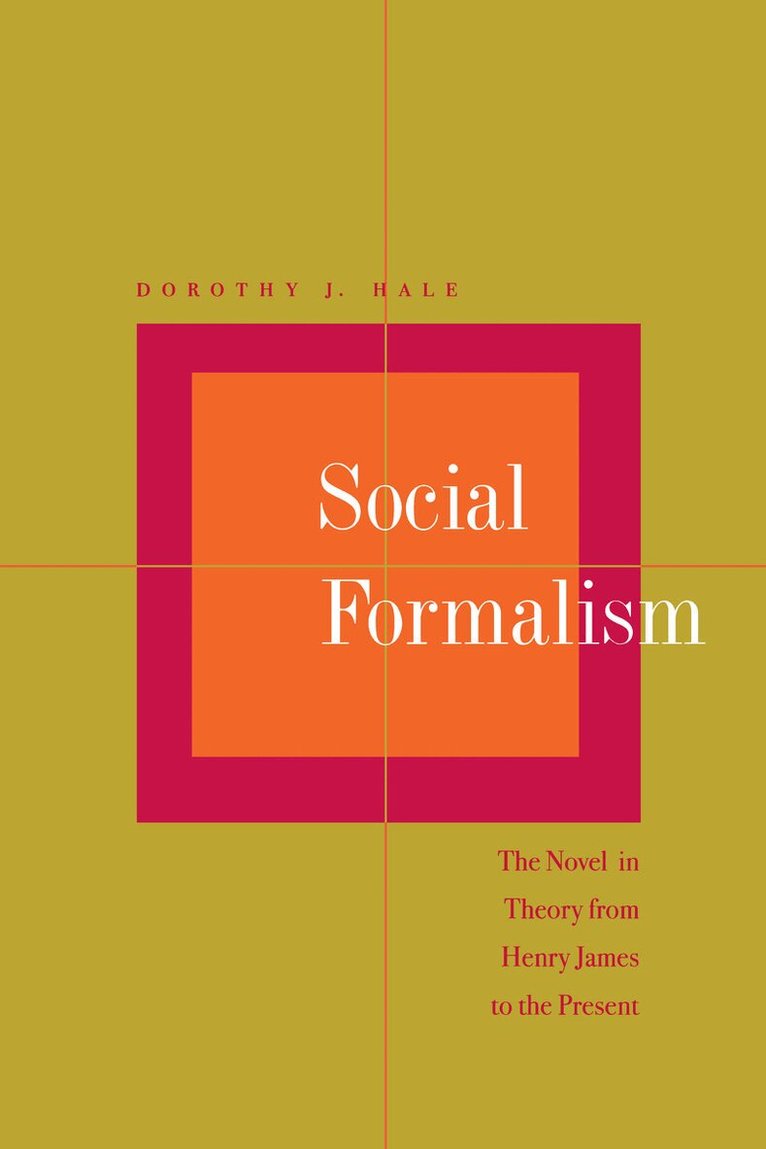
In recent decades, literary critics have praised novel theory for abandoning its formalist roots and defining the novel as a vehicle of social discourse. The old school of novel theory has long been associated with Henry James; the new school allies itself with the Russian theorist Mikhail Bakhtin. In this book, the author argues that actually it was the compatibility of Bakhtin with James that prompted Anglo-American theorists to embrace Bakhtin with such enthusiasm. Far from rejecting James, in other words, recent novel theorists have only refined James's foundational recharacterization of the novel as the genre that does not simply represent identity through its content but actually instantiates it through its form.Social Formalism demonstrates the persistence of James's theoretical assumptions from his writings and those of his disciple Percy Lubbock through the critique of Jamesian theory by Roland Barthes, Wayne Booth, and Gérard Genette to the current Anglo-American assimilation of Bakhtin. It also traces the expansion of James's influence, as mediated by Bakhtin, into cultural and literary theory. Jamesian social formalism is shown to help determine the widely influential theories of minority identity expounded by such important cultural critics as Barbara Johnson and Henry Louis Gates. Social Formalism thus explains why a tradition that began by defining novelistic value as the formal instantiation of identity ends by defining minority political empowerment as aestheticized self-representation.
1 685 kr
Skickas inom 7-10 vardagar
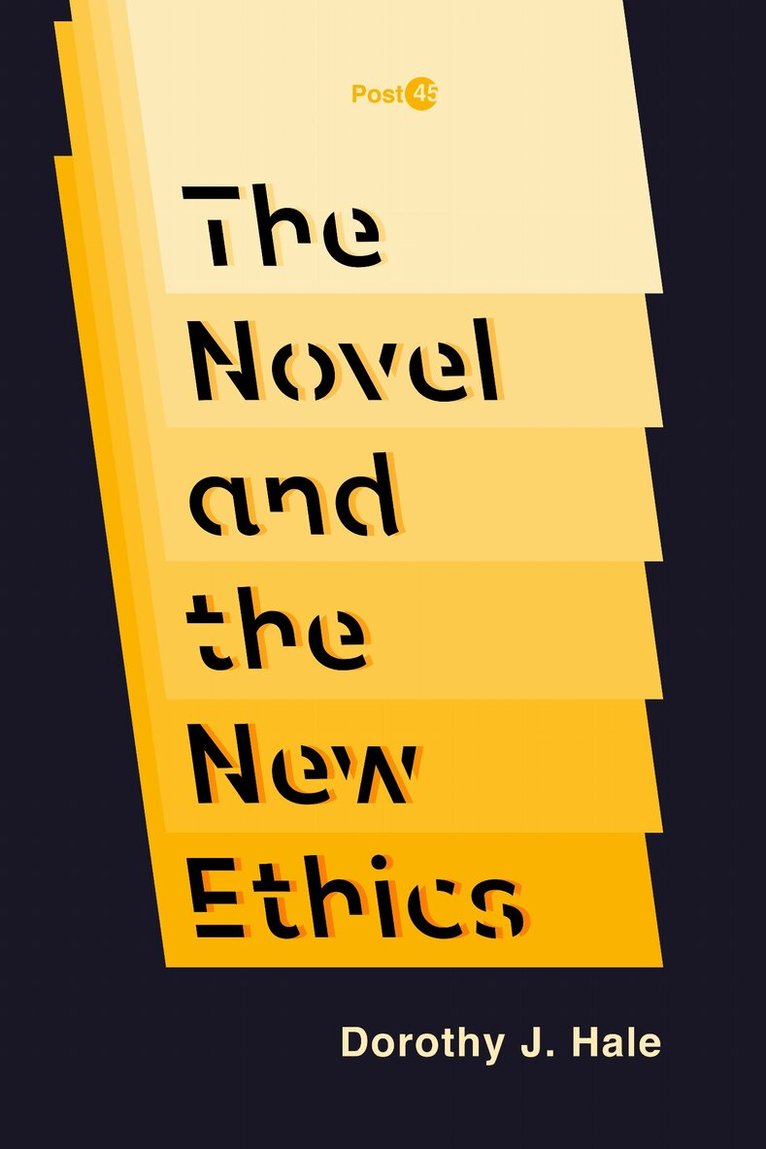
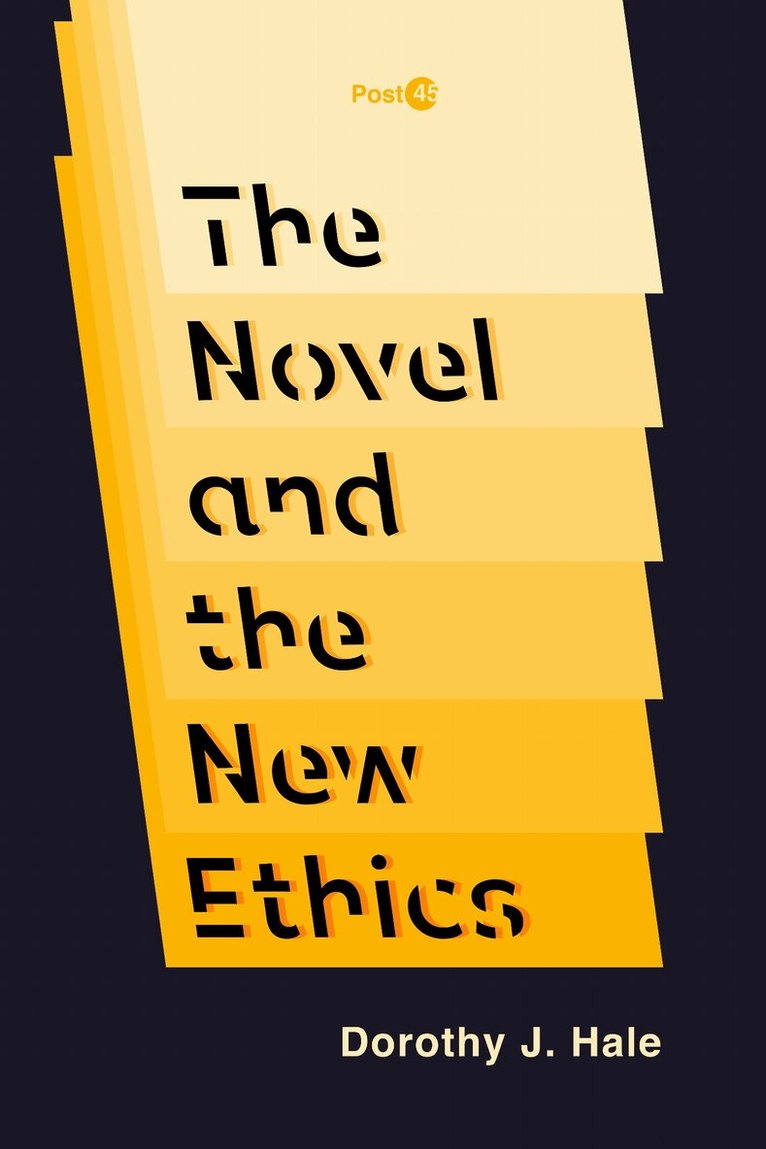
For a generation of contemporary Anglo-American novelists, the question "Why write?" has been answered with a renewed will to believe in the ethical value of literature. Dissatisfied with postmodernist parody and pastiche, a broad array of novelist-critics—including J.M. Coetzee, Toni Morrison, Zadie Smith, Gish Jen, Ian McEwan, and Jonathan Franzen—champion the novel as the literary genre most qualified to illuminate individual ethical action and decision-making within complex and diverse social worlds. Key to this contemporary vision of the novel's ethical power is the task of knowing and being responsible to people different from oneself, and so thoroughly have contemporary novelists devoted themselves to the ethics of otherness, that this ethics frequently sets the terms for plot, characterization, and theme. In The Novel and the New Ethics, literary critic Dorothy J. Hale investigates how the contemporary emphasis on literature's social relevance sparks a new ethical description of the novel's social value that is in fact rooted in the modernist notion of narrative form. This "new" ethics of the contemporary moment has its origin in the "new" idea of novelistic form that Henry James inaugurated and which was consolidated through the modernist narrative experiments and was developed over the course of the twentieth century. In Hale's reading, the art of the novel becomes defined with increasing explicitness as an aesthetics of alterity made visible as a formalist ethics. In fact, it is this commitment to otherness as a narrative act which has conferred on the genre an artistic intensity and richness that extends to the novel's every word.
1 789 kr
Skickas inom 7-10 vardagar
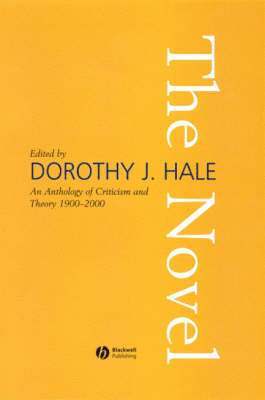
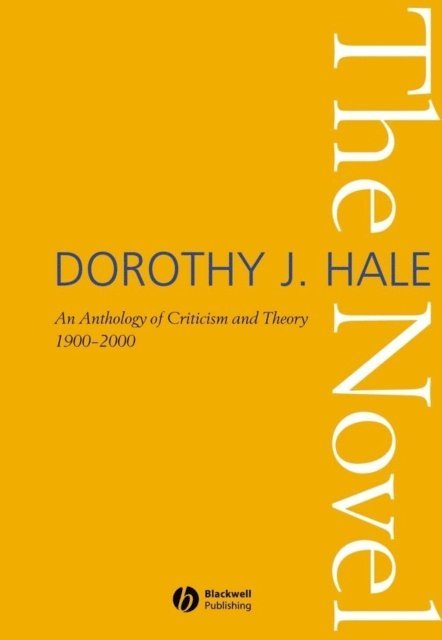
The Novel: An Anthology of Criticism and Theory 1900–2000 is a collection of the most influential writings on the theory of the novel from the twentieth century. Traces the rise of novel theory and the extension of its influence into other disciplines, especially social, cultural and political theory. Broad in scope, including sections on formalism; the Chicago School; structuralism and narratology; deconstruction; psychoanalysis; Marxism; social discourse; gender; post-colonialism; and more. Includes whole essays or chapters wherever possible. Headnotes introduce and link each piece, enabling readers to draw connections between different schools of thought. Encourages students to approach theoretical texts with confidence, applying the same skills they bring to literary texts. Includes a volume introduction, a selected bibliography, an index of topics and short author biographies to support study.
590 kr
Skickas inom 7-10 vardagar
The Novel: An Anthology of Criticism and Theory 1900–2000 is a collection of the most influential writings on the theory of the novel from the twentieth century. Traces the rise of novel theory and the extension of its influence into other disciplines, especially social, cultural and political theory. Broad in scope, including sections on formalism; the Chicago School; structuralism and narratology; deconstruction; psychoanalysis; Marxism; social discourse; gender; post-colonialism; and more. Includes whole essays or chapters wherever possible. Headnotes introduce and link each piece, enabling readers to draw connections between different schools of thought. Encourages students to approach theoretical texts with confidence, applying the same skills they bring to literary texts. Includes a volume introduction, a selected bibliography, an index of topics and short author biographies to support study.
416 kr
Skickas inom 7-10 vardagar
For a generation of contemporary Anglo-American novelists, the question "Why write?" has been answered with a renewed will to believe in the ethical value of literature. Dissatisfied with postmodernist parody and pastiche, a broad array of novelist-critics—including J.M. Coetzee, Toni Morrison, Zadie Smith, Gish Jen, Ian McEwan, and Jonathan Franzen—champion the novel as the literary genre most qualified to illuminate individual ethical action and decision-making within complex and diverse social worlds. Key to this contemporary vision of the novel's ethical power is the task of knowing and being responsible to people different from oneself, and so thoroughly have contemporary novelists devoted themselves to the ethics of otherness, that this ethics frequently sets the terms for plot, characterization, and theme. In The Novel and the New Ethics, literary critic Dorothy J. Hale investigates how the contemporary emphasis on literature's social relevance sparks a new ethical description of the novel's social value that is in fact rooted in the modernist notion of narrative form. This "new" ethics of the contemporary moment has its origin in the "new" idea of novelistic form that Henry James inaugurated and which was consolidated through the modernist narrative experiments and was developed over the course of the twentieth century. In Hale's reading, the art of the novel becomes defined with increasing explicitness as an aesthetics of alterity made visible as a formalist ethics. In fact, it is this commitment to otherness as a narrative act which has conferred on the genre an artistic intensity and richness that extends to the novel's every word.