• Fri frakt över 249 kr
  • •
  • Snabba leveranser
  • •
  • Billiga böcker
Kundservice

Du är på sajten för privatpersoner.

Företag, bibliotek eller offentlig verksamhet?

Du handlar på classic.bokus.com, där alla dina funktioner finns intakta.
Till classic.bokus.com
Bokus logotyp. Gå till startsidan.
  • Erbjudanden
  • Nyheter
  • Student
  • Topplistor
  • Barn & ungdom
  • Bokus Play
  • E-böcker
  • Pocketböcker
  • Spel & pussel

10% rabatt på allt med kod NYSTART10 →

Sidfot

Mina sidor

    Hjälp

    • Kundservice
    • Vanliga frågor och svar
    • Frakt och leverans
    • Retur vid ångerrätt
    • Reklamera vara
    • Betalning
    • Köpvillkor
    • Allmänna villkor
    • Information om webbplatsens tillgänglighet

    Om Bokus

    • Om oss
    • Pressrum
    • För studenter
    • För företag
    • För bibliotek och offentlig verksamhet
    • För leverantörer
    • Hållbarhet

    Populärt

    • Aktuella erbjudanden
    • Presentkort
    • Studentlitteratur
    • Nya böcker
    • Topplistor
    • Signerade böcker
    • Engelska böcker

    Inspiration

    • Boktips
    • BookTok
    • Populära bokserier
    • Barnbokskaraktärer
    • Populära författare
    Logotyp för Bokus
    Följ oss på Facebook (extern länk)Följ oss på Instagram (extern länk)Följ oss på YouTube (extern länk)Följ oss på TikTok (extern länk)
    bokus @ CookiesAnpassa cookiesIntegritetspolicyKöpvillkor
    Till Citymail hemsida (extern länk)Till Budbee hemsida (extern länk)Till Postnord hemsida (extern länk)Till Schenker hemsida (extern länk)Till Early Bird hemsida (extern länk)Till Walleys hemsida (extern länk)
    1. Skönlitteratur
    2. Litteraturvetenskap
    3. Litteraturvetenskap

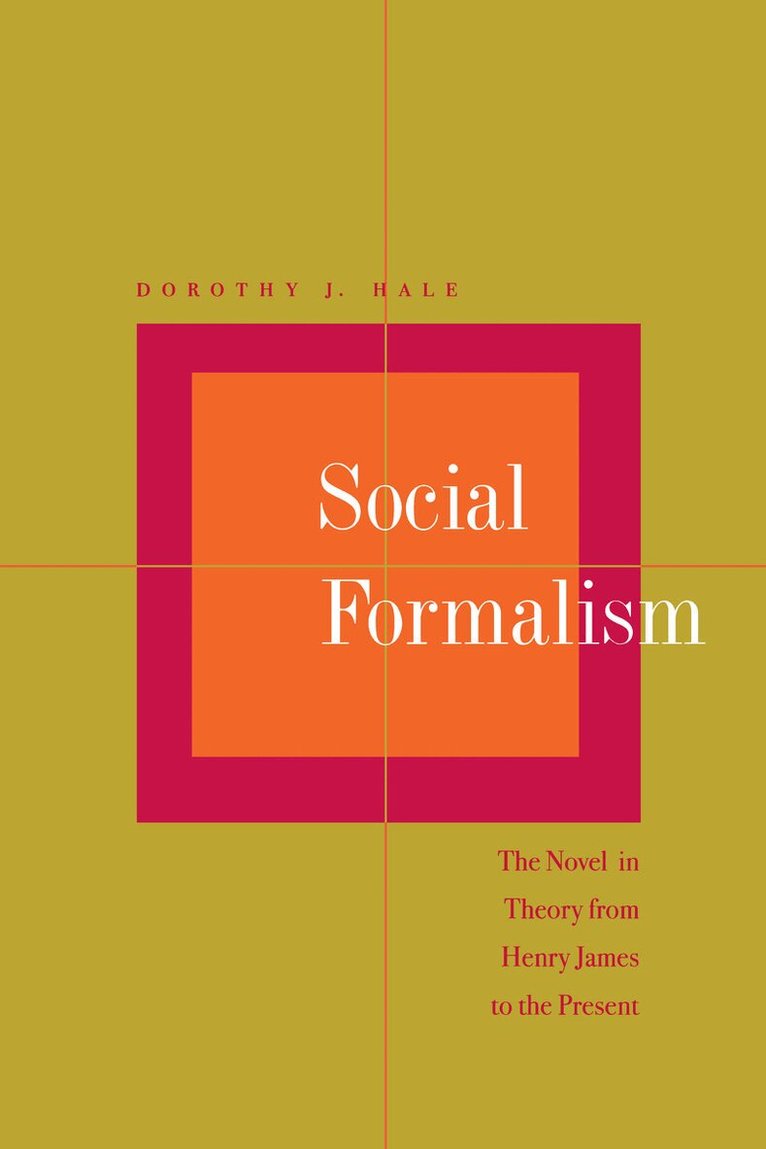
    Social Formalism

    The Novel in Theory from Henry James to the Present

    AvDorothy J. Hale

    Häftad, Engelska, 1998

    370 kr

    Beställningsvara. Skickas inom 5-8 vardagar. Fri frakt över 249 kr.

    Beskrivning

    In recent decades, literary critics have praised novel theory for abandoning its formalist roots and defining the novel as a vehicle of social discourse. The old school of novel theory has long been associated with Henry James; the new school allies itself with the Russian theorist Mikhail Bakhtin. In this book, the author argues that actually it was the compatibility of Bakhtin with James that prompted Anglo-American theorists to embrace Bakhtin with such enthusiasm. Far from rejecting James, in other words, recent novel theorists have only refined James's foundational recharacterization of the novel as the genre that does not simply represent identity through its content but actually instantiates it through its form.Social Formalism demonstrates the persistence of James's theoretical assumptions from his writings and those of his disciple Percy Lubbock through the critique of Jamesian theory by Roland Barthes, Wayne Booth, and Gérard Genette to the current Anglo-American assimilation of Bakhtin. It also traces the expansion of James's influence, as mediated by Bakhtin, into cultural and literary theory. Jamesian social formalism is shown to help determine the widely influential theories of minority identity expounded by such important cultural critics as Barbara Johnson and Henry Louis Gates. Social Formalism thus explains why a tradition that began by defining novelistic value as the formal instantiation of identity ends by defining minority political empowerment as aestheticized self-representation.

    Produktinformation

    • Utgivningsdatum:1998-07-01
    • Mått:152 x 229 x 15 mm
    • Vikt:367 g
    • Format:Häftad
    • Språk:Engelska
    • Antal sidor:264
    • Förlag:Stanford University Press
    • ISBN:9780804733564

    Utforska kategorier

    • Litteraturvetenskap inom Skönlitteratur

    Recensioner i media

    "This book stages a powerful critique of the theory of narrative in general, and of the novel in particular. Hale's arguments are convincing, she writes with an admirable lucidity, and she is fearless in taking on the central shibboleths of the last thirty years. This is a splendid, brave, bracing performance."—Jonathan Freedman, University of Michigan

    Innehållsförteckning

    • Contents 1. 2. 3. 4. 5.