
Douglas C. Langston - Böcker
Visar alla böcker från författaren Douglas C. Langston. Handla med fri frakt och snabb leverans.
2 produkter
2 produkter
502 kr
Skickas inom 5-8 vardagar
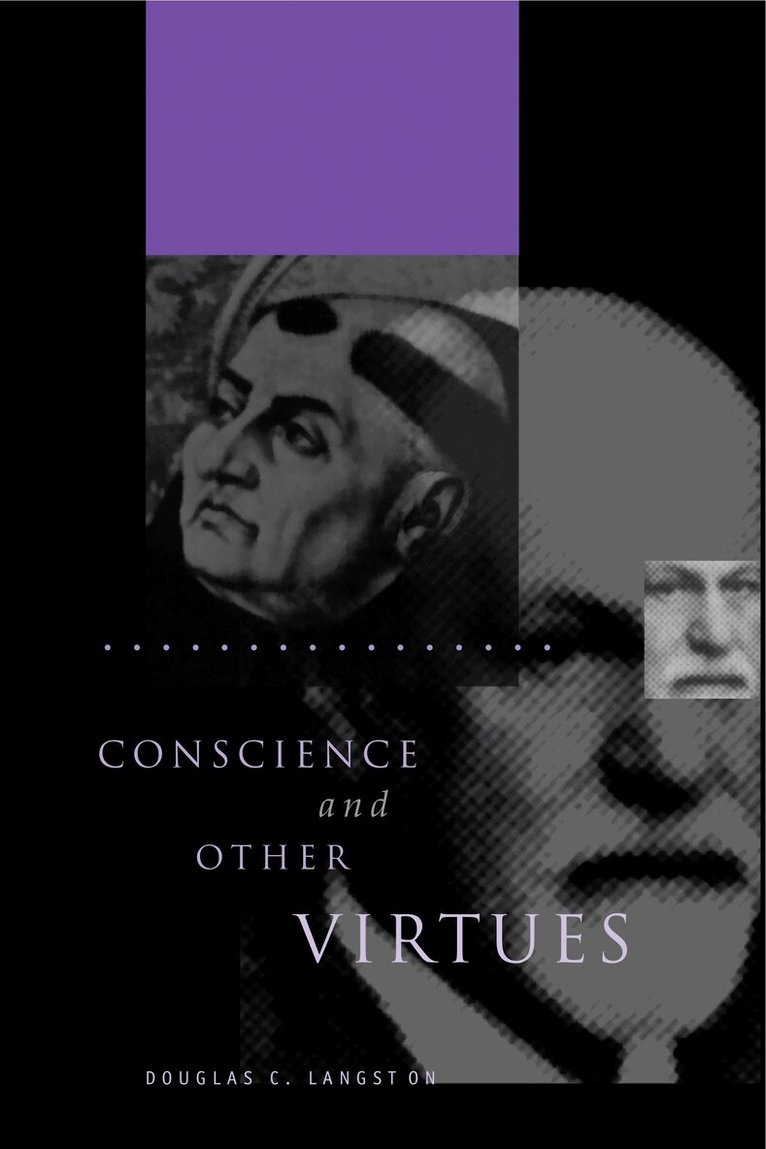
Conscience, once a core concept for ethics, has mostly disappeared from modern moral theory. In this book Douglas Langston traces its intellectual history to account for its neglect while arguing for its still vital importance, if correctly understood.In medieval times, Langston shows in Part I, the notions of "conscientia" and "synderesis" from which our contemporary concept of conscience derives were closely connected to Greek ideas about the virtues and practical reason, although in Christianized form. As modified by Luther, Butler, and Kant, however, conscience later came to be regarded as a faculty like will and intellect, and when faculty psychology fell into disrepute, so did the role of conscience in moral philosophy.A view of mature conscience that sees it as relational, with cognitive, emotional, and conative dimensions, can survive the criticisms of conscience as faculty. In Part II, through discussions of Freud, Ryle, and other modern thinkers, Langston proceeds to reconstruct conscience as a viable philosophical concept.Finally, in Part III, this better grounded concept is connected with the modern revival of virtue ethics, and Langston shows how crucial conscience is to a theory of virtue because it is fundamental to the training of any morally good person.
123 kr
Tillfälligt slut
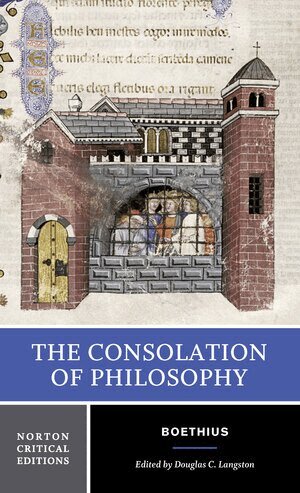
The Consolation of Philosophy occupies a central place in the history of Western thought. Its author, Anicius Manlius Severinus Boethius (ca. 476–526 c.e.), was a Roman philosopher, scholar, and statesman who wrote The Consolation of Philosophy while in a remote prison awaiting his execution on dubious political charges. The text of this Norton Critical Edition is based on the translation by Richard H. Green. It is accompanied by the editor’s preface and full-scale introduction to the work, the translator’s preface, and explanatory annotations. “Contexts” reprints selections from the texts that Boethius drew upon for his own work. These include excerpts from two of Plato’s Dialogues (Gorgias and Timaeus), from Aristotle’s Nicomachean Ethics, and from Augustine’s On Free Choice of the Will. “Criticism” collects five wide-ranging essays by major scholars of Boethius. Henry Chadwick presents a general introduction to Boethius’s life and works. Nelson Pike presents a clear and insightful interpretation of what Boethius means by writing that God is eternal (timeless). The final three essays—by William Bark, Edmund Reiss, and John Marenbon—all depart from traditional readings of The Consolation of Philosophy in significant ways and are sure to stimulate classroom discussion. A Chronology of Boethius’s life and work and a Selected Bibliography are also included.