Häftad, Engelska, 2002
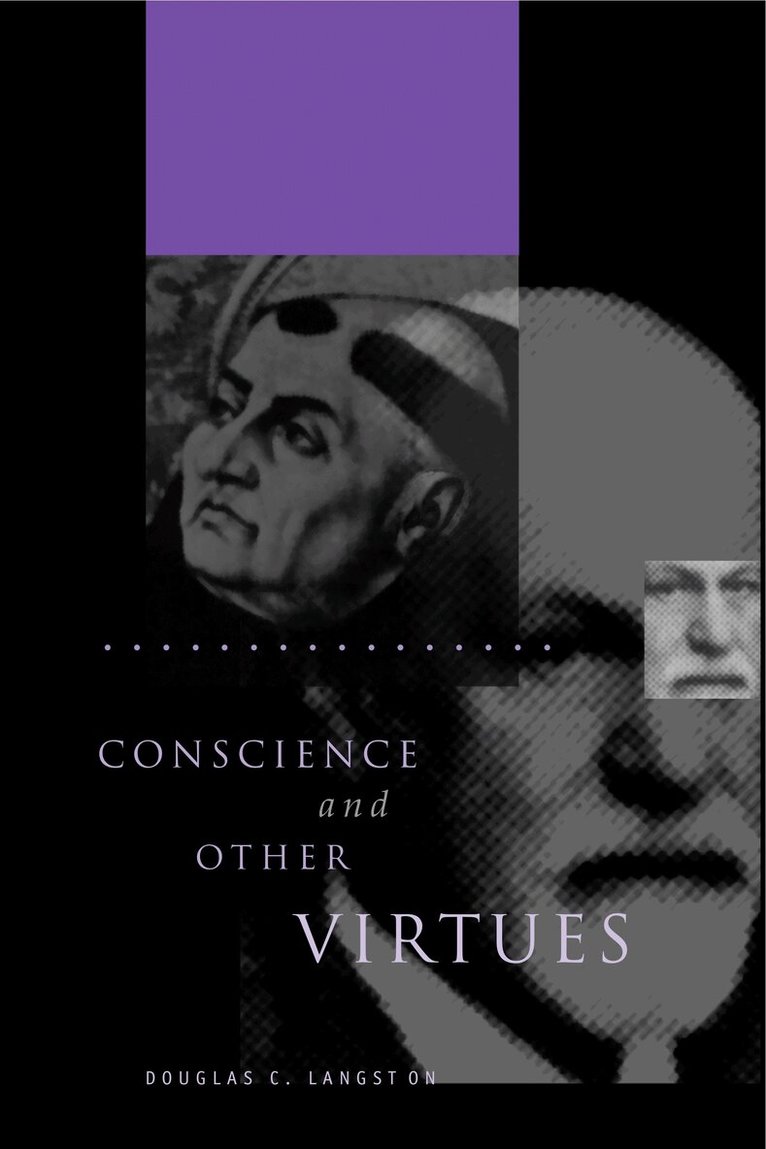
Conscience and Other Virtues
From Bonaventure to MacIntyre
399 kr
Skickas torsdag 3/12. Fri frakt över 249 kr.
Beskrivning
Conscience, once a core concept for ethics, has mostly disappeared from modern moral theory. In this book Douglas Langston traces its intellectual history to account for its neglect while arguing for its still vital importance, if correctly understood.In medieval times, Langston shows in Part I, the notions of "conscientia" and "synderesis" from which our contemporary concept of conscience derives were closely connected to Greek ideas about the virtues and practical reason, although in Christianized form. As modified by Luther, Butler, and Kant, however, conscience later came to be regarded as a faculty like will and intellect, and when faculty psychology fell into disrepute, so did the role of conscience in moral philosophy.A view of mature conscience that sees it as relational, with cognitive, emotional, and conative dimensions, can survive the criticisms of conscience as faculty. In Part II, through discussions of Freud, Ryle, and other modern thinkers, Langston proceeds to reconstruct conscience as a viable philosophical concept.Finally, in Part III, this better grounded concept is connected with the modern revival of virtue ethics, and Langston shows how crucial conscience is to a theory of virtue because it is fundamental to the training of any morally good person.
Produktinformation
- Utgivningsdatum: 2002-01-15
- Mått: 152 x 229 x 17 mm
- Vikt: 454 g
- Format: Häftad
- Språk: Engelska
- Antal sidor: 200
- Förlag: Pennsylvania State University Press
- ISBN: 9780271027890
Utforska kategorier
Mer om författaren
Douglas C. Langston is Professor of Philosophy and Religion at the New College of the University of Southern Florida. His previous book, God's Willing Knowledge, was published by Penn State Press in 1986.
Recensioner i media
“This important book synthesizes a broad range of historical and contemporary literature dealing with conscience. It traces the development of the notion of conscience in the Western philosophical tradition from antiquity through the early modern period, and it rehabilitates conscience as a useful, even crucial, concept for current ethical theory.”—Michael G. Baylor, Lehigh University
Betyg & recensioner
0 recensioner
Inga recensioner tillgängliga.