Douglas McCalla – författare
Visar alla böcker från författaren Douglas McCalla. Handla med fri frakt och snabb leverans.
6 produkter
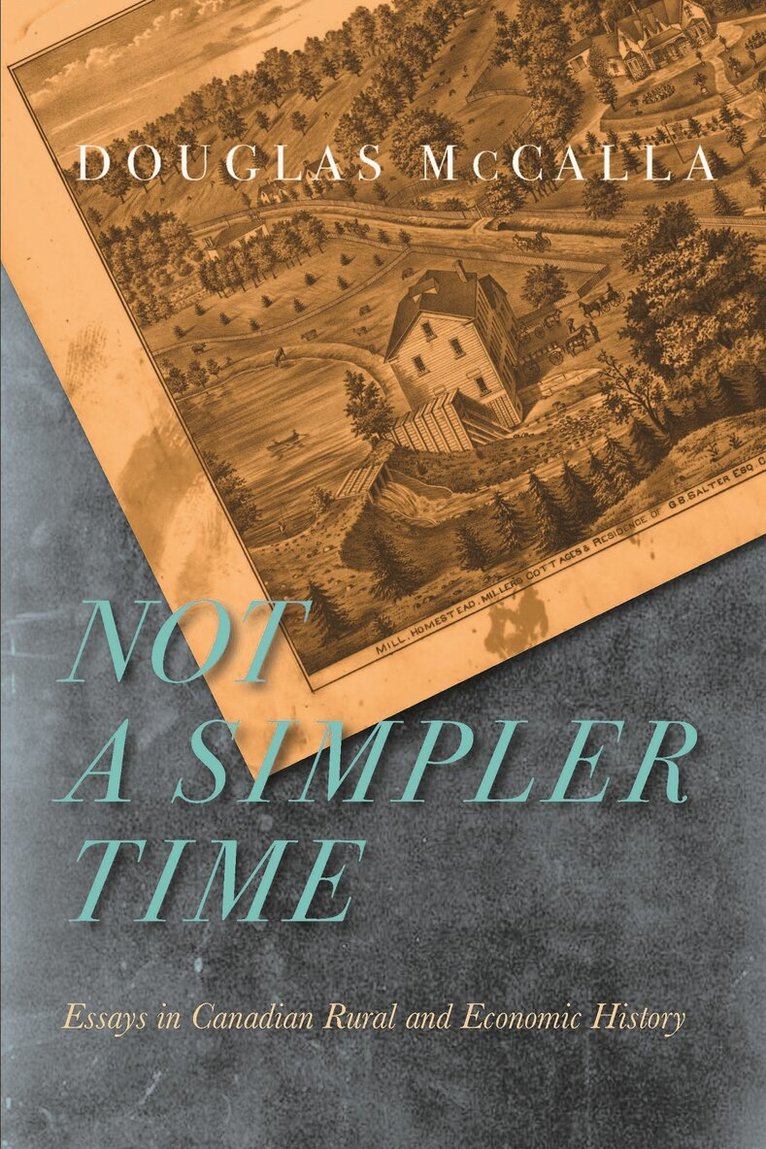
Not a Simpler Time
Essays in Canadian Rural and Economic History
Häftad, 2026
453 kr
Lägg i varukorg
Although the great majority of Canadians lived in rural communities until the early 1900s, rural life has often been dismissed as marginal to the country’s economic development. Not a Simpler Time challenges this view, arguing that the strategies, skills, and work of rural families were the …
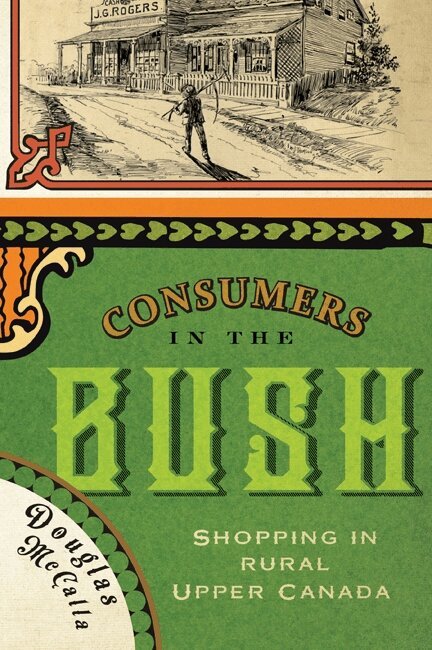
Consumers in the Bush
Shopping in Rural Upper Canada
Häftad, 2015
454 kr
Lägg i varukorg
General stores are essential to the image of a colonial village. Many historians, however, still base their stories of settlement on the notion of rural self-sufficiency, begging the question: if general stores were so common, who were their customers? To answer this, Consumers in the Bush draws on …
Consumers in the Bush
Shopping in Rural Upper Canada
E-bok, 2015
397 kr
Lägg i varukorg
General stores are essential to the image of a colonial village. Many historians, however, still base their stories of settlement on the notion of rural self-sufficiency, begging the question: if general stores were so common, who were their customers? To answer this, Consumers in the Bush draws on …
Consumers in the Bush
Shopping in Rural Upper Canada
E-bok, 2015
397 kr
Lägg i varukorg
General stores are essential to the image of a colonial village. Many historians, however, still base their stories of settlement on the notion of rural self-sufficiency, begging the question: if general stores were so common, who were their customers? To answer this, Consumers in the Bush draws on …
Upper Canada Trade 1834–1872
A Study of the Buchanans' Business
E-bok, 1979
411 kr
Lägg i varukorg
Based in Glasgow and Toronto and later Hamilton, the trading business of Peter and Isaac Buchanan became one of Canada’s largest. The crash of 1857, which abruptly ended an Upper Canadian boom, brought its growth to a halt, and increasing financial problems led to its failure in 1867 and gain in …
Upper Canada Trade 1834-1872
A Study of the Buchanans' Business
Häftad, 1979
323 kr
Lägg i varukorg
Based in Glasgow and Toronto and later Hamilton, the trading business of Peter and Isaac Buchanan became one of Canada’s largest. The crash of 1857, which abruptly ended an Upper Canadian boom, brought its growth to a halt, and increasing financial problems led to its failure in 1867 and gain in …