Douglas Moggach - Böcker
Visar alla böcker från författaren Douglas Moggach. Handla med fri frakt och snabb leverans.
9 produkter
9 produkter
485 kr
Skickas inom 7-10 vardagar
This is a comprehensive study in English of Bruno Bauer, a leading Hegelian philosopher of the 1840s. Inspired by the philosophy of Hegel, Bauer led an intellectual revolution that influenced Marx and shaped modern secular humanism. In the process he offered a republican alternative to liberalism and socialism, criticized religious and political conservatism and set out the terms for the development of modern mass and industrial society. Based on in-depth archival research this book traces the emergence of republican political thought in Germany before the revolutions of 1848. Professor Moggach examines Bauer's republicanism and his concept of infinite self-consciousness. He also explores the more disturbing aspects of Bauer's critique of modernity, such as his anti-Semitism. This book will be eagerly sought out by professionals in political philosophy, political science and intellectual history.
1 034 kr
Skickas inom 7-10 vardagar
This is a comprehensive study in English of Bruno Bauer, a leading Hegelian philosopher of the 1840s. Inspired by the philosophy of Hegel, Bauer led an intellectual revolution that influenced Marx and shaped modern secular humanism. In the process he offered a republican alternative to liberalism and socialism, criticized religious and political conservatism and set out the terms for the development of modern mass and industrial society. Based on in-depth archival research this book traces the emergence of republican political thought in Germany before the revolutions of 1848. Professor Moggach examines Bauer's republicanism and his concept of infinite self-consciousness. He also explores the more disturbing aspects of Bauer's critique of modernity, such as his anti-Semitism. This book will be eagerly sought out by professionals in political philosophy, political science and intellectual history.
1 390 kr
Skickas inom 7-10 vardagar
The period leading up to the Revolutions of 1848 was a seminal moment in the history of political thought, demarcating the ideological currents and defining the problems of freedom and social cohesion which are among the key issues of modern politics. This 2006 anthology offers research on Hegel's followers in the 1830s and 1840s. With essays by philosophers, political scientists, and historians from Europe and North America, it pays special attention to questions of state power, the economy, poverty, and labour, as well as to ideas on freedom. The book examines the political and social thought of Eduard Gans, Ludwig Feuerbach, Max Stirner, Bruno and Edgar Bauer, the young Engels, and Marx. It places them in the context of Hegel's philosophy, the Enlightenment, Kant, the French Revolution, industrialization, and urban poverty. It also views Marx and Engels in relation to their contemporaries and interlocutors in the Hegelian school.
Del 156 - Ideas in Context
Freedom and Perfection
German Political Thought from Leibniz to Marx
Inbunden, Engelska, 2025
1 390 kr
Skickas inom 7-10 vardagar
Leibniz, this study argues, is the genuine initiator of German Idealism. His analysis of freedom as spontaneity and the relations he establishes among freedom, justice, and progress underlie Kant's ideas of rightful interaction and his critiques of Enlightened absolutism. Freedom and Perfection offers a historical examination of perfectionism, its political implications and transformations in German thought between 1650 and 1850. Douglas Moggach demonstrates how Kant's followers elaborated a new ethical-political approach, 'post-Kantian perfectionism', which, in the context of the French Revolution, promoted the conditions for free activity rather than state-directed happiness. Hegel, the Hegelian School, and Marx developed this approach further with reference to the historical process as the history of freedom. Highlighting the decisive importance of Leibniz for subsequent theorists of the state, society, and economy, Freedom and Perfection offers a new interpretation of important schools of modern thought and a vantage point for contemporary political debates.
1 146 kr
Skickas inom 7-10 vardagar
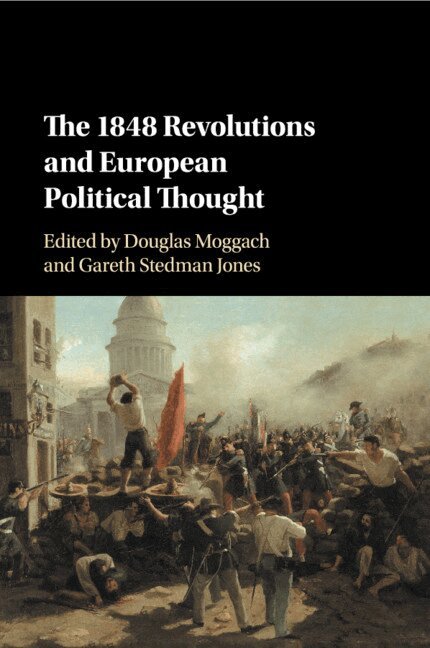
The revolutions that swept across Europe in 1848 marked a turning-point in the history of political and social thought. They raised questions of democracy, nationhood, freedom and social cohesion that have remained among the key issues of modern politics, and still help to define the major ideological currents - liberalism, socialism, republicanism, anarchism, conservatism - in which these questions continue to be debated today. This collection of essays by internationally prominent historians of political thought examines the 1848 Revolutions in a pan-European perspective, and offers research on questions of state power, nationality, religion, the economy, poverty, labour, and freedom. Even where the revolutionary movements failed to achieve their explicit objectives of transforming the state and social relations, they set the agenda for subsequent regimes, and contributed to the shaping of modern European thought and institutions.
507 kr
Skickas inom 7-10 vardagar
The period leading up to the Revolutions of 1848 was a seminal moment in the history of political thought, demarcating the ideological currents and defining the problems of freedom and social cohesion which are among the key issues of modern politics. This 2006 anthology offers research on Hegel's followers in the 1830s and 1840s. With essays by philosophers, political scientists, and historians from Europe and North America, it pays special attention to questions of state power, the economy, poverty, and labour, as well as to ideas on freedom. The book examines the political and social thought of Eduard Gans, Ludwig Feuerbach, Max Stirner, Bruno and Edgar Bauer, the young Engels, and Marx. It places them in the context of Hegel's philosophy, the Enlightenment, Kant, the French Revolution, industrialization, and urban poverty. It also views Marx and Engels in relation to their contemporaries and interlocutors in the Hegelian school.
604 kr
Skickas inom 7-10 vardagar
The revolutions that swept across Europe in 1848 marked a turning-point in the history of political and social thought. They raised questions of democracy, nationhood, freedom and social cohesion that have remained among the key issues of modern politics, and still help to define the major ideological currents - liberalism, socialism, republicanism, anarchism, conservatism - in which these questions continue to be debated today. This collection of essays by internationally prominent historians of political thought examines the 1848 Revolutions in a pan-European perspective, and offers research on questions of state power, nationality, religion, the economy, poverty, labour, and freedom. Even where the revolutionary movements failed to achieve their explicit objectives of transforming the state and social relations, they set the agenda for subsequent regimes, and contributed to the shaping of modern European thought and institutions.
Del 1 - Anthem Impact
What is the State For?
Karl von Dalberg’s Critique of Liberalism and the Defence of Enlightened Absolutism
Häftad, Engelska, 2027
312 kr
Kommande
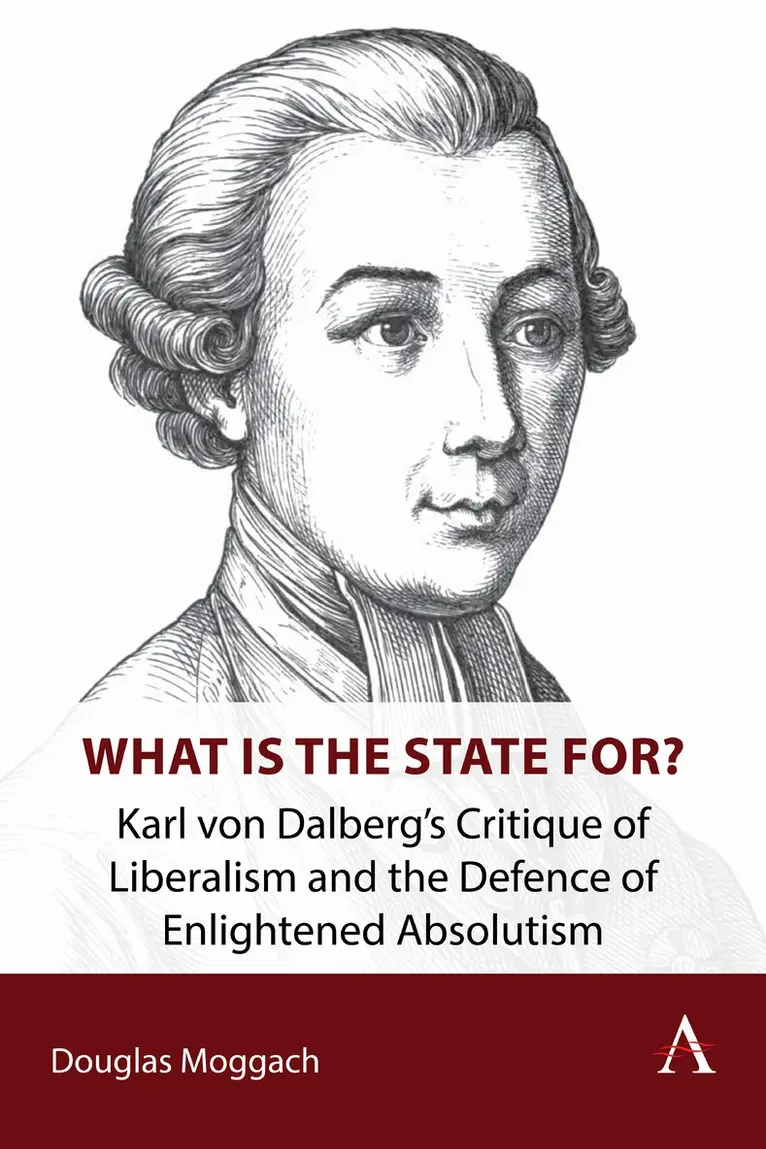
Karl von Dalberg (1744–1817) was the scion of a prominent aristocratic family in the Holy Roman Empire. He served as the Empire’s last Reichskanzler (1802–1806) before its dissolution by Napoleon, and subsequently as Prince-Primate of the Confederation of the Rhine (1806–1813), implementing Napoleonic reforms in the Rhineland. In the 1790s, he had been active as a political theorist and a member of Friedrich Schiller’s intellectual circle in Jena. Dalberg’s early text of 1793, ‘Von den wahren Grenzen der Wirksamkeit des Staats’ [‘The True Limits of the Effectiveness of the State’], published anonymously but securely attributed, defends Christian Wolff’s perfectionist theory of the state against Kantian critiques, especially as these were formulated in 1792 by Wilhelm von Humboldt (1767–1835). The confrontation between Dalberg and Humboldt illustrates the early reception of Kant’s moral, political and juridical thought, and varying German responses to the French Revolution. Dalberg offers an insightful defence of the older perfectionism, while distinguishing it from new liberal and republican approaches.Dalberg himself had encouraged Humboldt to publish his largely Kantian reflections on the role of the state. Humboldt’s text, Ideen zu einem Versuch, die Grenzen der Wirksamkeit des Staats zu bestimmen [An Attempt to Determine the Limits of the Effectiveness of the State], was published in part in 1792, truncated by Prussian censorship, and the complete work appeared posthumously only in 1851. Humboldt advocated a minimalist state, which he took to be consistent with Kant’s repudiation of Wolffian perfectionism in the Groundwork of the Metaphysics of Morals (1785) as inimical to the self-determination of persons. The state was to be the agent of freedom and not of happiness. Dalberg responded with a critique of the minimalist state. He defended Wolffian enlightened absolutism, bolstering Wolff’s position with anthropological arguments about indolence and co-ordination to support the view that without broad state intervention and guidance, society stagnates, and perfection, or happiness, becomes unattainable. Dalberg’s response retains a strongly reformist orientation, differentiating him from other contemporary offshoots of Wolffianism, such as the staunchly conservative Historical School of Law. Dalberg is thus a representative of Enlightened absolutism in the context of the French Revolution, and his subsequent political career exemplifies this position.
1 370 kr
Skickas inom 5-8 vardagar