Douglas S. Mack - Böcker
Visar alla böcker från författaren Douglas S. Mack. Handla med fri frakt och snabb leverans.
12 produkter
12 produkter
Europe on 5 Wrong Turns a Day: One Man, Eight Countries, One Vintage Travel Guide
Häftad, Engelska, 2012
324 kr
Skickas inom 3-6 vardagar
2 728 kr
Skickas inom 3-6 vardagar
The Tale of Old Mortality describes the lives - and often violent deaths - the hopes, and the struggles, of the Covenanters in late seventeenth-century Scotland. A tale of extremism, bigotry and cruelty, it is redeemed by its characters’ courage and loyalty, and their passionate belief in religious and civil liberty. Considered to be one of the greatest novels of the nineteenth century, its influence pervades European writing from Stendhal to Tolstoy.
1 672 kr
Skickas inom 7-10 vardagar
A collection of thirteen tales and anecdotes, published for the first time as Hogg intended, and capturing the flavour of Border story-telling.
1 528 kr
Skickas inom 7-10 vardagar
Both comical and horrific, The Three Perils of Woman is essentially a combination of two stories on similar themes. One is set in the Highlands following the Battle of Culloden and the other in Hogg's Edinburgh. Daring in its subject matter, the novel touches on such delicate topics as prostitution and venereal disease.
1 528 kr
Skickas inom 7-10 vardagar
Lay Sermons offers, playfully, a series of lay sermons on good principles and good breeding - the last thing that one would expect from the pen of Blackwood's Ettrick Shepherd. But a significant part of the joke is that the Shepherd provides lay sermons that combine into a series of wise meditations on life and on literature.
1 528 kr
Skickas inom 7-10 vardagar
Heroic, radical and at times hilarious, Queen Hynde is Ossian with jokes; but Hogg's epic has serious purposes in mind. Its picture of the ancient Scottish past has much in common with stories of King Arthur and Camelot; and Queen Hynde aspires to emulate Paradise Lost as a Christian epic.
1 528 kr
Skickas inom 7-10 vardagar
The Queen's Wake is one of the landmarks of British Romantic poetry. It focuses on the return of Mary, Queen of Scots to Scotland in 1561 to take personal rule of her kingdom after her years in France. In the poem poets and bards hold a poetic competition (a 'wake') in Holyrood Palace to welcome the Queen home. In the descriptions of the songs and the people who sing them various Scottish poets of Hogg's own period can be recognised, giving the reader a sense of the condition of poetry in Hogg's Scotland.Another key concern of the poem is the state of Scotland in 1561 - a crucial period in Scottish history, coming a year after the legislation was passed that brought in the Scottish Reformation. The Queen's Wake looks back to the pre-1560 world of Catholic Scotland and explores the tensions between that old world and an emerging modernity.When The Queen's Wake was published in 1813 it proved an unexpected popular success, placing Hogg for a while alongside Byron and Scott as one of the most admired British poets of that time. Over the next six years Hogg was encouraged by major players in the Edinburgh book trade to make substantial revisions, to make the poem even more attractive and saleable. The fifth edition (1819) is an enhanced and carefully polished version from the now established and respected poet. It is markedly different from the edgy, powerful and unsettling first version of The Queen's Wake, which was the work of an impecunious and marginalised outsider.Thus the poem exists in significantly different authorial versions, each reflecting Hogg's circumstances at the time. In recent years a consensus has emerged that in cases of this kind the modern reader is best served by having access to editions of both versions. The Stirling/South Carolina Research Edition of The Queen's Wake therefore presents both the first and fifth edition of the poem.Key Features:* The publication of one of the lan
416 kr
Tillfälligt slut
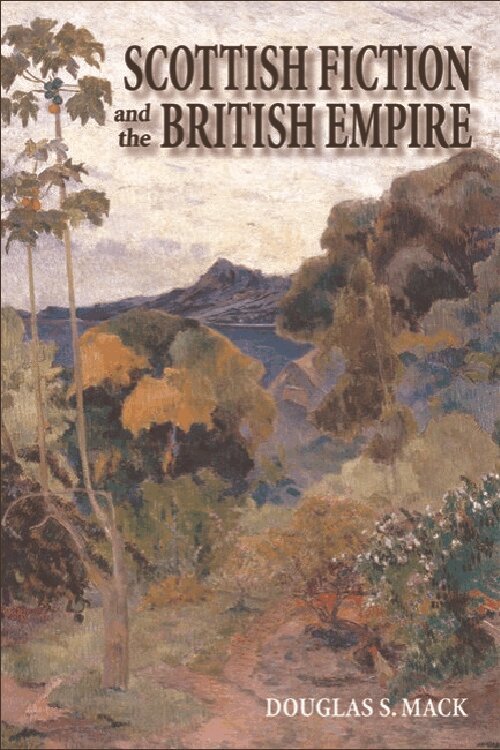
Scotland was an active – albeit junior – partner in the British Empire. But the poorer and more marginalised parts of Scottish society shared something of Ireland’s experience of being at the receiving end of British Imperial power. This created a long-lasting, complex, and eloquent debate among Scottish novelists about the nature of Scotland’s involvement in the power-structures of British society.Some Scottish writers, such as Sir Walter Scott and John Buchan, did much to generate and promote Imperial Britain’s sense of itself, and these authors tended to be part of the Scottish elite. However, an alternative strand of Scottish writing was produced by authors with roots in non-elite, ‘subaltern’ Scotland – writers from the past such as James Hogg, Mary Macpherson (‘Màiri Mhór nan Oran’), and Lewis Grassic Gibbon, as well as present-day writers such as James Kelman and Irvine Welsh.Douglas Mack argues that such writers actively challenge the elite's Imperial Grand Narrative and demonstrates that Scottish fiction was active and influential both in shaping and in subverting the assumptions that underpinned the Empire.Key Features:* Draws on recent research on Scotland's role in the British Empire, allowing new light to be thrown on the work of some of Scotland's best known writers* Exposes a radical, anti-establishment tradition of Scottish fiction that begins with Hogg and is carried on by writers such as Gibbon, Kelman and Welsh* Highlights the relevance and importance of Scottish fiction for all those interested in post-colonial studies and post-colonial fiction* Develops fruitful connections between the Scottish writers it examines and major writers of the Scottish diaspora such as Alice Munro and Alistair MacLeod
312 kr
Skickas inom 7-10 vardagar
The Queen’s Wake is one of the landmarks of British Romantic poetry. It focuses on the return of Mary, Queen of Scots to Scotland in 1561 to take personal rule of her kingdom after her years in France. In the poem poets and bards hold a poetic competition (a ‘wake’) in Holyrood Palace to welcome the Queen home.When The Queen’s Wake was published in 1813 it proved an unexpected popular success, placing Hogg for a while alongside Byron and Scott as one of the most admired British poets of that time. Over the next six years Hogg made substantial revisions, making the poem even more attractive and saleable. The fifth edition (1819) is an enhanced and carefully polished version from a now established and respected poet. It is markedly different from the edgy, powerful and unsettling first version, which was the work of an impecunious and marginalised outsider. This book presents both the first and fifth edition of the poem.
1 528 kr
Skickas inom 7-10 vardagar
The Bush aboon Traquair, like Allan Ramsay's The Gentle Shepherd, is a pastoral drama with songs, and in this play Hogg celebrates the life of the people of his native community in Ettrick Forest. At times earthy and at times hilarious, The Bush focuses on rural courtship, and it derives part of its energy from its presentation of a contrast between the old ways and an emerging (but not always admirable) modernity. Here, as elsewhere in Hogg's writings, the shepherds and ewe-milkers of Ettrick Forest operate in a pastoral world that is noticeably realistic and convincing. They pursue their love adventures as ardently as if they were inhabitants of the more literary pastoral world of the Forest of Arden, but as they do so they also have to cope with some very unpoetical and very troublesome sheep. It appears that The Bush was first drafted around 1813, but the first publication of Hogg's play came when a bowdlerised version was included in his posthumous Tales and Sketches (1837). Douglas Mack's edition includes the first-ever publication of the unbowdlerised version of The Bush aboon Traquair.Written on the occasion of George IV's famous royal visit to Edinburgh in 1822, The Royal Jubilee is another pastoral drama with songs. In this 'Scottish Mask', Hogg brings a group of representative Scottish spirits to a 'romantic dell' on Arthur's Seat. The spirits (including an Ossianic Highlander who has suffered dispossession, and the ghost of an old Covenanter) give expression to past Scottish grievances against royalty, while indicating their hope that the King's visit will bring renewal and a fresh start. This potentially ambiguous expression of loyalty is further complicated by various Jacobite references and echoes as the spirits prepare to welcome a Hanoverian king, returning to the ancient kingdom of his Stuart ancestors.
369 kr
Skickas inom 11-20 vardagar
James Hogg (1770-1835) is increasingly recognised as a major Scottish author and one of the most original figures in European Romanticism. 16 essays written by international experts on Hogg draw on recent breakthroughs in research to illuminate the contexts and debates that helped to shape his writings. The book provides an indispensable guide to Hogg's life and worlds, his publishing history, reception and reputation, his treatments of politics, religion, nationality, social class, sexuality and gender, and the diverse literary forms - ballads, songs, poems, drama, short stories, novels, periodicals - in which he wrote. Key Features:* Thorough coverage of the whole of Hogg's works, career and contexts, as well as detailed considerations of his most famous work, Private Memoirs and Confessions of a Justified Sinner* The contributors are all major figures in Hogg studies and include editors of the definitive Stirling South Carolina Research Edition of the Collected Works of James Hogg, including Caroline McCracken-Flesher (Wyoming), Hans de Groot (Toronto), Penny Fielding(Edinburgh), Peter Garside (Edinburgh) and Gillian Hughes.
312 kr
Skickas inom 7-10 vardagar
First published in 1823, Hogg’s powerful novel combines two stories that hauntingly echo each other, one set in Edinburgh and the Scottish Borders in the early 1820s, and the other set in the Highlands in 1746, the time of Culloden and its devastating aftermath. The Three Perils of Woman subversively challenges many of the attitudes and assumptions of the established elite of Hogg’s day, for example by refusing to gloss over what it calls ‘the disgrace of the British annals’, the atrocities committed by the Duke of Cumberland’s victorious army in the Highlands after Culloden. Likewise, in its story of the 1820s Hogg’s novel questions prevailing social attitudes to prostitution and other matters. The Three Perils of Woman had an interested but shocked and hostile reception on its first publication, and this controversial text was omitted from all the nineteenth-century collected editions of Hogg’s works. It remained out of print from the 1820s until its republication in 1995 in the new Stirling / South Carolina edition of Hogg published by Edinburgh University Press, on which the present edition is based. Since 1995 The Three Perils of Woman has come to be seen as a book of outstanding interest and importance.‘Commentators once dismissed Perils of Woman as a bad book because it trampled on the flowerbeds of early-nineteenth-century decorum; they now acclaim it a masterpiece for the very same reason, reading subversive craft in the place of oafishness.’ Ian Duncan, Studies in Hogg and his World‘Both stories [of The Three Perils of Woman] are generically diverse, self-consciously impure. Hogg described them as ‘domestic tales’, apparently soliciting a female readership whose delicacy he then assaults with speculations about promiscuity and prostitution, and with prayers so chattily informal that reviewers found them blasphemous. Both stories modulate suddenly from comedy to tragedy, though one - but which?- struggles throug