Dror Ze’evi - Böcker
Visar alla böcker från författaren Dror Ze’evi. Handla med fri frakt och snabb leverans.
7 produkter
7 produkter
Del 52 - Studies on the History of Society and Culture
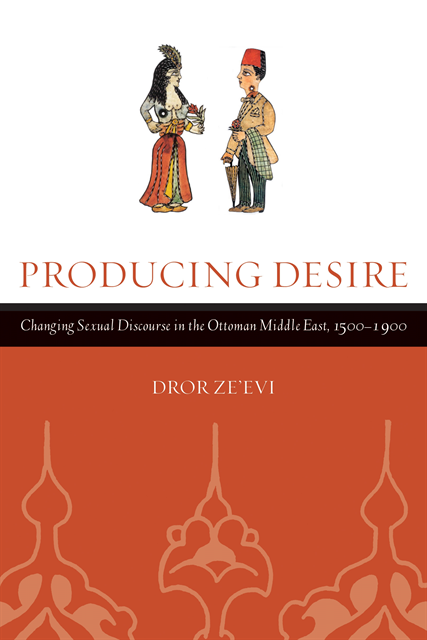
Producing Desire
Changing Sexual Discourse in the Ottoman Middle East, 1500-1900
Häftad, Engelska, 2006
295 kr
Skickas inom 7-10 vardagar
This highly original book brings into focus the sexual discourses manifest in a wealth of little-studied source material - medical texts, legal documents, religious literature, dream interpretation manuals, shadow theater, and travelogues - in a nuanced, wide-ranging, and powerfully analytic exploration of Ottoman sexual thought and practices from the heyday of the Ottoman Empire in the sixteenth century to the beginning of the twentieth. Following on the work of Foucault, Gagnon, Laqueur, and others, the premise of the book is that people shape their ideas of what is permissible, define boundaries of right and wrong, and imagine their sexual worlds through the set of discourses available to them. Dror Ze'evi finds that while some of these discourses were restrictive and others more permissive, all treated sex in its many manifestations as a natural human pursuit. And, he further argues that all these discourses were transformed and finally silenced in the last century, leaving very little to inform Middle Eastern societies in sexual matters.With its innovative approach toward the history of sexuality in the Middle East, "Producing Desire" sheds new light on the history of the Ottoman Empire, on the history of sexuality and gender, and on the Islamic Middle East today.
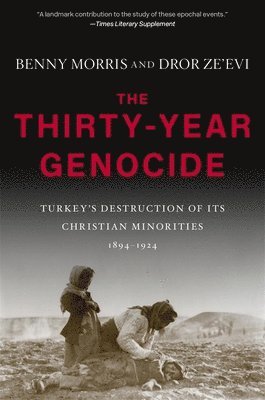
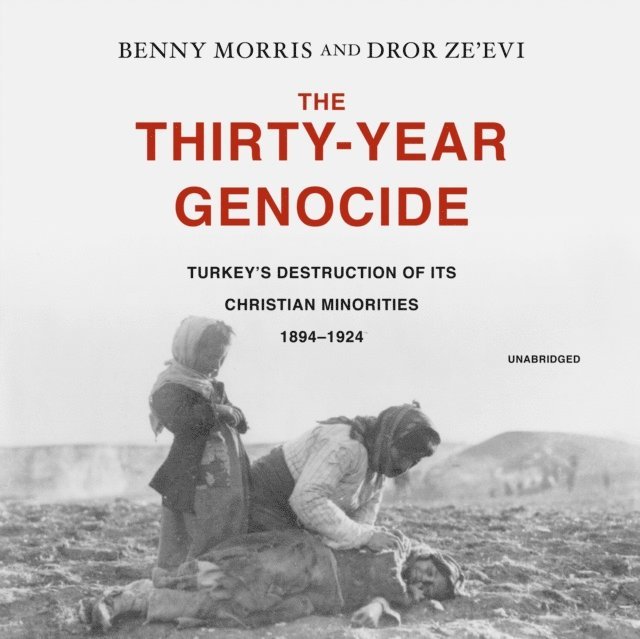
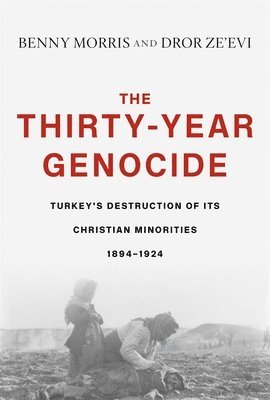
Thirty-Year Genocide
Turkey’s Destruction of Its Christian Minorities, 1894–1924
Häftad, Engelska, 2021
180 kr
Skickas inom 7-10 vardagar
A Financial Times Book of the YearA Foreign Affairs Book of the YearA Spectator Book of the Year“A landmark contribution to the study of these epochal events.”—Times Literary Supplement“Brilliantly researched and written…casts a careful eye upon the ghastly events that took place in the final decades of the Ottoman empire, when its rulers decided to annihilate their Christian subjects…Hitler and the Nazis gleaned lessons from this genocide that they then applied to their own efforts to extirpate Jews.”—Jacob Heilbrun, The SpectatorBetween 1894 and 1924, three waves of violence swept across Anatolia, targeting the region’s Christian minorities. By 1924, the Armenians, Assyrians, and Greeks, once nearly a quarter of the population, had been reduced to 2 percent. Most historians have treated these waves as distinct, isolated events, and successive Turkish governments presented them as an unfortunate sequence of accidents. The Thirty-Year Genocide is the first account to show that all three were actually part of a single, continuing, and intentional effort to wipe out Anatolia’s Christian population. Despite the dramatic swing from the Islamizing autocracy of the sultan to the secularizing republicanism of the post–World War I period, the nation’s annihilationist policies were remarkably constant, with continual recourse to premeditated mass killing, homicidal deportation, forced conversion, and mass rape. And one thing more was a constant: the rallying cry of jihad. While not justified under the teachings of Islam, the killing of two million Christians was effected through the calculated exhortation of the Turks to create a pure Muslim nation.“A subtle diagnosis of why, at particular moments over a span of three decades, Ottoman rulers and their successors unleashed torrents of suffering.”—Bruce Clark, New York Times Book Review
Thirty-Year Genocide
Turkey’s Destruction of Its Christian Minorities, 1894–1924
Inbunden, Engelska, 2019
317 kr
Tillfälligt slut
A reappraisal of the giant massacres perpetrated by the Ottoman Empire, and then the Turkish Republic, against their Christian minorities.Between 1894 and 1924, three waves of violence swept across Anatolia, targeting the region’s Christian minorities, who had previously accounted for 20 percent of the population. By 1924, the Armenians, Assyrians, and Greeks had been reduced to 2 percent. Most historians have treated these waves as distinct, isolated events, and successive Turkish governments presented them as an unfortunate sequence of accidents. The Thirty-Year Genocide is the first account to show that the three were actually part of a single, continuing, and intentional effort to wipe out Anatolia’s Christian population.The years in question, the most violent in the recent history of the region, began during the reign of the Ottoman sultan Abdulhamid II, continued under the Young Turks, and ended during the first years of the Turkish Republic founded by Ataturk. Yet despite the dramatic swing from the Islamizing autocracy of the sultan to the secularizing republicanism of the post–World War I period, the nation’s annihilationist policies were remarkably constant, with continual recourse to premeditated mass killing, homicidal deportation, forced conversion, mass rape, and brutal abduction. And one thing more was a constant: the rallying cry of jihad. While not justified under the teachings of Islam, the killing of two million Christians was effected through the calculated exhortation of the Turks to create a pure Muslim nation.Revelatory and impeccably researched, Benny Morris and Dror Ze’evi’s account is certain to transform how we see one of modern history’s most horrific events.
1 088 kr
Tillfälligt slut
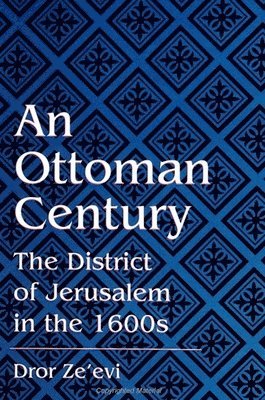
This sweeping look at the city and the District of Jerusalem in the 17th century paints a vivid picture of life in an Ottoman province.Based on micro-level research of the District of Jerusalem, this book addresses some of the most crucial questions concerning the Ottoman empire in a time of crisis and disorientation: decline and decentralization, the rise of the notable elite, the urban-rural-pastoral nexus, agrarian relations and the encroachment of European economy. At the same time it paints a vivid picture of life in an Ottoman province. By integrating court record, petitions, chronicles and even local poetry, the book recreates a historical world that, though long vanished, has left an indelible imprint on the city of Jerusalem and its surroundings.
364 kr
Skickas inom 7-10 vardagar
This sweeping look at the city and the District of Jerusalem in the 17th century paints a vivid picture of life in an Ottoman province.Based on micro-level research of the District of Jerusalem, this book addresses some of the most crucial questions concerning the Ottoman empire in a time of crisis and disorientation: decline and decentralization, the rise of the notable elite, the urban-rural-pastoral nexus, agrarian relations and the encroachment of European economy. At the same time it paints a vivid picture of life in an Ottoman province. By integrating court record, petitions, chronicles and even local poetry, the book recreates a historical world that, though long vanished, has left an indelible imprint on the city of Jerusalem and its surroundings.
369 kr
Skickas inom 10-15 vardagar
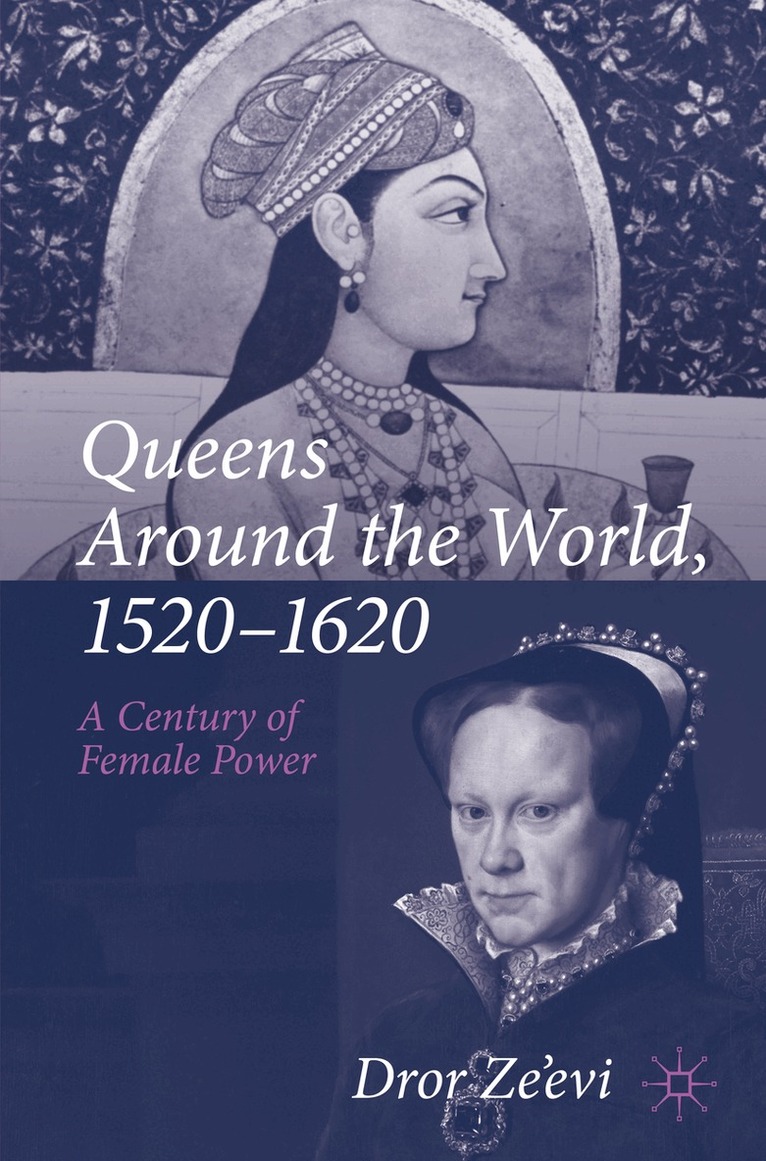
This textbook explores the histories of royal women in Europe, the Middle East, and parts of Asia in the sixteenth and early seventeenth centuries.
846 kr
Skickas inom 5-8 vardagar
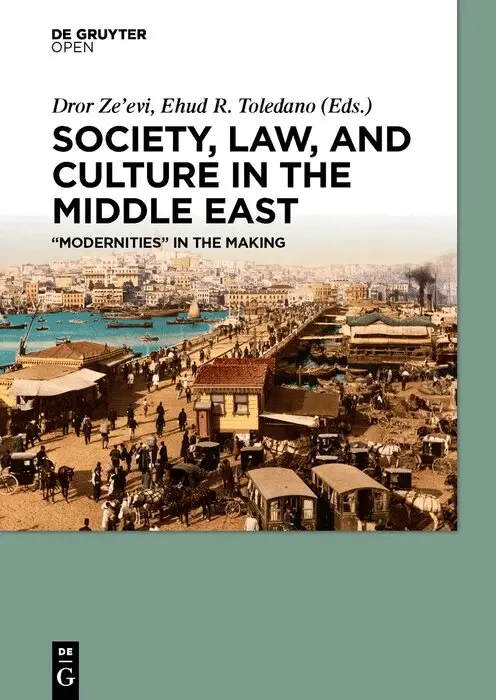
Society, Law, and Culture in the Middle East:“Modernities” in the Making is an edited volume that seeks to deepen and broaden our understanding of various forms of change in Middle Eastern and North African societies during the Ottoman period. It offers an in-depth analysis of reforms and gradual change in the longue durée, challenging the current discourse on the relationship between society, culture, and law. The focus of the discussion shifts from an external to an internal perspective, as agency transitions from “the West” to local actors in the region. Highlighting the ongoing interaction between internal processes and external stimuli, and using primary sources in Arabic and Ottoman Turkish, the authors and editors bring out the variety of modernities that shaped south-eastern Mediterranean history.The first part of the volume interrogates the urban elite household, the main social, political, and economic unit of networking in Ottoman societies. The second part addresses the complex relationship between law and culture, looking at how the legal system, conceptually and practically, undergirded the socio-cultural aspects of life in the Middle East.Society, Law, and Culture in the Middle East consists of eleven chapters, written by well-established and younger scholars working in the field of Middle East and Islamic Studies. The editors, Dror Ze'evi and Ehud R. Toledano, are both leading historians, who have published extensively on Middle Eastern societies in the Ottoman and post-Ottoman periods.