Benny Morris - Böcker
Visar alla böcker från författaren Benny Morris. Handla med fri frakt och snabb leverans.
12 produkter
12 produkter
272 kr
Skickas inom 3-6 vardagar
237 kr
Skickas inom 7-10 vardagar
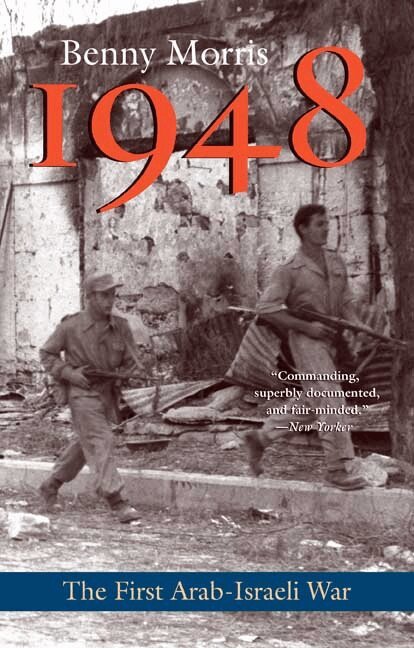
Benny Morris demolishes misconceptions and provides a comprehensive history of the Israeli-Arab war of 1948 This history of the foundational war in the Arab-Israeli conflict is groundbreaking, objective, and deeply revisionist. A riveting account of the military engagements, it also focuses on the war’s political dimensions. Benny Morris probes the motives and aims of the protagonists on the basis of newly opened Israeli and Western documentation. The Arab side—where the archives are still closed—is illuminated with the help of intelligence and diplomatic materials. Morris stresses the jihadi character of the two-stage Arab assault on the Jewish community in Palestine. Throughout, he examines the dialectic between the war’s military and political developments and highlights the military impetus in the creation of the refugee problem, which was a by-product of the disintegration of Palestinian Arab society. The book thoroughly investigates the role of the Great Powers—Britain, the United States, and the Soviet Union—in shaping the conflict and its tentative termination in 1949. Morris looks both at high politics and general staff decision-making processes and at the nitty-gritty of combat in the successive battles that resulted in the emergence of the State of Israel and the humiliation of the Arab world, a humiliation that underlies the continued Arab antagonism toward Israel.
1 110 kr
Skickas inom 5-8 vardagar
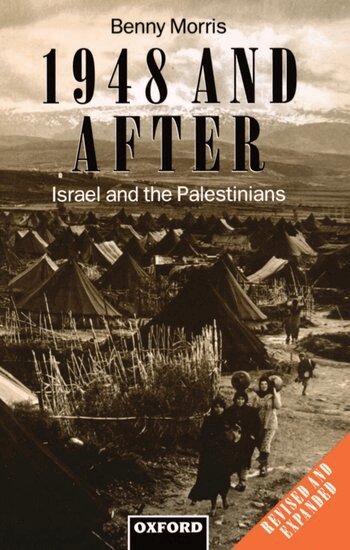
In this new collection of essays, three of which appear here for the first time, Benny Morris examines and elucidates aspects of the Arab exodus from Palestine in 1948, focusing on Israeli decision-making and the causes of the mass exile. He deals with the transfer of Majdal's (Ashkelon's) Arabs to Gaza in 1950 and the initial absorption of the Palestinian refugees in the Arab host countries in 1948-9, and looks at why a number of Arab villages in key areas of Israel along the highways linking Tel Aviv with Jerusalem and Haifa did not go into exile voluntarily and were left in place by the Israeli authorities. He examines the attitudes towards the Palestinian Arabs, as they evolved during the 1948 war, of Israel's two main parties, Mapai and Mapam; how the battle for the harvest of 1948 affected the exodus; how the Israeli Defence Forces' Intelligence Service analysed the Arab exodus; and how Yosef Weitz, a Jewish National Fund official, and the two `Transfer Committees' he chaired, helped promote the Palestinian exodus during 1948-9. In his introduction, Dr Morris examines past and present Israeli historiography, analysing the shift from the `old' official Israeli histories to the `new history' of the 1980s. He identifies the major points of controversy between the two approaches and the direction in which Israeli historiography is now moving.
200 kr
Skickas inom 7-10 vardagar
A renowned historian eludes the pitfalls of partisanship and tackles one of the world’s most perplexing and divisive issues“What is so striking about Morris’s work as a historian is that it does not flatter anyone’s prejudices, least of all his own,” David Remnick remarked in a New Yorker article that coincided with the publication of Benny Morris’s 1948: A History of the First Arab-Israeli War. With the same commitment to objectivity that has consistently characterized his approach, Morris now turns his attention to the present-day legacy of the events of 1948 and the concrete options for the future of Palestine and Israel.The book scrutinizes the history of the goals of the Palestinian national movement and the Zionist movement, then considers the various one- and two-state proposals made by different streams within the two movements. It also looks at the willingness or unwillingness of each movement to find an accommodation based on compromise. Morris assesses the viability and practicality of proposed solutions in the light of complicated and acrimonious realities. Throughout his groundbreaking career, Morris has reshaped understanding of the Israeli-Arab conflict. Here, once again, he arrives at a new way of thinking about the discord, injecting a ray of hope in a region where it is most sorely needed.
209 kr
Skickas inom 7-10 vardagar
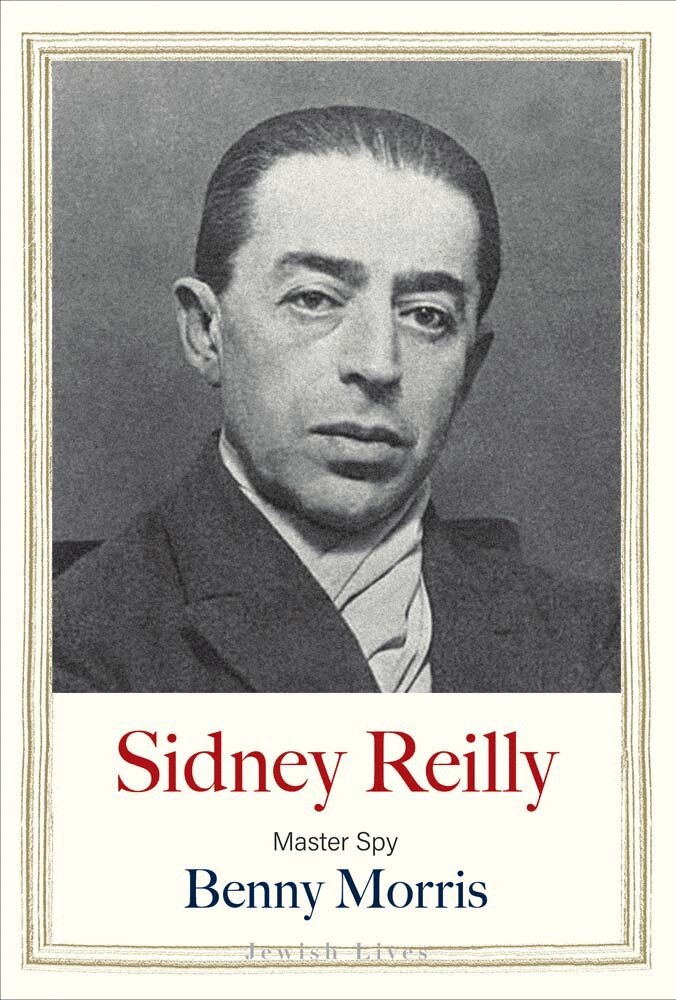
A revealing biography of Sidney Reilly, the early twentieth-century virtuoso of espionage “Mr. Morris’s dogged research . . . lends impressive rigor to this portrait of an often-cryptic figure.”—Diane Cole, Wall Street Journal Sidney Reilly (c. 1873–1925) is one of the most colorful and best-known spies of the twentieth century. Emerging from humble beginnings in southern Russia, Reilly was an inventive multilingual businessman and conman who enjoyed espionage as a sideline. By the early twentieth century he was working as an agent for Scotland Yard, spying on émigré communities in Paris and London, with occasional sorties to Germany, Russia, and the Far East. He spent World War I in the United States, brokering major arms deals for tsarist Russia, and then decided to become a professional spy, joining the ranks of MI6, Britain’s foreign intelligence service. He came close to overthrowing the Bolshevik regime in Moscow before eventually being lured back to Russia and executed. Said to have been the inspiration for Ian Fleming’s iconic James Bond character, Reilly was simultaneously married to three or four women and had mistresses galore. Sifting through the reality and the myth of Reilly’s life, historian Benny Morris offers a fascinating portrait of one of the most intriguing figures from the golden age of spies.
Del 18 - Cambridge Middle East Studies
The Birth of the Palestinian Refugee Problem Revisited
Häftad, Engelska, 2003
636 kr
Skickas inom 7-10 vardagar
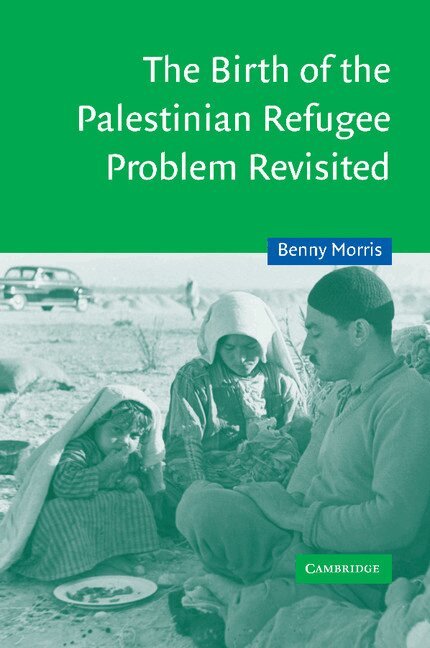
Benny Morris' The Birth of the Palestinian Refugee Problem was published in 1988. Its startling revelations about how and why 700,000 Palestinians left their homes and became refugees during the Arab-Israeli war in 1948 undermined traditional interpretations as to whether they left voluntarily or were expelled as part of a systematic plan. This book represents a revised edition of the earlier work, compiled on the basis of newly-opened Israeli military archives. While the focus remains the 1948 war and the analysis of the Palestinian exodus, the new material contains more information about what happened in Jerusalem, Jaffa and Haifa, and how events there led to the collapse of Palestinian urban society. It also sheds light on the battles and atrocities that resulted in the disintegration of rural communities. The story is a harrowing one. The refugees now number four million and their existence remains a major obstacle to peace.
Del 18 - Cambridge Middle East Studies
The Birth of the Palestinian Refugee Problem Revisited
Inbunden, Engelska, 2003
1 580 kr
Skickas inom 7-10 vardagar
Benny Morris' The Birth of the Palestinian Refugee Problem was published in 1988. Its startling revelations about how and why 700,000 Palestinians left their homes and became refugees during the Arab-Israeli war in 1948 undermined traditional interpretations as to whether they left voluntarily or were expelled as part of a systematic plan. This book represents a revised edition of the earlier work, compiled on the basis of newly-opened Israeli military archives. While the focus remains the 1948 war and the analysis of the Palestinian exodus, the new material contains more information about what happened in Jerusalem, Jaffa and Haifa, and how events there led to the collapse of Palestinian urban society. It also sheds light on the battles and atrocities that resulted in the disintegration of rural communities. The story is a harrowing one. The refugees now number four million and their existence remains a major obstacle to peace.
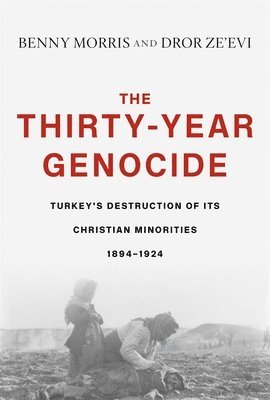
Thirty-Year Genocide
Turkey’s Destruction of Its Christian Minorities, 1894–1924
Häftad, Engelska, 2021
180 kr
Skickas inom 7-10 vardagar
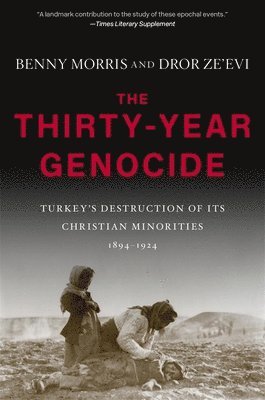
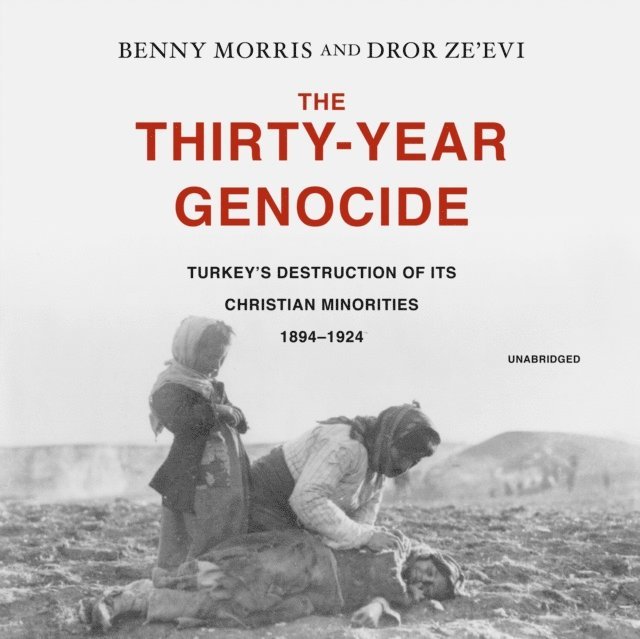
A Financial Times Book of the YearA Foreign Affairs Book of the YearA Spectator Book of the Year“A landmark contribution to the study of these epochal events.”—Times Literary Supplement“Brilliantly researched and written…casts a careful eye upon the ghastly events that took place in the final decades of the Ottoman empire, when its rulers decided to annihilate their Christian subjects…Hitler and the Nazis gleaned lessons from this genocide that they then applied to their own efforts to extirpate Jews.”—Jacob Heilbrun, The SpectatorBetween 1894 and 1924, three waves of violence swept across Anatolia, targeting the region’s Christian minorities. By 1924, the Armenians, Assyrians, and Greeks, once nearly a quarter of the population, had been reduced to 2 percent. Most historians have treated these waves as distinct, isolated events, and successive Turkish governments presented them as an unfortunate sequence of accidents. The Thirty-Year Genocide is the first account to show that all three were actually part of a single, continuing, and intentional effort to wipe out Anatolia’s Christian population. Despite the dramatic swing from the Islamizing autocracy of the sultan to the secularizing republicanism of the post–World War I period, the nation’s annihilationist policies were remarkably constant, with continual recourse to premeditated mass killing, homicidal deportation, forced conversion, and mass rape. And one thing more was a constant: the rallying cry of jihad. While not justified under the teachings of Islam, the killing of two million Christians was effected through the calculated exhortation of the Turks to create a pure Muslim nation.“A subtle diagnosis of why, at particular moments over a span of three decades, Ottoman rulers and their successors unleashed torrents of suffering.”—Bruce Clark, New York Times Book Review
Thirty-Year Genocide
Turkey’s Destruction of Its Christian Minorities, 1894–1924
Inbunden, Engelska, 2019
317 kr
Tillfälligt slut
A reappraisal of the giant massacres perpetrated by the Ottoman Empire, and then the Turkish Republic, against their Christian minorities.Between 1894 and 1924, three waves of violence swept across Anatolia, targeting the region’s Christian minorities, who had previously accounted for 20 percent of the population. By 1924, the Armenians, Assyrians, and Greeks had been reduced to 2 percent. Most historians have treated these waves as distinct, isolated events, and successive Turkish governments presented them as an unfortunate sequence of accidents. The Thirty-Year Genocide is the first account to show that the three were actually part of a single, continuing, and intentional effort to wipe out Anatolia’s Christian population.The years in question, the most violent in the recent history of the region, began during the reign of the Ottoman sultan Abdulhamid II, continued under the Young Turks, and ended during the first years of the Turkish Republic founded by Ataturk. Yet despite the dramatic swing from the Islamizing autocracy of the sultan to the secularizing republicanism of the post–World War I period, the nation’s annihilationist policies were remarkably constant, with continual recourse to premeditated mass killing, homicidal deportation, forced conversion, mass rape, and brutal abduction. And one thing more was a constant: the rallying cry of jihad. While not justified under the teachings of Islam, the killing of two million Christians was effected through the calculated exhortation of the Turks to create a pure Muslim nation.Revelatory and impeccably researched, Benny Morris and Dror Ze’evi’s account is certain to transform how we see one of modern history’s most horrific events.
249 kr
Skickas inom 3-6 vardagar
Roots of Appeasement
The British Weekly Press and Nazi Germany During the 1930s
Inbunden, Engelska, 2022
1 678 kr
Skickas inom 10-15 vardagar
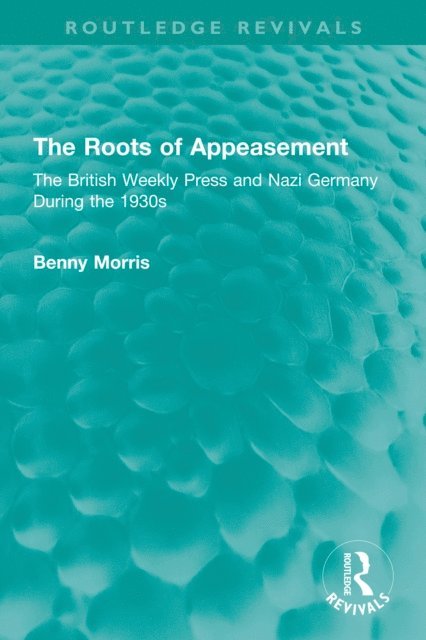
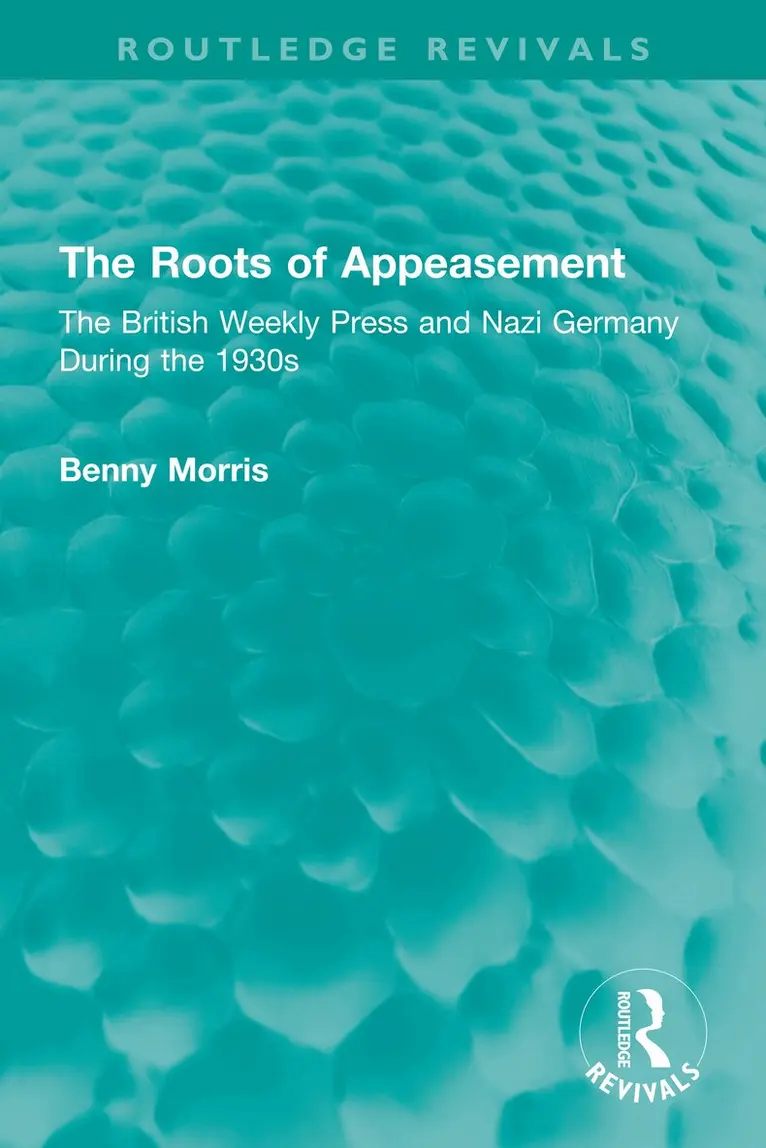
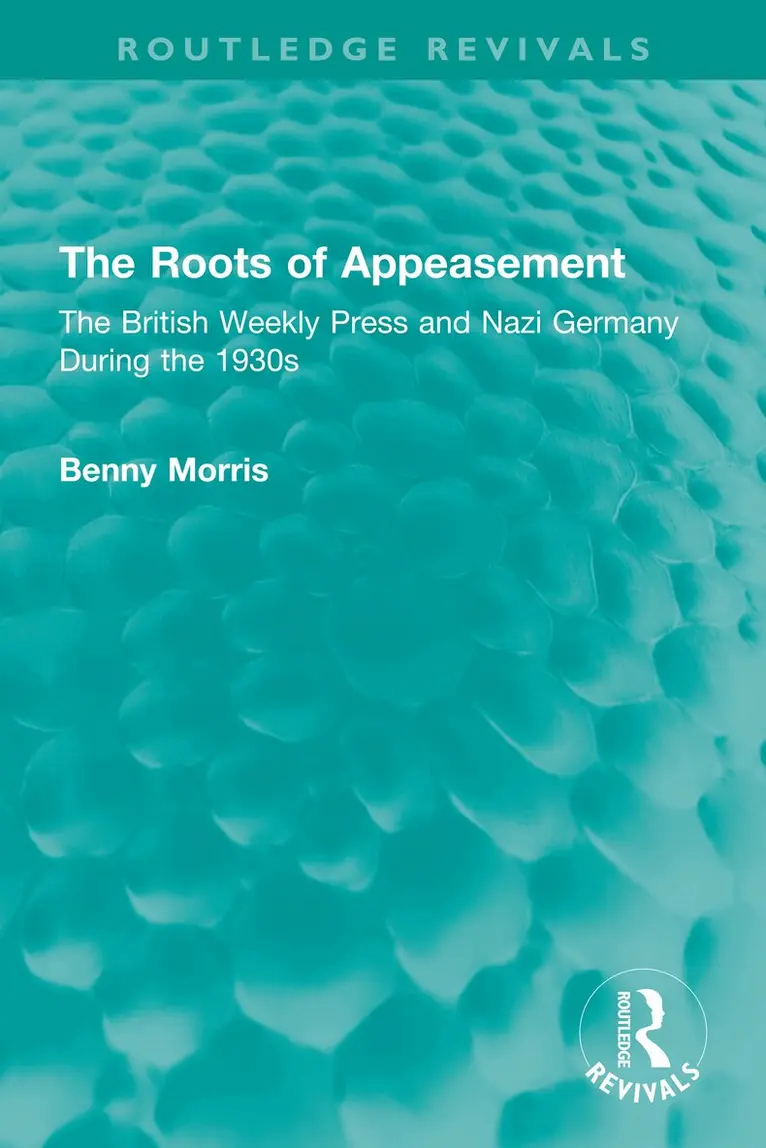
Originally published in 1991, The Roots of Appeasement outlines the attitudes of the British weekly press and its editors to Nazism and to German and British foreign policies during the 1930s. It analyses and interprets the reasons which underlay those attitudes. Aided by the evidence of the weeklies, it sheds additional light on the roots and development of appeasement. After introducing the weeklies and their editors, the study conveys and examines their attitudes to the European crises of 1935-9 and one chapter focusses on the popular fear of air attack as reflected in the journals. The major conclusion of the book is that a consensus supporting appeasement emerged in the weeklies in the course of 1935 and that it remained virtually intact until September 1938.
Roots of Appeasement
The British Weekly Press and Nazi Germany During the 1930s
Häftad, Engelska, 2022
499 kr
Skickas inom 10-15 vardagar
Originally published in 1991, The Roots of Appeasement outlines the attitudes of the British weekly press and its editors to Nazism and to German and British foreign policies during the 1930s. It analyses and interprets the reasons which underlay those attitudes. Aided by the evidence of the weeklies, it sheds additional light on the roots and development of appeasement. After introducing the weeklies and their editors, the study conveys and examines their attitudes to the European crises of 1935-9 and one chapter focusses on the popular fear of air attack as reflected in the journals. The major conclusion of the book is that a consensus supporting appeasement emerged in the weeklies in the course of 1935 and that it remained virtually intact until September 1938.