E. C. Spary – författare
Visar alla böcker från författaren E. C. Spary. Handla med fri frakt och snabb leverans.
10 produkter
10 produkter
268 kr
Skickas inom 7-10 vardagar
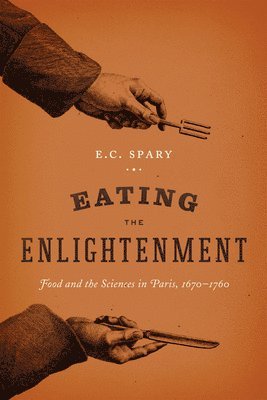
Eating the Enlightenment offers a new perspective on the history of food, looking at writings about cuisine, diet, and food chemistry as a key to larger debates over the state of the nation in Old Regime France. Embracing a wide range of authors and scientific or medical practitioners - from physicians and poets to philosophies and playwrights - E. C. Spary demonstrates how public discussions of eating and drinking were used to articulate concerns about the state of civilization versus that of nature, about the effects of consumption on the identitics of individuals and nations, and about the proper form and practice of scholarship. En route, Spary devotes extensive attention to the manufacture, trade, and eating of foods, focusing on coffee and liqueurs in particular, and also considers controversies over specific issues such as the chemistry of digestion and the nature of alcohol. Familiar figures such as Fontenelle, Diderot, and Rousseau appear alongside little-known individuals from the margins of the world of letters, including the draughts-playing cafe owner Charles Manoury, the "Turkish envoy" Soliman Aga, and the natural philosopher Jacques Gautier d'Agoty.Equally entertaining and enlightening, Eating the Enlightenment is an original contribution to discussions of the dissemination of knowledge and the nature of scientific authority.
584 kr
Skickas inom 7-10 vardagar
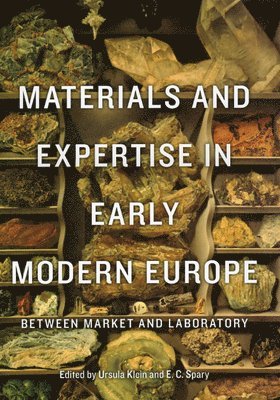
It is often assumed that natural philosophy was the forerunner of early modern natural sciences. But where did these sciences' systematic observation and experimentation get their starts? In "Materials and Expertise in Early Modern Europe", the laboratories, workshops, and marketplaces emerge as arenas where hands-on experience united with higher learning. In an age when chemistry, mineralogy, geology, and botany intersected with mining, metallurgy, pharmacy, and gardening, materials were objects that crossed disciplines. Here, the contributors tell the stories of metals, clay, gunpowder, pigments, and foods, and thereby demonstrate the innovative practices of technical experts, the development of the consumer market, and the formation of the observational and experimental sciences in the early modern period. By exploring the hybrid expertise involved in the making, consumption, and promotion of various materials, the book offers an original perspective on important issues in the history of science, medicine, and technology.
985 kr
Skickas inom 7-10 vardagar
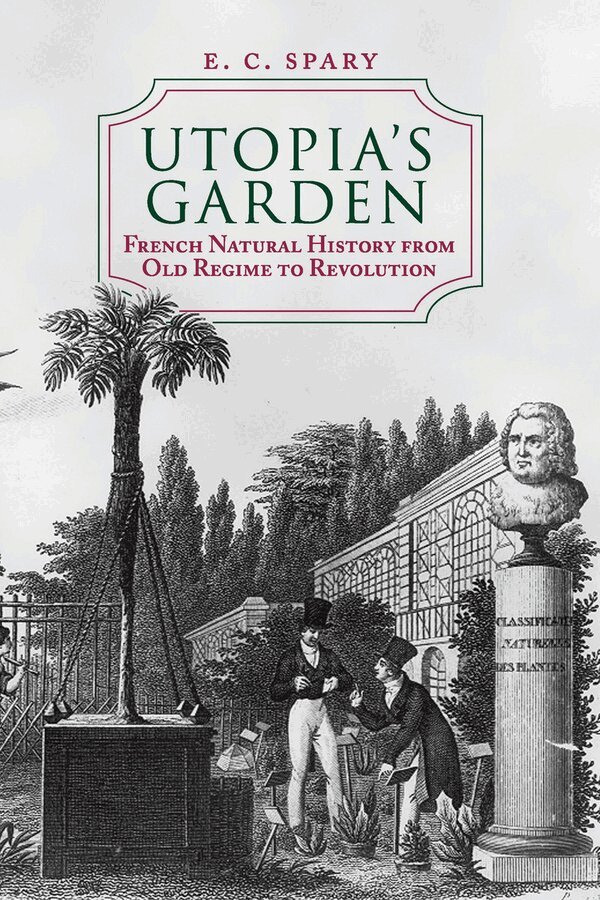
The royal Parisian botanical garden, the Jardin du Roi, was a jewel in the crown of the French Old Regime, praised by both rulers and scientific practitioners. Yet unlike many such institutions, the Jardin not only survived the French Revolution but by 1800 had become the world's leading public establishment of natural history: the Mus[5]eum d'Histoire Naturelle. E.C. Spary traces the scientific, administrative, and political strategies that enabled the foundation of the Mus[5]eum, arguing that agriculture and animal breeding rank alongside classification and collections in explaining why natural history was important for French rulers. But the Mus[5]eum's success was also a consequence of its employees' Revolutionary rhetoric: by displaying the natural order, they suggested, the institution could assist in fashioning a self-educating, self-policing Republican people. Natural history was presented as an indispensable source of national prosperity and individual virtue.
366 kr
Skickas inom 7-10 vardagar
The royal Parisian botanical garden, the Jardin du Roi, was a jewel in the crown of the French Old Regime, praised by both rulers and scientific practitioners. Yet unlike many such institutions, the Jardin not only survived the French Revolution but by 1800 had become the world's leading public establishment of natural history: the Muséum d'Histoire Naturelle.E. C. Spary traces the scientific, administrative, and political strategies that enabled the foundation of the Muséum, arguing that agriculture and animal breeding rank alongside classification and collections in explaining why natural history was important for French rulers. But the Muséum's success was also a consequence of its employees' Revolutionary rhetoric: by displaying the natural order, they suggested, the institution could assist in fashioning a self-educating, self-policing Republican people. Natural history was presented as an indispensable source of national prosperity and individual virtue.Spary's fascinating account opens a new chapter in the history of France, science, and the Enlightenment.
814 kr
Skickas inom 7-10 vardagar
"Eating the Enlightenment" offers a new perspective on the history of food, looking at writings about cuisine, diet, and food chemistry as a key to larger debates over the state of the nation in Old Regime France. Embracing a wide range of authors and scientific or medical practitioners - from physicians and poets to philosophers and playwrights - E. C. Spary demonstrates how public discussions of eating and drinking were used to articulate concerns about the state of civilization versus that of nature, about the effects of consumption upon the identities of individuals and nations, and about the proper form and practice of scholarship. En route, Spary devotes extensive attention to the manufacture, trade, and eating of foods, focusing upon coffee and liqueurs in particular, and also considers controversies over specific issues such as the chemistry of digestion and the nature of alcohol. Familiar figures such as Fontenelle, Diderot, and Rousseau appear alongside little-known individuals from the margins of the world of letters: the chess-playing cafe owner Charles Manoury, the "Turkish envoy" Soliman Aga, and the natural philosopher Jacques Gautier d'Agoty.Equally entertaining and enlightening, "Eating the Enlightenment" will be an original contribution to discussions of the dissemination of knowledge and the nature of scientific authority.
705 kr
Skickas inom 7-10 vardagar
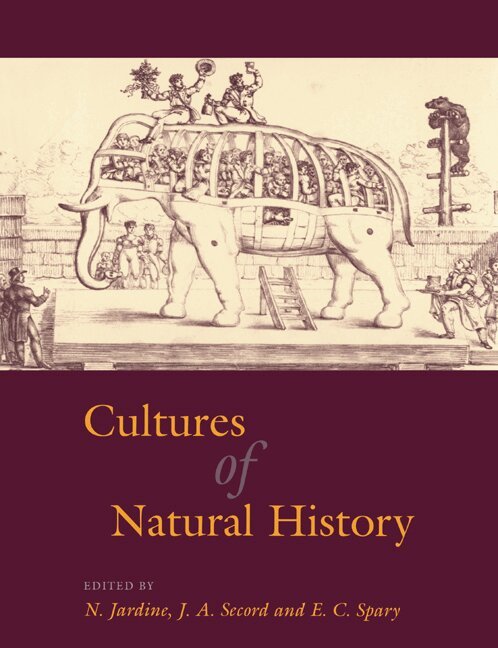
This lavishly illustrated volume is the first systematic general work to do justice to the fruits of recent scholarship in the history of natural history. Public interest in this lively field has been stimulated by environmental concerns and through links with the histories of art, collecting and gardening. Twenty-four specially commissioned essays cover the period from the sixteenth century, when the first institutions of natural history were created, to its late nineteenth-century transformation by practitioners of the new biological sciences. An introduction discusses novel approaches that have made this a major focus for research in cultural history. The essays, which include suggestions for further reading, offer a coherent and accessible overview of a fascinating subject. An epilogue highlights the relevance of this wide-ranging survey for current debates on museum practice, the display of ecological diversity, and concerns about the environment.
1 627 kr
Skickas inom 7-10 vardagar
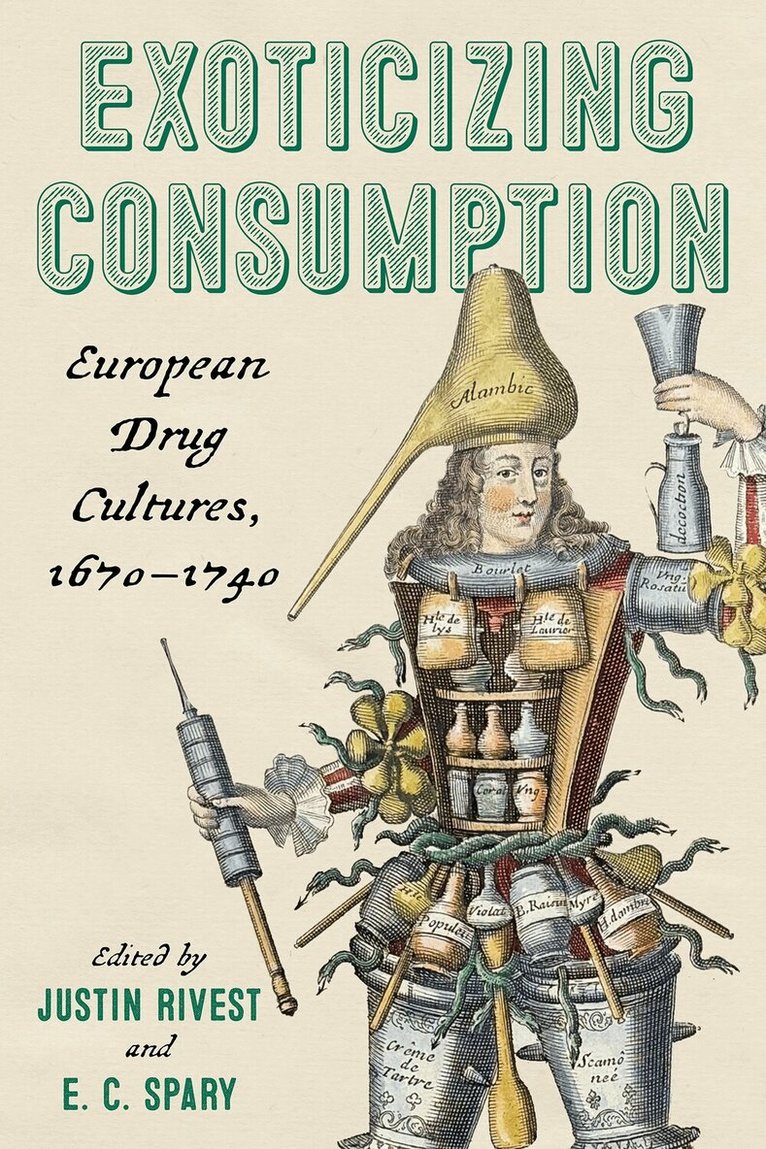
Exotic drugs and spices, from tea to opium, were among the first fruits of European commercial expansion in the sixteenth century. By the eighteenth, many had become profitable products of the European empires that had spread across the globe. Often, they were objects of appropriation—substances whose curative virtues were known to Indigenous peoples and assimilated into European knowledge and commerce by missionaries, soldiers, and merchants. Exoticizing Consumption explores the many ways in which new global drugs disrupted the European medical marketplace, how they came to be known, described, valued, and used in Europe, how they reached European markets, who sold them, and who consumed them. Individual chapters covering many parts of Europe, from Spain in the south to Russia in the north, address the effects of commercial expansion when no central, national, or international system for policing drugs existed. Collectively, they trace the movement of drugs from their sources of extraction all over the world in light of intertwined processes of knowing, healing, using, and selling in the global marketplace and beyond.
489 kr
Skickas inom 7-10 vardagar
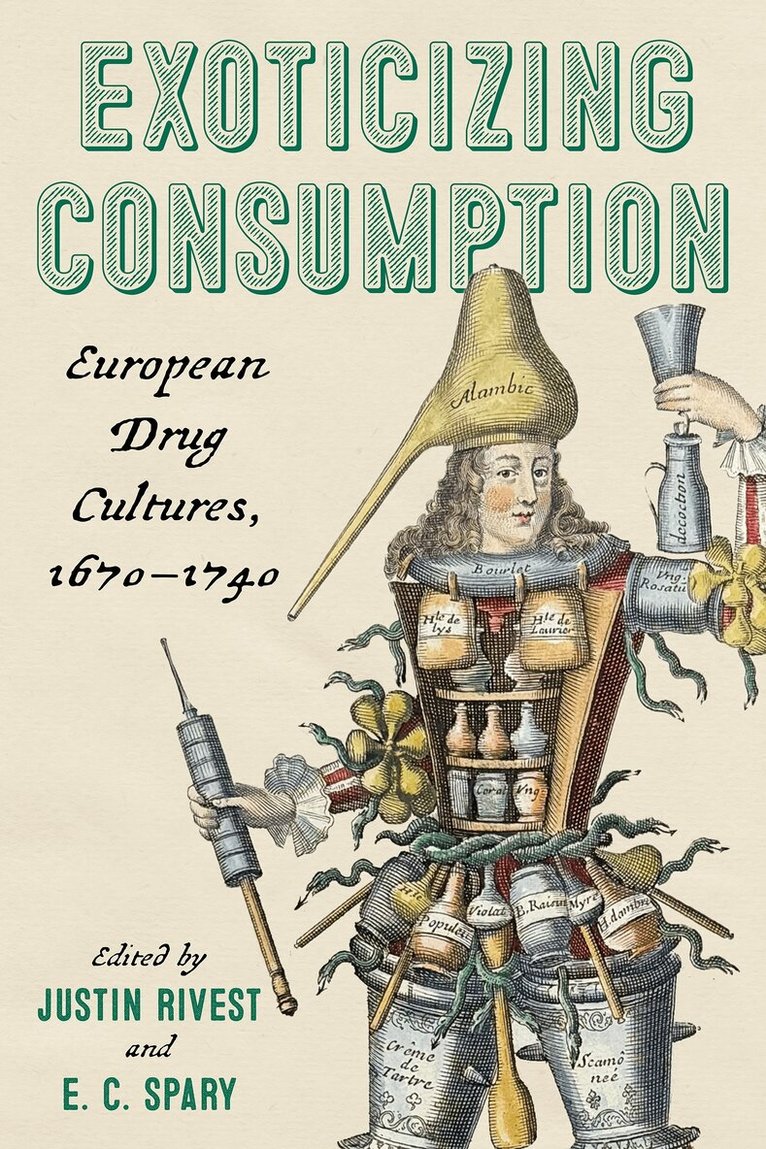
Exotic drugs and spices, from tea to opium, were among the first fruits of European commercial expansion in the sixteenth century. By the eighteenth, many had become profitable products of the European empires that had spread across the globe. Often, they were objects of appropriation—substances whose curative virtues were known to Indigenous peoples and assimilated into European knowledge and commerce by missionaries, soldiers, and merchants. Exoticizing Consumption explores the many ways in which new global drugs disrupted the European medical marketplace, how they came to be known, described, valued, and used in Europe, how they reached European markets, who sold them, and who consumed them. Individual chapters covering many parts of Europe, from Spain in the south to Russia in the north, address the effects of commercial expansion when no central, national, or international system for policing drugs existed. Collectively, they trace the movement of drugs from their sources of extraction all over the world in light of intertwined processes of knowing, healing, using, and selling in the global marketplace and beyond.
Del 21 - Cambridge Social and Cultural Histories
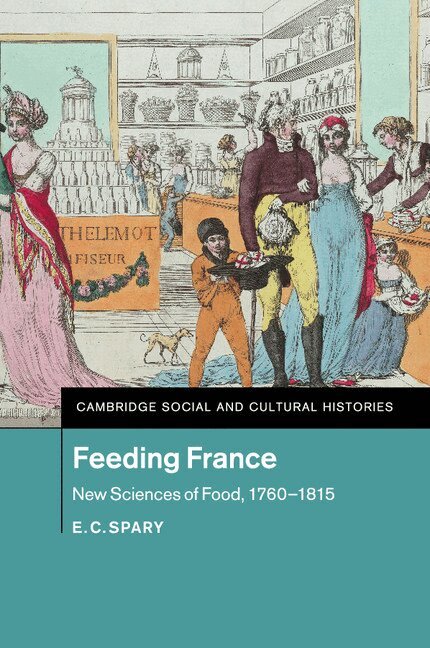
Feeding France
New Sciences of Food, 1760-1815
Inbunden, Engelska, 2014
1 431 kr
Skickas inom 7-10 vardagar
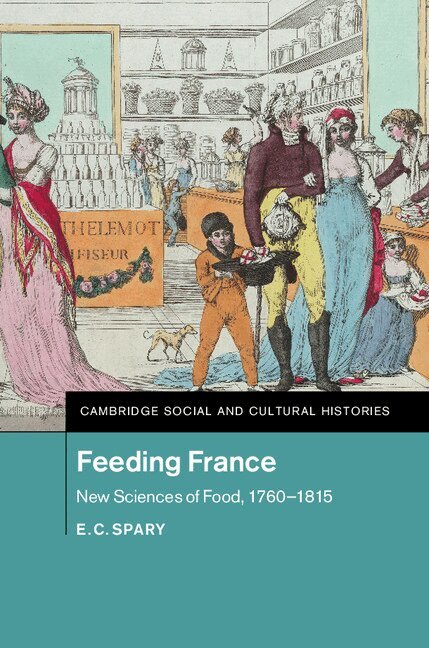
Feeding France is the first comprehensive study of the French food industry in the decades surrounding the French Revolution of 1789. Though the history of gastronomy and the restaurant have been explored by scholars, few are aware that France was also one of the first nations to produce industrial foods. In this time of political and social upheaval, chemists managed to succeed both as public food experts and as industrial food manufacturers. This book explores the intersection between knowledge, practice and commerce which made this new food expertise possible, and the institutional and experimental culture which housed it. Ranging from the exigencies of Old Regime bread-making to the industrial showcasing of gelatine manufacture, E. C. Spary rewrites the history of the French relationship with food to show that industrialisation and patrimonialism were intimately intertwined.
Del 21 - Cambridge Social and Cultural Histories
Feeding France
New Sciences of Food, 1760-1815
Häftad, Engelska, 2017
523 kr
Skickas inom 7-10 vardagar
Feeding France is the first comprehensive study of the French food industry in the decades surrounding the French Revolution of 1789. Though the history of gastronomy and the restaurant have been explored by scholars, few are aware that France was also one of the first nations to produce industrial foods. In this time of political and social upheaval, chemists managed to succeed both as public food experts and as industrial food manufacturers. This book explores the intersection between knowledge, practice and commerce which made this new food expertise possible, and the institutional and experimental culture which housed it. Ranging from the exigencies of Old Regime bread-making to the industrial showcasing of gelatine manufacture, E. C. Spary rewrites the history of the French relationship with food to show that industrialisation and patrimonialism were intimately intertwined.