Ursula Klein – författare
Visar alla böcker från författaren Ursula Klein. Handla med fri frakt och snabb leverans.
22 produkter
Materials and Expertise in Early Modern Europe
Between Market and Laboratory
Inbunden, 2010
634 kr
Lägg i varukorg
It is often assumed that natural philosophy was the forerunner of early modern natural sciences. But where did these sciences' systematic observation and experimentation get their starts? In "Materials and Expertise in Early Modern Europe", the laboratories, workshops, and marketplaces emerge as …
Materials and Expertise in Early Modern Europe
Between Market and Laboratory
Av Emma C. Spary, Ursula Klein
E-bok, 2010
1424 kr
Lägg i varukorg
It is often assumed that natural philosophy was the forerunner of early modern natural sciences. But where did these sciences’ systematic observation and experimentation get their starts? In Materials and Expertise in Early Modern Europe , the laboratories, workshops, and marketplaces emerge as …
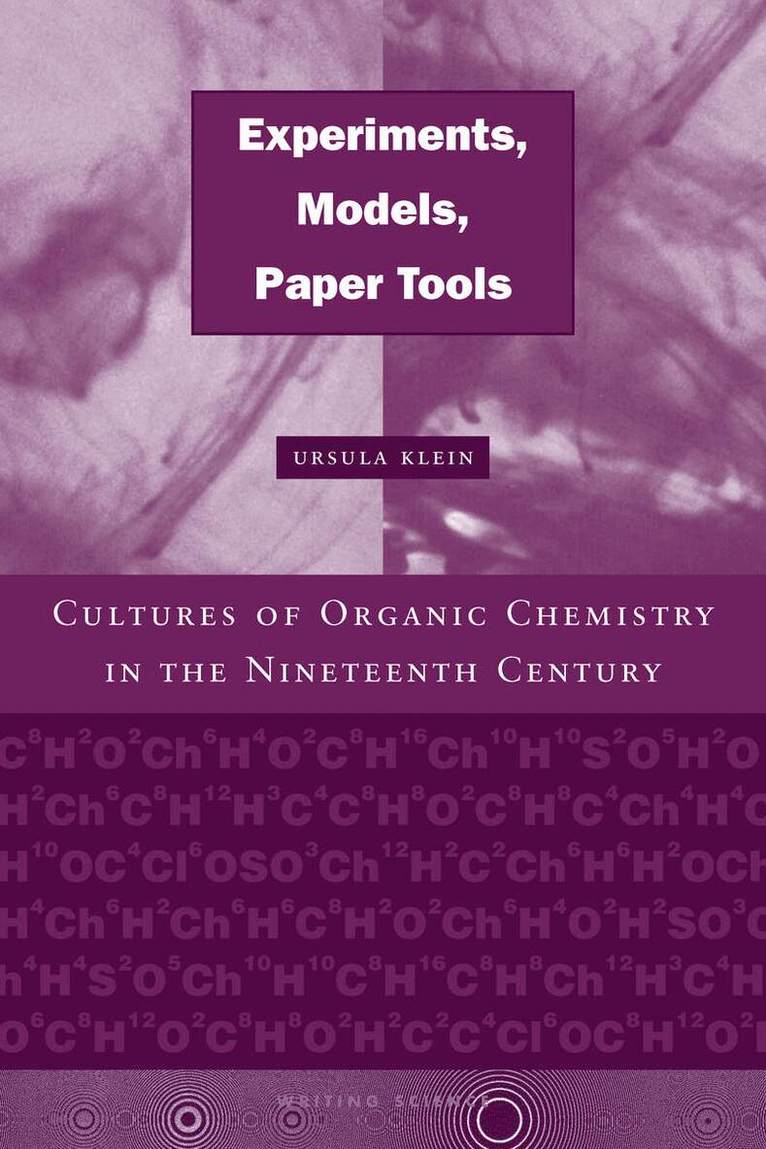
Experiments, Models, Paper Tools
Cultures of Organic Chemistry in the Nineteenth Century
Av Ursula Klein
Inbunden, 2002
1011 kr
Lägg i varukorg
In the early nineteenth century, chemistry emerged in Europe as a truly experimental discipline. What set this process in motion, and how did it evolve? Experimentalization in chemistry was driven by a seemingly innocuous tool: the sign system of chemical formulas invented by the Swedish chemist …
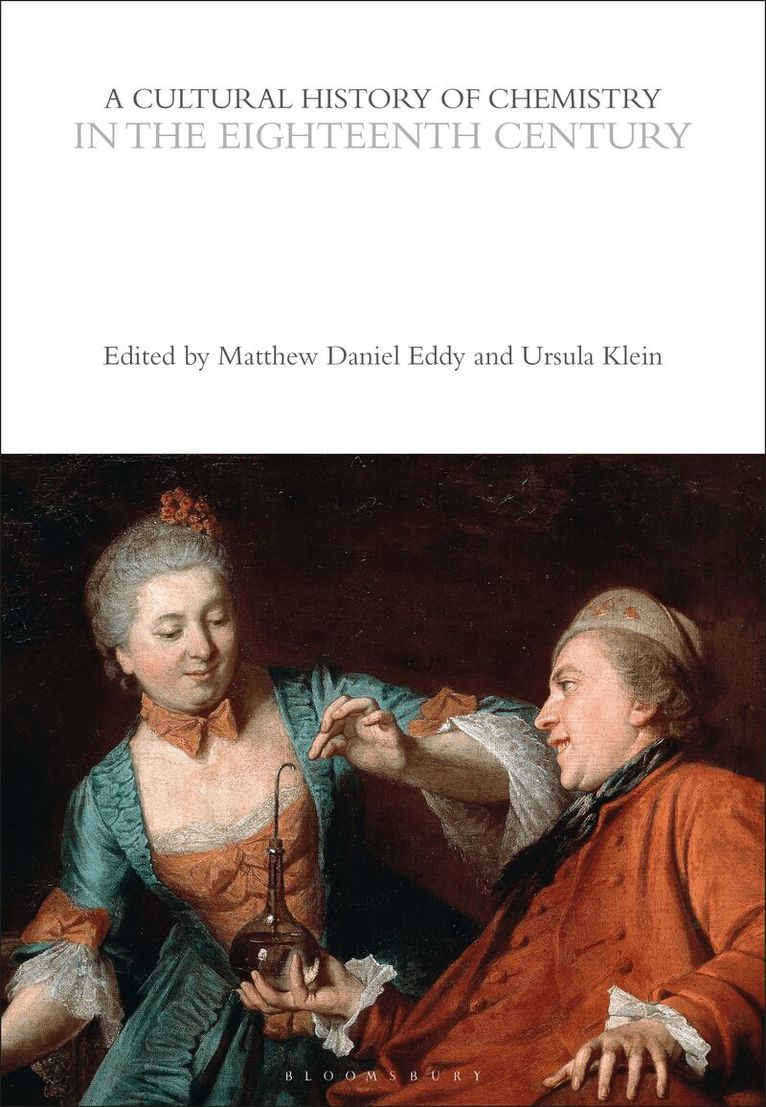
Cultural History of Chemistry in the Eighteenth Century
Av Matthew Daniel Eddy, Ursula Klein
E-bok, 2023
1204 kr
Lägg i varukorg
A Cultural History of Chemistry in the Eighteenth Century covers the period from 1700 to 1815. Setting the progress of science and technology in its cultural context, the volume re-examines the changes that many have considered to constitute a "chemical revolution ". Already boasting a laboratory …
Cultural History of Chemistry in the Eighteenth Century
Av Matthew Daniel Eddy, Ursula Klein
E-bok, 2023
1204 kr
Lägg i varukorg
A Cultural History of Chemistry in the Eighteenth Century covers the period from 1700 to 1815. Setting the progress of science and technology in its cultural context, the volume re-examines the changes that many have considered to constitute a "chemical revolution ". Already boasting a laboratory …
Cultural History of Chemistry in the Eighteenth Century
Av Matthew Daniel Eddy, Ursula Klein
Häftad, 2025
315 kr
Lägg i varukorg
** A Cultural History of Chemistry: Volumes 1-6 is a 2023 CHOICE Outstanding Academic Title ** A Cultural History of Chemistry in the Eighteenth Century covers the period from 1700 to 1815. Setting the progress of science and technology in its cultural context, the volume re-examines the changes …
Tools and Modes of Representation in the Laboratory Sciences
Av Ursula Klein, U. Klein
Inbunden, 2001
1098 kr
Lägg i varukorg
constitutive of reference in laboratory sciences as cultural sign systems and their manipulation and superposition, collectively shared classifications and associated conceptual frameworks,· and various fonns of collective action and social institutions. This raises the question of how much modes …
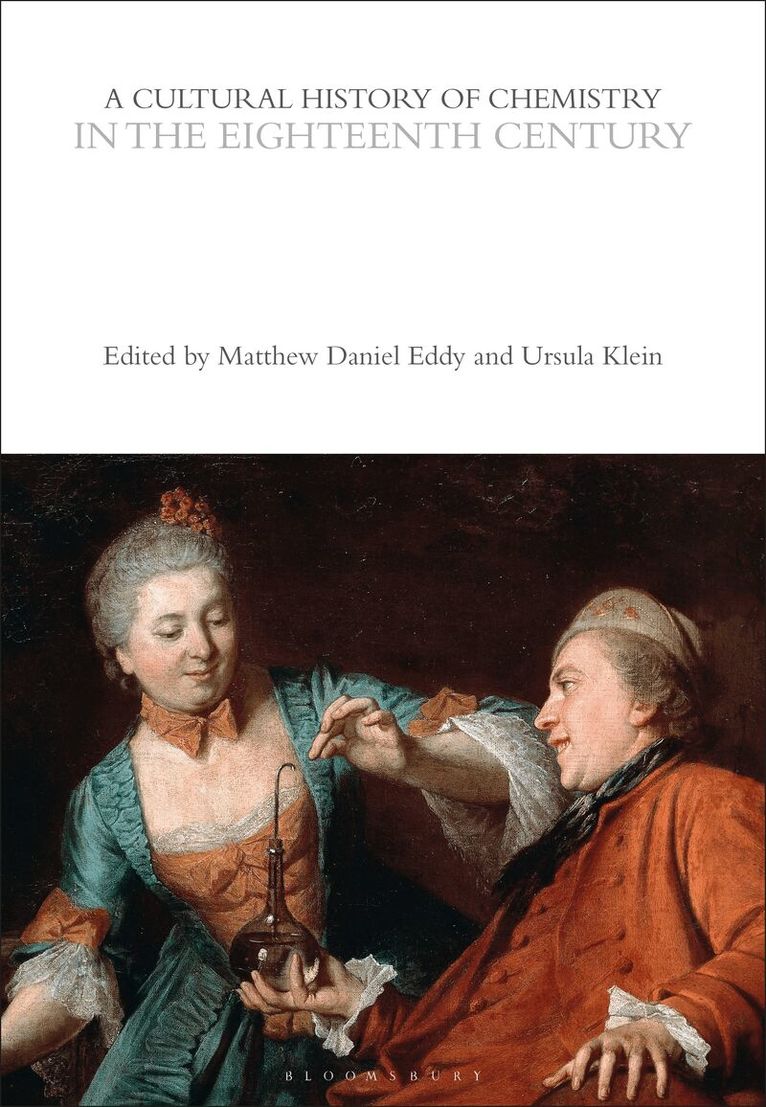
Cultural History of Chemistry in the Eighteenth Century
Av Matthew Daniel Eddy, Ursula Klein
Inbunden, 2023
1157 kr
Lägg i varukorg
** A Cultural History of Chemistry: Volumes 1-6 is a 2023 CHOICE Outstanding Academic Title **A Cultural History of Chemistry in the Eighteenth Century covers the period from 1700 to 1815. Setting the progress of science and technology in its cultural context, the volume re-examines the changes …
Verbindung und Affinität
Die Grundlegung der neuzeitlichen Chemie an der Wende vom 17. zum 18. Jahrhundert
Av Ursula Klein
E-bok, 2013
782 kr
Lägg i varukorg
Verbindung und Affinität
Die Grundlegung der neuzeitlichen Chemie an der Wende vom 17. zum 18. Jahrhundert
Av Ursula Klein
Häftad, 2012
863 kr
Lägg i varukorg
Supervision und Weiterbildung
Instrumente zur Professionalisierung von ErzieherInnen
Av Ursula Klein
Häftad, 2010
550 kr
Lägg i varukorg
Das Thema Frühpädagogik hat Hochkonjunktur. Im Vordergrund der öffentlichen Auseinandersetzung stehen die Bedeutung der frühen Förderung hinsichtlich der Entwicklungschancen von Kindern und die gestiegenen Anforderungen an die Einrichtungen sowie die Ausbildung der dort professionell Tätigen. Es …
Supervision und Weiterbildung
Instrumente zur Professionalisierung von ErzieherInnen
Av Ursula Klein
E-bok, 2010
423 kr
Lägg i varukorg
Das Thema Frühpädagogik hat Hochkonjunktur. Im Vordergrund der öffentlichen Auseinandersetzung stehen die Bedeutung der frühen Förderung hinsichtlich der Entwicklungschancen von Kindern und die gestiegenen Anforderungen an die Einrichtungen sowie die Ausbildung der dort professionell Tätigen. Es …
Umgang mit Bilingualität von Migrantenkindern in der Primarstufe ("KOALA")
Koordinierte Alphabetisierung im Anfangsunterricht
Av Ursula Klein
Häftad, 2011
351 kr
Lägg i varukorg
Erfahrungsbasierte Kompetenzentwicklung älterer ArbeitnehmerInnen im gewerblich-technischen Unternehmensbereich
Equa Lernarrangement
Av Ursula Klein
Häftad, 2011
363 kr
Lägg i varukorg
Verbindung und Affinität
Die Grundlegung der neuzeitlichen Chemie an der Wende vom 17. zum 18. Jahrhundert
Av Ursula Klein
Inbunden, 1994
771 kr
Lägg i varukorg
Nützliches Wissen
Die Erfindung der Technikwissenschaften
Av Ursula Klein
E-bok, 2016
204 kr
Lägg i varukorg
Die Figur des hybriden Experten und die »nützlichen Wissenschaften" als Frühformen der Ingenieurswissenschaften.Die Erkenntnisse und Innovationen moderner Ingenieurs- und Technikwissenschaften haben unseren Alltag - vom Auto bis zum Internet - bereits tief durchdrungen. Naturwissenschaften, …