Matthew Daniel Eddy – författare
Visar alla böcker från författaren Matthew Daniel Eddy. Handla med fri frakt och snabb leverans.
4 produkter
4 produkter
537 kr
Skickas inom 7-10 vardagar
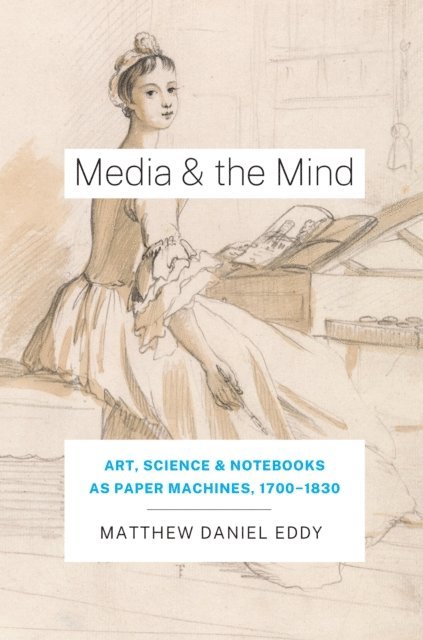
A beautifully illustrated argument that reveals notebooks as extraordinary paper machines that transformed knowledge on the page and in the mind.We often think of reason as a fixed entity, as a definitive body of facts that do not change over time. But during the Enlightenment, reason also was seen as a process, as a set of skills enacted on a daily basis. How, why, and where were these skills learned? Concentrating on Scottish students living during the long eighteenth century, this book argues that notebooks were paper machines and that notekeeping was a capability-building exercise that enabled young notekeepers to mobilize everyday handwritten and printed forms of material and visual media in a way that empowered them to judge and enact the enlightened principles they encountered in the classroom. Covering a rich selection of material ranging from simple scribbles to intricate watercolor diagrams, the book reinterprets John Locke’s comparison of the mind to a blank piece of paper, the tabula rasa. Although one of the most recognizable metaphors of the British Enlightenment, scholars seldom consider why it was so successful for those who used it. Each chapter uses one core notekeeping skill to reveal the fascinating world of material culture that enabled students in the arts, sciences, and humanities to transform the tabula rasa metaphor into a dynamic cognitive model. Starting in the home, moving to schools, and ending with universities, the book reconstructs the relationship between media and the mind from the bottom up. It reveals that the cognitive skills required to make and use notebooks were not simply aids to reason; rather, they were part of reason itself.
360 kr
Skickas inom 7-10 vardagar
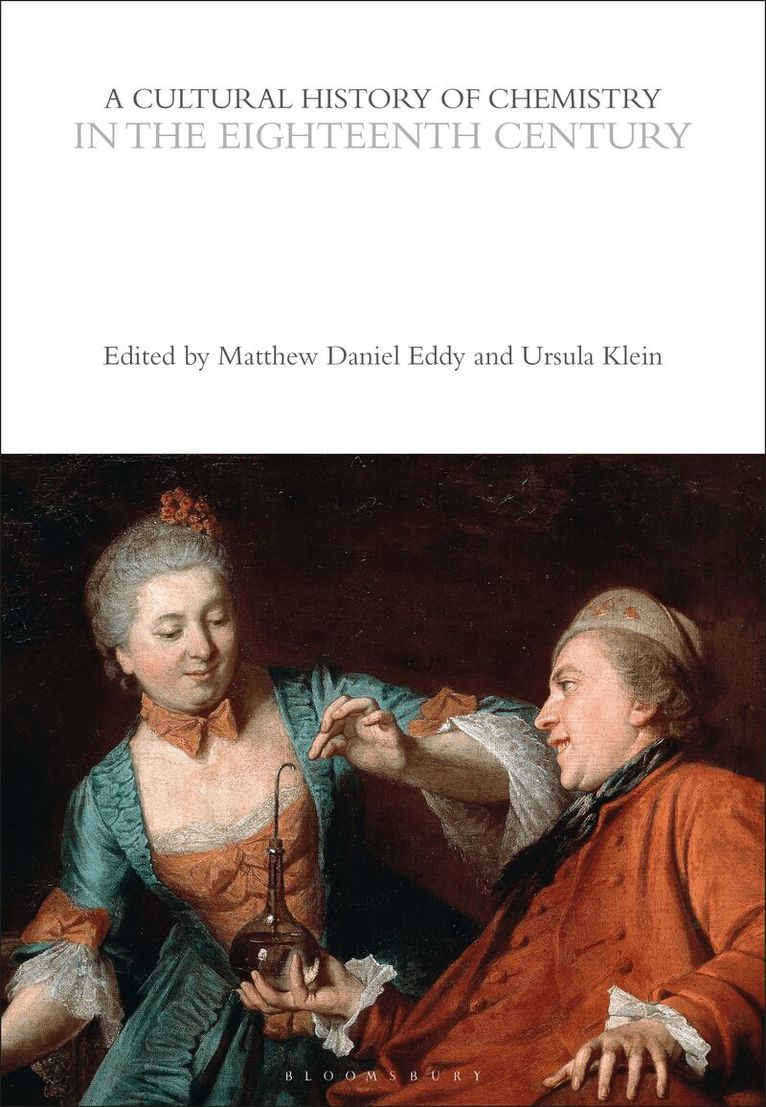
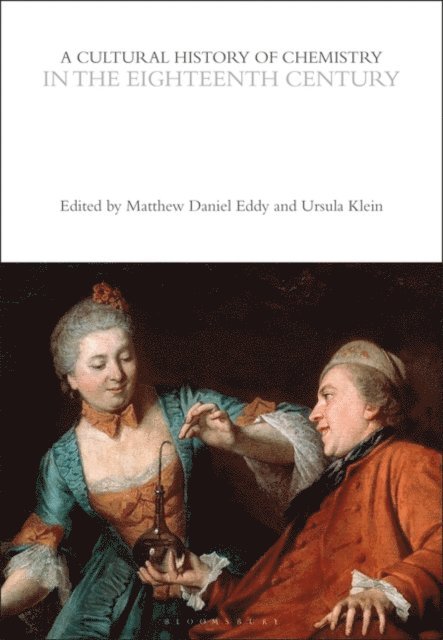
** A Cultural History of Chemistry: Volumes 1-6 is a 2023 CHOICE Outstanding Academic Title ** A Cultural History of Chemistry in the Eighteenth Century covers the period from 1700 to 1815. Setting the progress of science and technology in its cultural context, the volume re-examines the changes that many have considered to constitute a "chemical revolution". Already boasting a laboratory culture open to both manufacturing and commerce, the discipline of chemistry now extended into academies and universities. Chemists studied myriad materials - derived from minerals, plants, and animals - and produced an increasing number of chemical substances such as acids, alkalis, and gases. New textbooks offered opportunities for classifying substances, rethinking old theories and elaborating new ones. By the end of the period – in Europe and across the globe - chemistry now embodied the promise of unifying practice and theory.The six-volume set of the Cultural History of Chemistry presents the first comprehensive history from the Bronze Age to today, covering all forms and aspects of chemistry and its ever-changing social context. The themes covered in each volume are theory and concepts; practice and experiment; laboratories and technology; culture and science; society and environment; trade and industry; learning and institutions; art and representation.Matthew Daniel Eddy is Professor and Chair in the History and Philosophy of Science at Durham University, UK. Ursula Klein is Senior Research Scholar at the Max Planck Institute for the History of Science, Germany.A Cultural History of Chemistry in the Eighteenth Century is the fourth volume in the six-volume set, A Cultural History of Chemistry, also available online as part of Bloomsbury Cultural History, a fully-searchable digital library (see www.bloomsburyculturalhistory.com).General Editors: Peter J. T. Morris, University College London, UK, and Alan Rocke, Case Western Reserve University, USA.
1 093 kr
Skickas inom 7-10 vardagar
** A Cultural History of Chemistry: Volumes 1-6 is a 2023 CHOICE Outstanding Academic Title **A Cultural History of Chemistry in the Eighteenth Century covers the period from 1700 to 1815. Setting the progress of science and technology in its cultural context, the volume re-examines the changes that many have considered to constitute a "chemical revolution". Already boasting a laboratory culture open to both manufacturing and commerce, the discipline of chemistry now extended into academies and universities. Chemists studied myriad materials - derived from minerals, plants, and animals - and produced an increasing number of chemical substances such as acids, alkalis, and gases. New textbooks offered opportunities for classifying substances, rethinking old theories and elaborating new ones. By the end of the period – in Europe and across the globe - chemistry now embodied the promise of unifying practice and theory. The six-volume set of the Cultural History of Chemistry presents the first comprehensive history from the Bronze Age to today, covering all forms and aspects of chemistry and its ever-changing social context. The themes covered in each volume are theory and concepts; practice and experiment; laboratories and technology; culture and science; society and environment; trade and industry; learning and institutions; art and representation.Matthew Daniel Eddy is Professor and Chair in the History and Philosophy of Science at Durham University, UK. Ursula Klein is Senior Research Scholar at the Max Planck Institute for the History of Science, Germany.A Cultural History of Chemistry in the Eighteenth Century is the fourth volume in the six-volume set, A Cultural History of Chemistry, also available online as part of Bloomsbury Cultural History, a fully-searchable digital library (see www.bloomsburyculturalhistory.com).General Editors: Peter J. T. Morris, University College London, UK, and Alan Rocke, Case Western Reserve University, USA.
Gender, Science and Sociability in the Diary of Jane Ewbank of York (1778-1824)
Inbunden, Engelska, 2026
1 337 kr
Skickas inom 7-10 vardagar
Examines the newly-discovered diary of Jane Ewbank as a vital site of knowledge-making, illuminating women's intellectual lives in Enlightenment York, where science, cultural criticism and sociability intersected. Between 1803 and 1805, Jane Ewbank of York kept a fascinating diary which chronicled her place within the lively Enlightenment world of northern England. Written in engaging prose, the diary offers a rare, richly textured account of a provincial woman's engagement with science, cultural criticism, and sociability in York and beyond.This interdisciplinary volume includes an annotated transcription of Ewbank's 34,000-word diary alongside essays situating it within the gendered knowledge networks of northern England. Exploring her participation in scientific lectures, women's writing and the arts in York, contributors interrogate the diary as a media technology, a cognitive tool, and an emotionally informed thinking device. Ewbank's encounters with figures such as the novelist and educationalist Maria Edgeworth, the scientific lecturer Henry Moyes, and the philanthropist Catherine Cappe are explored throughout. Intersecting topics ranging from natural theology and scientific education to literature, theatre and music are all discussed.The essays variously engage with historiographies of early modern life-writing, Enlightenment sociability, and the emotional economies of medicine, while offering reflections that challenge colonial silences and foreground global entanglements. Drawing on recent work in the history of science, literature and feminist theory, this volume redefines the diary as a critical artefact of Enlightenment culture and offers a compelling model for studying gendered intellectual life in regional contexts.MATTHEW DANIEL EDDY is Durham University's Professor and Chair in the History and Philosophy of Science and Co-Director of the Institute for Medieval and Early Modern Studies.RACHEL FELDBERG is a doctoral candidate at the Centre for Eighteenth Century Studies, University of York.JANE RENDALL is an Honorary Fellow of the Centre for Eighteenth Studies and the History Department at the University of York.Contributors: Michael Brown, Matthew Daniel Eddy, Rachel Feldberg, Corinne Fowler, Joanna de Groot, Roseanna Kettle, Karen Lipsedge, Jon Mee, Jane Rendall, Gillian Russell, Millie Schurch.