E. Christian Wells – författare
Visar alla böcker från författaren E. Christian Wells. Handla med fri frakt och snabb leverans.
2 produkter
2 produkter
1 476 kr
Skickas inom 10-15 vardagar
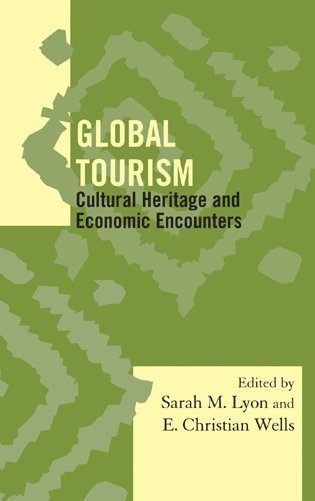
Global tourism is perhaps the largest scale movement of goods, services, and people in history. Consequently, it is a significant catalyst for economic development and sociopolitical change. While tourism increasingly accounts for ever greater segments of national economies, the consequences of this growth for intercultural interaction are diverse and uncertain. The proliferation of tourists also challenges classic theoretical descriptions of just what an economy is. What are the commodities being consumed? What is the division of labor between producers and clients in creating the value of tourist exchanges? How do culture, power, and history shape these interactions? What are the prospects for sustainable tourism? How is cultural heritage being shaped by tourists around the world? These critical questions inspired this volume in which the contributors explore the connections among economy, sustainability, heritage, and identity that tourism and related processes makes explicit. The volume moves beyond the limits of place-specific discussions, case studies, and best practice examples. Accordingly, it is organized according to three overarching themes: exploring dimensions of cultural heritage, the multi-faceted impacts of tourism on both hosts and guests, and the nature of touristic encounters. Based on ethnographic and archaeological research conducted in distinct locations, the contributors’ conclusions and theoretical arguments reach far beyond the limits of isolated case studies. Together, they contribute to a new synthesis for the anthropology of tourism while simultaneously demonstrating how emerging theories of the economics of tourism can lead to the rethinking of traditionally non-touristic enterprises—from farming to medical occupations.
744 kr
Tillfälligt slut
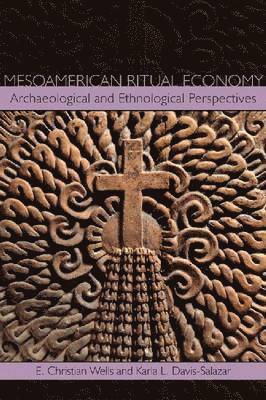
Scholars examine the extent to which economic processes were driven by and integrated with religious ritual in ancient Mesoamerica. The contributors explore how traditional rituals -- human blood sacrifice and self-mutilation, 'flowery wars' and battling butterfly warriors, sumptuous feasting with chocolate and tamales, and fantastic funerary rites -- intertwined with all sectors of the economy. Examining the interplay between well-established religious rites and market forces of raw material acquisition, production, circulation, and consumption, this volume effectively questions the idea that materialism alone motivates the production, exchange, and use of objects. Exploring the intersection of spirituality and materiality, MESOAMERICAN RITUAL ECONOMY will be of interest to all scholars studying how worldview and belief motivate economic behaviour. The authors consider a diverse set of Mesoamerican cultural patterns in order to investigate the ways in which ritual and economic practices influenced each other in the operation of communities, small-scale societies, and state-level polities.