E. Clery – författare
Visar alla böcker från författaren E. Clery. Handla med fri frakt och snabb leverans.
6 produkter
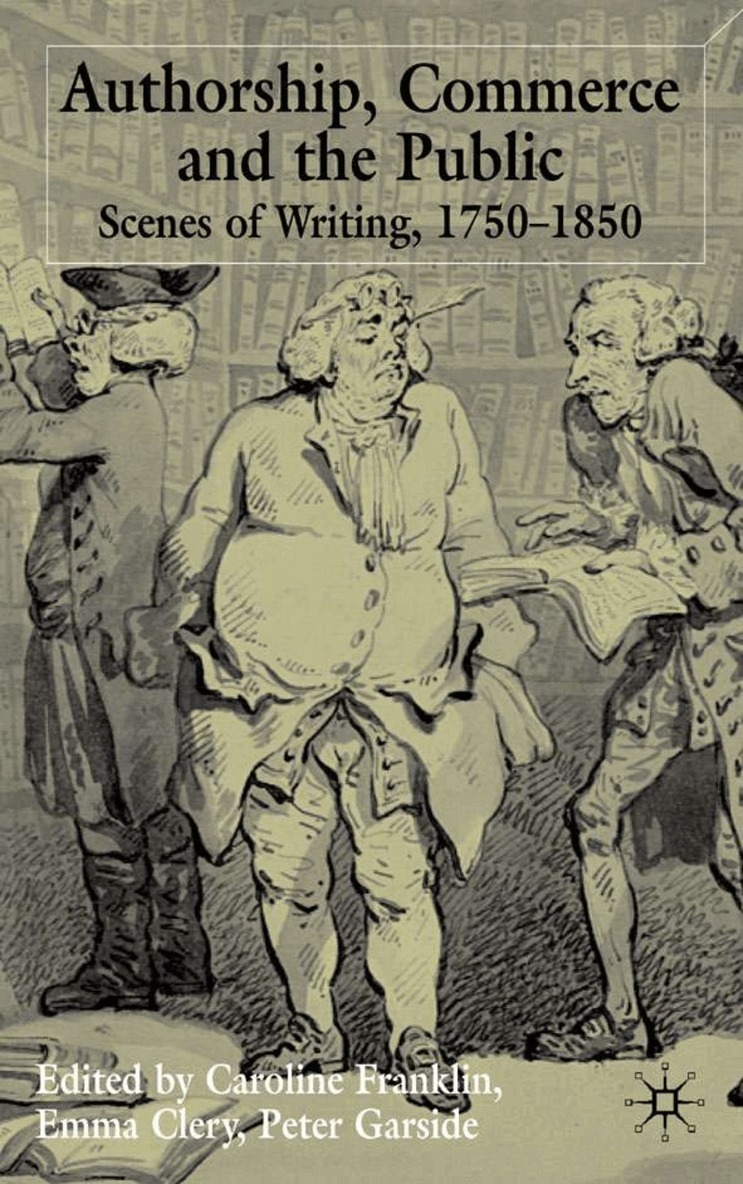
Authorship, Commerce and the Public
Scenes of Writing 1750-1850
Av P. Garside, C. Franklin m. fl.
E-bok, 2002
1726 kr
Lägg i varukorg
These essays explore the remarkable expansion of publishing from 1750 to 1850 which reflected the growth of literacy, and the diversification of the reading public. Experimentation with new genres, methods of advertising, marketing and dissemination, forms of critical reception and modes of access …
Feminization Debate in Eighteenth-Century England
Literature, Commerce and Luxury
Av E. Clery
E-bok, 2004
1982 kr
Lägg i varukorg
In the Eighteenth-century, critics of capitalism denounced the growth of luxury and effeminacy; supporters applauded the increase of refinement and the improved status of women. This pioneering study explores the way the association of commerce and femininity permeated cultural production. It looks …
Feminization Debate in Eighteenth-Century England
Literature, Commerce and Luxury
Av E. Clery
Inbunden, 2004
1259 kr
Lägg i varukorg
In the Eighteenth-century, critics of capitalism denounced the growth of luxury and effeminacy; supporters applauded the increase of refinement and the improved status of women. This pioneering study explores the way the association of commerce and femininity permeated cultural production. It looks …
Feminization Debate in Eighteenth-Century England
Literature, Commerce and Luxury
Av E. Clery
Häftad, 2004
1385 kr
Lägg i varukorg
In the Eighteenth-century, critics of capitalism denounced the growth of luxury and effeminacy; supporters applauded the increase of refinement and the improved status of women. This pioneering study explores the way the association of commerce and femininity permeated cultural production. It looks …
Authorship, Commerce and the Public
Scenes of Writing 1750-1850
Av E. Clery, C. Franklin m. fl.
Inbunden, 2002
1259 kr
Lägg i varukorg
These essays explore the remarkable expansion of publishing from 1750 to 1850 which reflected the growth of literacy, and the diversification of the reading public. Experimentation with new genres, methods of advertising, marketing and dissemination, forms of critical reception and modes of access …
Gothic Documents
A Sourcebook 1700–18
Av E. Clery, Robert Miles
E-bok, 2017
257 kr
Lägg i varukorg
How is it that the age of Enlightenment gave rise to the genre of the literary ghost story? What did the term 'Gothic' mean, when Horace Walpole used it in the subtitle of his experimental novel The Castle of Otranto? How did a type of writing which broke. Based on intensive research, it …