E. Dickinson – författare
Visar alla böcker från författaren E. Dickinson. Handla med fri frakt och snabb leverans.
9 produkter
Selected Poems of Emily Dickinson: York Notes Advanced - everything you need to study and prepare for the 2027, 2028 exams
York Notes Series
Av E. Dickinson, Glennis Byron
Häftad, 2000
121 kr
Lägg i varukorg
Key Features: Study methods Introduction to the text Summaries with critical notes Themes and techniques Textual analysis of key passages Author biography Historical and literary background Modern and historical critical approaches Chronology Glossary of literary terms
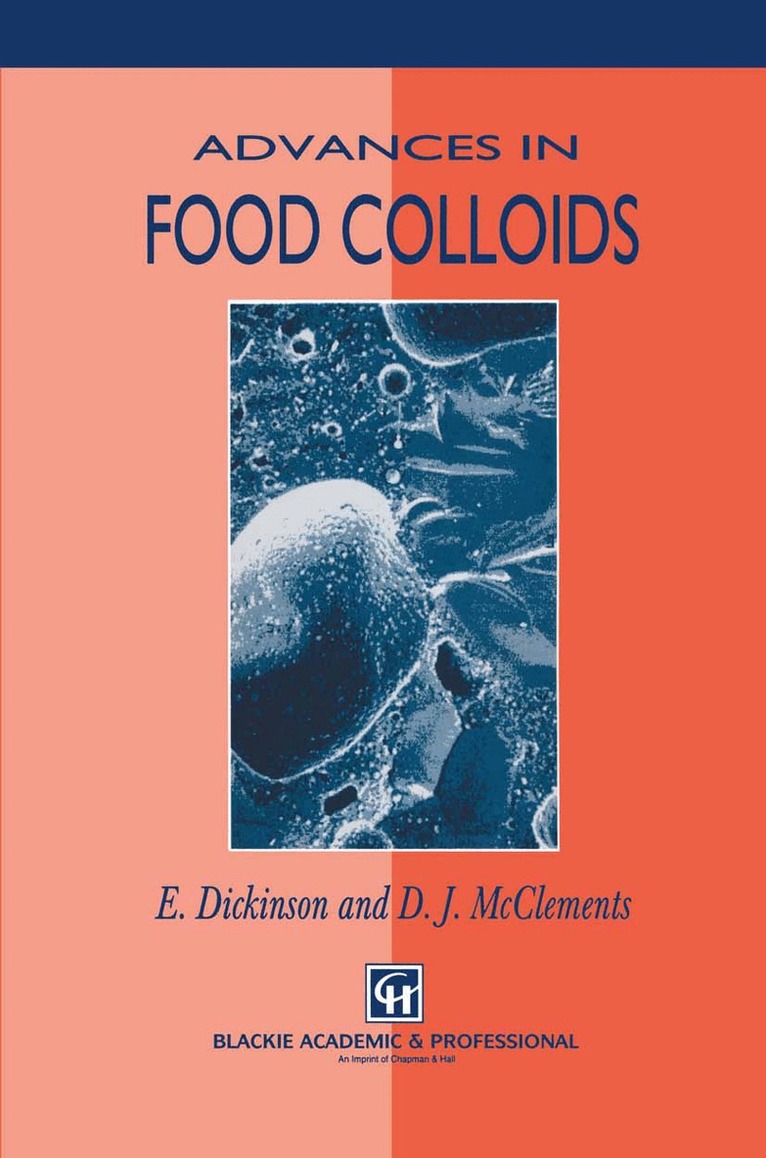
Advances in Food Colloids
Av D.J. McClements, E. Dickinson
Inbunden, 1996
1641 kr
Lägg i varukorg
The field of food colloids is concerned with the physical chemistry of food systems viewed as assemblies of particles and macromolecules in various states of supramolecular and microscopic organization. The objective is to relate the equilibrium and dynamic properties of the system to the inter …
New Physico-Chemical Techniques for the Characterization of Complex Food Systems
Av E. Dickinson
Inbunden, 1995
1641 kr
Lägg i varukorg
'There is no higher or lower knowledge, but only one, flowing out of experimen tation. ' (Leonardo da Vinci, 1452-1519) Food materials are complex in terms of composition, structure and mechanical properties. In order to understand the relationship between these different kinds of complexity, the …
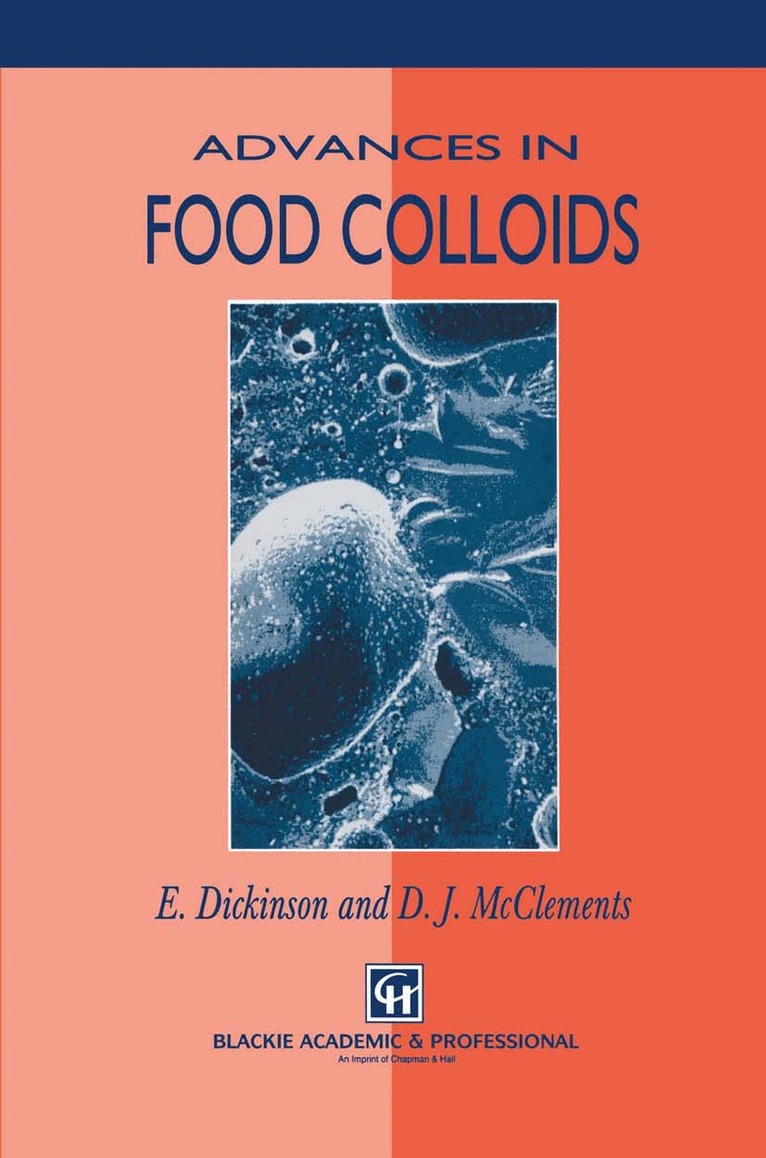
Advances in Food Colloids
Av D.J. McClements, E. Dickinson
Häftad, 2011
1641 kr
Lägg i varukorg
The field of food colloids is concerned with the physical chemistry of food systems viewed as assemblies of particles and macromolecules in various states of supramolecular and microscopic organization. The objective is to relate the equilibrium and dynamic properties of the system to the inter …
New Physico-Chemical Techniques for the Characterization of Complex Food Systems
Av E. Dickinson
Häftad, 2012
1641 kr
Lägg i varukorg
'There is no higher or lower knowledge, but only one, flowing out of experimen tation. ' (Leonardo da Vinci, 1452-1519) Food materials are complex in terms of composition, structure and mechanical properties. In order to understand the relationship between these different kinds of complexity, the …
Food Colloids
Proteins, Lipids and Polysaccharides
Av B Bergenstahl, E. Dickinson
E-bok, 1997
2852 kr
Lägg i varukorg
The field of food colloids is concerned with the structural and dynamic aspects of multi-phase food systems - dispersions, emulsions, foams, gels - viewed from a physical chemistry perspective as assemblies of molecules and particles in various states of organisation. The main molecular components …
Food Colloids and Polymers
Stability and Mechanical Properties
E-bok, 1993
2852 kr
Lägg i varukorg
This overview describes ideas and techniques for the study of structure and dynamics of direct relevance to food. It pays particular attention to the microstructure and rheology of concentrated systems containing deformable particles, emulsion droplets and gas bubbles, and describes factors …
Food Emulsions and Foams
Av E. Dickinson
E-bok, 1987
2526 kr
Lägg i varukorg
This text explains how properties of the system are affected by such factors as the crystallisation of the fat, the surface behaviour of the proteins, and presence of various small molecules and ions in the aqueous phase.
Food Polymers, Gels and Colloids
Av E. Dickinson
E-bok, 1991
2974 kr
Lägg i varukorg
Manufactured foodstuffs typically exist in the form of complex, multi-phase, multi-component, colloidal systems. One way to try to make sense of their chemical and structural complexity is to study simple model systems in which the nature and properties of the polymer molecules and dispersed …