Edmund D. Pellegrino - Böcker
Visar alla böcker från författaren Edmund D. Pellegrino. Handla med fri frakt och snabb leverans.
16 produkter
16 produkter
1 443 kr
Skickas inom 7-10 vardagar
Beneficence - doing the right and good thing - is the fundamental principle of medical ethics. It points all medical decisions and actions toward advancing the patient's best interests. Yet in our normally pluralistic society where rights are asserted more frequently than obligations, this ancient principle tends to be obscured or confused with paternalism. This book attempts to rejuvenate and redevelop the notion of beneficence as a guiding principle within the ethics of medicine. The authors examine the content of the concept of 'patient good' from both philosophical and practical viewpoints, and they strive to supplement and in some ways transcend duty- and rights-based ethical systems. The book is divided into three sections. The first develops the authors' model of the doctor-patient relation as 'beneficence-in-trust'. The second examines the implications of the model for that relationship. The third explores some consequences of the beneficence model with respect to the difficult challenges facing health care, such as allocation of resources and decisions about incompetent patients. Like the authors' earlier work, A Philosophical Basis of Medical Practice (Oxford 1981), this book argues that the special nature of the doctor-patient relationship should be the primary source of the canons of professional medical ethics. It will be of value to physicians and ethicists as well as students of medicine and bioethics.
781 kr
Skickas inom 5-8 vardagar
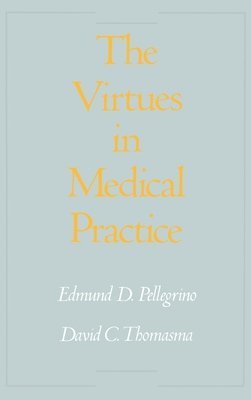
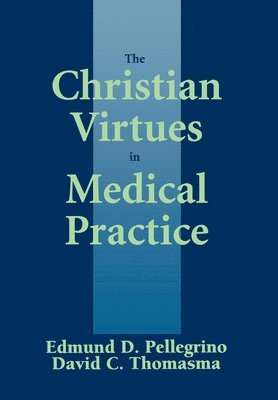
This book constructs a virtue-based ethics for medicine and health care. Beginning with the problem of relating virtues to principles, the authors develop a theory that this linkage lies in the goals of medicine and the nature of medical practice as a moral community. Specific virtues such as trust, compassion, prudence, justice, courage, temperance, and self-effacement are discussed in separate chapters. The book ends by examining how a virtue-based ethic of medicine makes a difference in analysing problems like caring for the poor, research on human subjects, whether the medical virtues can be taught in professional training, and how a refurbished philosophy of medicine can enhance medicine and health care in the future.
473 kr
Skickas inom 10-15 vardagar
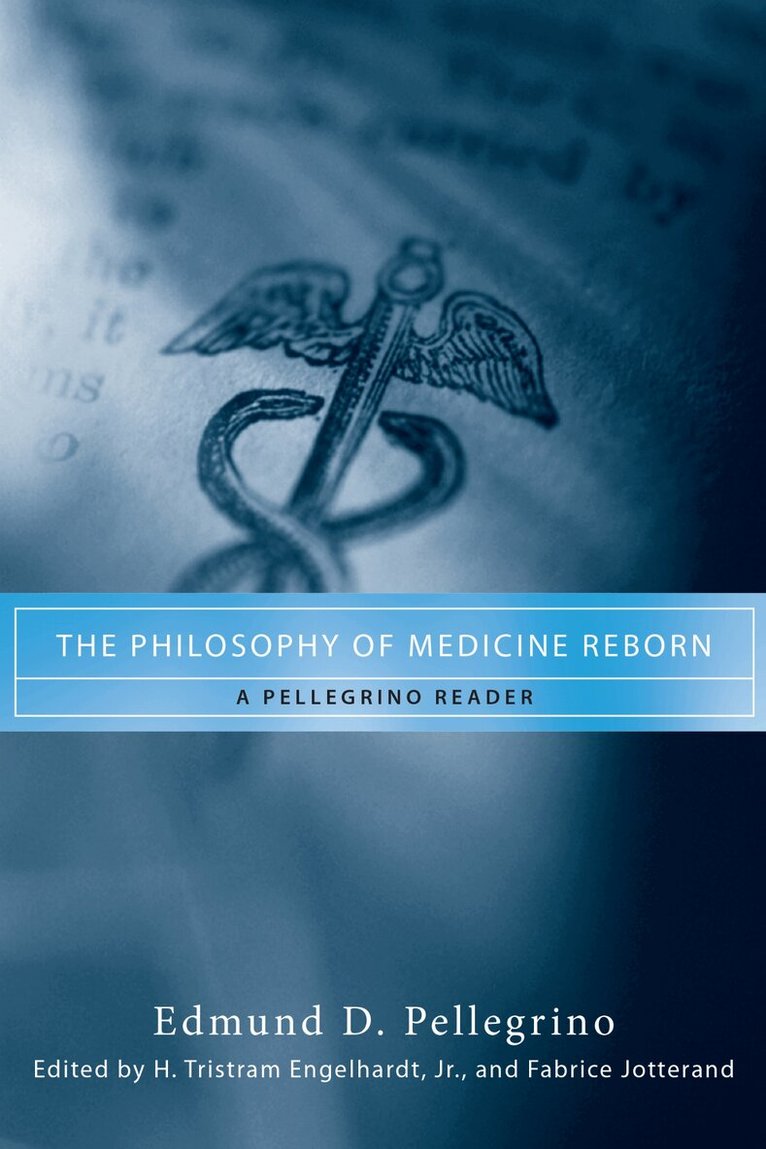
Edmund D. Pellegrino has played a central role in shaping the fields of bioethics and the philosophy of medicine. His writings encompass original explorations of the healing relationship, the need to place humanism in the medical curriculum, the nature of the patient's good, and the importance of a virtue-based normative ethics for health care.In this anthology, H. Tristram Engelhardt, Jr., and Fabrice Jotterand have created a rich presentation of Pellegrino's thought and its development. Pellegrino's work has been dedicated to showing that bioethics must be understood in the context of medical humanities, and that medical humanities, in turn, must be understood in the context of the philosophy of medicine. Arguing that bioethics should not be restricted to topics such as abortion, third-party-assisted reproduction, physician-assisted suicide, or cloning, Pellegrino has instead stressed that such issues are shaped by foundational views regarding the nature of the physician-patient relationship and the goals of medicine, which are the proper focus of the philosophy of medicine.This volume includes a preface ("Apologia") by Dr. Pellegrino and a comprehensive Introduction by the editors. Of interest to medical ethicists as well as students, scholars, and physicians, The Philosophy of Medicine Reborn offers fascinating insights into the emergence of a field and the work of one of its pioneers.
432 kr
Skickas inom 10-15 vardagar
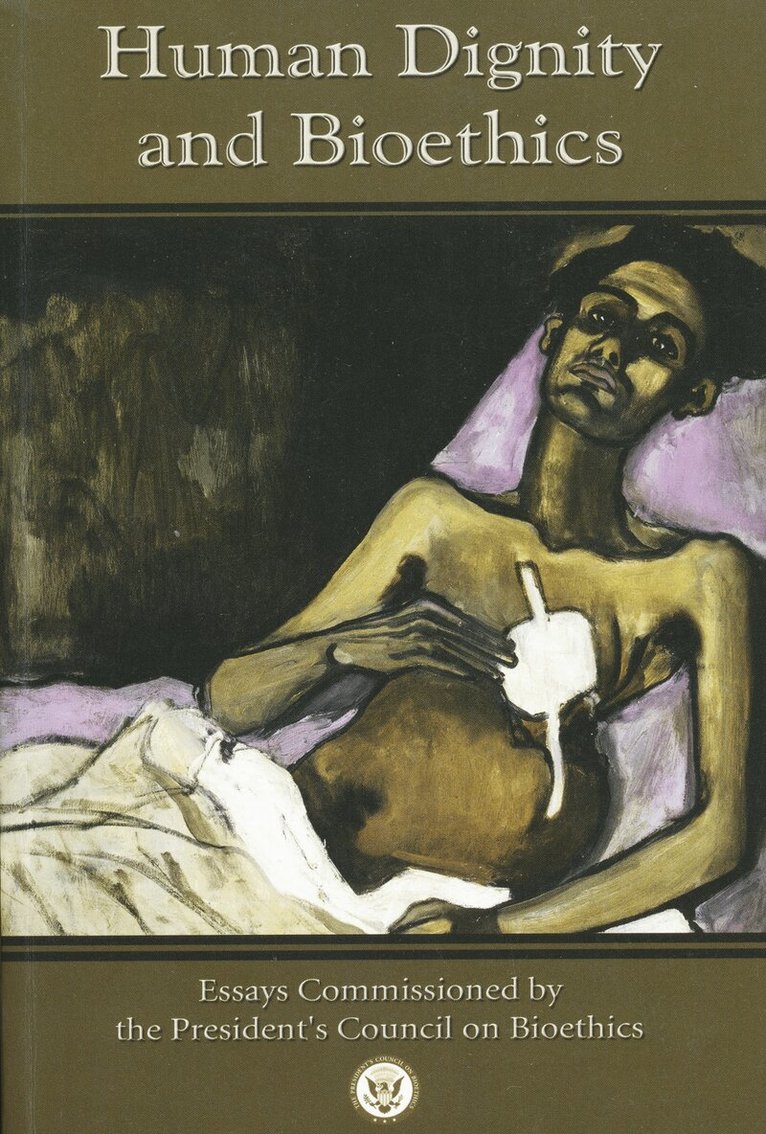
This collection of essays, commissioned by the President's Council on Bioethics, explores a fundamental concept crucial to today's discourse in law and ethics in general and in bioethics in particular. Since its formation in 2001, the council has frequently used the term "human dignity" in its discussions and reports. In this volume scholars from the fields of philosophy, medicine and medical ethics, law, political science, and public policy address the issue of what the concept of "human dignity" entails and its proper role in bioethical controversies. Human Dignity and Bioethics is an attempt to clarify a controversial concept, one that is a critical component in the decisions of policymakers. Contributors: Adam Schulman, F. Daniel Davis, Daniel C. Dennett, Robert P. Kraynak, Alfonso Gómez-Lobo, Patricia S. Churchland, Gilbert Meilaender, Holmes Rolston III, Charles Rubin, Nick Bostrom, Richard John Neuhaus, Peter Augustine Lawler, Diana Schaub, Leon R. Kass, Susan M. Shell, Martha Nussbaum, David Gelernter, Patrick Lee, Robert P. George, Paul Weithman, Daniel P. Sulmasy, O.F.M., Rebecca Dresser, and Edmund D. Pellegrino.
1 605 kr
Skickas inom 10-15 vardagar
Edmund D. Pellegrino has played a central role in shaping the fields of bioethics and the philosophy of medicine. His writings encompass original explorations of the healing relationship, the need to place humanism in the medical curriculum, the nature of the patient's good, and the importance of a virtue-based normative ethics for health care.In this anthology, H. Tristram Engelhardt, Jr., and Fabrice Jotterand have created a rich presentation of Pellegrino's thought and its development. Pellegrino's work has been dedicated to showing that bioethics must be understood in the context of medical humanities, and that medical humanities, in turn, must be understood in the context of the philosophy of medicine. Arguing that bioethics should not be restricted to topics such as abortion, third-party-assisted reproduction, physician-assisted suicide, or cloning, Pellegrino has instead stressed that such issues are shaped by foundational views regarding the nature of the physician-patient relationship and the goals of medicine, which are the proper focus of the philosophy of medicine.This volume includes a preface ("Apologia") by Dr. Pellegrino and a comprehensive Introduction by the editors. Of interest to medical ethicists as well as students, scholars, and physicians, The Philosophy of Medicine Reborn offers fascinating insights into the emergence of a field and the work of one of its pioneers.
314 kr
Skickas inom 3-6 vardagar
374 kr
Skickas inom 7-10 vardagar
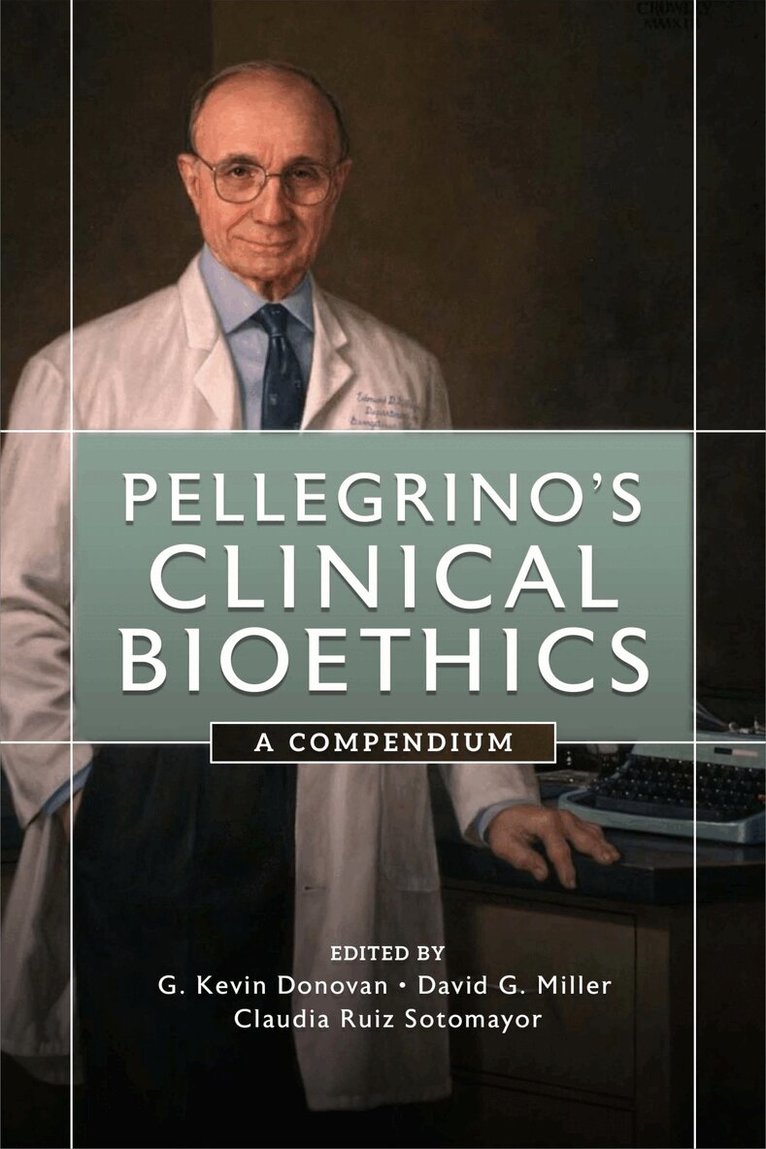
Pellegrino's Clinical Bioethics: A Compendium offers, for the first time, a collection of the landmark articles in clinical bioethics authored by the physician and philosopher, Edmund D Pellegrino. As one of the founding figures of modern medical ethics, Dr. Pellegrino gained international renown for his deeply reflective scholarship and for his public service in developing the field. In over 600 scholarly papers and two dozen books, he touched on topics in medical ethics, philosophy, and theology. Previous attempts to collect his work gave rise to a mixed assortment of his thoughts. This volume focuses purely on those topics in clinical bioethics that are sought after by healthcare professionals, professional and graduate students in these fields,and those involved with clinical bioethics in hospitals and clinics. His legacy and profound influence in the proper practice of the field of medicine is thus made accessible to present and subsequent generations.
758 kr
Skickas inom 5-8 vardagar
The essays in "Ethics, Trust, and the Professions" probe the nature of the fiduciary relationship that binds client to lawyer, believer to minister, and patient to doctor. Angles of approach include history, sociology, philosophy, and culture, and their very multiplicity reveals how difficult we find it to formulate a code of ethics which will insure a relationship of trust between the professional and the public.
758 kr
Skickas inom 5-8 vardagar
By analyzing the amalgam of Greek philosophy, Jewish and Christian teachings, and secular humanism that composes our dominant ethical system, the authors of this volume explore the question of whether or not Western and non-Western moral values can be commingled without bilateral loss of cultural integrity. They take as their philosophical point of departure the observation that both ethical relativism and ethical absolutism have become morally indefensible in the context of the multicultural American life, and they variously consider the need for an ethical middle ground.
472 kr
Skickas inom 5-8 vardagar
Christian health care professionals in our secular and pluralistic society often face uncertainty about the place religious faith holds in today's medical practice. Through an examination of a virtue-based ethics, this book proposes a theological view of medical ethics that helps the Christian physician reconcile faith, reason, and professional duty. Edmund D. Pellegrino and David C. Thomasma trace the history of virtue in moral thought, and they examine current debate about a virtue ethic's place in contemporary bioethics. Their proposal balances theological ethics, based on the virtues of faith, hope, and charity, with contemporary medical ethics, based on the principles of beneficence, justice, and autonomy. The result is a theory of clinical ethics that centers on the virtue of charity and is manifest in practical moral decisions. Using Christian bioethical principles, the authors address today's divisive issues in medicine. For health care providers and all those involved in the fields of ethics and religion, this volume shows how faith and reason can combine to create the best possible healing relationship between health care professional and patient.
758 kr
Skickas inom 5-8 vardagar
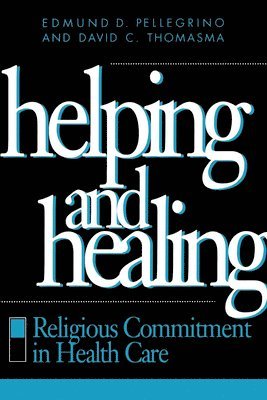
Exploring the moral foundations of the healing relationship, Edmund D. Pellegrino and David C. Thomasma offer the health care professional a highly readable Christian philosophy of medicine. This book examines the influence religious beliefs have on the kind of person the health professional should be, on the health care policies a society should adopt, and on what constitutes healing in its fullest sense. "Helping and Healing" looks at the ways a religious perspective shapes the healing relationship and the ethics of that relationship. Pellegrino and Thomasma seek to clarify the role of religious belief in health care by providing a moral basis for such commitment as well as a balancing role for reason. This book establishes a common ground for believers and skeptics alike in their dedication to relieve suffering by showing that helping and healing require an involvement in the religious values of patients. It clearly argues that religion provides crucial insights into medical practice and morality that cannot be ignored, even in our morally heterogeneous society.Central to the authors' message is the concept of patients' vulnerabilities and the need to help them recover not only from the disease but also from an existential assault on their personhood. They then show how this understanding can move caregivers to view their professions as vocations and thereby change the nature of health care from a business to a community of healing. Physicians, nurses, administrators, clergy, theologians, and other health professionals and church leaders will find this volume helpful for their own reflections on the role of religion in the health care ministry and for making a religious commitment integral to their professional lives.
758 kr
Skickas inom 5-8 vardagar
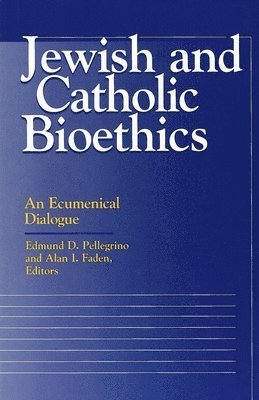
Drawing on multiple interconnected scriptural and spiritual sources, the Jewish tradition of ethical reflection is intricate and nuanced. This book presents scholarly Jewish perspectives on suffering, healing, life, and death, and it compares them with contemporary Christian and secular views. The Jewish perspectives presented in this book are mainly those of orthodox scholars, with the responses representing primarily Christian-Catholic points of view. Readers unfamiliar with the Jewish tradition will find here a practical introduction to its major voices, from Spinoza to Jewish religious law. The contributors explore such issues as active and passive euthanasia, abortion, assisted reproduction, genetic screening, and health care delivery. Offering a thoughtful and thought-provoking dialogue between Jewish and Christian scholars, "Jewish and Catholic Bioethics" is an important contribution to ecumenical understanding in the realm of health care.
1 062 kr
Skickas inom 10-15 vardagar
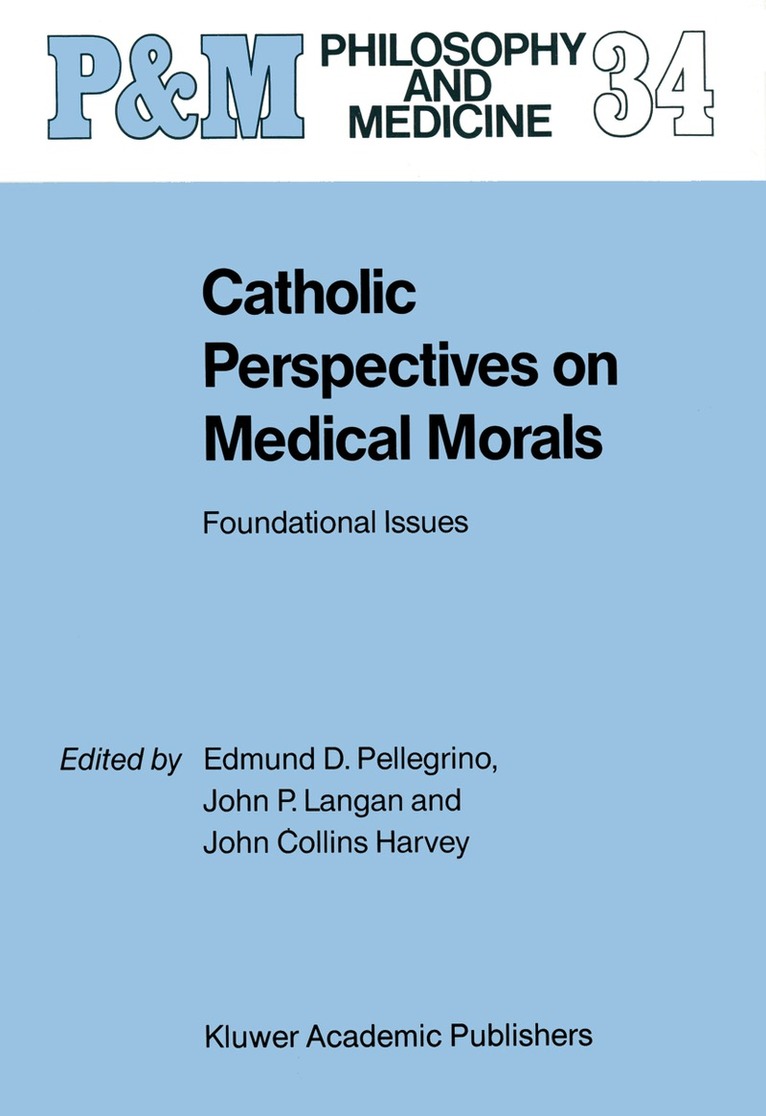
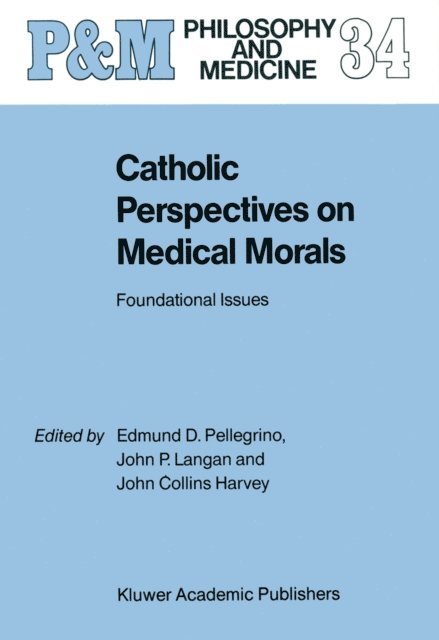
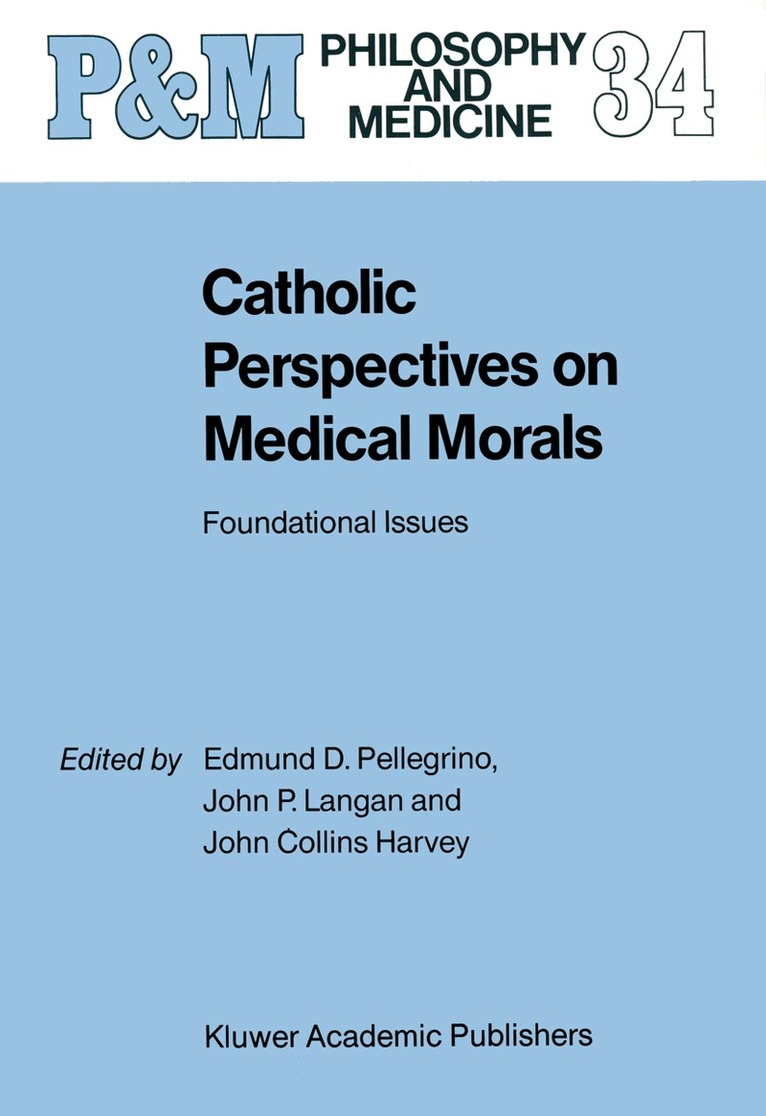
CATHOLIC PERSPECTIVES AND CONTEMPORARY MEDICAL MORALS A Catholic perspective on medical morals antedates the current world wide interest in medical and biomedical ethics by many centuries[5]. Discussions about the moral status of the fetus, abortion, contraception, and sterilization can be found in the writings of the Fathers and Doctors of the Church. Teachings on various aspects of medical morals were scattered throughout the penitential books of the early medieval church and later in more formal treatises when moral theology became recog nized as a distinct discipline. Still later, medical morality was incorpor ated into the many pastoral works on medicine. Finally, in the contemporary period, works that strictly focus on medical ethics are produced by Catholic moral theologians who have special interests in matters medical. Moreover, this long tradition of teaching has been put into practice in the medical moral directives governing the operation of hospitals under Catholic sponsorship. Catholic hospitals were monitored by Ethics Committees long before such committees were recommended by the New Jersey Court in the Karen Ann Quinlan case or by the President's Commission in 1983 ([8, 9]). Underlying the Catholic moral tradition was the use of the casuistic method, which since the 17th and 18th centuries was employed by Catholic moralists to study and resolve concrete clinical ethical dilem mas. The history of casuistry is of renewed interest today when the case method has become so widely used in the current revival of interest in medical ethics[ll].
1 116 kr
Tillfälligt slut
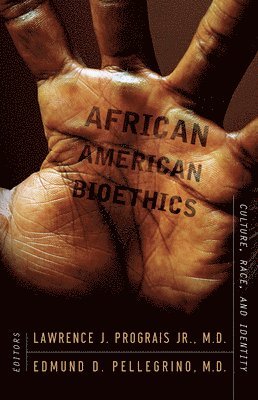
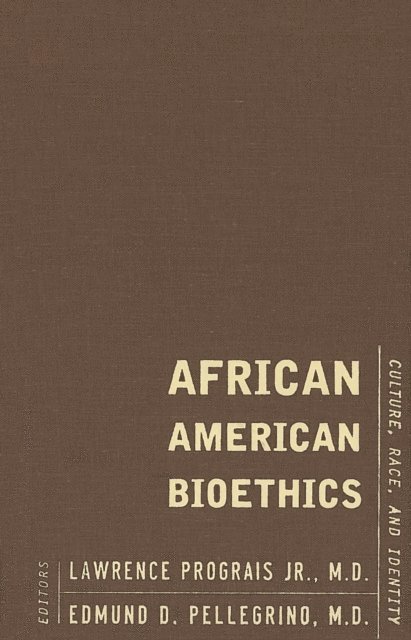
Do people of differing ethnicities, cultures, and races view medicine and bioethics differently? And, if they do, should they? Are doctors and researchers taking environmental perspectives into account when dealing with patients? If so, is it done effectively and properly? In African American Bioethics, Lawrence J. Prograis Jr. and Edmund D. Pellegrino bring together medical practitioners, researchers, and theorists to assess one fundamental question: Is there a distinctive African American bioethics? The book's contributors resoundingly answer yes—yet their responses vary. They discuss the continuing African American experience with bioethics in the context of religion and tradition, work, health, and U.S. society at large—finding enough commonality to craft a deep and compelling case for locating a black bioethical framework within the broader practice, yet recognizing profound nuances within that framework. As a more recent addition to the study of bioethics, cultural considerations have been playing catch-up for nearly two decades. African American Bioethics does much to advance the field by exploring how medicine and ethics accommodate differing cultural and racial norms, suggesting profound implications for growing minority groups in the United States.
579 kr
Skickas inom 3-6 vardagar
Do people of differing ethnicities, cultures, and races view medicine and bioethics differently? And, if they do, should they? Are doctors and researchers taking environmental perspectives into account when dealing with patients? If so, is it done effectively and properly? In "African American Bioethics", Lawrence J. Prograis Jr. and Edmund D. Pellegrino bring together medical practitioners, researchers, and theorists to assess one fundamental question: Is there a distinctive African American bioethics? The book's contributors resoundingly answer yes - yet their responses vary. They discuss the continuing African American experience with bioethics in the context of religion and tradition, work, health, and U.S. society at large - finding enough commonality to craft a deep and compelling case for locating a black bioethical framework within the broader practice, yet recognizing profound nuances within that framework. As a more recent addition to the study of bioethics, cultural considerations have been playing catch-up for nearly two decades."African American Bioethics" does much to advance the field by exploring how medicine and ethics accommodate differing cultural and racial norms, suggesting profound implications for growing minority groups in the United States.
1 062 kr
Skickas inom 10-15 vardagar
CATHOLIC PERSPECTIVES AND CONTEMPORARY MEDICAL MORALS A Catholic perspective on medical morals antedates the current world wide interest in medical and biomedical ethics by many centuries[5]. Discussions about the moral status of the fetus, abortion, contraception, and sterilization can be found in the writings of the Fathers and Doctors of the Church. Teachings on various aspects of medical morals were scattered throughout the penitential books of the early medieval church and later in more formal treatises when moral theology became recog nized as a distinct discipline. Still later, medical morality was incorpor ated into the many pastoral works on medicine. Finally, in the contemporary period, works that strictly focus on medical ethics are produced by Catholic moral theologians who have special interests in matters medical. Moreover, this long tradition of teaching has been put into practice in the medical moral directives governing the operation of hospitals under Catholic sponsorship. Catholic hospitals were monitored by Ethics Committees long before such committees were recommended by the New Jersey Court in the Karen Ann Quinlan case or by the President's Commission in 1983 ([8, 9]). Underlying the Catholic moral tradition was the use of the casuistic method, which since the 17th and 18th centuries was employed by Catholic moralists to study and resolve concrete clinical ethical dilem mas. The history of casuistry is of renewed interest today when the case method has become so widely used in the current revival of interest in medical ethics[ll].