Robert M. Veatch - Böcker
Visar alla böcker från författaren Robert M. Veatch. Handla med fri frakt och snabb leverans.
13 produkter
13 produkter
709 kr
Skickas inom 5-8 vardagar
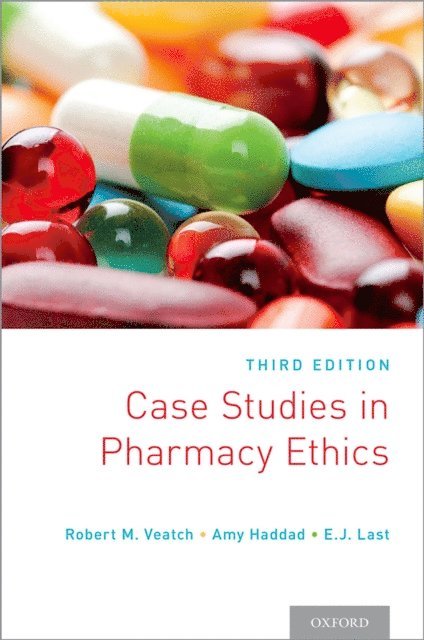
Pharmacists constantly face ethical choices -- sometimes dramatic matters of life-and-death decisions, but more often subtle, less conspicuous choices that are nonetheless important. Case Studies in Pharmacy Ethics identifies and discusses the broad range of ethics issues pharmacists confront in practice. Ranging from situations faced in direct patient care to broader issues, this book uses cases to explore topics and the ethical framework within which practitioners make decisions about such issues as assisted suicide, conscientious refusal, pain management, and confidentiality as well as the equitable distribution of drug resources within institutions or managed care organizations and clinical studies on vulnerable populations.As the scope of the pharmacist's role expands, pharmacists find themselves facing new ethical challenges. This third edition accounts for some of the many changes in pharmacy practice and in the delivery of health care since the second edition. It includes an entirely new chapter on health insurance and health system planning, and a discussion of the impact of the Affordable Care Act and cases that are updated to reflect current pharmacy practice models. It serves as a valuable resource regarding topics that are both specific to pharmacy practice and those that involve the health care system more generally.
Disrupted Dialogue
Medical Ethics and the Collapse of Physician/Humanist Communication, 1770-1980
Inbunden, Engelska, 2004
769 kr
Skickas inom 3-6 vardagar
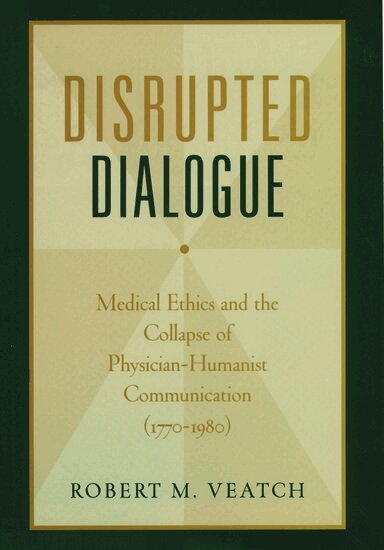
Medical ethics changed dramatically in the past 30 years because physicians and humanists actively engaged each other in discussions that sometimes led to confrontation and controversy, but usually have improved the quality of medical decision-making. Before then medical ethics had been isolated for almost two centuries from the larger philosophical, social, and religious controversies of the time. There was, however, an earlier period where leaders in medicine and in the humanities worked closely together and both fields were richer for it.This volume begins with the 18th century Scottish Enlightenment when professors of medicine such as John Gregory, Edward Percival, and the American, Benjamin Rush, were close friends of philosophers like David Hume, Adam Smith, and Thomas Reid. They continually exchanged views on matters of ethics with each other in print, at meetings of elite intellectual groups, and at the dinner table. Then something happened, physicians and humanists quit talking with each other. In searching for the causes of the collapse, this book identifies shifts in the social class of physicians, developments in medical science, and changes in the patterns of medical education. Only in the past three decades has the dialogue resumed as physicians turned to humanists for help just when humanists wanted their work to be relevant to real-life social problems. Again, the book asks why, finding answers in the shift from acute to chronic disease as the dominant pattern of illness, the social rights revolution of the 1960's, and the increasing dissonance between physician ethics and ethics outside medicine. The book tells the critical story of how the breakdown in communication between physicians and humanists occurred and how it was repaired when new developments in medicine together with a social revolution forced the leaders of these two fields to resume their dialogue.
1 200 kr
Skickas inom 10-15 vardagar
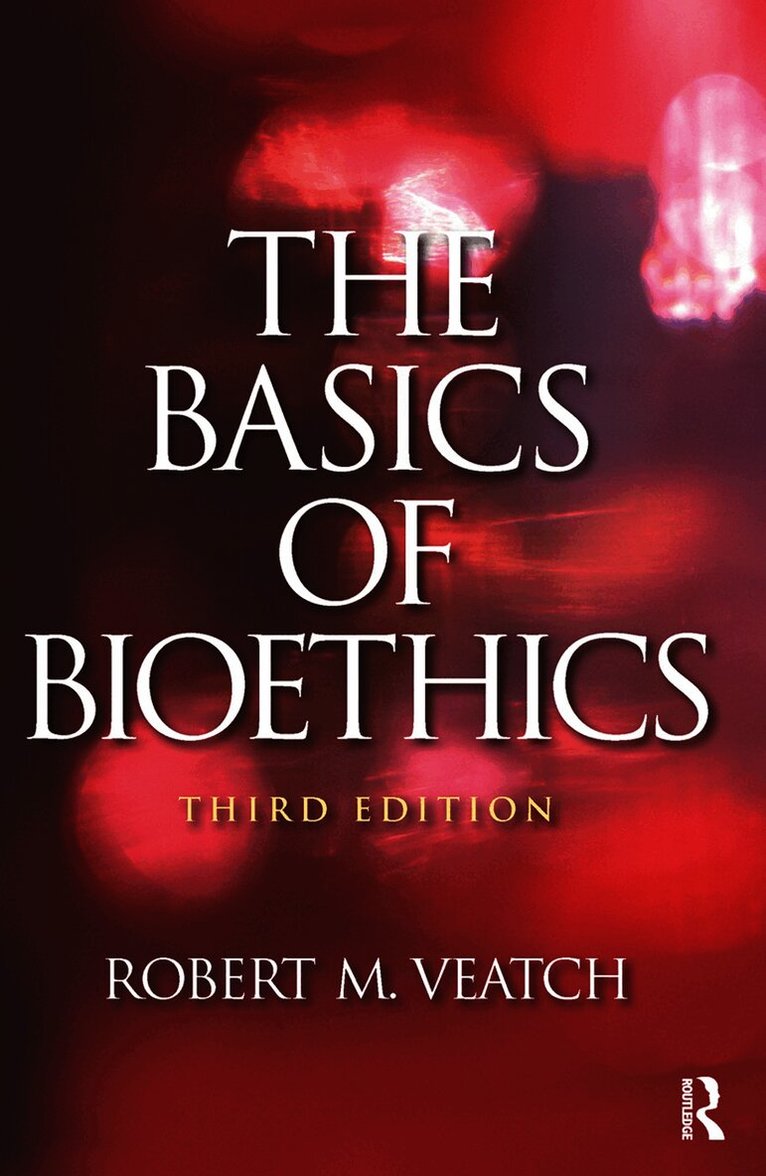
The third edition of The Basics of Bioethics continues to provide a balanced and systematic ethical framework to help students analyze a wide range of controversial topics in medicine, and consider ethical systems from various religious and secular traditions. The Basics of Bioethics covers the “Principalist” approach and identifies principles that are believed to make behavior morally right or wrong. It showcases alternative ethical approaches to health care decision making by presenting Hippocratic ethics as only one among many alternative ethical approaches to health care decision-making. The Basics of Bioethics offers case studies, diagrams, and other learning aids for an accessible presentation. Plus, it contains an all-encompassing ethics chart that shows the major questions in ethics and all of the major answers to these questions.
337 kr
Skickas inom 10-15 vardagar
"Throughout the past two decades, when medical ethics has had a renaissance, Robert Veatch has been a leading contributor to its dialogue and advance. This collection of his work shows the breadth and the cogency of his thinking. . . . it is a book worth having." —Journal of the American Medical Association" . . . a fascinating dissection of almost every aspect of the doctor-patient relationship. . . . strongly recommended reading for all health care workers interested in this rapidly evolving field." —Queen's Quarterly"This outstanding discussion of important current medical issues is a valuable addition to academic and professional libraries." —Choice" . . . an important contribution to bioethics . . . certain to provoke controversy in the field." —Medical Humanities Review"Lucid and well-argued . . . " —Religious Studies ReviewThis book heralds the imminent demise of "doctor knows best." In it, Robert M. Veatch proposes a postmodern medicine in which decisions about patient care will routinely involve both doctor and patient—not only in ethically complex cases such as the termination of life-sustaining treatment, but in everyday care as well.
758 kr
Skickas inom 5-8 vardagar
The essays in "Ethics, Trust, and the Professions" probe the nature of the fiduciary relationship that binds client to lawyer, believer to minister, and patient to doctor. Angles of approach include history, sociology, philosophy, and culture, and their very multiplicity reveals how difficult we find it to formulate a code of ethics which will insure a relationship of trust between the professional and the public.
781 kr
Skickas inom 5-8 vardagar
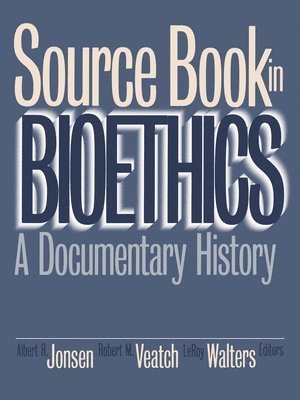
Government agencies and commissions, courts, and legislatures have during the past several decades produced reports, rendered decisions, and passed laws that have both defined the fundamental issues in the field of bioethics and established ways of managing them in our society. Providing a history of these key bioethical decisions, this Source Book in Bioethics is the first and only comprehensive collection of the critical public documents in biomedical ethics, including many hard-to-find or out-of-print materials. Covering the period from 1947 to 1995, this volume brings together core legislative documents, court briefs, and reports by professional organizations, public bodies, and governments around the world.Sections on human experimentation, care of the terminally ill, genetics, human reproduction, and emerging areas in bioethics include such pivotal works as "The Nuremberg Code," "The Tuskegee Report," and "In the Matter of Baby M," as well less readily available documents as "The Declaration of Inuyama," the Council for International Organizations of Medical Sciences statement on genetic engineering, and "The Warnock Committee Report" on reproductive technologies from the United Kingdom. Three eminent scholars in the field provide brief introductions to each document explaining the significance of these classic sources. This historical volume will be a standard text for courses in bioethics, health policy, and death and dying, and a primary reference for anyone interested in this increasingly relevant field.
781 kr
Skickas inom 5-8 vardagar
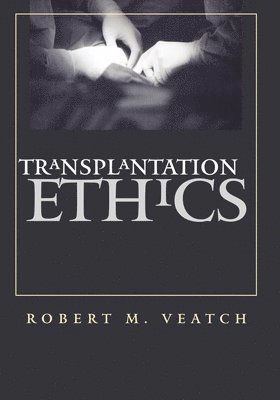
Three decades after the first heart transplant surgery stunned the world, organs including eyes, lungs, livers, kidneys, and hearts are transplanted every day. But despite its increasingly routine nature - or perhaps because of it - transplantation offers enormous ethical challenges. A medical ethicist who has been involved in the organ transplant debate for many years, Robert M. Veatch explores a variety of questions that continue to vex the transplantation community, offering his own solutions in many cases. Ranging from the most fundamental questions to recently emerging issues, "Transplantation Ethics" is the first complete and systematic account of the ethical and policy controversies surrounding organ transplants. Veatch structures his discussion around three major topics: the definition of death, the procurement of organs, and the allocation of organs. He lobbies for an allocation system - administered by nonphysicians - that considers both efficiency and equity, that takes into consideration the patient's age and previous transplant history, and that operates on a national rather than a regional level.Rich with case studies and written in an accessible style, this comprehensive reference is intended for a broad cross section of people interested in the ethics of transplantation from either the medical or public policy perspective: patients and their relatives, transplantation professionals, other health care professionals and administrators, social workers, members of organ procurement organizations, and government officials involved in the regulation of transplants.
1 921 kr
Tillfälligt slut
The third edition of The Basics of Bioethics continues to provide a balanced and systematic ethical framework to help students analyze a wide range of controversial topics in medicine, and consider ethical systems from various religious and secular traditions. The Basics of Bioethics covers thePrincipalist approach and identifies principles that are believed to make behavior morally right or wrong. It showcases alternative ethical approaches to health care decision making by presenting Hippocratic ethics as only one among many alternative ethical approaches to health care decision-making. The Basics of Bioethics offers case studies, diagrams, and other learning aids for an accessible presentation. Plus, it contains an all-encompassing ethics chart that shows the major questions in ethics and all of the major answers to these questions.
629 kr
Skickas inom 7-10 vardagar
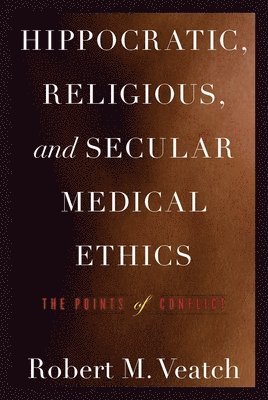
Where should physicians get their ethics? Professional codes such as the Hippocratic Oath claim moral authority for those in a particular field, yet according to medical ethicist Robert Veatch, these codes have little or nothing to do with how members of a guild should understand morality or make ethical decisions. While the Hippocratic Oath continues to be cited by a wide array of professional associations, scholars, and medical students, Veatch contends that the pledge is such an offensive code of ethics that it should be summarily excised from the profession. What, then, should serve as a basis for medical morality? Building on his recent contribution to the prestigious Gifford Lectures, Veatch challenges the presumption that professional groups have the authority to declare codes of ethics for their members. To the contrary, he contends that role-specific duties must be derived from ethical norms having their foundations outside the profession, in religious and secular convictions. Further, these ethical norms must be comprehensible to lay people and patients.Veatch argues that there are some moral norms shared by most human beings that reflect a common morality, and ultimately it is these generally agreed-upon religious and secular ways of knowing - thus far best exemplified by the 2005 Universal Declaration on Bioethics and Human Rights - that should underpin the morality of all patient-professional relations in the field of medicine. "Hippocratic, Religious, and Secular Medical Ethics" is the magnum opus of one of the most distinguished medical ethicists of his generation.
455 kr
Skickas inom 7-10 vardagar
Although the history of organ transplant has its roots in ancient Christian mythology, it is only in the past fifty years that body parts from a dead person have successfully been procured and transplanted into a living person. After fourteen years, the three main issues that Robert Veatch first outlined in his seminal study Transplantation Ethics still remain: deciding when human beings are dead; deciding when it is ethical to procure organs; and deciding how to allocate organs, once procured. However, much has changed. Enormous strides have been made in immunosuppression. Alternatives to the donation model are debated much more openly - living donors are used more widely and hand and face transplants have become more common, raising issues of personal identity. In this second edition of Transplantation Ethics, coauthored by Lainie F Ross, transplant professionals and advocates will find a comprehensive update of this critical work on transplantation policies.
1 342 kr
Skickas inom 7-10 vardagar
Although the history of organ transplant has its roots in ancient Christian mythology, it is only in the past fifty years that body parts from a dead person have successfully been procured and transplanted into a living person. After fourteen years, the three main issues that Robert Veatch first outlined in his seminal study Transplantation Ethics still remain: deciding when human beings are dead; deciding when it is ethical to procure organs; and deciding how to allocate organs, once procured. However, much has changed. Enormous strides have been made in immunosuppression. Alternatives to the donation model are debated much more openly -- living donors are used more widely and hand and face transplants have become more common, raising issues of personal identity. In this second edition of Transplantation Ethics, coauthored by Lainie F. Ross, transplant professionals and advocates will find a comprehensive update of this critical work on transplantation policies.
2 245 kr
Skickas inom 5-8 vardagar
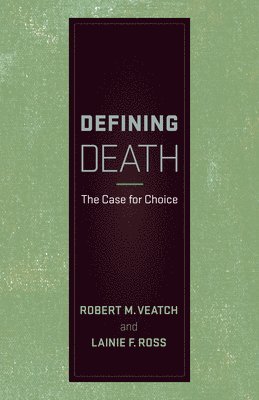
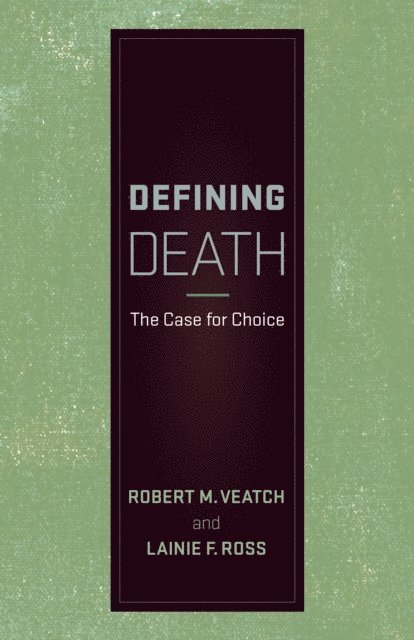
New technologies and medical treatments have complicated questions such as how to determine the moment when someone has died. The result is a failure to establish consensus on the definition of death and the criteria by which the moment of death is determined. This creates confusion and disagreement not only among medical, legal, and insurance professionals but also within families faced with difficult decisions concerning their loved ones. Distinguished bioethicists Robert M. Veatch and Lainie F. Ross argue that the definition of death is not a scientific question but a social one rooted in religious, philosophical, or social beliefs. Drawing on history and recent court cases, the authors detail three potential definitions of death--the whole-brain concept; the circulatory, or somatic, concept; and the higher-brain concept. Because no one definition of death commands majority support, it creates a major public policy problem. The authors cede that society needs a default definition to proceed in certain cases, like those involving organ transplantation.But they also argue the decision-making process must give individuals the space to choose among plausible definitions of death according to personal beliefs. Taken in part from the authors' latest edition of their groundbreaking work on transplantation ethics, Defining Death is an indispensable guide for professionals in medicine, law, insurance, public policy, theology, and philosophy as well as lay people trying to decide when they want to be treated as dead.
611 kr
Skickas inom 7-10 vardagar
New technologies and medical treatments have complicated questions such as how to determine the moment when someone has died. The result is a failure to establish consensus on the definition of death and the criteria by which the moment of death is determined. This creates confusion and disagreement not only among medical, legal, and insurance professionals but also within families faced with difficult decisions concerning their loved ones. Distinguished bioethicists Robert M. Veatch and Lainie F. Ross argue that the definition of death is not a scientific question but a social one rooted in religious, philosophical, or social beliefs. Drawing on history and recent court cases, the authors detail three potential definitions of death--the whole-brain concept; the circulatory, or somatic, concept; and the higher-brain concept. Because no one definition of death commands majority support, it creates a major public policy problem. The authors cede that society needs a default definition to proceed in certain cases, like those involving organ transplantation.But they also argue the decision-making process must give individuals the space to choose among plausible definitions of death according to personal beliefs. Taken in part from the authors' latest edition of their groundbreaking work on transplantation ethics, Defining Death is an indispensable guide for professionals in medicine, law, insurance, public policy, theology, and philosophy as well as lay people trying to decide when they want to be treated as dead.