• Fri frakt över 249 kr
  • •
  • Snabba leveranser
  • •
  • Billiga böcker
Kundservice

Du är på sajten för privatpersoner.

Företag, bibliotek eller offentlig verksamhet?

Du handlar på classic.bokus.com, där alla dina funktioner finns intakta.
Till classic.bokus.com
Bokus logotyp. Gå till startsidan.
  • Erbjudanden
  • Nyheter
  • Student
  • Topplistor
  • Barn & ungdom
  • Bokus Play
  • E-böcker
  • Pocketböcker
  • Spel & pussel

10% rabatt på allt med kod NYSTART10 →

Sidfot

Mina sidor

    Hjälp

    • Kundservice
    • Vanliga frågor och svar
    • Frakt och leverans
    • Retur vid ångerrätt
    • Reklamera vara
    • Betalning
    • Köpvillkor
    • Allmänna villkor
    • Information om webbplatsens tillgänglighet

    Om Bokus

    • Om oss
    • Pressrum
    • För studenter
    • För företag
    • För bibliotek och offentlig verksamhet
    • För leverantörer
    • Hållbarhet

    Populärt

    • Aktuella erbjudanden
    • Presentkort
    • Studentlitteratur
    • Nya böcker
    • Topplistor
    • Signerade böcker
    • Engelska böcker

    Inspiration

    • Boktips
    • BookTok
    • Populära bokserier
    • Barnbokskaraktärer
    • Populära författare
    Logotyp för Bokus
    Följ oss på Facebook (extern länk)Följ oss på Instagram (extern länk)Följ oss på YouTube (extern länk)Följ oss på TikTok (extern länk)
    bokus @ CookiesAnpassa cookiesIntegritetspolicyKöpvillkor
    Till Citymail hemsida (extern länk)Till Budbee hemsida (extern länk)Till Postnord hemsida (extern länk)Till Schenker hemsida (extern länk)Till Early Bird hemsida (extern länk)Till Walleys hemsida (extern länk)
    1. Medicin
    2. Medicin: allmänt
    3. Den medicinska professionen
    4. Medicinsk etik och läkaretik

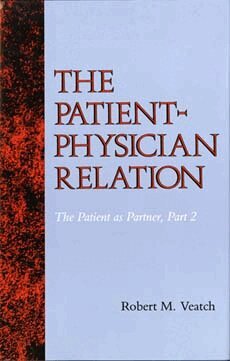
    Patient-Physician Relation

    The Patient As Partner, Part 2

    AvRobert M. Veatch

    Inbunden, Engelska, 1991

    Del i serien Medical Ethics

    350 kr

    Beställningsvara. Skickas inom 10-15 vardagar. Fri frakt över 249 kr.

    Beskrivning

    "Throughout the past two decades, when medical ethics has had a renaissance, Robert Veatch has been a leading contributor to its dialogue and advance. This collection of his work shows the breadth and the cogency of his thinking. . . . it is a book worth having." —Journal of the American Medical Association" . . . a fascinating dissection of almost every aspect of the doctor-patient relationship. . . . strongly recommended reading for all health care workers interested in this rapidly evolving field." —Queen's Quarterly"This outstanding discussion of important current medical issues is a valuable addition to academic and professional libraries." —Choice" . . . an important contribution to bioethics . . . certain to provoke controversy in the field." —Medical Humanities Review"Lucid and well-argued . . . " —Religious Studies ReviewThis book heralds the imminent demise of "doctor knows best." In it, Robert M. Veatch proposes a postmodern medicine in which decisions about patient care will routinely involve both doctor and patient—not only in ethically complex cases such as the termination of life-sustaining treatment, but in everyday care as well.

    Produktinformation

    • Utgivningsdatum:1991-01-22
    • Mått:152 x 229 x undefined mm
    • Vikt:653 g
    • Format:Inbunden
    • Språk:Engelska
    • Serie:Medical Ethics
    • Antal sidor:322
    • Förlag:Indiana University Press
    • ISBN:9780253362070

    Utforska kategorier

    • Medicinsk etik och läkaretik inom Medicin

    Recensioner i media

    "Veatch, an eminent medical ethicist, addressed the concept of a contractual physician—patient relationship applied to research settings in The Patient as Partner: A Theory of Human—Experimentation Ethics (CH, Sep'87). In this new volume he applies it to routine clinical encounters. Cogent arguments are presented to show the inappropriateness of traditional authoritarian interactions for modern clinical encounters. Chapters examine patients' values, the concept of medical indications (which Veatch argues contains embedded values and biases), and application of the proposed model to malpractice, generic prescribing, use of investigational drugs, drug use for nonapproved purposes, placebos, access to medical records, and notions of confidentiality and duty. Part 3 of the book includes four chapters dealing with the principle of justice, too often neglected in American writings about medical ethics. The work concludes with chapters dealing with special problems: transplantation, guardianship, do—not—resuscitate orders, and ethics committees. The final chapter summarizes and discusses these concepts in the context of medicine's changing technology and culture. This outstanding discussion of important current medical issues is a valuable addition to academic and professional libraries."—L. A. Crandall, University of Florida , Choice, September 1991

    Innehållsförteckning

    • PrefaceAcknowledgmentsIntroductionPart I. The Foundations of the Patient-Physician Relation1. Models for Ethical Medicine in a Revolutionary Age2. Medical Ethics: Professional or Universal?3. The Physician as Stranger: The Ethics of the Anonymous Patient-Physician Relationship4. Values in Routine Medical Decisions5. The Concept of "Medical Indications"6. The Principles for Medical EthicsPart II. The Individual Professional-Patient Relation7. Informed Consent: The Emergeing Norms8. Malpractice in the Contract Mode9. The Ethics of Generic Drug Use10. Treatment INDs: The Right of Access to Experimental Drugs11. Ethics of Drugs for Nonapproved Uses12. When Should the Patient Know? The Death of the Therapeutic Privilege13. An Unexpected Chronosome: Disclosure of Genetic Information14. The Ethics of Dispensing Placebos15. The Patient's Right of Access to Medical Records16. The Limits of Confidentiality: The Case of the Homosexual Husband17. Patients' Duties and Physicians' RightsPart III. The Social Professional-Patient Relation18. Autonomy's Temporary Triumph: On the Alleged Conflict between Autonomy and Justice19. DRGs and the Ethics of Cost Containment20. Justice and Economics: Care of the Terminally Ill, Persistently Vegetative, and Elderly21. Voluntary Risks to Health: The Ethical IssuesPart IV. Special Problem Areas22. The Ethics of Organ Transplantation23. The Technical Criteria Fallacy: The Case of Spina Bifida24. Limits of Guardian Treament Refusal: A Reasonableness Standard25. "Do Not Resuscitate" Orders: An Ethical Analysis26. The Ethics of Institutional Ethics CommitteesPart V. The Future of the Partnership27. Contemporary Bioethics and the Demise of Modern MedicineNotesIndex