Edward Muir - Böcker
Visar alla böcker från författaren Edward Muir. Handla med fri frakt och snabb leverans.
9 produkter
9 produkter
435 kr
Skickas inom 7-10 vardagar
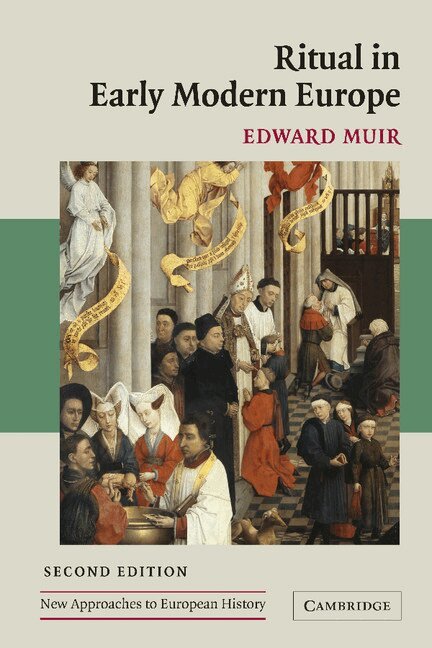
The comprehensive 2005 study of rituals in early modern Europe argues that between about 1400 and 1700 a revolution in ritual theory took place that utterly transformed concepts about time, the body, and the presence of spiritual forces in the world. Edward Muir draws on extensive historical research to emphasize the persistence of traditional Christian ritual practices even as educated elites attempted to privilege reason over passion, textual interpretation over ritual action, and moral rectitude over gaining access to supernatural powers. Edward Muir discusses wide ranging themes such as rites of passage, carnivalesque festivity, the rise of manners, Protestant and Catholic Reformations, the alleged anti-Christian rituals of Jews and witches. This edition examines the impact on the European understanding of ritual from the discoveries of new civilizations in the Americas and missionary efforts in China and adds more material about rituals peculiar to women.
902 kr
Skickas inom 7-10 vardagar
The comprehensive 2005 study of rituals in early modern Europe argues that between about 1400 and 1700 a revolution in ritual theory took place that utterly transformed concepts about time, the body, and the presence of spiritual forces in the world. Edward Muir draws on extensive historical research to emphasize the persistence of traditional Christian ritual practices even as educated elites attempted to privilege reason over passion, textual interpretation over ritual action, and moral rectitude over gaining access to supernatural powers. Edward Muir discusses wide ranging themes such as rites of passage, carnivalesque festivity, the rise of manners, Protestant and Catholic Reformations, the alleged anti-Christian rituals of Jews and witches. This edition examines the impact on the European understanding of ritual from the discoveries of new civilizations in the Americas and missionary efforts in China and adds more material about rituals peculiar to women.
Del 1 - Bernard Berenson Lectures on the Italian Renaissance Delivered at Villa I Tatti
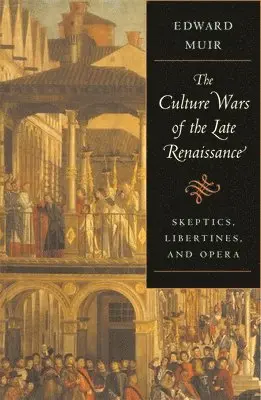
Culture Wars of the Late Renaissance
Skeptics, Libertines, and Opera
Inbunden, Engelska, 2007
406 kr
Skickas inom 10-15 vardagar
In the summer of 1591 students from the University of Padua attacked the local Jesuit college and successfully appealed to the Venetian Senate to intervene on behalf of the university. When the Jesuits were expelled from the Venetian dominion a few years later, religious censorship was virtually eliminated. The result was a remarkable era of cultural innovation that promoted free inquiry in the face of philosophical and theological orthodoxy, advocated libertine morals, critiqued the tyranny of aristocratic fathers over their daughters, and expanded the theatrical potential of grand opera.In Padua a faction of university faculty, including Galileo Galilei and the philosopher Cesare Cremonini, pursued an open and free inquiry into astronomy and philosophy. In Venice some of Cremonini's students founded the Accademia degli Incogniti (Academy of the Unknowns), one of whose most notorious members was the brilliant polemicist Ferrante Pallavicino. The execution of Pallavicino for his writings attacking Pope Urban VIII silenced the more outrageous members of the Incogniti, who soon turned to writing libretti for operas. The final phase of the Venetian culture wars pitted commercial opera, with its female performers and racy plot lines, against the decorous model of Jesuit theater. The libertine inclinations of the Incogniti suffuse many of the operas written in the 1640s, especially Monteverdi's masterpiece, L'Incoronazione di Poppea.Edward Muir's exploration of an earlier age of anxiety reveals the distinguished past of today's culture wars, including debates about the place of women in society, the clash between science and faith, and the power of the arts to stir emotions.
518 kr
Skickas inom 7-10 vardagar
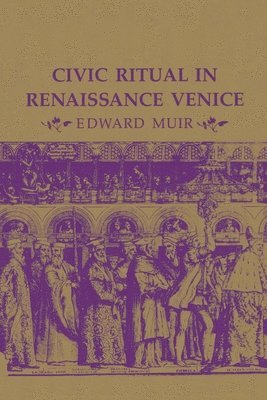
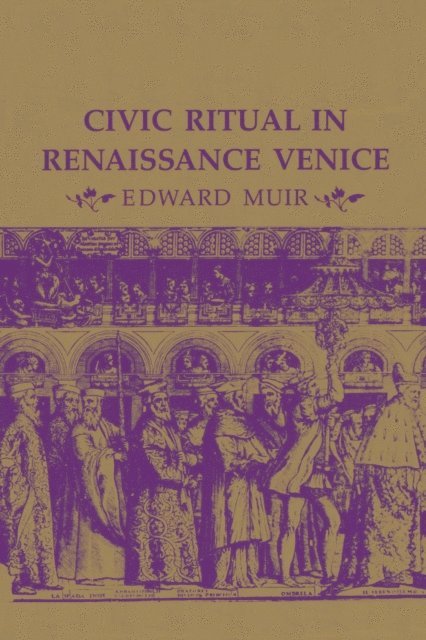
Venice's reputation for political stability and a strong, balanced republican government holds a prominent place in European political theory. Edward Muir traces the origins and development of this reputation, paying particular attention to the sixteenth century, when civic ritual in Venice reached its peak. He shows how the ritualization of society and politics was an important reason for Venice's stability. Influenced in part by cultural anthropology, he establishes and applies to Venice a new methodology for the historical study of civic ritual.
Del 1 - Selections from Quaderni Storici
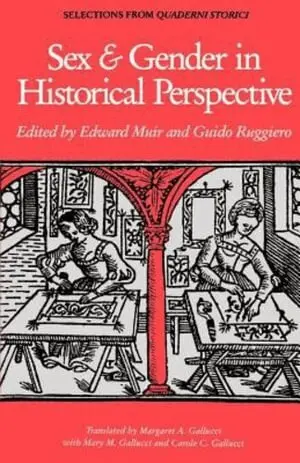
Sex and Gender in Historical Perspective
Selections from Quaderni Storici
Häftad, Engelska, 1990
363 kr
Skickas inom 7-10 vardagar
How we did the "fallen" women of Bologna regain their lost honor as wives or nuns? Why did the church need to control the "quasi-magical" power of female fertility? What did working women do to transform the factory environment-- as well as their social identity? In the microstoria of Italian scholars, good stories make even better history. "Sex and Gender in Historical Perspective"-- the inaugural volume of Selections from Quaderni Storici-- looks at sexual mores and gender roles in European social history of popular culture, these scholars present a broad and highly original view of human history. Taking a microhistorical approach, they explore topics including witchcraft and sexual intercourse, folk explanations of "monstrous" births, the reception of syphilis in Europe, sexual honor, female roles in Christian spiritual practices, and women in "men's jobs". Without losing sight of larger historical themes or societal structures, the authors offer a refreshingly particular and subtle view of everyday people, their hopes and visions, and their words.Drawing from archives and manuscripts that have received little attention until now, "Sex and Gender in Historical Perspective" illuminates the cultural and political forces that shaped gender perception and sexuality over the centuries and offers an engaging and powerful challenge to current assumptions.
Del 2 - Selections from Quaderni Storici
Microhistory and the Lost Peoples of Europe
Selections from Quaderni Storici
Häftad, Engelska, 1991
446 kr
Skickas inom 5-8 vardagar
"An excellent introduction to and sampling of the developing genre of microhistory...In essence these historians begin their analysis `from below,' viewing the ordinary peoples ignored in the annals of European history."--'Catholic Historical Review.' 'Selections from' Quaderni Storici.
406 kr
Skickas inom 5-8 vardagar
Nobles were slaughtered and their castles looted or destroyed, bodies were dismembered and corpses fed to animals-the Udine carnival massacre of 1511 was the most extensive and damaging popular revolt in Renaissance Italy (and the basis for the story of Romeo and Juliet). Mad Blood Stirring is a gripping account and analysis of this event, as well as the social structures and historical conflicts preceding it and the subtle shifts in the mentality of revenge it introduced. This new reader's edition offers students and general readers an abridged version of this classic work which shifts the focus from specialized scholarly analysis to the book's main theme: the role of vendetta in city and family politics. Uncovering the many connections between the carnival motifs, hunting practices, and vendetta rituals, Muir finds that the Udine massacre occurred because, at that point in Renaissance history, violent revenge and allegiance to factions provided the best alternative to failed political institutions.But the carnival massacre also marked a crossroads: the old mentality of vendetta was soon supplanted by the emerging sense that the direct expression of anger should be suppressed-to be replaced by duels.
335 kr
Skickas inom 5-8 vardagar
469 kr
Skickas inom 3-6 vardagar
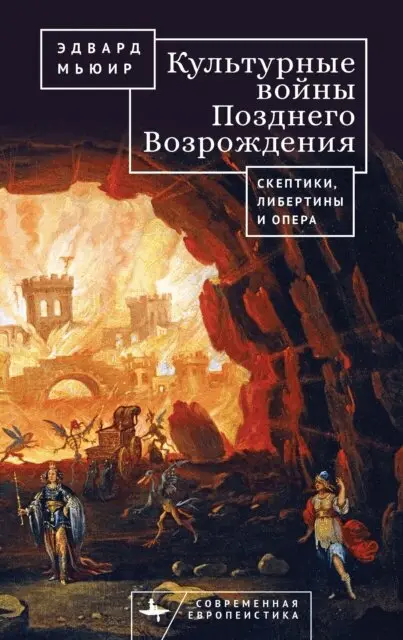
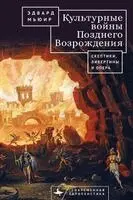
Летом 1591 года начались выступления студентов Падуанского университета против иезуитской школы. Последовавшие за изгнанием иезуитов из Венеции десятилетия стали эпохой научных открытий, культурных инноваций и дебатов о морали. Регион превратился в центр противостояния католического мира расширению папской власти, а также прибежище для издателей, получивших возможность публиковать книги без церковной цензуры. Закрытие общества свободомыслящих интеллектуалов «Академия неизвестных» около 1660 года ознаменовало конец этой эпохи. В своей книге Эдвард Мьюир рассказывает, как наука проверяла на прочность религию, представления о правах женщин вступали в конфликт с традиционными нарративами, а новая опера бросала вызов этическим нормам прошлого.