Edward N. Luttwak - Böcker
Visar alla böcker från författaren Edward N. Luttwak. Handla med fri frakt och snabb leverans.
13 produkter
13 produkter
308 kr
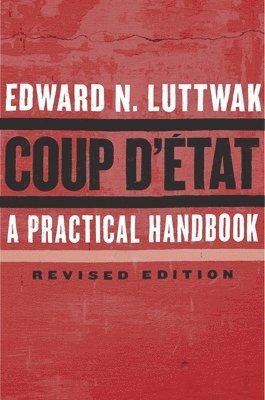
Coup d’État astonished readers when it first appeared in 1968 because it showed, step by step, how governments could be overthrown. Translated into sixteen languages, it has inspired anti-coup precautions by regimes around the world. In addition to these detailed instructions, Edward Luttwak’s revised handbook offers an altogether new way of looking at political power—one that considers, for example, the vulnerability to coups of even the most stable democracies in the event of prolonged economic distress.The world has changed dramatically in the past half century, but not the essence of the coup d’état. It still requires the secret recruitment of military officers who command the loyalty of units well placed to seize important headquarters and key hubs in the capital city. The support of the armed forces as a whole is needed only in the aftermath, to avoid countercoups. And mass support is largely irrelevant, although passive acceptance is essential. To ensure it, violence must be kept to a minimum. The ideal coup is swift and bloodless. Very violent coups rarely succeed, and if they trigger a bloody civil war they fail utterly.Luttwak identifies conditions that make countries vulnerable to a coup, and he outlines the necessary stages of planning, from recruitment of coconspirators to postcoup promises of progress and stability. But much more broadly, his investigation of coups—updated for the twenty-first century—uncovers important truths about the nature of political power.
Endangered American Dream
How to Stop the United States from Becoming a Third World Country and How to Win the Geo-Economic Struggle for Industrial Supremacy
Häftad, Engelska, 1994
314 kr
Skickas inom 3-6 vardagar
466 kr
Skickas inom 3-6 vardagar
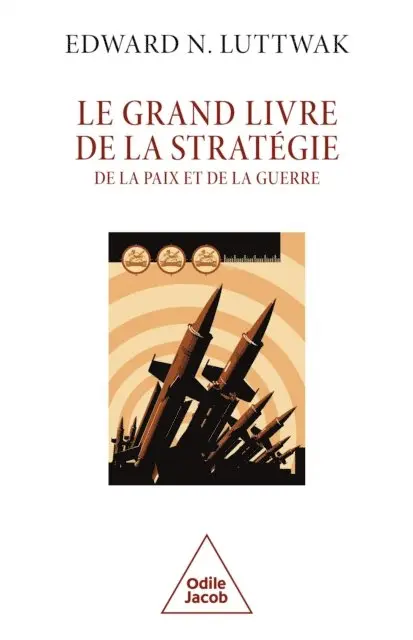
“If you want peace, prepare for war.” “A buildup of offensive weapons can be purely defensive.” “The worst road may be the best route to battle.” Strategy is made of such seemingly self-contradictory propositions, Edward Luttwak shows—they exemplify the paradoxical logic that pervades the entire realm of conflict.In this widely acclaimed work, now revised and expanded, Luttwak unveils the peculiar logic of strategy level by level, from grand strategy down to combat tactics. Having participated in its planning, Luttwak examines the role of air power in the 1991 Gulf War, then detects the emergence of “post-heroic” war in Kosovo in 1999—an American war in which not a single American soldier was killed.In the tradition of Carl von Clausewitz, Strategy goes beyond paradox to expose the dynamics of reversal at work in the crucible of conflict. As victory is turned into defeat by over-extension, as war brings peace by exhaustion, ordinary linear logic is overthrown. Citing examples from ancient Rome to our own days, from Barbarossa and Pearl Harbor down to minor combat affrays, from the strategy of peace to the latest operational methods of war, this book by one of the world’s foremost authorities reveals the ultimate logic of military failure and success, of war and peace.
250 kr
Skickas inom 7-10 vardagar
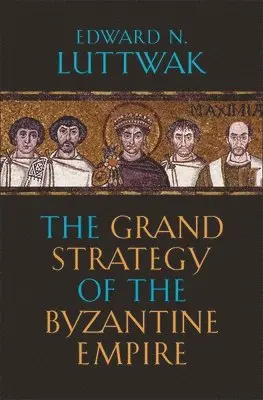
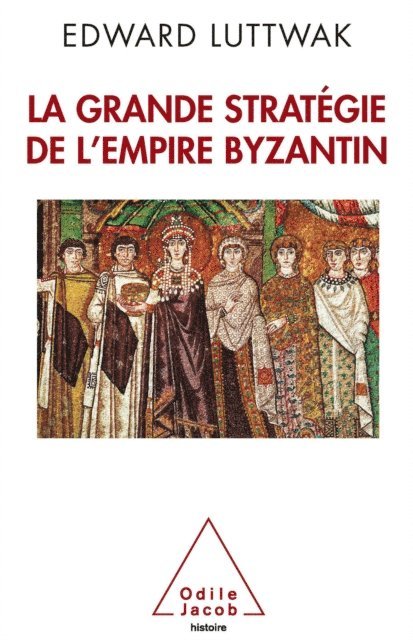
In this book, the distinguished writer Edward N. Luttwak presents the grand strategy of the eastern Roman empire we know as Byzantine, which lasted more than twice as long as the more familiar western Roman empire, eight hundred years by the shortest definition. This extraordinary endurance is all the more remarkable because the Byzantine empire was favored neither by geography nor by military preponderance. Yet it was the western empire that dissolved during the fifth century.The Byzantine empire so greatly outlasted its western counterpart because its rulers were able to adapt strategically to diminished circumstances, by devising new ways of coping with successive enemies. It relied less on military strength and more on persuasion—to recruit allies, dissuade threatening neighbors, and manipulate potential enemies into attacking one another instead. Even when the Byzantines fought—which they often did with great skill—they were less inclined to destroy their enemies than to contain them, for they were aware that today’s enemies could be tomorrow’s allies. Born in the fifth century when the formidable threat of Attila’s Huns were deflected with a minimum of force, Byzantine strategy continued to be refined over the centuries, incidentally leaving for us several fascinating guidebooks to statecraft and war.The Grand Strategy of the Byzantine Empire is a broad, interpretive account of Byzantine strategy, intelligence, and diplomacy over the course of eight centuries that will appeal to scholars, classicists, military history buffs, and professional soldiers.
225 kr
Skickas inom 7-10 vardagar
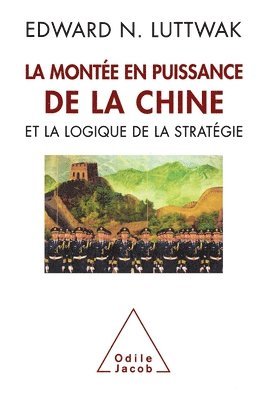
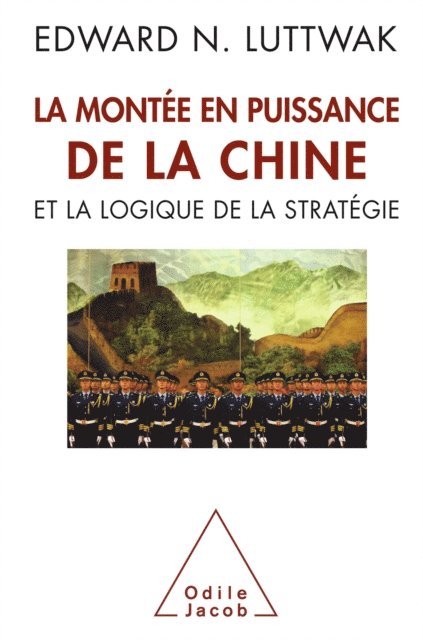
As the rest of the world worries about what a future might look like under Chinese supremacy, Edward Luttwak worries about China’s own future prospects. Applying the logic of strategy for which he is well known, Luttwak argues that the most populous nation on Earth—and its second largest economy—may be headed for a fall.For any country whose rising strength cannot go unnoticed, the universal logic of strategy allows only military or economic growth. But China is pursuing both goals simultaneously. Its military buildup and assertive foreign policy have already stirred up resistance among its neighbors, just three of whom—India, Japan, and Vietnam—together exceed China in population and wealth. Unless China’s leaders check their own ambitions, a host of countries, which are already forming tacit military coalitions, will start to impose economic restrictions as well.Chinese leaders will find it difficult to choose between pursuing economic prosperity and increasing China’s military strength. Such a change would be hard to explain to public opinion. Moreover, Chinese leaders would have to end their reliance on ancient strategic texts such as Sun Tzu’s Art of War. While these guides might have helped in diplomatic and military conflicts within China itself, their tactics—such as deliberately provoking crises to force negotiations—turned China’s neighbors into foes. To avoid arousing the world’s enmity further, Luttwak advises, Chinese leaders would be wise to pursue a more sustainable course of economic growth combined with increasing military and diplomatic restraint.
303 kr
Kommande
"Rich with rare detail, much of it a result of the authors' access to the IDF's inner sanctums and their intimate knowledge of grand strategy and military history." -Wall Street Journal A world-leading military strategist and an IDF insider explain the improbable success of the Israeli armed forces. When the Israel Defense Forces was established in 1948, the emerging Jewish state lacked sufficient weaponry and the capacity to produce it. Forced to make do, the IDF relied on a spirit of improvisation. Today that same spirit has secured the IDF a place among the world's most powerful militaries. In The Art of Military Innovation, Edward Luttwak and Eitan Shamir trace the roots of this astounding success. What sets the IDF apart, they argue, is its structure. From its inception, it has been the world's only one-service military, with air, naval, and land forces collected in a single institutional body. This unique architecture, coupled with a youthful officer corps, encourages initiative from below. The result is a nimble organization inclined toward change. The IDF has fostered significant technological advances, from the first wartime use of drones to the famed Iron Dome missile defense system, and now the first laser weapon, Iron Beam. Less-heralded innovations in training, logistics, and human resources have been equally important. Sharing rich insights and compelling stories, Luttwak and Shamir reveal just what makes the IDF so agile and effective.
290 kr
Skickas inom 7-10 vardagar
A world-leading military strategist and an IDF insider explain the improbable success of the Israeli armed forces.When the Israel Defense Forces was established in May 1948, it was small, poorly equipped, and already at war. Lacking sufficient weaponry or the domestic industrial base to produce it, the newborn military was forced to make do with whatever it could get its hands on. That spirit of improvisation carried the IDF to a decisive victory in the First Arab-Israeli War.Today the same spirit has made the IDF the most powerful military in the Middle East and among the most capable in the world. In The Art of Military Innovation, Edward N. Luttwak and Eitan Shamir trace the roots of this astounding success. What sets the IDF apart, they argue, is its singular organizational structure. From its inception, it has been the world’s only one-service military, encompassing air, naval, and land forces in a single institutional body. This unique structure, coupled with a young officer corps, allows for initiative from below. The result is a nimble organization inclined toward change rather than beholden to tradition.The IDF has fostered some of the most significant advances in military technology of the past seventy years, from the first wartime use of drones to the famed Iron Dome missile defense system, and now the first laser weapon, Iron Beam. Less-heralded innovations in training, logistics, and human resources have been equally important. Sharing rich insights and compelling stories, Luttwak and Shamir reveal just what makes the IDF so agile and effective.
2 402 kr
Skickas inom 10-15 vardagar
This is Edward Luttwak's third and arguably fi nest collection of essays. In a challenge to the intellectual backbone of those who write about peace as something one wishes into existence through mediation and good will, Luttwak's view of warfare is bracing: "An unpleasant truth, often overlooked, is that although war is a great evil, it does have a great virtue: it can resolve political confl icts and lead to peace."Luttwak articulates positions shared by military fi gures and political heroes who have their feet on the ground rather than in the sand. He shares his thoughts in essays covering America at war and the new Bolshevism in Russia, ranging in place from the Middle East to Latin America and stops along the way to Byzantium. Luttwak examines military reform, great powers grown small, and drugs, crime and corruption as part of the common culture of the West. Th ough his message is sometimes delivered in a light tone, he is never foolish and never trivial.Luttwak develops the bracing thesis that cease fi res and armistices in states of war, while sometimes inconclusive, are lesser evils than prospects for a nuclear meltdown. Even in arenas of geopolitical antagonism, neither Americans nor Russians have been inclined to intervene competitively in wars of lesser powers. As a consequence, intermittent war persists; and greater dangers to the world are averted. It is no exaggeration to compare Luttwak to Clausewitz in the nineteenth century and Herman Kahn in the twentieth century. Th is volume deserves to be read and digested by all who would understand contemporary geopolitics.
803 kr
Skickas inom 10-15 vardagar
This is Edward Luttwak's third and arguably fi nest collection of essays. In a challenge to the intellectual backbone of those who write about peace as something one wishes into existence through mediation and good will, Luttwak's view of warfare is bracing: "An unpleasant truth, often overlooked, is that although war is a great evil, it does have a great virtue: it can resolve political confl icts and lead to peace."Luttwak articulates positions shared by military fi gures and political heroes who have their feet on the ground rather than in the sand. He shares his thoughts in essays covering America at war and the new Bolshevism in Russia, ranging in place from the Middle East to Latin America and stops along the way to Byzantium. Luttwak examines military reform, great powers grown small, and drugs, crime and corruption as part of the common culture of the West. Th ough his message is sometimes delivered in a light tone, he is never foolish and never trivial.Luttwak develops the bracing thesis that cease fi res and armistices in states of war, while sometimes inconclusive, are lesser evils than prospects for a nuclear meltdown. Even in arenas of geopolitical antagonism, neither Americans nor Russians have been inclined to intervene competitively in wars of lesser powers. As a consequence, intermittent war persists; and greater dangers to the world are averted. It is no exaggeration to compare Luttwak to Clausewitz in the nineteenth century and Herman Kahn in the twentieth century. Th is volume deserves to be read and digested by all who would understand contemporary geopolitics.
705 kr
Tillfälligt slut
At the height of its power, the Roman Empire encompassed the entire Mediterranean basin, extending much beyond it from Britain to Mesopotamia, from the Rhine to the Black Sea. Rome prospered for centuries while successfully resisting attack, fending off everything from overnight robbery raids to full-scale invasion attempts by entire nations on the move. How were troops able to defend the Empire's vast territories from constant attacks? And how did they do so at such moderate cost that their treasury could pay for an immensity of highways, aqueducts, amphitheaters, city baths, and magnificent temples? In The Grand Strategy of the Roman Empire, seasoned defense analyst Edward N. Luttwak reveals how the Romans were able to combine military strength, diplomacy, and fortifications to effectively respond to changing threats. Rome's secret was not ceaseless fighting, but comprehensive strategies that unified force, diplomacy, and an immense infrastructure of roads, forts, walls, and barriers. Initially relying on client states to buffer attacks, Rome moved to a permanent frontier defense around 117 CE.Finally, as barbarians began to penetrate the empire, Rome filed large armies in a strategy of "defense-in-depth," allowing invaders to pierce Rome's borders. This updated edition has been extensively revised to incorporate recent scholarship and archeological findings. A new preface explores Roman imperial statecraft. This illuminating book remains essential to both ancient historians and students of modern strategy.
363 kr
Skickas inom 7-10 vardagar
At the height of its power, the Roman Empire encompassed the entire Mediterranean basin, extending much beyond it from Britain to Mesopotamia, from the Rhine to the Black Sea. Rome prospered for centuries while successfully resisting attack, fending off everything from overnight robbery raids to full-scale invasion attempts by entire nations on the move. How were troops able to defend the Empire's vast territories from constant attacks? And how did they do so at such moderate cost that their treasury could pay for an immensity of highways, aqueducts, amphitheaters, city baths, and magnificent temples? In The Grand Strategy of the Roman Empire, seasoned defense analyst Edward N. Luttwak reveals how the Romans were able to combine military strength, diplomacy, and fortifications to effectively respond to changing threats. Rome's secret was not ceaseless fighting, but comprehensive strategies that unified force, diplomacy, and an immense infrastructure of roads, forts, walls, and barriers. Initially relying on client states to buffer attacks, Rome moved to a permanent frontier defense around 117 CE.Finally, as barbarians began to penetrate the empire, Rome filed large armies in a strategy of "defense-in-depth," allowing invaders to pierce Rome's borders. This updated edition has been extensively revised to incorporate recent scholarship and archeological findings. A new preface explores Roman imperial statecraft. This illuminating book remains essential to both ancient historians and students of modern strategy.
Grand Strategy of the Byzantine Empire / La Grande Stratégie de l'empire byzantin
Häftad, Franska, 2010
773 kr
Skickas inom 3-6 vardagar
The Rise of China and the Logic of Strategy / La Montée en puissance de la Chine et la logique de la stratégie
Häftad, Franska, 2012
554 kr
Skickas inom 3-6 vardagar