Egdūnas Račius - Böcker
Visar alla böcker från författaren Egdūnas Račius. Handla med fri frakt och snabb leverans.
8 produkter
8 produkter
2 103 kr
Skickas inom 10-15 vardagar
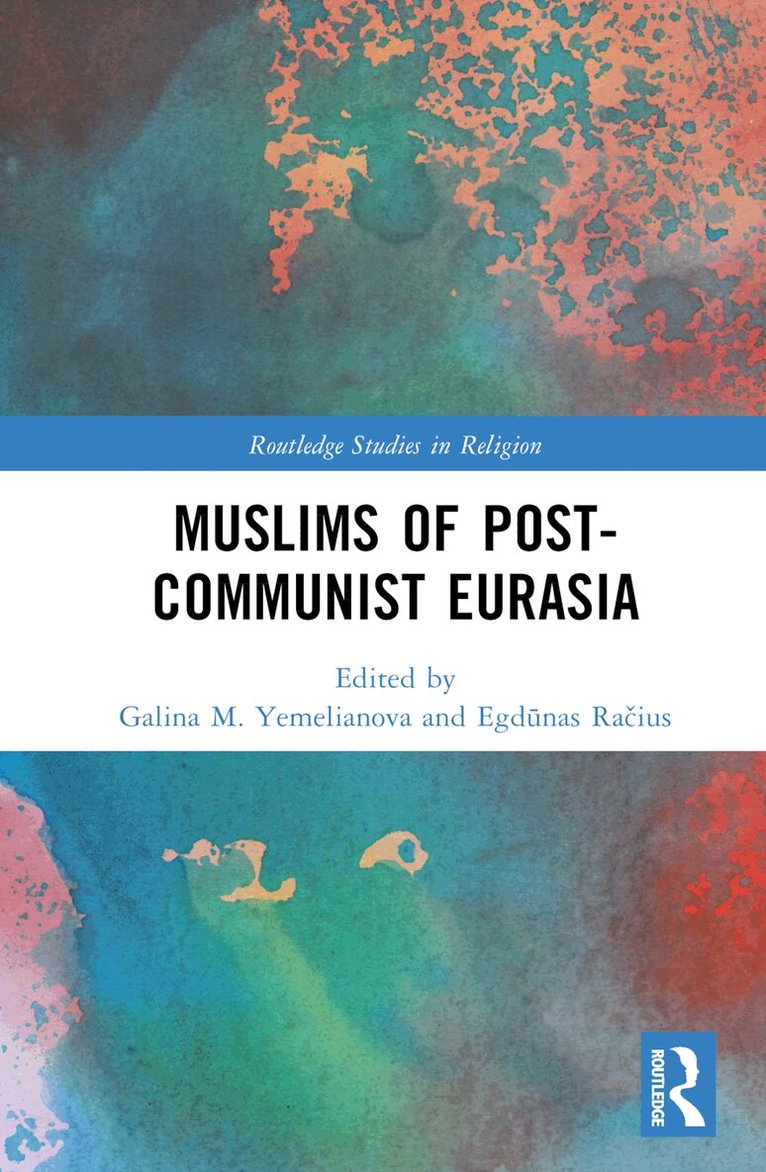
This book discusses the evolution of state governance of Islam and the nature and forms of local Muslims’ rediscovery of their ‘Muslimness’ across post-communist Eurasia. It examines the effects on the Islamic scene of the political and ideological divergence of Central and South-Eastern Europe from Russia and most of the Caucasus and Central Asia. Of particular interest are the implications of the proliferation of new, ‘global’ interpretations of Islam and their relationship with existing ‘traditional’ Islamic beliefs and practices. The contributions in this book address these issues through an interdisciplinary prism combining history, religious studies/theology, social anthropology, sociology, ethnology and political science. They analyse the greater public presence of Islam in constitutionally secular contexts and offer a critique of the domestication and accommodation of Islam in Europe, comparing these to what has happened in the international Eurasian space. The discussion is informed by the works of such thinkers as Talal Asad, Bryan Turner, Veit Bader, Marcel Maussen and Bassam Tibi, and utilises primary and secondary sources and ethnographic observation. Looking at how collectivities and individuals are defining what it means to be Muslim in a globalised Islamic context, this book will be of great interest to scholars of Religious Studies, Islamic Studies, Political Science, Sociology and Anthropology.
575 kr
Skickas inom 10-15 vardagar
This book discusses the evolution of state governance of Islam and the nature and forms of local Muslims’ rediscovery of their ‘Muslimness’ across post-communist Eurasia. It examines the effects on the Islamic scene of the political and ideological divergence of Central and South-Eastern Europe from Russia and most of the Caucasus and Central Asia. Of particular interest are the implications of the proliferation of new, ‘global’ interpretations of Islam and their relationship with existing ‘traditional’ Islamic beliefs and practices. The contributions in this book address these issues through an interdisciplinary prism combining history, religious studies/theology, social anthropology, sociology, ethnology and political science. They analyse the greater public presence of Islam in constitutionally secular contexts and offer a critique of the domestication and accommodation of Islam in Europe, comparing these to what has happened in the international Eurasian space. The discussion is informed by the works of such thinkers as Talal Asad, Bryan Turner, Veit Bader, Marcel Maussen and Bassam Tibi, and utilises primary and secondary sources and ethnographic observation. Looking at how collectivities and individuals are defining what it means to be Muslim in a globalised Islamic context, this book will be of great interest to scholars of Religious Studies, Islamic Studies, Political Science, Sociology and Anthropology.
2 085 kr
Skickas inom 3-6 vardagar
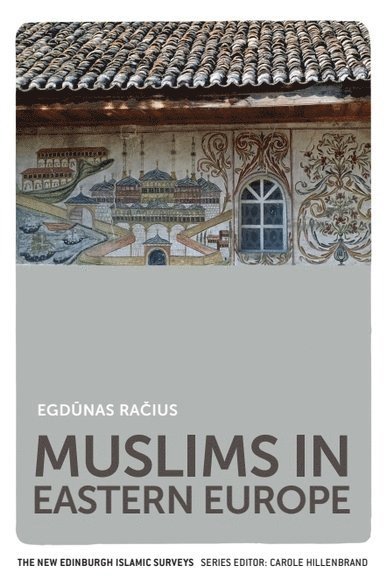
Introduces the centuries-old history of Muslim communities in Eastern EuropeThe history and contemporary situation of Muslim communities in Eastern Europe are explored here from three angles. First, survival, telling of the resilience of these Muslim communities in the face of often restrictive state policies and hostile social environments, especially during the Communist period. Next, their subsequent revival in the aftermath of the Cold War, and last, transformation, looking at the profound changes currently taking place in the demographic composition of the communities and in the forms of Islam practiced by them. The reader is shown a picture of the general trends common to the Muslim communities of Eastern Europe, and the special characteristics of clusters of states, such as the Baltics, the Balkans, the Visegrad states, and the European states of the Commonwealth of Independent States (CIS).Key FeaturesPlaces Muslim communities of Eastern Europe within their historical and pan-European context, establishing them as belonging in and to EuropeProvides an overview of the history and current trends in Muslim communities in 21 post-Communist Eastern European countriesAnalyses the situation of Muslim communities in Eastern Europe on a country-cluster basis (North-Eastern Europe: Russia, Ukraine, Lithuania, Latvia, Estonia, Belarus, Moldova; the successor states of Yugoslavia: Bosnia and Herzegovina, Montenegro, Serbia, Kosovo, Macedonia, Slovenia, Croatia; South-Eastern Europe: Albania, Bulgaria, Romania; Central Europe: Poland, Hungary, the Czech Republic, Slovakia)Provides an overview of the emerging trends in conversion to Islam among Eastern Europeans
383 kr
Skickas inom 7-10 vardagar
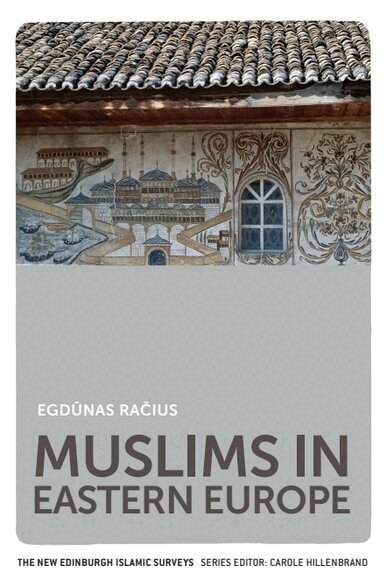
Introduces the centuries-old history of Muslim communities in Eastern EuropeThe history and contemporary situation of Muslim communities in Eastern Europe are explored here from three angles. First, survival, telling of the resilience of these Muslim communities in the face of often restrictive state policies and hostile social environments, especially during the Communist period. Next, their subsequent revival in the aftermath of the Cold War, and last, transformation, looking at the profound changes currently taking place in the demographic composition of the communities and in the forms of Islam practiced by them. The reader is shown a picture of the general trends common to the Muslim communities of Eastern Europe, and the special characteristics of clusters of states, such as the Baltics, the Balkans, the Visegrad states, and the European states of the Commonwealth of Independent States (CIS).Key FeaturesPlaces Muslim communities of Eastern Europe within their historical and pan-European context, establishing them as belonging in and to EuropeProvides an overview of the history and current trends in Muslim communities in 21 post-Communist Eastern European countriesAnalyses the situation of Muslim communities in Eastern Europe on a country-cluster basis (North-Eastern Europe: Russia, Ukraine, Lithuania, Latvia, Estonia, Belarus, Moldova; the successor states of Yugoslavia: Bosnia and Herzegovina, Montenegro, Serbia, Kosovo, Macedonia, Slovenia, Croatia; South-Eastern Europe: Albania, Bulgaria, Romania; Central Europe: Poland, Hungary, the Czech Republic, Slovakia)Provides an overview of the emerging trends in conversion to Islam among Eastern Europeans
Del 7 - Yearbook of Muslims in Europe
Yearbook of Muslims in Europe, Volume 7
Inbunden, Engelska, 2015
3 125 kr
Skickas inom 5-8 vardagar
Now in a new format with a more current and topical focus on a country level.While the strength of the Yearbook has always been the comprehensive geographical remit, starting with volume 7 the reports primarily concentrate on more specific and topical information. The most current research available on public debates, transnational links, legal or political changes that have affected the Muslim population, and activities and initiatives of Muslim organizations from surveyed countries are available throughout the Yearbook. At the end of each country report, an annual overview of statistical and demographic data is presented in an appendix. By using a table format, up-to-date information is quickly accessible for each country.To see how these changes affect the articles, please read this sample chapter about Austria.The Yearbook of Muslims in Europe is an essential resource for analysis of Europe's dynamic Muslim populations. Featuring up-to-date research from forty-six European countries, the reports provide cumulative knowledge of on-going trends and developments around Muslims in different European countries. In addition to offering a relevant framework for original research, the Yearbook of Muslims in Europe provides an invaluable source of reference for government and NGO officials, journalists, policy-makers, and related research institutions.
Del 35 - Muslim Minorities
Islam in Post-communist Eastern Europe
Between Churchification and Securitization
Inbunden, Engelska, 2020
1 799 kr
Skickas inom 5-8 vardagar
In Islam in Post-communist Eastern Europe: Between Churchification and Securitization Egdūnas Račius reveals how not only the governance of religions but also practical politics in post-communist Eastern Europe are permeated by the strategies of churchification and securitization of Islam. Though most Muslims and the majority of researchers of Islam hold to the view that there may not be church in Islam, material evidence suggests that the representative Muslim religious organizations in many Eastern European countries have been effectively turned into ecclesiastical-bureaucratic institutions akin to nothing less than ‘national Muslim Churches’. As such, these ‘national Muslim Churches’ themselves take an active part in securitization, advanced by both non-Muslim political and social actors, of certain forms of Islamic religiosity.
Del 16 - Yearbook of Muslims in Europe
Yearbook of Muslims in Europe, Volume 16
Inbunden, Engelska, 2024
3 706 kr
Skickas inom 3-6 vardagar
The Yearbook of Muslims in Europe is an essential resource for analysis of Europe's dynamic Muslim populations. Featuring up-to-date research from forty-four European countries, this comprehensive reference work summarises significant activities, trends, and developments within those communities.Each new volume reports on the most current information available from surveyed countries, offering an annual overview of statistical and demographic data, topical issues of public debate, shifting transnational networks, change to domestic policies and legal frameworks, and major activities in Muslim organisations and institutions. Supplementary data is gathered from a variety of sources and evaluated according to its reliability.In addition to offering a relevant framework for original research, the Yearbook of Muslims in Europe provides an invaluable source of reference for government and NGO officials, journalists, policymakers, and related research institutions.
Del 17 - Yearbook of Muslims in Europe
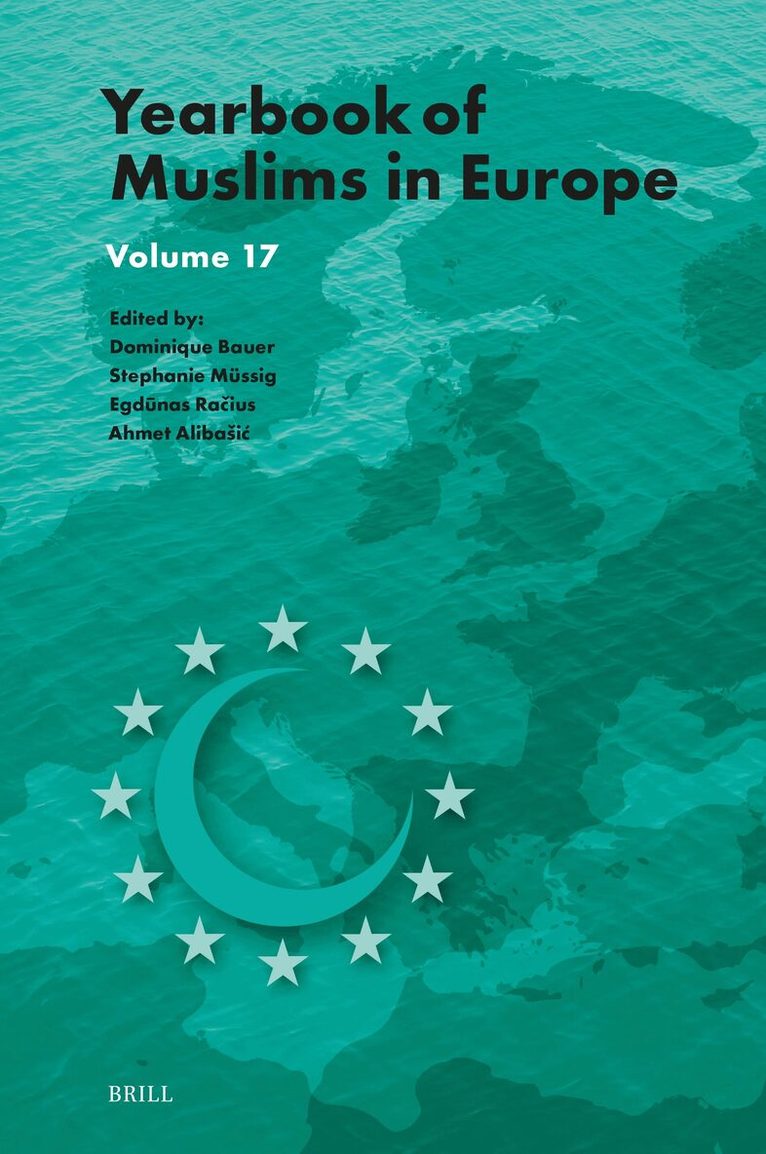
Yearbook of Muslims in Europe, Volume 17
Inbunden, Engelska, 2025
3 539 kr
Skickas inom 3-6 vardagar
The Yearbook of Muslims in Europe is an essential resource for analysis of Europe's dynamic Muslim populations. Featuring up-to-date research from forty-four European countries, this comprehensive reference work summarises significant activities, trends, and developments within those communities.Each new volume reports on the most current information available from surveyed countries, offering an annual overview of statistical and demographic data, topical issues of public debate, shifting transnational networks, change to domestic policies and legal frameworks, and major activities in Muslim organisations and institutions. Supplementary data is gathered from a variety of sources and evaluated according to its reliability.In addition to offering a relevant framework for original research, the Yearbook of Muslims in Europe provides an invaluable source of reference for government and NGO officials, journalists, policymakers, and related research institutions.