Eleanor Townsley - Böcker
Visar alla böcker från författaren Eleanor Townsley. Handla med fri frakt och snabb leverans.
4 produkter
4 produkter
1 192 kr
Skickas inom 3-6 vardagar
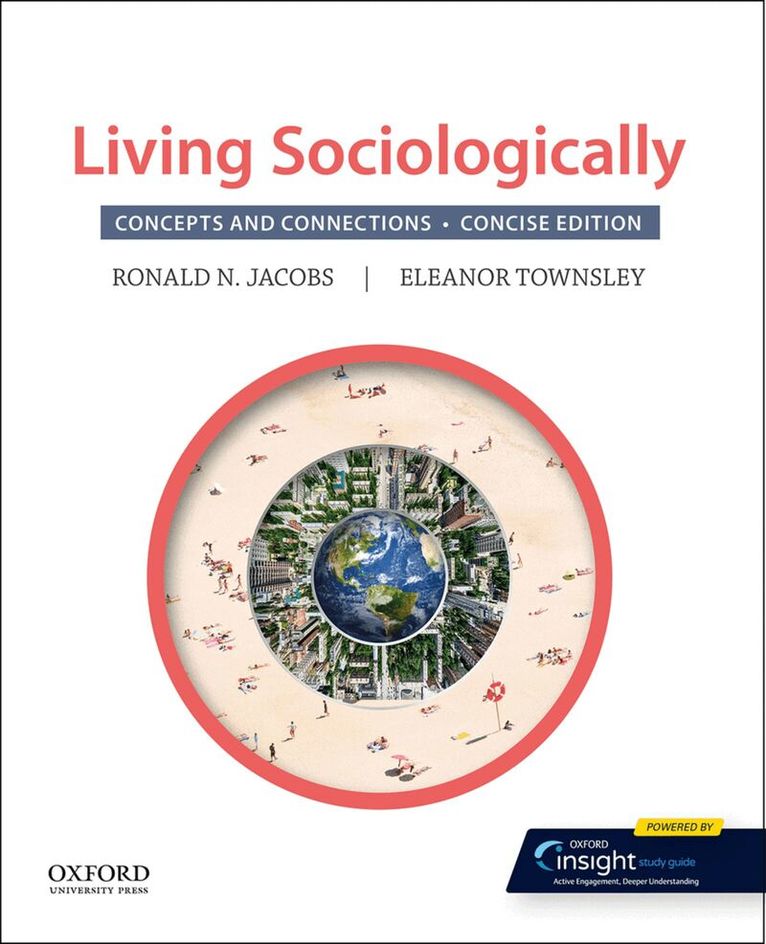
Students are drawn to topics of urgent sociological concern by a need to understand the forces that shape their world and their desire to make the world better. It can be challenging, however, for students to link sociological concepts with real-world applications. Living Sociologically: Concepts and Connections, Concise Edition helps students make those connections.This brief, engaging and accessible text offers an innovative, class-tested framework for teaching sociology. The "paired concepts" approach demonstrates the interdependent ways in which social forces work, encourages students to engage with complexity and contradiction, and provides them with critical, analytical thinking tools. The built-in student study guide is a unique adaptive learning program that will enable students to assess their learning and understanding as they move through the course, and provides feedback and an individualized learning path to help students master the material.
922 kr
Skickas
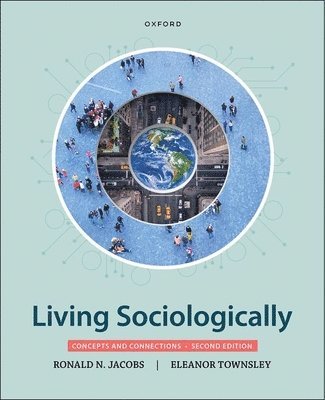
Living Sociologically is built around a contemporary, applied framework that is designed to help students find their place in a complex and contradictory social world. Students who enroll in today's introductory sociology courses are already familiar with concepts such as inequality, privilege, conflict, power, and structure -- yet they do not realize how a sociological understanding of these concepts can help them to make sense of and enact change in their diverse social worlds. Living Sociologically pairs central sociological concepts together -- Power and Resistance; Inequality and Privilege; Solidarity and Conflict; Structure and Contingency; and Global and Local giving students a framework and a set of tools to help them develop their sociological imaginations. For example, to understand the sociological and cultural meaning of wealth, you also need to understand the sociological and cultural meaning of poverty. These pairings, illustrated and reinforced through abundant contemporary examples and case studies, offer students relevant opportunities for thinking intersectionally and discovering the many ways in which sociological forces are at play in their lives.
1 532 kr
Skickas inom 7-10 vardagar
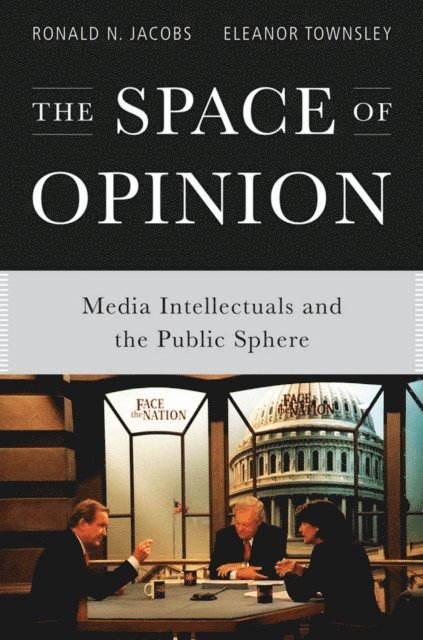
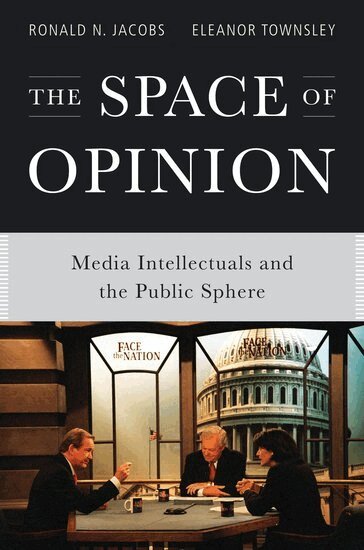
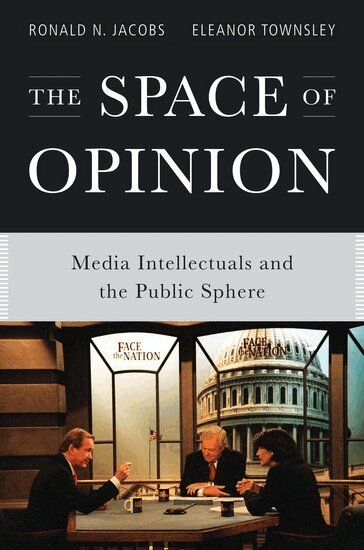
While the newspaper op-ed page, the Sunday morning political talk shows on television, and the evening cable-news television lineup have an obvious and growing influence in American politics and political communication, social scientists and media scholars tend to be broadly critical of the rise of organized punditry during the 20th century without ever providing a close empirical analysis. What is the nature of the contemporary space of opinion? How has it developed historically? What kinds of people speak in this space? What styles of writing and speech do they use? What types of authority and expertise do they draw on? And what impact do their commentaries have on public debate?To describe and analyze this complex space of news media, Ronald Jacobs and Eleanor Townsley rely on enormous samples of opinion collected from newspapers and television shows during the first years of the last two Presidential administrations. They also employ biographical data on authors of opinion to connect specific argument styles to specific types of authors, and examine the distribution of authors and argument types across different formats. The result is a close mapping that reveals a massive expansion and differentiation of the opinion space. It tells a complex story of shifting intersections between journalism, politics, the academy, and the new sector of think tanks. It also reveals a proliferation of genres and forms of opinion; not only have the people who speak within the space of opinion become more diverse over time, but the formats of opinion-claims to authority, styles of speech, and modes of addressing publics-have also become more varied. Though Jacobs and Townsley find many changes, they also find continuities. Despite public anxieties, the project of objective journalism is alive and well, thriving in the older, more traditional formats, and if anything, the proliferation of newer formats has resulted in an intensified commitment (by some) to core journalistic values as clear points of difference that offer competing logics of distinction and professional justification. But the current moment does represent a real challenge as more and different shows compete to narrate politics in the most compelling, authoritative, and influential manner. By providing the first systematic study of media opinion and news commentary, The Space of Opinion will fill an important gap on research about media, politics, and the civil society and will attract readers in a number of disciplines, including sociology, communication, media studies, and political science.
406 kr
Skickas inom 7-10 vardagar
While the newspaper op-ed page, the Sunday morning political talk shows on television, and the evening cable-news television lineup have an obvious and growing influence in American politics and political communication, social scientists and media scholars tend to be broadly critical of the rise of organized punditry during the 20th century without ever providing a close empirical analysis. What is the nature of the contemporary space of opinion? How has it developed historically? What kinds of people speak in this space? What styles of writing and speech do they use? What types of authority and expertise do they draw on? And what impact do their commentaries have on public debate?To describe and analyze this complex space of news media, Ronald Jacobs and Eleanor Townsley rely on enormous samples of opinion collected from newspapers and television shows during the first years of the last two Presidential administrations. They also employ biographical data on authors of opinion to connect specific argument styles to specific types of authors, and examine the distribution of authors and argument types across different formats. The result is a close mapping that reveals a massive expansion and differentiation of the opinion space. It tells a complex story of shifting intersections between journalism, politics, the academy, and the new sector of think tanks. It also reveals a proliferation of genres and forms of opinion; not only have the people who speak within the space of opinion become more diverse over time, but the formats of opinion-claims to authority, styles of speech, and modes of addressing publics-have also become more varied. Though Jacobs and Townsley find many changes, they also find continuities. Despite public anxieties, the project of objective journalism is alive and well, thriving in the older, more traditional formats, and if anything, the proliferation of newer formats has resulted in an intensified commitment (by some) to core journalistic values as clear points of difference that offer competing logics of distinction and professional justification. But the current moment does represent a real challenge as more and different shows compete to narrate politics in the most compelling, authoritative, and influential manner. By providing the first systematic study of media opinion and news commentary, The Space of Opinion will fill an important gap on research about media, politics, and the civil society and will attract readers in a number of disciplines, including sociology, communication, media studies, and political science.