Eleanor Williams - Böcker
Visar alla böcker från författaren Eleanor Williams. Handla med fri frakt och snabb leverans.
6 produkter
6 produkter
342 kr
Skickas inom 7-10 vardagar
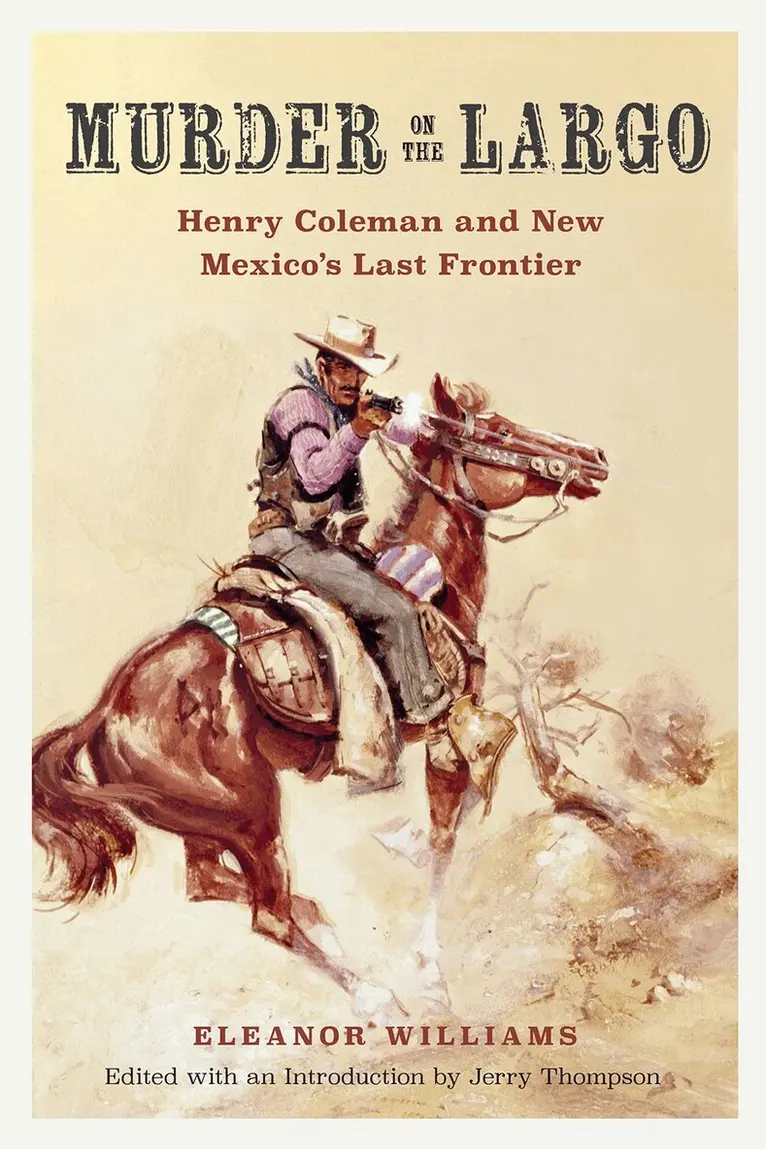
In western New Mexico in 1905 there rode a notorious outlaw from the Mexican border named Henry Coleman. With a Colt .45 strapped to his hip, Coleman (alias Street Hudspeth from the well-to-do Texas family) came to be either despised as a deceitful rustler and ruthless murderer or admired as a man of honor and great courage, a popular and charismatic cowman who was fast with a gun. No one seemed indifferent. In less than a decade, Coleman, who was fluent in Spanish and popular with many of the Hispanics of the area, became as famous in the western part of the state as Billy the Kid was in Lincoln County. Sheriff Elfego Baca of Socorro County, who was careful not to confront Coleman, referred to him as the last of the “bad men of New Mexico.” Especially spellbinding are the recollections of how Coleman came to be associated with several murders. Also intriguing is how he died so violently at the hands of a posse of cattlemen in October 1921. From her ranch on Largo Creek, not far from where Coleman was said to have committed more than one murder, Eleanor Williams worked hard to interview anyone who had known him or had any knowledge of his daring deeds. Williams first published Coleman’s story in the New Mexico Electric News, a monthly electrical co-op magazine, from 1964 to 1965. Award-winning historian Jerry Thompson edited and annotated it with additional historical context; also included is a short biography of Williams by her daughter, Helen Cress.
Diary of Nannie Haskins Williams
A Southern Woman's Story of Rebellion and Reconstruction, 1863–1890
Häftad, Engelska, 2014
333 kr
Skickas inom 10-15 vardagar
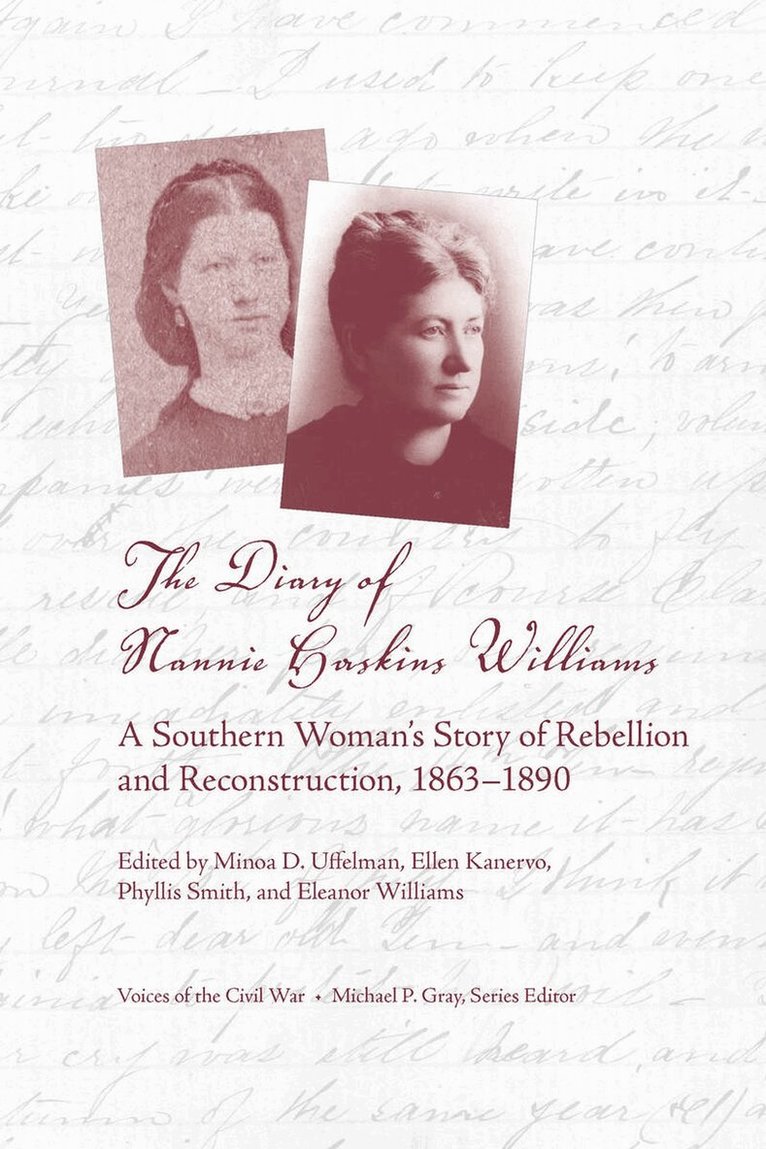
In 1863, while living in Clarksville, Tennessee, Martha Ann Haskins, known to friends and family as Nannie, began a diary. The Diary of Nannie Haskins Williams: A Southern Woman’s Story of Rebellion and Reconstruction, 1863–1890 provides valuable insights into the conditions in occupied Middle Tennessee. A young, elite Confederate sympathizer, Nannie was on the cusp of adulthood with the expectation of becoming a mistress in a slaveholding society. The war ended this prospect, and her life was forever changed. Though this is the first time the diaries have been published in full, they are well known among Civil War scholars, and a voice-over from the wartime diary was used repeatedly in Ken Burns’s famous PBS program The Civil War.Sixteen-year-old Nannie had to come to terms with Union occupation very early in the war. Amid school assignments, young friendship, social events, worries about her marital prospects, and tension with her mother, Nannie’s entries also mixed information about battles, neighbors wounded in combat, U.S. Colored troops, and lawlessness in the surrounding countryside. Providing rare detail about daily life in an occupied city, Nannie’s diary poignantly recounts how she and those around her continued to fight long after the war was over—not in battles, but to maintain their lives in a war-torn community.Though numerous women’s Civil War diaries exist, Nannie’s is unique in that she also recounts her postwar life and the unexpected financial struggles she and her family experienced in the post-Reconstruction South. Nannie’s diary may record only one woman’s experience, but she represents a generation of young women born into a society based on slavery but who faced mature adulthood in an entirely new world of decreasing farm values, increasing industrialization, and young women entering the workforce. Civil War scholars and students alike will learn much from this firsthand account of coming-of-age during the Civil War.
245 kr
Skickas inom 3-6 vardagar
2 014 kr
Skickas inom 3-6 vardagar
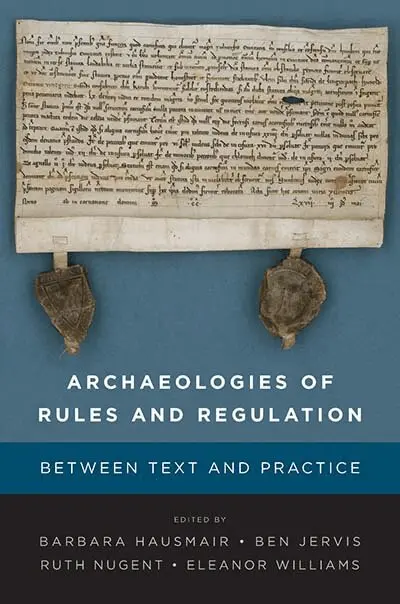
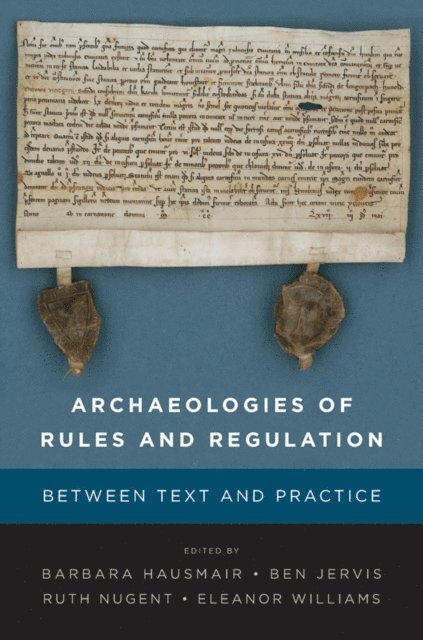
How can we study the impact of rules on the lives of past people using archaeological evidence? To answer this question, Archaeologies of Rules and Regulation presents case studies drawn from across Europe and the United States. Covering areas as diverse as the use of space in a nineteenth-century U.S. Army camp, the deposition of waste in medieval towns, the experiences of Swedish migrants to North America, the relationship between people and animals in Anglo-Saxon England, these case studies explore the use of archaeological evidence in understanding the relationship between rules, lived experience, and social identity.
386 kr
Skickas
How can we study the impact of rules on the lives of past people using archaeological evidence? To answer this question, Archaeologies of Rules and Regulation presents case studies drawn from across Europe and the United States. Covering areas as diverse as the use of space in a nineteenth-century U.S. Army camp, the deposition of waste in medieval towns, the experiences of Swedish migrants to North America, the relationship between people and animals in Anglo-Saxon England, these case studies explore the use of archaeological evidence in understanding the relationship between rules, lived experience, and social identity.
124 kr
Skickas
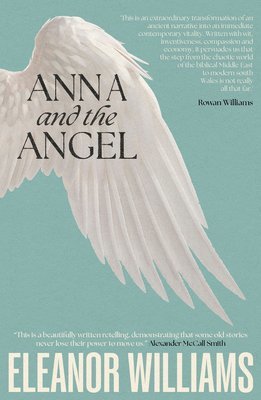
'This is a beautifully written retelling, demonstrating that some old stories never lose their power to move us.' - Alexander McCall Smith 'Sensual, ambitious, flowing and intimate... [a] warm, [diverse] exploration of mental health, dodgy money and optimism.' - Gwen Davies, adjudication, New Welsh Writing Awards 2022'This is an extraordinary transformation of an ancient narrative into an immediate contemporary vitality. Written with wit, inventiveness, compassion and economy, it persuades us that the step from the chaotic world of the biblical Middle East to modern south Wales is not really all that far.' - Rowan WilliamsI’m getting in touch because Tobias is here. He’s a fine boy: handsome, kind. You and your husband must be so proud of him. He and Az came for supper and are staying the night… They don’t actually know I’m writing to you. I hope you don’t mind...And so begins a secretive, tentative and increasingly affectionate correspondence between two strangers. Edna and Anna are both mothers, both lonely in different ways. When Anna’s son Tobias turns up at Edna’s house in Newport, en route to somewhere else altogether, it seems to be an act of pure serendipitous coincidence.He settles into the heart of this adopted family, healing fractures they hadn’t even acknowledged were there. But he also has a mission to retrieve a fortune on behalf of his ailing father, the difficult and unhappy T.And there is the mysterious Az ‒ beautiful, enigmatic, and mesmerising. His presence is the thread that stitches these two families together and makes them one.