Elisa Pezzotta - Böcker
Visar alla böcker från författaren Elisa Pezzotta. Handla med fri frakt och snabb leverans.
6 produkter
6 produkter
383 kr
Skickas inom 7-10 vardagar
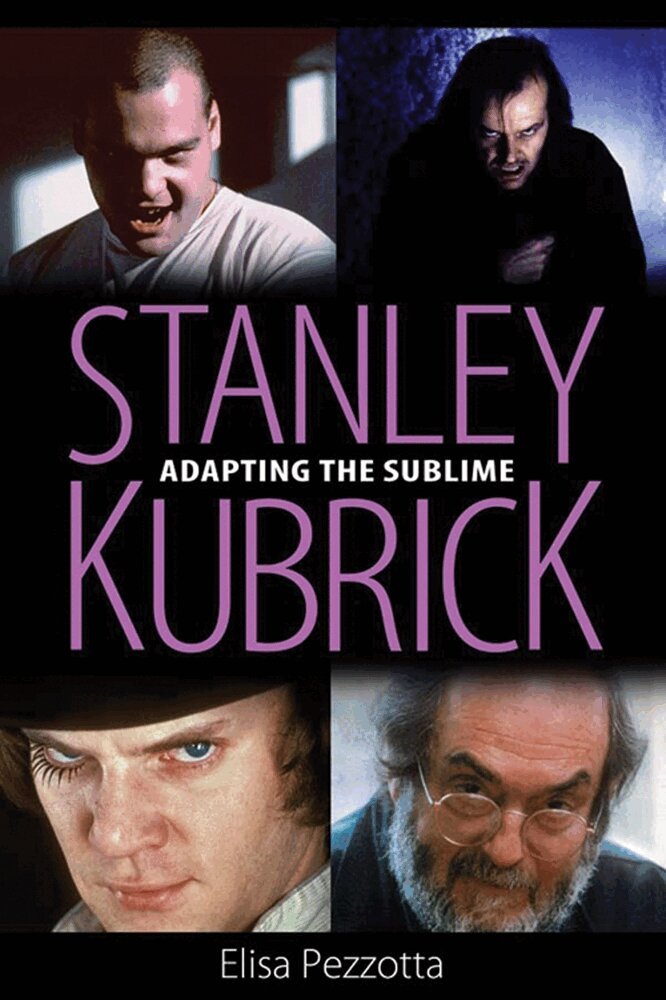
Although Stanley Kubrick adapted novels and short stories, his films deviate in notable ways from the source material. In particular, since 2001: A Space Odyssey (1968), his films seem to definitively exploit all cinematic techniques, embodying a compelling visual and aural experience. But, as author Elisa Pezzotta contends, it is for these reasons that his cinema becomes the supreme embodiment of the sublime, fruitful encounter between the two arts and, simultaneously, of their independence.Stanley Kubrick's last six adaptations--2001: A Space Odyssey, A Clockwork Orange (1971), Barry Lyndon (1975), The Shining (1980), Full Metal Jacket (1987), and Eyes Wide Shut (1999)--are characterized by certain structural and stylistic patterns. These features help to draw conclusions about the role of Kubrick in the history of cinema, about his role as an adapter, and, more generally, about the art of cinematic adaptations. The structural and stylistic patterns that characterize Kubrick adaptations seem to criticize scientific reasoning, causality, and traditional semantics. In the history of cinema, Kubrick can be considered a modernist auteur. In particular, he can be regarded as an heir of the modernist avant-garde of the 1920s. However, author Elisa Pezzotta concludes that, unlike his predecessors, Kubrick creates a cinema not only centered on the ontology of the medium, but on the staging of sublime, new experiences.
433 kr
Skickas inom 10-15 vardagar
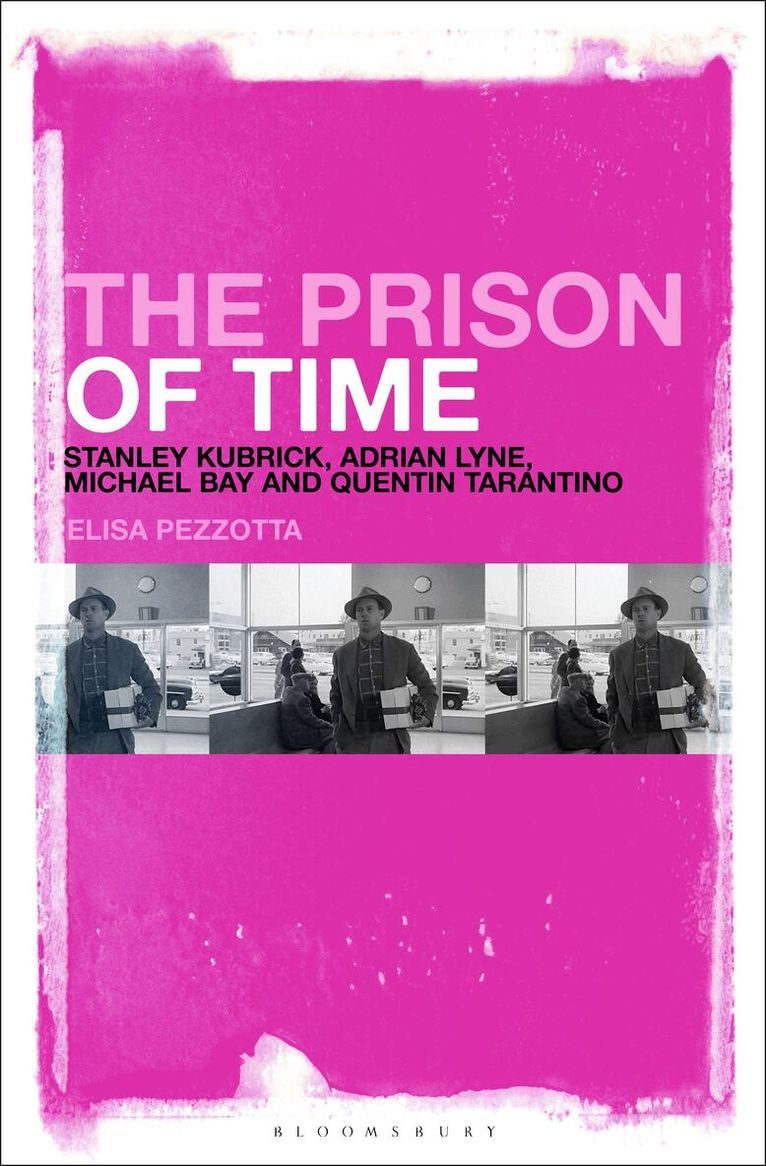
We are imprisoned in circadian rhythms, as well as in our life reviews that follow chronological and causal links. For the majority of us our lives are vectors directed toward aims that we strive to reach and delimited by our birth and death. Nevertheless, we can still experience fleeting moments during which we forget the past and the future, as well as the very flow of time. During these intense emotions, we burst out laughing or crying, or we scream with pleasure, or we are mesmerized by a work of art or just by eyes staring at us.Similarly, when we watch a film, the screening time has a well defined beginning and end, and screening and diegetic time and their relations, together with narrative and stylistic techniques, determine a time within the time of our life with its own rules and exceptions. Through the close analysis of Stanley Kubrick’s, Adrian Lyne’s, Michael Bay’s and Quentin Tarantino’s oeuvres, this book discusses the overall ‘dominating’ time of their films and the moments during which this ‘ruling’ time is disrupted and we momentarily forget the run toward the diegetic future – suspense – or the past – curiosity and surprise. It is in these very moments, as well as in our own lives, that the prison of time, through which the film is constructed and that is constructed by the film itself, crumbles displaying our role as spectators, our deepest relations with the film.
Prison of Time
Stanley Kubrick, Adrian Lyne, Michael Bay and Quentin Tarantino
Inbunden, Engelska, 2022
1 425 kr
Skickas inom 10-15 vardagar
We are imprisoned in circadian rhythms, as well as in our life reviews that follow chronological and causal links. For the majority of us our lives are vectors directed toward aims that we strive to reach and delimited by our birth and death. Nevertheless, we can still experience fleeting moments during which we forget the past and the future, as well as the very flow of time. During these intense emotions, we burst out laughing or crying, or we scream with pleasure, or we are mesmerized by a work of art or just by eyes staring at us.Similarly, when we watch a film, the screening time has a well defined beginning and end, and screening and diegetic time and their relations, together with narrative and stylistic techniques, determine a time within the time of our life with its own rules and exceptions. Through the close analysis of Stanley Kubrick’s, Adrian Lyne’s, Michael Bay’s and Quentin Tarantino’s oeuvres, this book discusses the overall ‘dominating’ time of their films and the moments during which this ‘ruling’ time is disrupted and we momentarily forget the run toward the diegetic future – suspense – or the past – curiosity and surprise. It is in these very moments, as well as in our own lives, that the prison of time, through which the film is constructed and that is constructed by the film itself, crumbles displaying our role as spectators, our deepest relations with the film.
1 233 kr
Skickas inom 7-10 vardagar
Although Stanley Kubrick adapted novels and short stories, his films deviate in notable ways from the source material. In particular, since 2001: A Space Odyssey (1968), his films seem to definitively exploit all cinematic techniques, embodying a compelling visual and aural experience. But, as author Elisa Pezzotta contends, it is for these reasons that his cinema becomes the supreme embodiment of the sublime, fruitful encounter between the two arts and, simultaneously, of their independence.Stanley Kubrick's last six adaptations--2001: A Space Odyssey, A Clockwork Orange (1971), Barry Lyndon (1975), The Shining (1980), Full Metal Jacket (1987), and Eyes Wide Shut (1999)--are characterized by certain structural and stylistic patterns. These features help to draw conclusions about the role of Kubrick in the history of cinema, about his role as an adapter, and, more generally, about the art of cinematic adaptations. The structural and stylistic patterns that characterize Kubrick adaptations seem to criticize scientific reasoning, causality, and traditional semantics. In the history of cinema, Kubrick can be considered a modernist auteur. In particular, he can be regarded as an heir of the modernist avant-garde of the 1920s. However, author Elisa Pezzotta concludes that, unlike his predecessors, Kubrick creates a cinema not only centered on the ontology of the medium, but on the staging of sublime, new experiences.
Spartacus and Kubrick in Hollywood
New Perspectives on the Film and its Production
Inbunden, Engelska, 2026
2 569 kr
Kommande
Directing Spartacus (1960) had a significant impact on Stanley Kubrick’s career. Although the director wasn’t involved in preproduction, the film clearly shows his stylistic influence. It was his first production for a major studio and he had to work with international stars. Moreover, the film was adapted by Dalton Trumbo from the novel Spartacus by Howard Fast; both had been blacklisted, and Trumbo had to work secretly until Kirk Douglas revealed his identity, so Spartacus is understood to be the film that ‘broke the blacklist’. Now it is a cult movie, widely discussed by fans and admirers but not receiving equal attention from an academic perspective.This collection of essays explores the film from a wide variety of angles: through its production history and the socio-historical context of its release; through the theme of gender, power, and sexuality; through close analysis in comparison with other epic movies, the literature preceding the film, and the rest of Kubrick’s oeuvre; and through its soundtrack and sonic style. Some chapters draw extensively on primary sources, especially those available at the Stanley Kubrick Archive; others apply a theoretical perspective. The volume’s interdisciplinary approach demonstrates how diverse methods can coexist and support each other to create a deeper knowledge of this important film.
1 807 kr
Skickas inom 7-10 vardagar
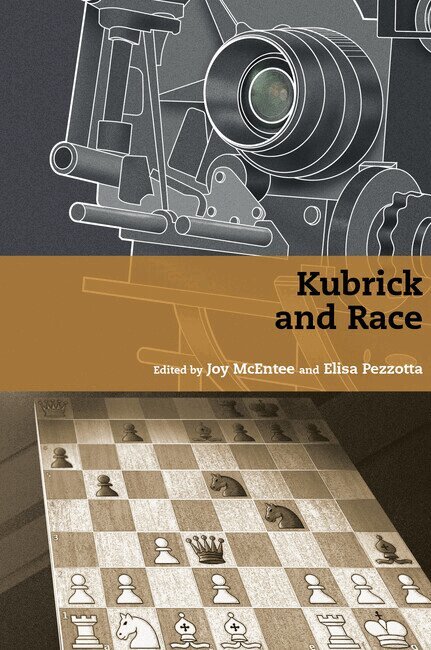
Kubrick and Race investigates race and racism in Stanley Kubrick’s oeuvre. At first glance, Kubrick’s films are very white, but his work with race is complex. Sometimes he addressed race covertly, indirectly, in hidden ways, or in the background, so that race becomes a palimpsest that is visible through the foreground story. Did Kubrick repress and deny racial inequities? Do his works condone and participate in racism, or did he represent it as a lived reality? This volume asks these questions, opening a discussion that is long overdue. Operating from a clear understanding of the contemporary context, the book spans past, present, and future, offering readers a chance to witness – afresh – ways in which Kubrick and his prolific work allow one to criss-cross academic disciplines as varied as communication, literature, psychiatry, media, film, and Black studies. This collection of essays opens new routes to and from Kubrick, in and out of the academy, convincingly and exhaustively.