Elise Yoko Watanabe - Böcker
Visar alla böcker från författaren Elise Yoko Watanabe. Handla med fri frakt och snabb leverans.
4 produkter
4 produkter
1 801 kr
Skickas inom 5-8 vardagar
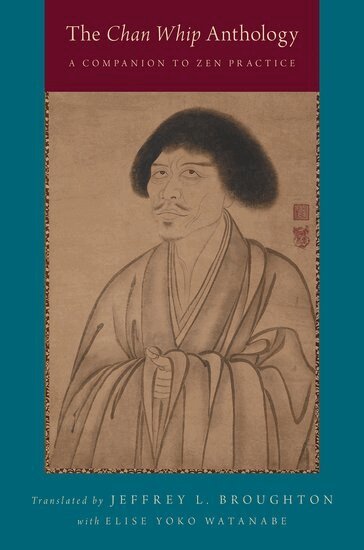
Jeffrey L. Broughton offers an annotated translation of the Whip for Spurring Students Onward Through the Chan Barrier Checkpoints, which he abbreviates to Chan Whip. This anthology is a classic of Chan (Zen) Buddhism that has served as a Chan handbook in both China and Japan since its publication in 1600. It is a compendium of extracts, over eighty percent of which are drawn from an enormous Chan corpus dating from the late 800s to about 1600-a survey that covers most of the history of Chan literature. The rest of the text consists of complementary extracts from Buddhist sutras and treatises. The extracts, many of which are accompanied by Yunqui Zhuhong's comments, deliberately eschew abstract discussions of theory in favor of sermons, exhortations, sayings, autobiographical narratives, letters, and anecdotal sketches dealing frankly and compassionately with the concrete experiences of lived practice. While there are a number of publications in English on Zen practice, none contain the vivid descriptions found within the Chan Whip. This translation thus fills a large gap in the English-language literature on Chan, and by including the original Chinese text as well Broughton has produced an invaluable tool for scholars and practitioners alike.
581 kr
Skickas inom 5-8 vardagar
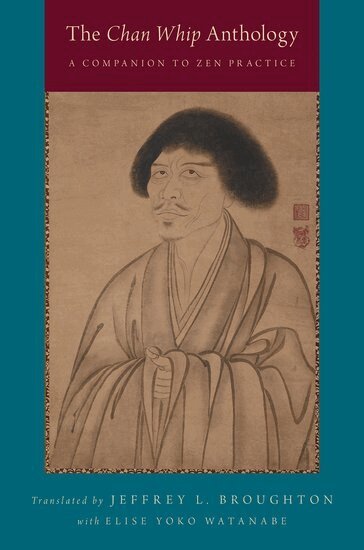
Jeffrey L. Broughton offers an annotated translation of the Whip for Spurring Students Onward Through the Chan Barrier Checkpoints (Changuan cejin), which he abbreviates to Chan Whip. This anthology, compiled by Yunqi Zhuhong (1535-1615), has served as a Chan handbook in both China and Japan since its publication in 1600. To characterize the Chan Whip as late Ming Chan is inaccuratein fact, it is a survey of virtually the entirety of Chan literature, running from the late 800s (Tang dynasty) to about 1600 (late Ming). The Chan extracts, the bulk of the book, are followed by a short section of extracts from Buddhist canonical works (showing Zhuhongs adherence to the convergence of Chan and the teachings). The Chan extracts deliberately eschew abstract discussions of theory in favor of autobiographical narratives, anecdotal sketches, exhortations, sermons, sayings, and letters that deal very franklysometimes humorouslywith the concrete ups and downs of lived practice. Recent decades have seen the publication in English of a number of handbooks on Zen practice by contemporary East Asian masters. The Chan Whip, though 400 years old, is as invaluable to todays practitioners as these modern works. The scholarly literature on Chan until now has focused on the Tang and Song dynastiesby giving us in addition the sayings of Yuan- and Ming-dynasty masters this translation fills a gap in that literature.
The Record of Linji
A New Translation of the Linjilu in the Light of Ten Japanese Zen Commentaries
Inbunden, Engelska, 2013
1 287 kr
Skickas inom 5-8 vardagar
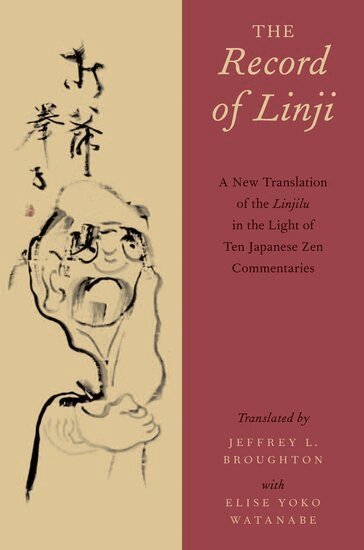
The Linjilu (Record of Linji or LJL) is one of the foundational texts of Chan/Zen Buddhist literature, and an accomplished work of baihua (vernacular) literature. Its indelibly memorable title character, the Master Linji--infamous for the shout, the whack of the rattan stick, and the declaration that sutras are toilet paper--is himself an embodiment of the very teachings he propounds to his students: he is a "true person," free of dithering; he exhibits the non-verbal, unconstrained spontaneity of the buddha-nature; he is always active, never passive; and he is aware that nothing is lacking at all, at any time, in his round of daily activities. This bracing new translation transmits the LJL's living expression of Zen's "personal realization of the meaning beyond words," as interpreted by ten commentaries produced by Japanese Zen monks, over a span of over four centuries, ranging from the late 1300s, when Five-Mountains Zen flourished in Kyoto and Kamakura, through the early 1700s, an age of thriving interest in the LJL. These Zen commentaries form a body of vital, in-house interpretive literature never before given full credit or center stage in previous translations of the LJL. Here, their insights are fully incorporated into the translation itself, allowing the reader unimpeded access throughout, with more extensive excerpts available in the notes. Also provided is a translation of the earliest extant material on Linji, including a neglected transmission-record entry relating to his associate Puhua, which indicate that the LJL is a fully-fledged work of literature that has undergone editorial changes over time to become the compelling work we know today.
The Record of Linji
A New Translation of the Linjilu in the Light of Ten Japanese Zen Commentaries
Häftad, Engelska, 2013
603 kr
Skickas inom 5-8 vardagar
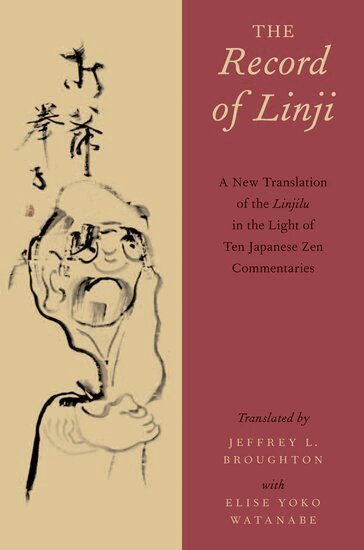
The Linjilu (Record of Linji or LJL) is one of the foundational texts of Chan/Zen Buddhist literature, and an accomplished work of baihua (vernacular) literature. Its indelibly memorable title character, the Master Linji--infamous for the shout, the whack of the rattan stick, and the declaration that sutras are toilet paper--is himself an embodiment of the very teachings he propounds to his students: he is a "true person," free of dithering; he exhibits the non-verbal, unconstrained spontaneity of the buddha-nature; he is always active, never passive; and he is aware that nothing is lacking at all, at any time, in his round of daily activities. This bracing new translation transmits the LJL's living expression of Zen's "personal realization of the meaning beyond words," as interpreted by ten commentaries produced by Japanese Zen monks, over a span of over four centuries, ranging from the late 1300s, when Five-Mountains Zen flourished in Kyoto and Kamakura, through the early 1700s, an age of thriving interest in the LJL. These Zen commentaries form a body of vital, in-house interpretive literature never before given full credit or center stage in previous translations of the LJL. Here, their insights are fully incorporated into the translation itself, allowing the reader unimpeded access throughout, with more extensive excerpts available in the notes. Also provided is a translation of the earliest extant material on Linji, including a neglected transmission-record entry relating to his associate Puhua, which indicate that the LJL is a fully-fledged work of literature that has undergone editorial changes over time to become the compelling work we know today.