Elisheva Rosman-Stollman – författare
Visar alla böcker från författaren Elisheva Rosman-Stollman. Handla med fri frakt och snabb leverans.
2 produkter
2 produkter
314 kr
Skickas inom 10-15 vardagar
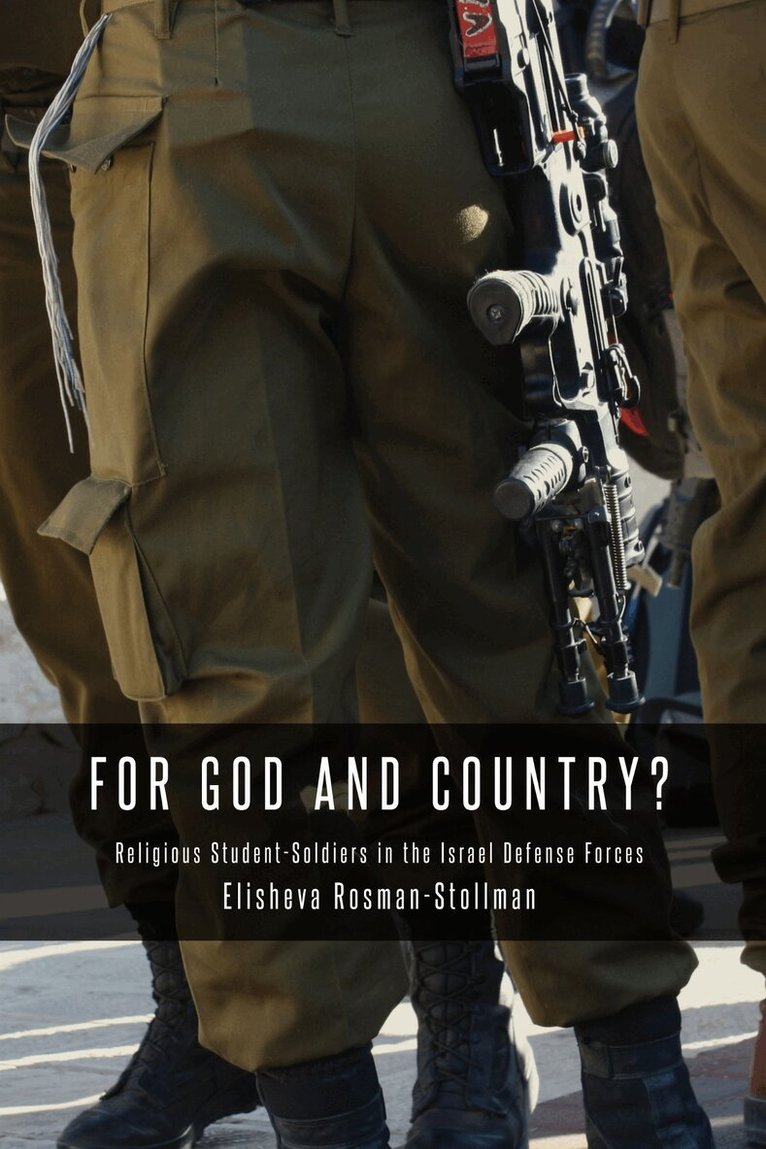
In many modern armies the religious soldier is suspect. Civilians and officers alike wonder if such a soldier might represent a potential fifth column. This concern is especially prominent in the public discourse over the presence of religious Orthodox Jews serving in the Israel Defense Forces. Will they obey their commanding officer or their rabbi? With research collected over almost a decade, including hundreds of hours of interviews, Elisheva Rosman examines this question of loyalties and reveals how religious soldiers negotiate a place for themselves in an institution whose goals and norms sometimes conflict with those of Orthodox Judaism.For God and Country? focuses on the pre-service study programs available to religious conscripts. Many journalists and scholars in Israel are suspicious of the student-soldiers who participate in these programs, but in fact, as Rosman’s research demonstrates, the pre-service study programs serve as mediating structures between the demands of Religious Zionism and the demands of the Israel Defense Forces and do not encourage their students to disobey orders. This was especially apparent during the disengagement from Gaza in 2005. Many in Israeli society predicted student-soldiers would defy their orders, per the instruction of their religious leaders, but this did not happen as expected. In high profile cases such as this and in matters encountered daily by religious soldiers-the mixing of the sexes, for instance-Rosman has discovered that the pre-service study programs can successfully serve as agents of civil society, both able to curb the military’s efforts to meddle in civilian affairs and vice versa.
1 476 kr
Skickas inom 10-15 vardagar
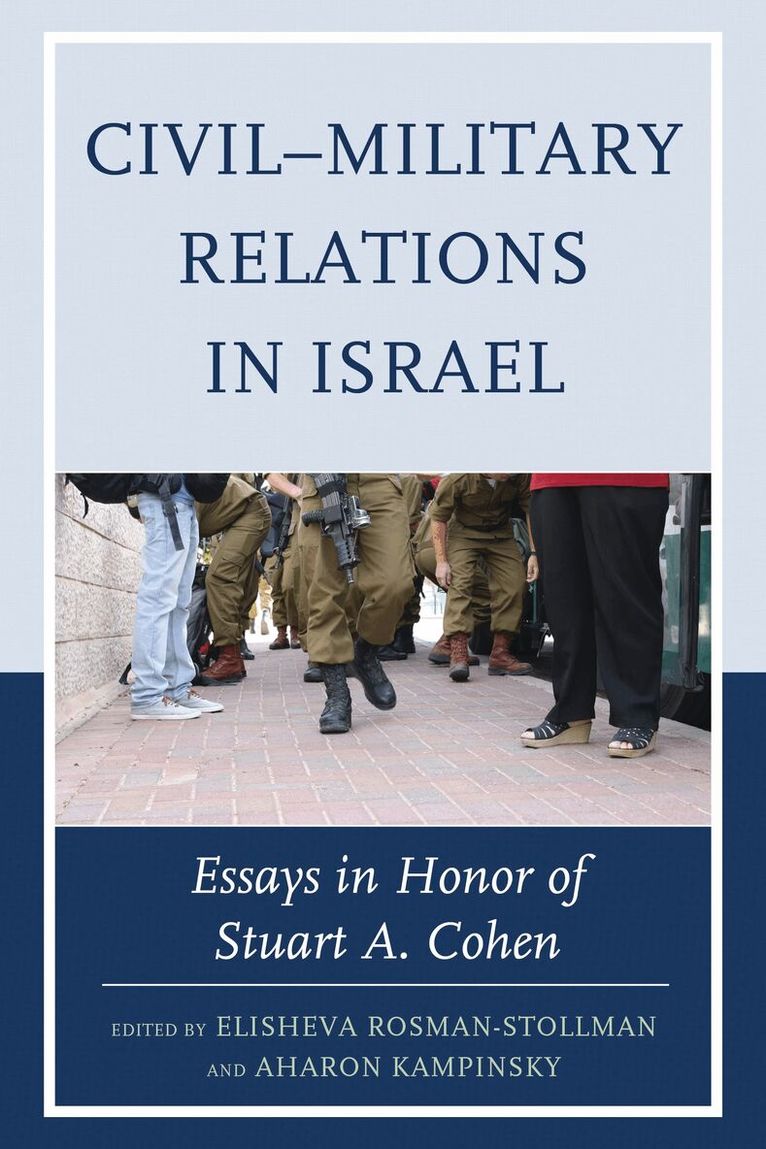
This book, a collection of essays in honor of Stuart Cohen, examines a variety of issues in civil-military relations (CMR) in Israel and abroad. Beyond honoring Cohen’s work, this collection makes a substantial contribution to the field for a number of reasons. First, it brings together prominent scholars from different disciplines in the field, from both Israel and abroad, sketching its boundaries. The chapters in the collection deal with a variety of issues, theoretical and empirical, including topics that are usually neglected in English works, such as the control the military in Israel has on building construction permits in the civilian sector and the relations between the security establishment and the judicial system. Other chapters offer new theoretical perspectives such as the context within which Israeli CMR should be examined, and a more general look at the focus of CMR. Second, it gives non-Hebrew speaking scholars and laypersons alike a better idea of what the main issues in the field of civil-military relations in Israel are today. This book will allow university professors and laypersons to access quality scholarship while still offering a broad spectrum of topics.