Elizabeth Archibald - Böcker
Visar alla böcker från författaren Elizabeth Archibald. Handla med fri frakt och snabb leverans.
14 produkter
14 produkter
2 672 kr
Skickas inom 5-8 vardagar
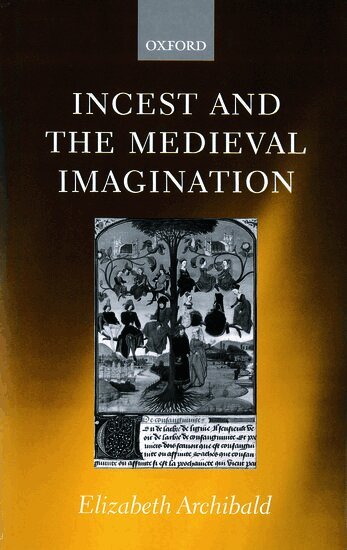
Incest is a remarkably frequent theme in medieval literature; it occurs in a wide range of genres, including romances, saints's lives, and exempla. Historically, the Church in the later Middle Ages was very concerned about breaches of the complex laws against incest, which was defined very broadly at the time to cover family relationships outside the nuclear family and also spiritual relationships through baptism. Medieval writers accepted that incestuous desire was a widespread phenomenon among women as well as men. They are surprisingly open about incest, though of course they disapprove of it; in many exemplary stories incest is identified with original sin, but the moral emphasizes the importance of contrition and the availability of grace even to such heinous sinners.This study begins with a brief account of the development of medieval incest laws, and the extent to which they were obeyed. Next comes a survey of classical incest stories and their legacy; many were retold in the Middle Ages, but they were frequently adapted to the purposes of Christian moralizers. In the three chapters that follow, homegrown medieval incest stories are grouped by relationship: mother-son (focusing on the Gregorius legend), father-daughter (focusing on La Manekine and its analogues), and sibling (focusing on the Arthurian legend). The final chapter considers the very common medieval trope of the Virgin Mary as mother, daughter, sister and bride of Christ, the one exception to the incest taboo. In western society today, incest has recently been recognized as a serious social problem, and has also become a frequent theme in both fiction and non-fiction, just as it was in the Middle Ages. This interdisciplinary study is the first broad survey of medieval incest stories in Latin and the vernaculars (mainly French, English and German). It situates the incest theme in both literary and cultural contexts, and offers many thought-provoking comparisons and contrasts to our own society in terms of gender relations, the power of patriarchy, the role of religious institutions in regulating morality, and the relationship between life and literature.
168 kr
Skickas inom 11-20 vardagar
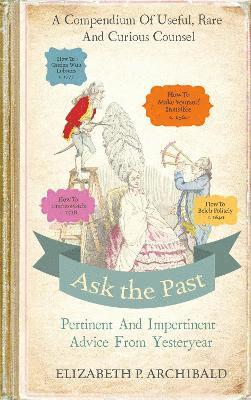
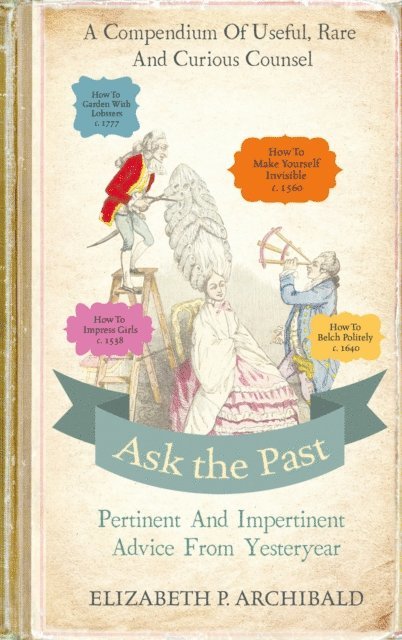
Want to know how to garden with lobsters? How to sober up? Grow a beard? Or, simply, how to make a perfect cheesy omelette? Look no further than Ask the Past. Chock-full of advice that has (and some that hasn't!) stood the test of time, Ask the Past is the tongue-in-cheek compilation of hilarious and true answers to life's questions, drawn from actual antique sourcebooks by a historian and bibliophile.From medieval headache remedies to Renaissance pick-up lines, Ask the Past brings you advice that will make you laugh out loud and shake your head in amazement. Here are the answers to the questions you’ve always wanted to ask – 'How do I impress my boss?' or 'How do I put out a fire' – and some that you didn’t know you needed to. Brimming with advice both wise and weird, and illustrated throughout with charming images from rare books, Ask the Past offers a surprising vision of the past, together with a hilarious menu of solutions to the knotty problems of the present – like how to kill a snake with a radish!
370 kr
Skickas inom 7-10 vardagar
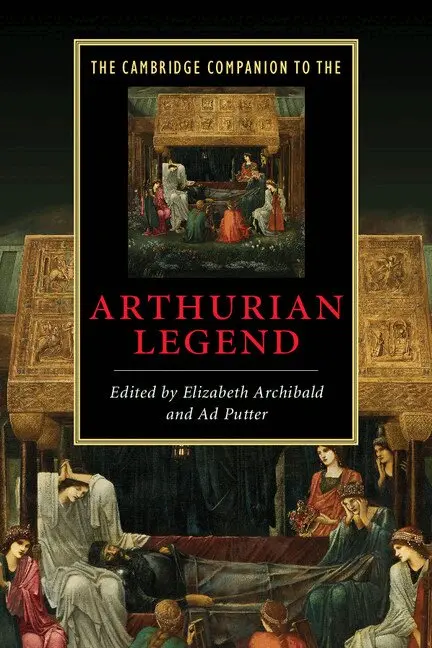
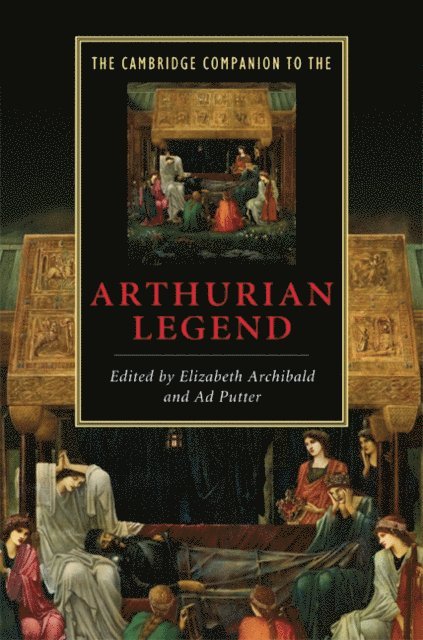
For more than a thousand years, the adventures of King Arthur and his Knights of the Round Table have been retold across Europe. They have inspired some of the most important works of European literature, particularly in the medieval period: the romances of Chrétien de Troyes, Wolfram von Eschenbach's Parzival, Sir Gawain and the Green Knight and Malory's Le Morte d'Arthur. In the nineteenth century, interest in the Arthurian legend revived with Tennyson, Wagner and Twain. This Companion outlines the evolution of the legend from the earliest documentary sources to Spamalot, and analyses how some of the major motifs of the legend have been passed down in both medieval and modern texts. With a map of Arthur's Britain, a chronology of key texts and a guide to further reading, this volume itself will contribute to the continuing fascination with the King and his many legends.
1 189 kr
Skickas inom 7-10 vardagar
For more than a thousand years, the adventures of King Arthur and his Knights of the Round Table have been retold across Europe. They have inspired some of the most important works of European literature, particularly in the medieval period: the romances of Chrétien de Troyes, Wolfram von Eschenbach's Parzival, Sir Gawain and the Green Knight and Malory's Le Morte d'Arthur. In the nineteenth century, interest in the Arthurian legend revived with Tennyson, Wagner and Twain. This Companion outlines the evolution of the legend from the earliest documentary sources to Spamalot, and analyses how some of the major motifs of the legend have been passed down in both medieval and modern texts. With a map of Arthur's Britain, a chronology of key texts and a guide to further reading, this volume itself will contribute to the continuing fascination with the King and his many legends.
1 344 kr
Skickas inom 7-10 vardagar
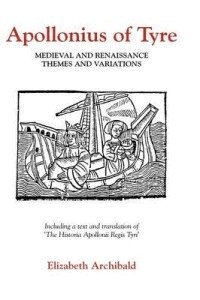
A comparative study of one of the most familiar stories in medieval romance (used by Gower, Shakespeare, etc.), from late Antiquity into the Renaissance.The Historia Apollonii is a rare Latin example of a genre of literature more fully attested in Greek, the so-called `Greek romance' - popular stories which involve lovers or families separated byshipwreck and misfortune andeventually joyfully reunited. It was one of the most widely and continuously read texts to survive from late Antiquity through the middle ages and into the Renaissance almost unchanged. Elizabeth Archibald's study of the Historia Apollonii, taking a valuable comparative approach, discusses the text's merits and interest, its date and possible origin, the present state of scholarship, and the question of its reception and genre in the middle ages and Renaissance. There follows a complete survey of the medieval and early Renaissance use and knowledge of the Historia Apollonii throughout Europe; and the book is completed with the text and translation of the romance itself. An indispensable work for students of medieval romance.ELIZABETH ARCHIBALD is Professor of English, Durham University.
393 kr
Skickas inom 10-15 vardagar
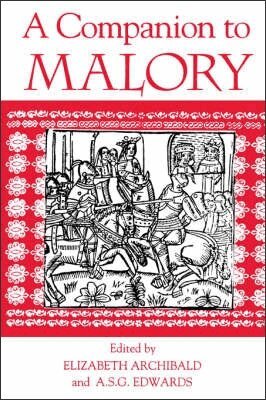
Malory's Morte Darthur - text, history and reception - expertly appraised by international scholars.This collection of original essays by an international group of distinguished medievalists provides a comprehensive introduction to the great work of Sir Thomas Malory, which will be indispensable for both students and scholars. It is divided into three main sections, on Malory in context, the art of the Morte Darthur, and its reception in later years. As well as essays on the eight tales which make up the Morte Darthur, there are studies ofthe relationship between the Winchestermanuscript and Caxton's and later editions; the political and social context in which Malory wrote; his style and sources; and his treatment of two key concepts in Arthurian literature, chivalry and the representation of women. The volume also includes a brief biography of Malory with a list of the historical records relating to him and his family. It ends with a discussion of the reception of the Morte Darthurfrom the sixteenth to the twentieth centuries, and a select bibliography.Contributors: P.J.C. FIELD, FELICITY RIDDY, RICHARD BARBER, ELIZABETH EDWARDS, TERENCE MCCARTHY, CAROL MEALE, JEREMY SMITH, ELIZABETH ARCHIBALD,BARBARA NOLAN, HELEN COOPER, JILL MANN, DAVID BENSON, A.S.G. EDWARDS
1 195 kr
Skickas inom 7-10 vardagar
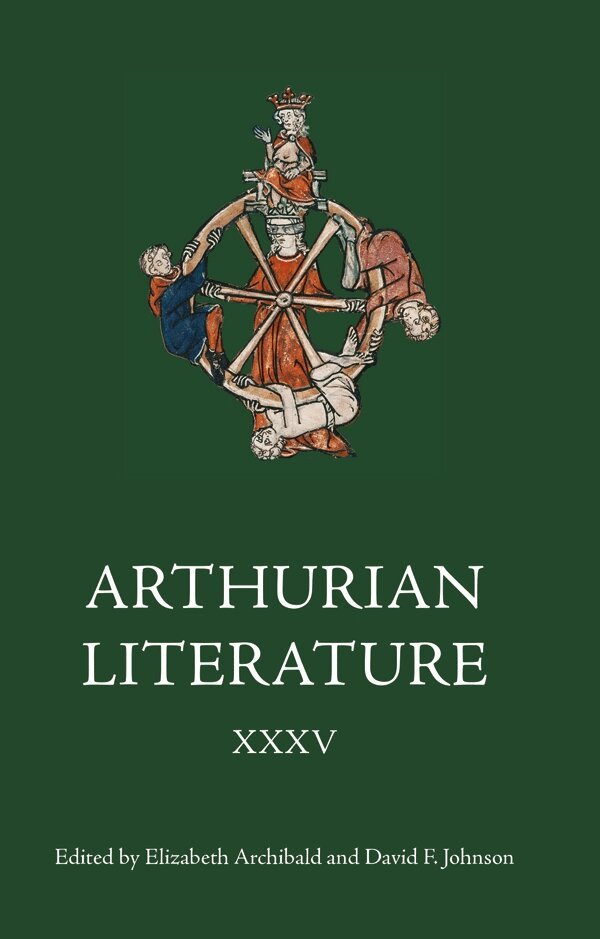
Arthurian Literature has established its position as the home for a great diversity of new research into Arthurian matters. Delivers some fascinating material across genres, periods, and theoretical issues. TIMES LITERARY SUPPLEMENTThe influence and significance of the legend of Arthur are fully demonstrated by the subject matter and time-span of articles here. Topics range from early Celtic sources and analogues of Arthurian plots to popular interest in King Arthur in sixteenth-century London, from the thirteenth-century French prose Mort Artu to Tennyson's Idylls of the King. It includes discussion of shapeshifters and loathly ladies, attitudes to treason, royal deaths and funerals in the fifteenth century and the nineteenth, late medieval Scottish politics and early modern chivalry.Elizabeth Archibald is Professor of English, University of Durhaml; Professor David F. Johnson teaches in the English Department, Florida State University, Tallahassee.Contributors: Aisling Byrne, Emma Campbell, P.J.C. Field, Kenneth Hodges, Megan Leitch, Andrew Lynch, Sue Niebrzydowski, Karen Robinson.
1 195 kr
Skickas inom 7-10 vardagar
Arthurian Literature has established its position as the home for a great diversity of new research into Arthurian matters. It delivers fascinating material across genres, periods, and theoretical issues. TIMES LITERARY SUPPLEMENTThe richness and interdisciplinarity of the Arthurian tradition are well represented by the essays collected here, which range from early Celtic texts to twentieth-century children's books, and include discussion of Welsh, Irish,English, French and Latin material in both literary and historical contexts. Many of the articles focus on less well-known late medieval versions of the legend, a somewhat neglected area until recently: an Irish Grail narrative, the Burgundian prose Erec, the enormous prequel Perceforest, Ysaïe le Triste, Le Conte du Papegau, and Froissart's Mélyador (the last three discussed as exercises in nostalgia). Meanwhile, anotherchapter approaches Sir Gawain and the Green Knight from the perspective of forest ecology.The contributions represent expanded and revised versions of selected papers given at the XXIIIrd Triennial Congress of the International Arthurian Society held in Bristol in July 2011; they include two of the plenary lectures, one on "Celtic Magic" and one on the reception of Geoffrey of Monmouth in the eighteenth and nineteenth centuries.Elizabeth Archibald is Professor of English Studies at Durham University, and Principal of St Cuthbert's Society; David F. Johnson is Professor of English at Florida State University, Tallahassee.Contributors: Richard Barber, Nigel Bryant, Aisling Byrne, Carol J. Chase, Siân Echard, Helen Fulton, Michael W. Twomey, Patricia Victorin.
1 195 kr
Skickas inom 7-10 vardagar
Arthurian Literature has established its position as the home for a great diversity of new research into Arthurian matters. It delivers fascinating material across genres, periods, and theoretical issues. TIMES LITERARY SUPPLEMENTThe studies collected in this volume demonstrate the enduring vitality of the Arthurian legend in a wide range of places, times and media. Chrétien's Conte du Graal features first in a study of the poem's place in its Anglo-Norman context, followed by four essays on Malory's Morte Darthur. Two of these deal with the significance of wounds and wounding in Malory's text, while the third explores the problematic aspects of sleep and the "slepynge knight" in that same romance. The fourth considers "transformative female corpses" as, quite literally, the embodiment of critical comment on the chivalric community in the Morte Darthur. There follow two studies of the Arthurian legend captured in material objects: the first concerns the early twelfth-century images on a marble column from the cathedral at Santiago de Compostela, the second a twentieth-century tapestry created by Lady Trevelyan for the family home at Wallington Hall. The volume closes with an essay that brings us into the twenty-first century, with an assessment of Kaamelott, an irreverent French Pythonesque television series.ElizabethArchibald is Professor of English Studies at Durham University, and Principal of St Cuthbert's Society; David F. Johnson is Professor of English at Florida State University, Tallahassee.Contributors: Karen Cherewatuk,Tara Foster, Joan Tasker Grimbert, Erin Kissick, Irit Ruth Kleiman, Megan Leitch, Roger Simpson, K.S. Whetter.
1 195 kr
Skickas inom 7-10 vardagar
Arthurian Literature has established its position as the home for a great diversity of new research into Arthurian matters. It delivers fascinating material across genres, periods, and theoretical issues. TIMES LITERARY SUPPLEMENTThe essays collected here put considerable emphasis on Arthurian narratives in material culture and historical context, as well as on purely literary analysis, a reminder of the enormous range of interests in Arthurian narrativesin the Middle Ages, in a number of different contexts.The volume opens with a study of torture in texts from Chrétien to Malory, and on English law and attitudes in particular. Several contributors discuss the undeservedly neglected Stanzaic Morte Arthur, a key source for Malory. His Morte Darthur is the focus of several essays, respectively on the sources of the "Tale of Sir Gareth"; battle scenes and the importance of chivalric kingship; Cicero's De amicitia and the mixed blessings and dangers of fellowship; and comparison of concluding formulae in the Winchester Manuscript and Caxton's edition. Seven tantalizing fragments of needlework, all depictingTristan, are discussed in terms of the heraldic devices they include. The volume ends with an update on newly discovered manuscripts of Geoffrey of Monmouth's seminal Historia regum Britanniae, the twelfth-century best-seller which launched Arthur's literary career.Elizabeth Archibald is Professor of English Studies at Durham University, and Principal of St Cuthbert's Society; David F. Johnson is Professor of English at Florida State University, Tallahassee.Contibutors: David Eugene Clark, Marco Nievergelt, Ralph Norris, Sarah Randles, Lisa Robeson, Richard Sévère, Jaakko Tahkokallio, Larissa Tracy
1 195 kr
Skickas inom 7-10 vardagar
Arthurian Literature has established its position as the home for a great diversity of new research into Arthurian matters. It delivers fascinating material across genres, periods, and theoretical issues. TIMES LITERARY SUPPLEMENTA wide range of Arthurian material is discussed here, reflecting its diversity, and enduring vitality. Geoffrey of Monmouth's best-selling Historia regum Britannie is discussed in the context of Geoffrey's reception in Wales and the relationship between Latin and Welsh literary culture. Two essays deal with the Middle English Ywain and Gawain: the first offers a comparative study of the Middle English poem alongside Chrétien's Yvainand the Welsh Owein, while the second considers Ywain and Gawain with the Alliterative Morte Arthure in their northern English cultural and political context, the world of the Percys and the Nevilles. It isfollowed by a discussion of Edward III's recuperation of his abandoned Order of the Round Table, which offers an intriguing explanation for this reversal in the context of Edward's victory over the French at Poitiers. The final essay is a comparison of fifteenth- and twentieth-century portrayals of Camelot in Malory and T.H. White, as both idea and locale, and a centre of hearsay and gossip. The volume is completed with a unique and little-known medievalGreek Arthurian poem, presented in facing-page edition and modern English translation.Elizabeth Archibald is Professor of English Studies at Durham University, and Principal of St Cuthbert's Society; David F. Johnson is Professor of English at Florida State University, Tallahassee.Contributors: Christopher Berard, Louis J. Boyle, Thomas H. Crofts, Ralph Hanna, Georgia Lynn Henley, Erich Poppe
1 195 kr
Skickas inom 7-10 vardagar
The continued influence and significance of the legend of Arthur are demonstrated by the articles collected in this volume.The enduring appeal and rich variety of the Arthurian legend are once again manifest here. Chrétien's Erec et Enide features first in a case study of the poet's endings and medieval theories of poetic composition. Next follows an essay that comes to the rather surprising-but- convincing conclusion that the "traitor" spoken of in the opening lines of Sir Gawain and the Green Knight is neither Aeneas nor Antenor, but Paris. Another essay dealing with Sir Gawain, this time in Malory's Morte Darthur, offers among other things an answer to the question of how Gawain knows the exact hour of his death. Few native Irish Arthurian tales have come down to us: a discussion of "The Tale of the Crop-Eared Dog" shows it to be both bizarre and popular, as witnessed by the many manuscripts in which it is preserved. The materiality of the Arthurian legend is represented here by a detailed treatment of the lead cross supposedly found in the grave of King Arthur at Glastonbury Abbey in 1191. Finally, this volume continues Arthurian Literature's tradition of publishing unfamiliar or previously unknown Arthurian texts, in this instance an original Middle English translation of the story of the sword in the stone, from the Old French Merlin. ELIZABETH ARCHIBALD is Professor of English Studies at Durham University, and Principal of StCuthbert's Society; DAVID F. JOHNSON is Professor of English at Florida State University, Tallahassee.Contributors: Lindy Brady, David Carlton, Neil Cartlidge, Nicole Clifton, Oliver Harris, Richard Moll, Rebecca Newby.
Del 22 - Studies in Medieval Romance
Romance Rewritten
The Evolution of Middle English Romance. A Tribute to Helen Cooper
Inbunden, Engelska, 2018
1 353 kr
Skickas inom 10-15 vardagar
New approaches to the everlasting malleability and transformation of medieval romance.The essays here reconsider the protean nature of Middle English romance. The contributors examine both the cultural unity of romance and its many variations, reiterations and reimaginings, including its contexts and engagements with other discourses and forms, as they were "rewritten" during the Middle Ages and beyond. Ranging across popular, anonymous English and courtly romances, and taking in the works of Chaucer and Arthurian romance (rarely treated together), in connection with continental sources and analogues, the chapters probe this fluid and creative genre to ask just how comfortable, and how flexible, are its nature and aims? How were Middle English romances rewritten toaccommodate contemporary concerns and generic expectations? What can attention to narrative techniques and conventional gestures reveal about the reassurances romances offer, or the questions they ask? How do romances' central concerns with secular ideals and conduct intersect with spiritual priorities? And how are romances transformed or received in later periods? The volume is also a tribute to the significance and influence of the work of Professor Helen Cooper on romance. Elizabeth Archibald is Professor of English Studies at Durham University; Megan G. Leitch is Senior Lecturer in English Literature at Cardiff University; Corinne Saunders is Professor of English andCo-Director of the Centre for Medical Humanities at Durham University.Contributors: Elizabeth Archibald, Julia Boffey, Christopher Cannon, Neil Cartlidge, Miriam Edlich-Muth, A.S.G. Edwards, Marcel Elias, Megan Leitch, Andrew Lynch, Jill Mann, Marco Nievergelt, Ad Putter, Corinne Saunders, Barry Windeatt, R.F. Yeager
1 212 kr
Skickas inom 10-15 vardagar
The continued influence and significance of the legend of Arthur are demonstrated by the articles collected in this volume.The rich vitality of both the Arthurian material itself and the scholarship devoted to it is manifested in this volume. It begins with an interdisciplinary study of swords belonging to Arthurian and other heroes and of the smithswho made them, assessed both in their literary contexts and in "historical" references to their existence as heroic relics. Two essays then consider the use of Arthurian material for political purposes: a discussion of Caradog's Vita Gildae throws light on the complex attitudes to Arthur of contemporaries of Geoffrey of Monmouth in a time of political turmoil in England, and an investigation into borrowings from Geoffrey's Historia in a chronicle of Anglo-Scottish relations in the time of Edward I, a well-known admirer of the Arthurian legend, argues that they would have appealed to the clerical élite. Romance motifs link the subsequent pieces: women and their friendships in Ywain and Gawain, the only known close English adaptation of a romance by Chrétien, and the mixture of sacred and secular in The Turke and Gawain, with fascinating alchemical parallels for a puzzling beheading episode. This is followed by a discussion of the views on native and foreign sources of three sixteenth-century defenders of Arthur, John Leland, John Prise and Humphrey Llwyd, and their responses to the criticisms of Polydore Vergil. In twentieth-century reception history, John Steinbeck was an ardent Arthurian enthusiast: an essay looks at the significance of his annotations to his copy of Malory as he worked on his adaptation, The Acts of King Arthur and his Noble Knights. The volume moves to even more recent territory with an exploration of the adaptations of Malory and other Arthurian writers that occur in the comic books by Geoff Johns about Arthur Curry, aka Aquaman, King of Atlantis. The book is completed by a reprint of a classic essay by Norris Lacy on the absence and presence of the Grail in Arthurian texts from the twelfth century on.