Elizabeth Carolyn Miller - Böcker
Visar alla böcker från författaren Elizabeth Carolyn Miller. Handla med fri frakt och snabb leverans.
6 produkter
6 produkter
124 kr
Skickas inom 5-8 vardagar
A new collection of Shaw's major political writings presents an opportunity to reflect on his influential role as a public intellectual. At the forefront of economic and political debate from the 1880s to the 1950s, George Bernard Shaw was once the most widely read socialist writer in the English language, and his lifelong crusade against inequality and exploitation is far from irrelevant today. The thorough interpenetration of Shaw's literary and political engagements is an unusual story in modern literature, and this volume offers a portrait of Shaw as a political artist in the purest possible sense: that is, as a writer of essays, articles, pamphlets, and books with explicitly and expressly political aims. The selected writings in this volume showcase Shaw's most influential and most accomplished political work, but also provide a cross-section that is representative of the whole of his long career. ABOUT THE SERIES: For over 100 years Oxford World's Classics has made available the widest range of literature from around the globe. Each affordable volume reflects Oxford's commitment to scholarship, providing the most accurate text plus a wealth of other valuable features, including expert introductions by leading authorities, helpful notes to clarify the text, up-to-date bibliographies for further study, and much more.
412 kr
Skickas inom 7-10 vardagar
Framed uses fin de siècle British crime narrative to pose a highly interesting question: why do female criminal characters tend to be alluring and appealing while fictional male criminals of the era are unsympathetic or even grotesque?In this elegantly argued study, Elizabeth Carolyn Miller addresses this question, examining popular literary and cinematic culture from roughly 1880 to 1914 to shed light on an otherwise overlooked social and cultural type: the conspicuously glamorous New Woman criminal. In so doing, she breaks with the many Foucauldian studies of crime to emphasize the genuinely subversive aspects of these popular female figures. Drawing on a rich body of archival material, Miller argues that the New Woman Criminal exploited iconic elements of late nineteenth- and early twentieth-century commodity culture, including cosmetics and clothing, to fashion an illicit identity that enabled her to subvert legal authority in both the public and the private spheres."This is a truly extraordinary argument, one that will forever alter our view of turn-of-the-century literary culture, and Miller has demonstrated it with an enrapturing series of readings of fictional and filmic criminal figures. In the process, she has filled a gap between feminist studies of the New Woman of the 1890s and more gender-neutral studies of early twentieth-century literary and social change. Her book offers an extraordinarily important new way to think about the changing shape of political culture at the turn of the century."---John Kucich, Professor of English, Rutgers University"Given the intellectual adventurousness of these chapters, the rich material that the author has brought to bear, and its combination of archival depth and disciplinary range, any reader of this remarkable book will be amply rewarded."---Jonathan Freedman, Professor of English and American Culture, University of MichiganElizabeth Carolyn Miller is Assistant Professor of English at the University of California, Davis.digitalculturebooks is an imprint of the University of Michigan and the Scholarly Publishing Office of the University of Michigan Library dedicated to publishing innovative and accessible work exploring new media and their impact on society, culture, and scholarly communication. Visit the website at www.digitalculture.org.
1 005 kr
Skickas inom 7-10 vardagar
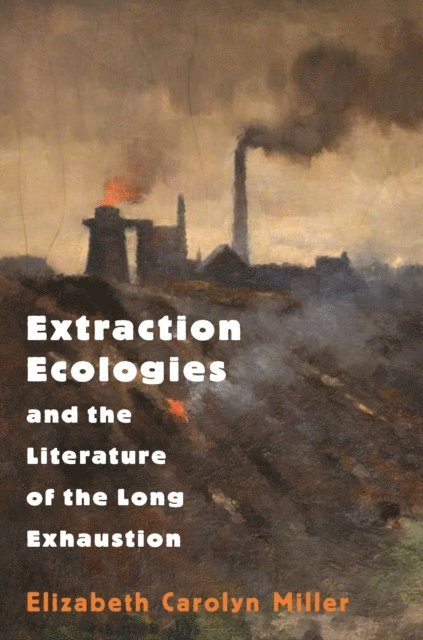
How literature of the British imperial world contended with the social and environmental consequences of industrial miningThe 1830s to the 1930s saw the rise of large-scale industrial mining in the British imperial world. Elizabeth Carolyn Miller examines how literature of this era reckoned with a new vision of civilization where humans are dependent on finite, nonrenewable stores of earthly resources, and traces how the threatening horizon of resource exhaustion worked its way into narrative form.Britain was the first nation to transition to industry based on fossil fuels, which put its novelists and other writers in the remarkable position of mediating the emergence of extraction-based life. Miller looks at works like Hard Times, The Mill on the Floss, and Sons and Lovers, showing how the provincial realist novel’s longstanding reliance on marriage and inheritance plots transforms against the backdrop of exhaustion to withhold the promise of reproductive futurity. She explores how adventure stories like Treasure Island and Heart of Darkness reorient fictional space toward the resource frontier. And she shows how utopian and fantasy works like “Sultana’s Dream,” The Time Machine, and The Hobbit offer imaginative ways of envisioning energy beyond extractivism.This illuminating book reveals how an era marked by violent mineral resource rushes gave rise to literary forms and genres that extend extractivism as a mode of environmental understanding.
361 kr
Skickas inom 7-10 vardagar
How literature of the British imperial world contended with the social and environmental consequences of industrial miningThe 1830s to the 1930s saw the rise of large-scale industrial mining in the British imperial world. Elizabeth Carolyn Miller examines how literature of this era reckoned with a new vision of civilization where humans are dependent on finite, nonrenewable stores of earthly resources, and traces how the threatening horizon of resource exhaustion worked its way into narrative form.Britain was the first nation to transition to industry based on fossil fuels, which put its novelists and other writers in the remarkable position of mediating the emergence of extraction-based life. Miller looks at works like Hard Times, The Mill on the Floss, and Sons and Lovers, showing how the provincial realist novel’s longstanding reliance on marriage and inheritance plots transforms against the backdrop of exhaustion to withhold the promise of reproductive futurity. She explores how adventure stories like Treasure Island and Heart of Darkness reorient fictional space toward the resource frontier. And she shows how utopian and fantasy works like “Sultana’s Dream,” The Time Machine, and The Hobbit offer imaginative ways of envisioning energy beyond extractivism.This illuminating book reveals how an era marked by violent mineral resource rushes gave rise to literary forms and genres that extend extractivism as a mode of environmental understanding.
496 kr
Skickas inom 10-15 vardagar
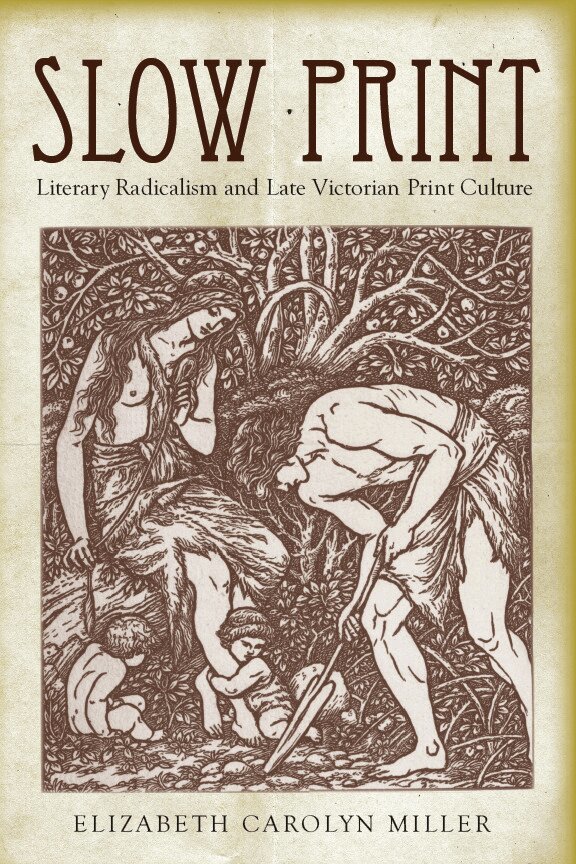
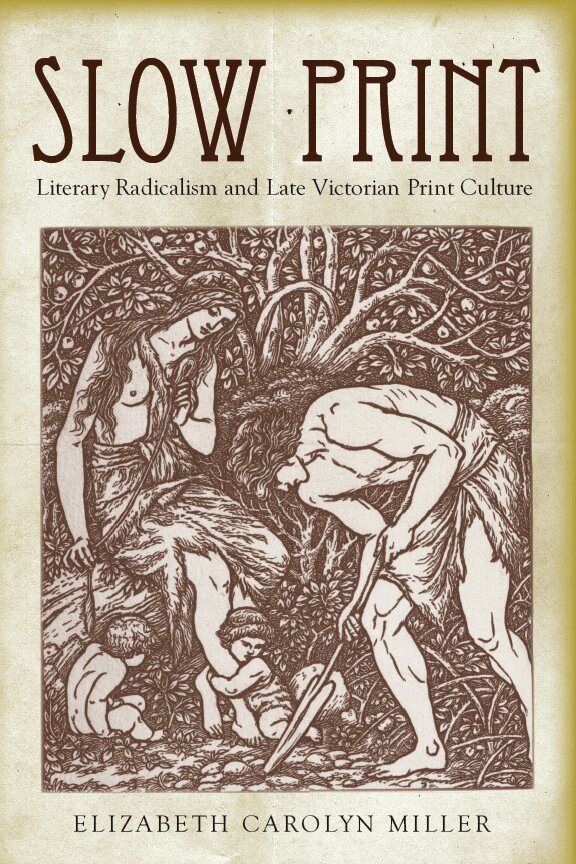
This book explores the literary culture of Britain's radical press from 1880 to 1910, a time that saw a flourishing of radical political activity as well as the emergence of a mass print industry. While Enlightenment radicals and their heirs had seen free print as an agent of revolutionary transformation, socialist, anarchist and other radicals of this later period suspected that a mass public could not exist outside the capitalist system. In response, they purposely reduced the scale of print by appealing to a small, counter-cultural audience. "Slow print," like "slow food" today, actively resisted industrial production and the commercialization of new domains of life. Drawing on under-studied periodicals and archives, this book uncovers a largely forgotten literary-political context. It looks at the extensive debate within the radical press over how to situate radical values within an evolving media ecology, debates that engaged some of the most famous writers of the era (William Morris and George Bernard Shaw), a host of lesser-known figures (theosophical socialist and birth control reformer Annie Besant, gay rights pioneer Edward Carpenter, and proto-modernist editor Alfred Orage), and countless anonymous others.
1 391 kr
Skickas inom 10-15 vardagar
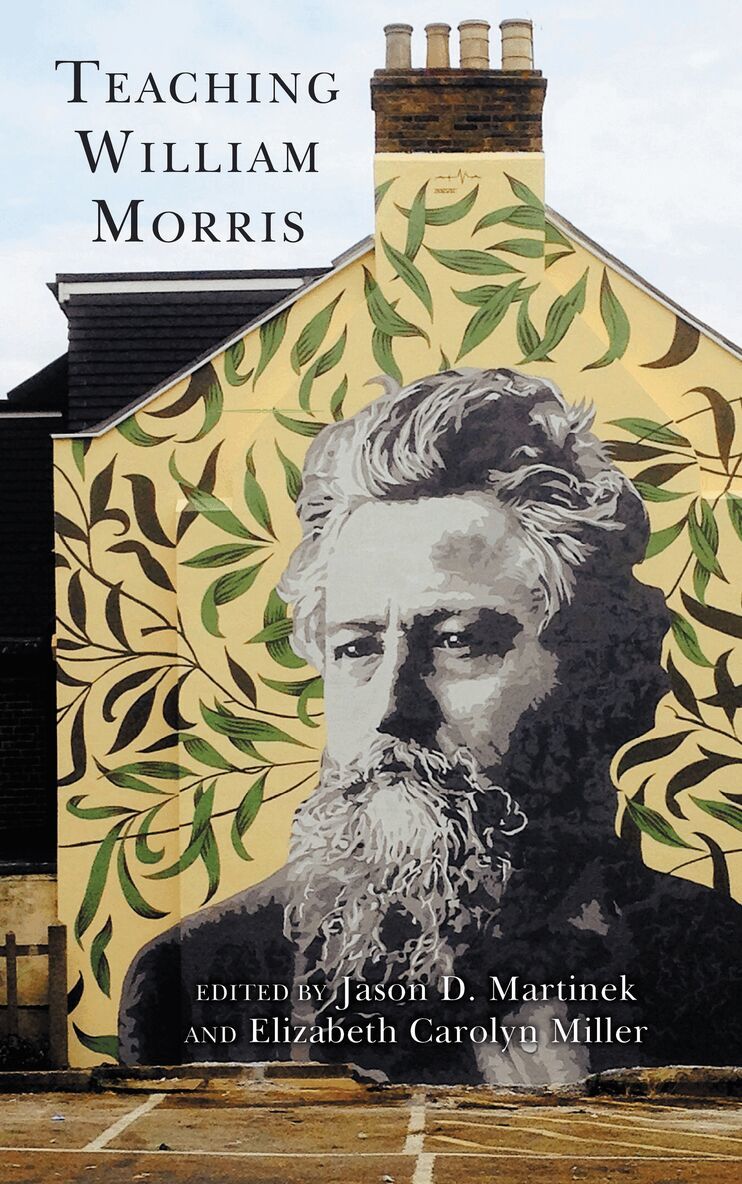
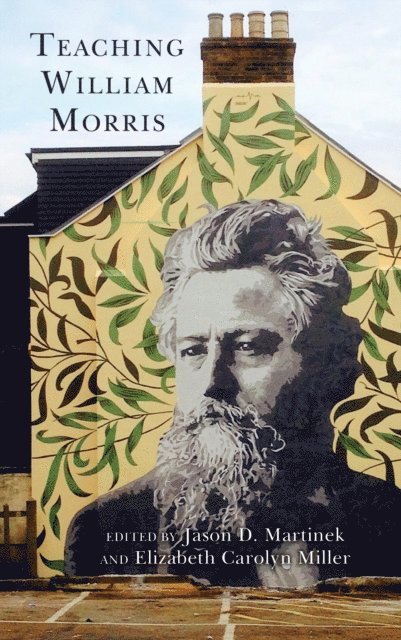
A prolific artist, writer, designer, and political activist, William Morris remains remarkably powerful and relevant today. But how do you teach someone like Morris who made significant contributions to several different fields of study? And how, within the exigencies of the modern educational system, can teachers capture the interdisciplinary spirit of Morris, whose various contributions hang so curiously together? Teaching William Morris gathers together the work of nineteen Morris scholars from a variety of fields, offering a wide array of perspectives on the challenges and the rewards of teaching William Morris. Across this book’s five sections—“Pasts and Presents,” “Political Contexts,” “Literature,” “Art and Design,” and “Digital Humanities”—readers will learn the history of Morris’s place in the modern curriculum, the current state of the field for teaching Morris’s work today, and how this pedagogical effort is reaching well beyond the college classroom.